REVIEW · TAY NINH
From Ho Chi Minh: Black Virgin Mount And Cao Dai Holy Mass
Book on GetYourGuide →Operated by Trip in Vietnam · Bookable on GetYourGuide
Ba Den, the Roof of the South, changes your perspective fast. You start from Ho Chi Minh City and head to Black Virgin Mountain, where a cable car ride leads to temples, caves, and wide views that put clouds almost at eye level. It’s one of those days where the scenery and the spirituality both feel real, not staged.
Two things I really like here: the cable car gets you to the high viewpoints without turning the day into a hiking contest, and the mix of religious sites (Buddhist spaces up the mountain, then Cao Dai Holy Mass) makes the trip feel like a cross-section of Southern Vietnam’s belief culture.
One consideration: the day includes several stops and a large temple complex, so you’ll want to manage your time and pace. If you’re hoping to shop inside temple areas, plan ahead because at least one of the temples you’ll visit can be cash-only, so bring money.
In This Review
- Key highlights to look for
- Ba Den and the cable car: where the day really starts to feel special
- Black Virgin Mountain: myths, pagodas, and the feeling of being high in the clouds
- The giant Maitreya and the scale of faith: Miroku Bosatsu in numbers
- Tay Ninh bronze Buddha stop: Asia’s tall sacred bronze statue
- Cao Dai Holy Mass: a living ceremony, not just a photo stop
- Lunch and getting around: the comfort piece you’ll thank yourself for
- Price and value: where $67 feels fair and where it can surprise you
- The guide and driver factor: what makes this day feel smooth
- Who should book this Black Virgin Mountain + Cao Dai day trip
- Should you book it? My take
- FAQ
- What does the tour include?
- Is the cable car included in the price?
- Where do you get picked up from?
- What religious sites are included in the itinerary?
- Is there an optional hike on Black Virgin Mountain?
- Can the tour include Cu Chi Tunnels?
- Do I need cash for temple areas?
- What languages are available for the guide?
Key highlights to look for
- Cable car to the top area: You get big elevation without burning your legs before the views.
- Black Virgin Mountain myths and legends: You’ll hear local stories as you move between temple spots.
- Panoramic viewpoints at 986 meters: Clouds can sit so low it feels like you’re standing in them.
- Temple, pagoda, and cave stops: Buddhist architecture and monk-residence-style spaces along the climb.
- Cao Dai Holy Mass: A different faith experience in the same day’s route.
- Miroku Bosatsu / Maitreya Buddha visit: Giant-scale Buddhist art made from thousands of stones.
Ba Den and the cable car: where the day really starts to feel special
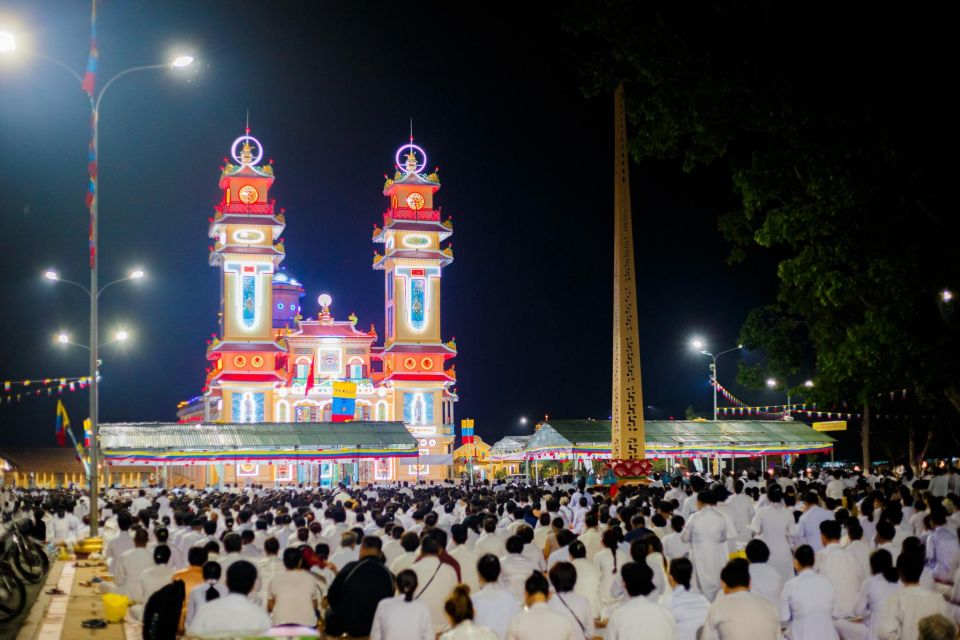
Your day starts with pickup by AC vehicle from central Ho Chi Minh City. Having a professional English-speaking guide (and the option for other languages with a surcharge) matters here because you’ll get context while you’re traveling, not just at the stops. You’re also handed bottled water on the way, which is a small but useful touch when you’re heading for altitude.
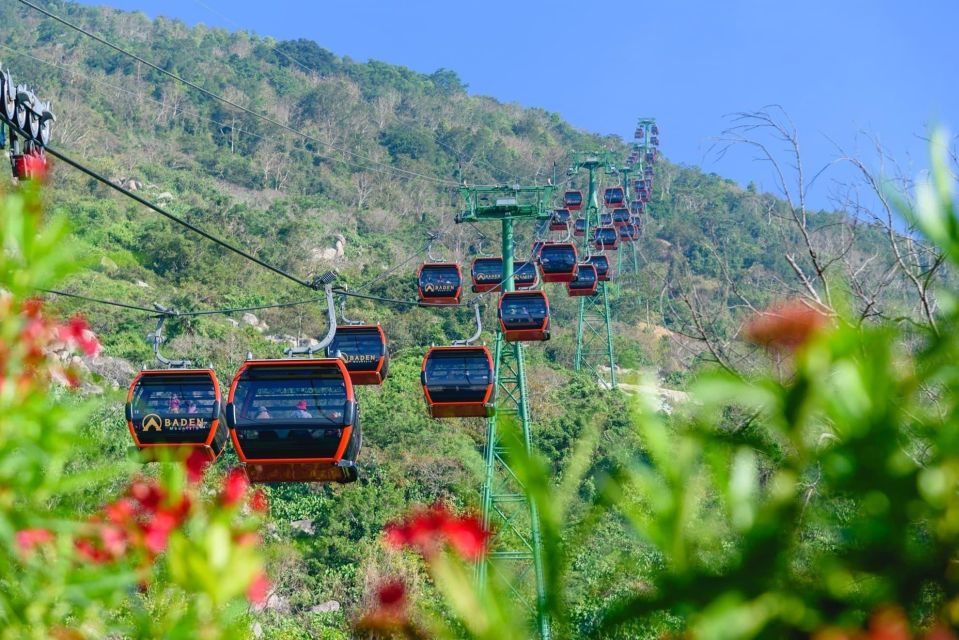
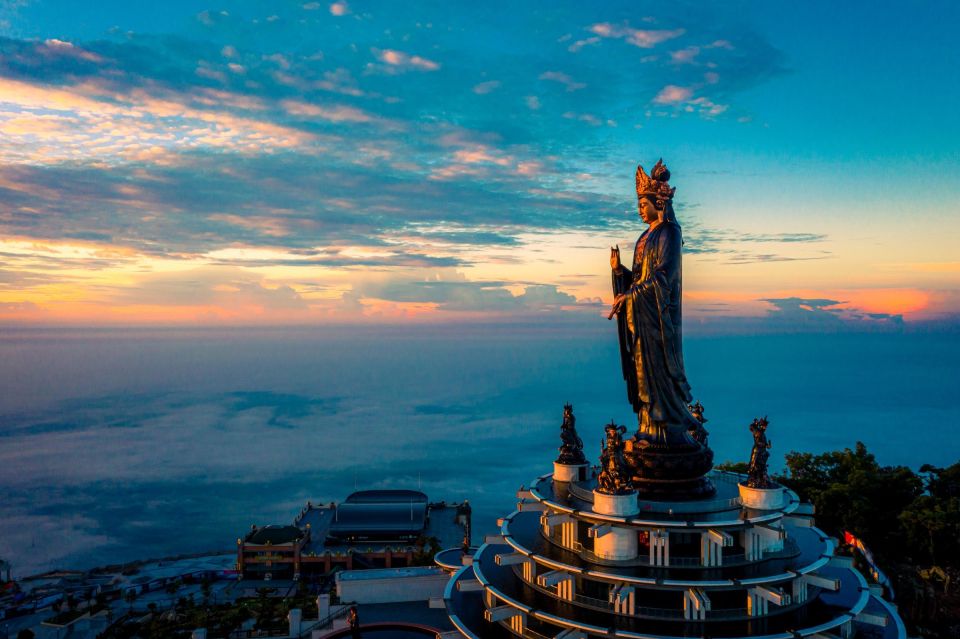
The cable car is a big part of why this works as a day trip. Instead of spending most of the day climbing, you’ll ride up to a temple area dedicated to the local Khmer deity, Bà Đen. Once you reach the top zone, you’re set up for that signature payoff: a view of Tay Ninh province with clouds hanging close to the horizon.
The practical win is that you can focus on the experience. Even if you don’t take an additional hike, the route still gives you multiple temple-and-view moments so you never feel like you’re waiting for the one big photo.
Black Virgin Mountain: myths, pagodas, and the feeling of being high in the clouds
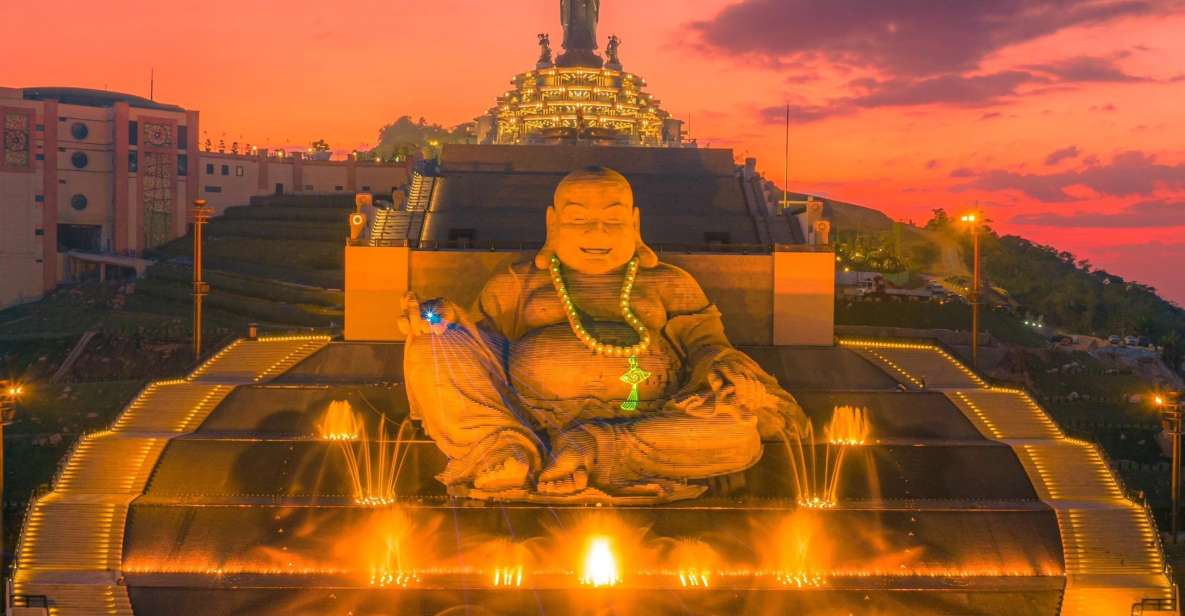
Ba Den is 986 meters tall, and the mountain is part of a larger area called Black Lady Mountain—three major mountains spread across about 24 km. As you move through the temple zones, your guide’s explanations help the place make sense. The mountain has its own myths and legends, and learning those stories gives you a reason to pay attention to the shrines and designs instead of just walking past them.
What I like most is the variety you get along the way. There are many temples and pagodas positioned so you can stop, look, and slow down. You’ll also see cave spaces used as residences for Buddhist monks, which changes how you picture life up there. It’s not just architecture; it feels like a functional spiritual setting.
There’s also an optional hike further up the mountain. If you want it, you can go beyond the initial temple area to discover two more temples. The upside is more quiet and less crowd energy. The downside is obvious: you’ll trade time and energy, so only do it if you’re comfortable walking on temple paths.
And yes, the clouds really can be low. In the misty moments, you’ll understand why people talk about seeing the scenery with clouds almost at eye level. It’s the kind of atmosphere that makes simple viewpoints feel cinematic without you trying to force it.
The giant Maitreya and the scale of faith: Miroku Bosatsu in numbers
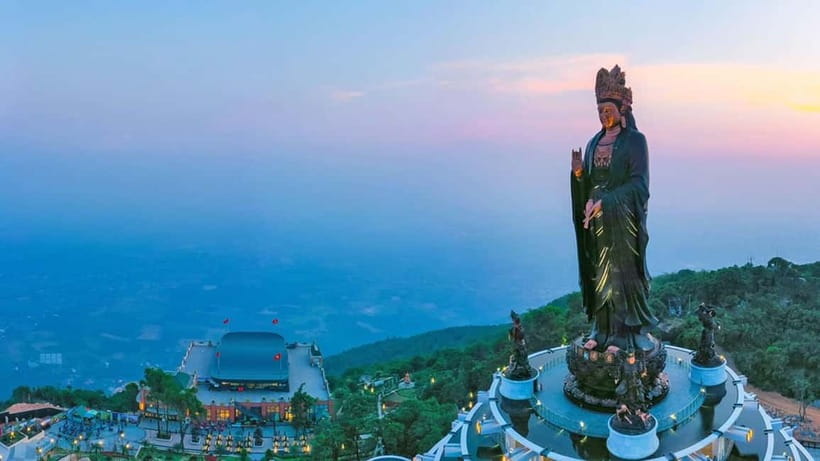
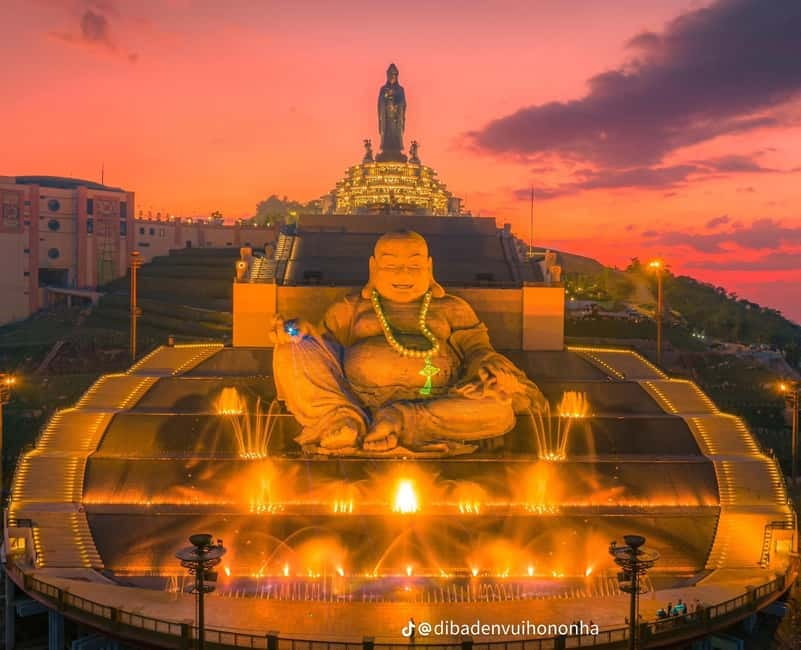
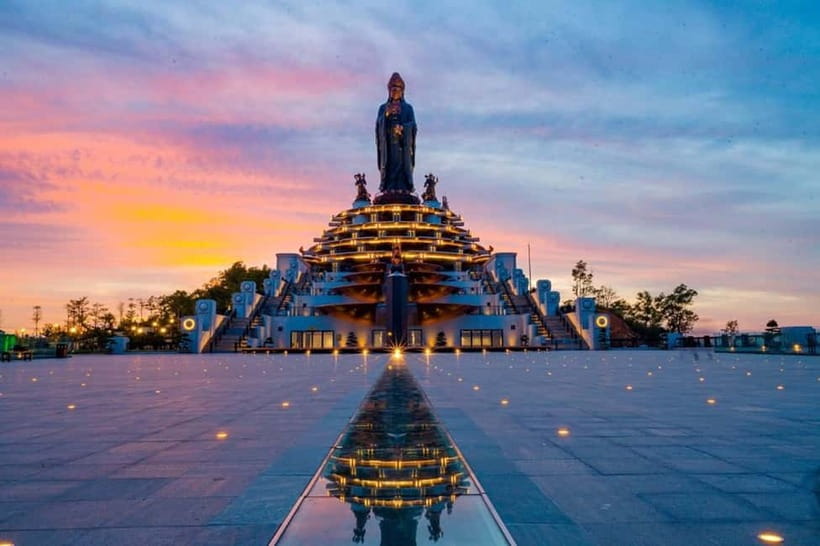
One of the standout wow-factors on this route is the giant Maitreya Buddha statue in Vietnam, also known from the Miroku Bosatsu connection. This statue is built from 6,688 sandstone stones and reaches 36 meters tall. That set of numbers isn’t just trivia—it tells you why the statue feels overwhelming in person.
The details keep coming. The maximum width is about 45 meters, the surface area is around 4,651 m², and it weighs about 5,112 tons. If you like when religious art is also engineering-level ambitious, this stop will land hard.
Why it’s valuable: you’re not just seeing a single landmark. You’re seeing how a temple complex can use scale to shape emotion—how size can communicate devotion and seriousness. Even if you’re not usually a big statue person, the sheer construction effort gives you a new lens.
When I think about what makes this part worth your time, it’s this: you get a shift from intimate shrine details to massive public symbolism, all in the same morning or afternoon flow. That contrast is what keeps the day from feeling one-note.
Tay Ninh bronze Buddha stop: Asia’s tall sacred bronze statue
Another dramatic sculpture element you’ll encounter is the tallest sacred bronze Buddha statue in Asia, cast with about 170 tons of red bronze. It measures around 72 meters long. That’s the kind of information that makes you roll your eyes until you’re standing far enough back to take it in and realize the scale is hard to fully capture in one frame.
Even if you skip the optional hike, this is still a strong reason to go. It adds variety to the visual rhythm: temples and caves on one side, then a massive bronze presence on the other.
The bigger value here is the way your guide can connect it to what you’re seeing on the ground. When you understand that these statues aren’t random sightseeing props, you naturally slow down and look longer.
Cao Dai Holy Mass: a living ceremony, not just a photo stop
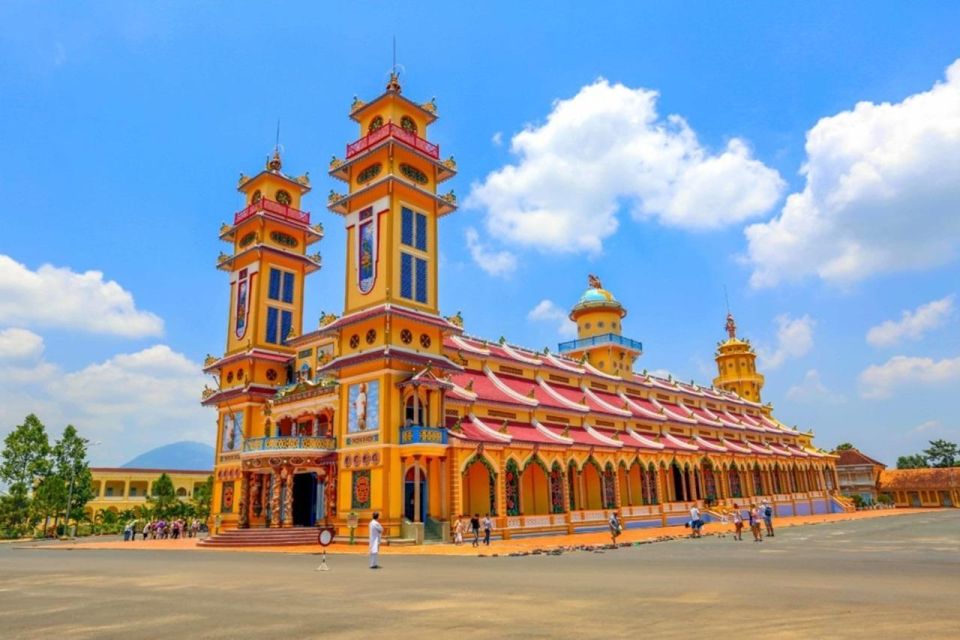
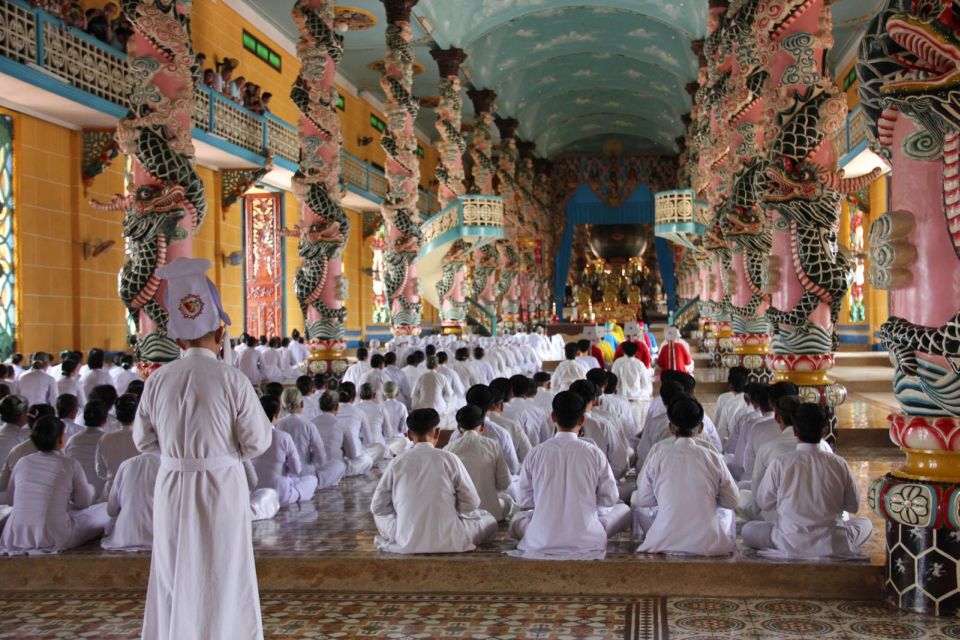
The Cao Dai Holy Mass is included on this route, and it’s the part that most clearly turns your day into a cultural experience rather than a sightseeing day. Cao Dai is a distinct tradition, and experiencing a holy mass helps you see how belief shows up in costume, ritual space, and community rhythm.
A practical note: the temple is large, and timing can matter. One guide on the route helped a visitor explore at their own pace, but that same person missed the mass and focused instead on exhibits, gardens, and viewing moments inside the complex. That’s a good reminder: if you care about seeing the mass, arrive with enough time to get your bearings and settle in.
Also, consider your energy level. If you’re spending time on views and photo spots, you might find the mass ends up feeling rushed. If you want the ceremony to be the main event, prioritize it and plan your earlier stops accordingly.
This is also where the guide can really help. Language support can make a difference because mass-related explanations are often more meaningful when you can follow what’s happening.
Lunch and getting around: the comfort piece you’ll thank yourself for
The itinerary includes lunch at a local restaurant, plus bottled water in the car. In practice, that’s a big deal because the mountain day includes walking, waiting, and the kind of sights that make you forget you’re hungry until you’re suddenly starving.
Two specific things stood out from real experience: lunch can be filling enough that people struggled to finish it, and it can be a traditional dish from the area. The point is simple: you’re not stuck hunting food alone, and you won’t feel like you have to make rushed choices.
Getting from Ho Chi Minh City also matters. The pickup and drop-off are centered in Ho Chi Minh City, and the car is air-conditioned. That comfort is especially helpful if your day starts early or you want to arrive in decent shape for the cable car lines and temple walking.
If you have room in your schedule, the operator may offer a free add-on visit to the Cu Chi Tunnels if seats are available on the vehicle that day. That’s not guaranteed, but it’s worth knowing because it can turn your trip into a more varied Southern Vietnam day.
Price and value: where $67 feels fair and where it can surprise you
The price is listed at $67 per person. For most people, the value comes from bundling several things you’d otherwise have to arrange separately: AC transportation, a professional guide, entrance tickets, and lunch.
Here’s the part to double-check for your own planning: the cable car is not included. So you’ll need to budget extra for that ride. Still, the way the day is structured makes sense: the tour gets you to the right temple zones, and the cable car is the mechanism that controls how much effort you spend for the altitude payoff.
Also note that holiday surcharges in Vietnam aren’t included. If you travel around peak holiday periods, it’s smart to ask ahead so there are no budget surprises.
Now the other money issue: the temple might not accept cards. One person specifically warned that the temple they visited does not accept card, so they recommended bringing cash and even suggested having at least 1 million VND. Even if you don’t plan to buy much, you’ll feel better having cash ready for small purchases, offerings, or on-site fees.
The guide and driver factor: what makes this day feel smooth
This kind of trip can go two ways: you either spend the day stuck figuring things out, or you glide through with context. The strongest praise here is about the guide-and-driver team.
For example, one of the guides on the route is Jacky Hieu, and people described him as careful, helpful, and knowledgeable in a practical way. Another review mentioned Japanese language support that was available through the guide, with extra help via Google when needed. That combination sounds small until you realize how much easier it is to enjoy ceremonies and temple meanings when you can actually follow what’s being said.
Punctual pickup and a comfortable private car also came up. When you’re doing a mountain day plus a ceremony stop, that comfort turns into time savings because you’re not wrestling with logistics.
The best part is pacing. At least one experience described the guide not rushing and letting people explore at their own pace. That’s the difference between snapping photos and actually absorbing what’s there.
Who should book this Black Virgin Mountain + Cao Dai day trip
I’d book this if you want a balanced day: views from 986 meters, Buddhist temple and cave stops, plus a Cao Dai Holy Mass included on the same route. It’s a good fit for people who like culture, don’t want to plan transport, and prefer guided context over doing everything solo.
It’s also a smart choice if you’re limited on energy. The cable car helps a lot, and the optional hike is just that—optional. You can choose more walking if you want more temples, or stick with the main route.
I’d think twice if you’re trying to see only one thing deeply. If Cao Dai mass timing is your top priority, plan your earlier stops so you don’t end up scrambling. And if you’re statue-obsessed, make sure your schedule includes time to actually look at the Maitreya/Miroku Bosatsu area, not just rush through.
Finally, if you hate cash-only situations, you’ll want to bring enough money. Card acceptance isn’t guaranteed at temple areas, and it’s an easy fix.
Should you book it? My take
If you want a single, well-organized day that covers Ba Den’s dramatic viewpoint energy and Tay Ninh’s religious variety, this is a strong value play. The biggest reasons to say yes are the guided explanations, the smooth pickup-and-transport setup, the high-altitude payoff from the cable car, and the inclusion of Cao Dai Holy Mass.
Just go in with two expectations: cable car costs extra, and the temple complex is big enough that you’ll want to manage your time. Do that, bring cash, and you’ll end up with a day that feels more meaningful than a standard checklist tour.
FAQ
What does the tour include?
It includes AC car transfer, pickup and drop-off at the center of Ho Chi Minh City, a professional English-speaking tour guide, entrance tickets, lunch at a local restaurant, and bottled water on the car.
Is the cable car included in the price?
No. The cable car is not included, so you should budget extra for it.
Where do you get picked up from?
Pickup and drop-off are at the center of Ho Chi Minh City.
What religious sites are included in the itinerary?
You’ll visit Buddhist temple areas on Ba Den/Black Virgin Mountain and also attend the Cao Dai Holy Mass.
Is there an optional hike on Black Virgin Mountain?
Yes. There’s an optional hike further up the mountain to discover two more temples, if you want to add walking time.
Can the tour include Cu Chi Tunnels?
The operator notes they can include a free visit to the Cu Chi Tunnels if there are available seats on the vehicle that day.
Do I need cash for temple areas?
At least one temple on the route may not accept card, so it’s wise to bring cash.
What languages are available for the guide?
The tour lists English, Chinese, French, Japanese, Italian, Spanish, Russian, Korean, and German. Other languages may have a surcharge.