REVIEW · HO CHI MINH CITY
Chu Chi Tunnel With Cao Dai Temple Tour From Ho Chi Minh
Book on Viator →Operated by Vietnam Sightseeing · Bookable on Viator
Cu Chi tunnels meet religion at midday. This private Ho Chi Minh City tour pairs the Cao Dai Temple in Tay Ninh with time underground at Cu Chi, so you get two very different sides of Vietnam’s 20th-century story in one long day.
I like that the schedule is built around real moments, not just photo stops. You’ll attend the midday Caodaism ceremony at the Great Holy See Temple (built in 1926), then you’ll move on to Cu Chi for a guided look at how the Viet Cong used the tunnels as a working base.
My only real caution is risk management: while most bookings are smooth, there’s at least one serious no-show complaint tied to an unarrived operator. I’d treat confirmation seriously and keep your contact details handy.
In This Review
- Key things that make this tour worth your time
- A One-Day Mix of Caodaism and Cu Chi Tunnels
- Cao Dai Temple in Tay Ninh: The Great Holy See and the Midday Ceremony
- Cu Chi Tunnels: Over 200km of Underground War Work
- The Tea and Cassava Moment: War-Time Life in Your Cup
- Getting There from Ho Chi Minh City: 8:00 AM Start, Long Day Comfort
- Price and Value for $135: What You’re Paying For
- Who Should Book This Tour (and Who Might Want a Different Plan)
- Should You Book This Chu Chi and Cao Dai Temple Tour?
- FAQ
- What’s the duration of the Chu Chi Tunnel With Cao Dai Temple Tour?
- Where does this tour take place?
- How much does the tour cost?
- Is pickup included?
- Are the admission tickets included?
- Will there be an English-speaking guide?
- What happens at the Cao Dai Temple stop?
- What’s included in the Cu Chi Tunnels portion?
- What’s included in the transportation and comfort?
- Can I cancel for a refund?
Key things that make this tour worth your time
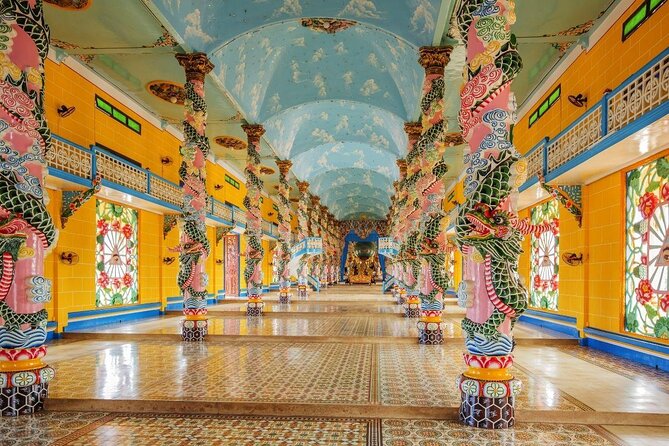
- Midday Caodaism ceremony at the Great Holy See Temple, with time to watch the daily mass
- Iconic Cao Dai Temple design, including the all-seeing holy eye above the entrance
- Cu Chi tunnels with a guided structure: a short intro video plus about an hour exploring
- War-era practicality: you’ll see evidence of fighting from the 1960s and how the site operated underground
- Included basics that reduce planning stress: English guide, A/C vehicle, bottled water, and admission tickets for both stops
- Simple, war-time food: tea and cassava, the guerrillas’ staple during the conflict
A One-Day Mix of Caodaism and Cu Chi Tunnels
If you only have a short visit to Ho Chi Minh City and you want depth, this kind of day trip is a smart use of time. You’re going from the spiritual world of Caodaism (Cao Dai) to the very physical reality of Cu Chi—underground survival, storage, command, and combat support.
What I find practical here is the “rhythm.” First, you get context at the Cao Dai Temple, where a hybrid religion blends elements from Buddhism, Christianity, and Confucianism. Then you shift gears to Cu Chi, where the scale of the tunnel network (over 200 km) explains how the Viet Cong could keep operating under intense pressure.
This is also a good option if you’d rather have a guide translate meaning for you. Both places can be overwhelming if you’re trying to interpret them on your own—especially when symbols and ceremonies are involved.
You can also read our reviews of more tours and experiences in Ho Chi Minh City.



Cao Dai Temple in Tay Ninh: The Great Holy See and the Midday Ceremony
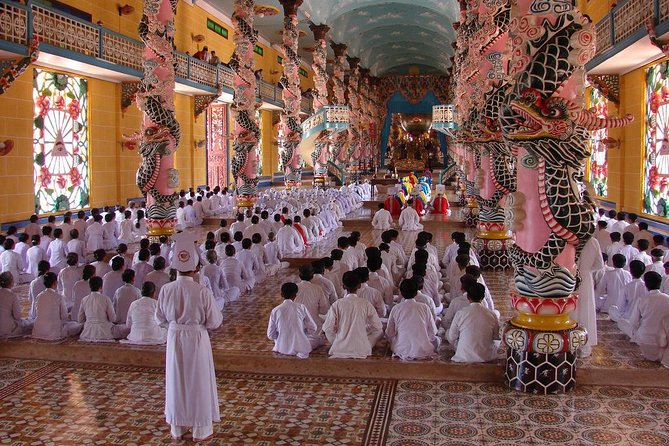
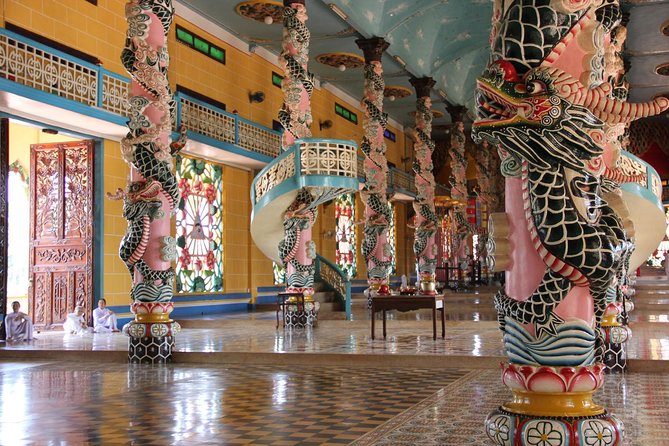
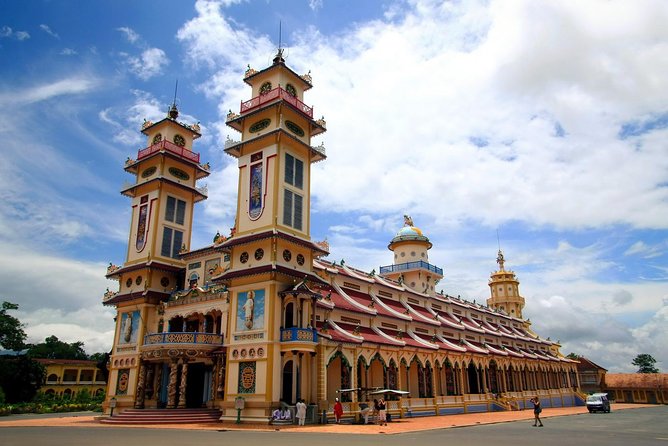
Your day starts with the Cao Dai Temple, officially known as the Great Holy See Temple, built in 1926. Even before anyone explains anything, the building grabs your attention. The all-seeing holy eye above the entrance is the kind of symbol that makes you instantly understand this is a designed religious space, not just a historic building.
Here’s what makes this stop more than sightseeing: you’re not just walking around. You attend the midday ceremony, which is described as an extravaganza and centers on the daily mass held by Cao Dai followers. That timing matters. If you visit at random hours, you miss the core action. On this tour, the schedule is built around catching the ceremony.
A quick practical mindset: ceremonies involve multiple parts, and not everything will be instantly clear if you don’t know the basics. That’s where an English-speaking guide helps—especially with a religion that blends influences from different traditions. You’ll likely understand more after the guide connects the dots between symbols, rituals, and the religion’s role as the Cao Dai sect’s headquarters.
What I like: the ceremony gives you a living view of belief, not just architecture.
What to consider: this is a sacred setting. Dress and behavior matter, and your time is tied to the ceremony schedule rather than your personal pace.
Cu Chi Tunnels: Over 200km of Underground War Work
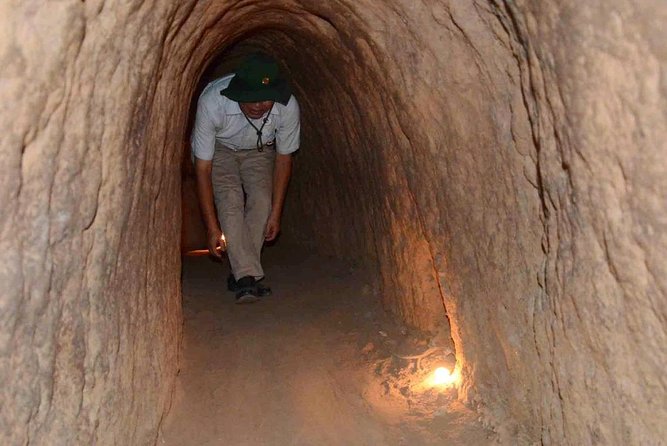
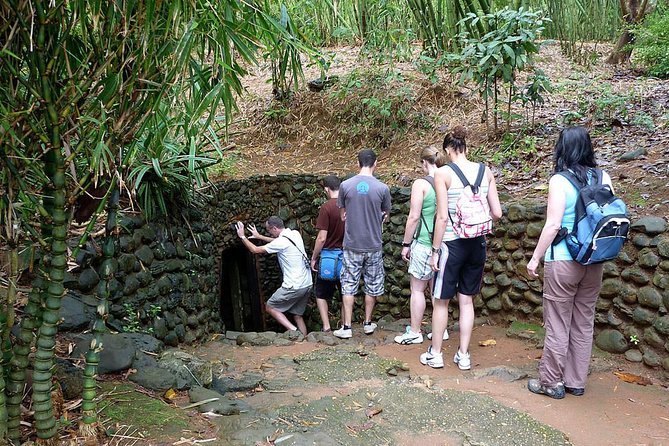
After Tay Ninh, you head to Cu Chi, where you’ll explore the historic site used by the Viet Cong. The numbers are part of the shock: the tunnel system totals over 200 km. It’s famous for a reason, but the real value here is understanding that these weren’t just escape routes. In their heyday, the tunnels worked like an underground city.
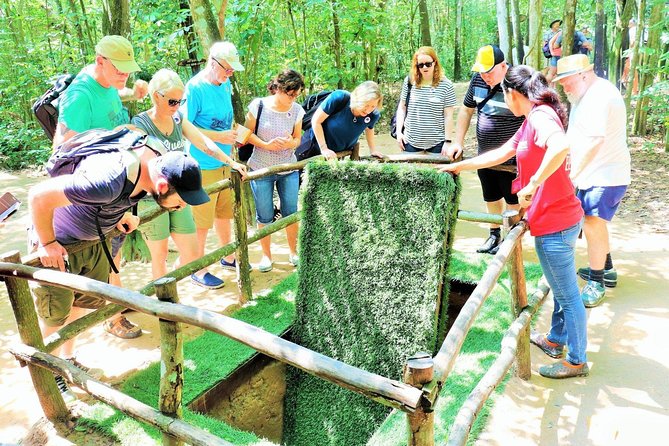
Your guided time includes a short introductory video first, which is a smart start if you want your visit to make sense fast. Then you spend about one hour exploring the tunnels themselves.
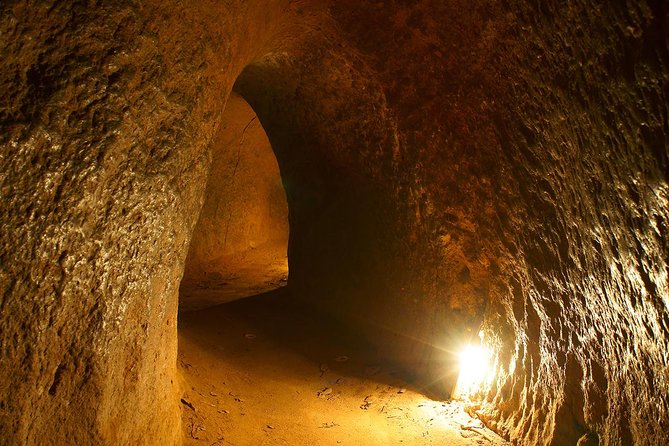
As you tour, you’ll see how the network was designed for survival and operations. The tunnels included trap doors and specially constructed living areas, storage facilities, weapons factories, field hospitals, command centers, and kitchens. Those aren’t random features; they explain the system’s purpose. It wasn’t only hiding. It was running.
You’ll also learn why Cu Chi became especially brutal in the 1960s, including the period described as a Free Target Zone. That context helps you read the “evidence” of battle you’ll be pointed to on site. Without that framing, it can feel like you’re just walking through a historic set. With it, you start connecting layout to strategy.
Practical note: underground spaces can feel tight. Go in ready for close quarters, uneven footing, and the kind of atmosphere that makes you slow down.
The Tea and Cassava Moment: War-Time Life in Your Cup
One of my favorite parts of this kind of tour is when history isn’t just visual. Here, after the tunnel exploring, you get tea and cassava—described as the guerrillas’ food during wartime.
It’s not a fancy meal, and it’s not meant to be. It’s a quick, sensory reminder that tunnel life wasn’t only about hiding and fighting. It included daily routines: sourcing food, using stores, and keeping energy available underground.
Even if you’ve had cassava elsewhere in Vietnam, this context changes it. You eat more thoughtfully when you know it’s tied to how people survived in these exact conditions.
Getting There from Ho Chi Minh City: 8:00 AM Start, Long Day Comfort
The tour starts at 8:00 am, and the full experience runs about 9 to 10 hours. That’s a big chunk of your day, so it helps to understand what you’re trading: less flexibility for more coverage.
You’ll be in an air-conditioned vehicle with private transportation, and the tour includes bottled water. That matters on an all-day day trip, especially in Vietnam’s heat. Drinks beyond the water are not included, so plan for how you’ll stay hydrated between stops.
This is also a private format, listed as: only your group participates. That’s a real advantage when you want questions answered without competing with a larger crowd.
What I’d do before you go: check what time you need to be ready for pickup and make sure you’re on time. With the ceremony scheduled for midday, the whole day depends on keeping the early flow steady.


Price and Value for $135: What You’re Paying For
At $135, this tour isn’t cheap, but it’s not wildly overpriced for an all-day private trip that includes guide time, transport, and admissions.
Here’s the value breakdown based on what’s included:
- English-speaking guide for both major stops
- Air-conditioned vehicle and private transportation
- All fees and taxes
- Bottled water
- Admission tickets included for both Cao Dai Temple and Cu Chi
- Private tour experience (your group only)
- Mobile ticket is listed as a feature
So you’re paying for the “two-site” combo plus logistics. The guide reduces confusion at both locations: Caodaism ceremony and symbols at the temple, and the logic of the tunnel network at Cu Chi. If you tried to combine these independently, you’d spend time figuring out transport, timing, and tickets anyway.
My value check: if you care about understanding what you’re seeing, a guided day like this can beat DIY. If you mainly want photos and don’t care about interpretation, the guide portion matters less—and you might consider a more self-directed approach.
Who Should Book This Tour (and Who Might Want a Different Plan)
This tour fits you best if you want:
- A one-day way to connect Caodaism and Vietnam’s wartime history
- A guided explanation of symbols, ceremony, and tunnel function
- A structured day trip where admissions and basic logistics are handled
You might skip it if:
- You don’t like long days (9–10 hours is substantial)
- You feel uncomfortable underground environments
- You’d rather choose your own timing for the temple visit instead of tying it to the midday ceremony
And here’s the practical caution I’d give everyone: there’s at least one severe complaint about a tour operator not showing up while the booking was still charged. You can’t always remove risk with tours, but you can reduce stress by confirming your pickup plan and keeping the tour provider’s contact info accessible the day before you depart.
Should You Book This Chu Chi and Cao Dai Temple Tour?
If you’re planning around a short stay and you want one day that actually teaches you something, I think this tour is a strong choice. The pairing makes sense: Caodaism at the Great Holy See Temple, then the Cu Chi tunnels where the Viet Cong built an underground operating base.
Book it if you value a guided ceremony moment and structured tunnel time, and you’re okay with a long day starting at 8:00 am. I’d also treat confirmation and pickup details as non-negotiable—because even one no-show issue is enough to ruin your day.
If your idea of a great trip is spontaneity over structure, you might prefer separate tickets and flexible timing. But for most visitors trying to cover the big things with meaning, this one-day combo earns its place.
FAQ
What’s the duration of the Chu Chi Tunnel With Cao Dai Temple Tour?
The tour runs about 9 to 10 hours.
Where does this tour take place?
It’s in Ho Chi Minh City, Vietnam, with stops that include the Cao Dai Temple in Tay Ninh and Cu Chi.
How much does the tour cost?
The price is listed as $135.
Is pickup included?
Pickup is offered, and the tour starts at 8:00 am.
Are the admission tickets included?
Yes. Admission tickets are included for both the Cao Dai Temple and the Cu Chi Tunnels.
Will there be an English-speaking guide?
Yes, the tour includes an English-speaking guide.
What happens at the Cao Dai Temple stop?
You’ll visit the Great Holy See Temple (built in 1926) and attend the midday ceremony, which includes the daily mass.
What’s included in the Cu Chi Tunnels portion?
You’ll watch a short introductory video about the tunnels, explore the tunnels for about an hour, and then enjoy tea and cassava.
What’s included in the transportation and comfort?
You’ll have an air-conditioned vehicle and private transportation, plus bottled water.
Can I cancel for a refund?
Free cancellation is available up to 24 hours in advance for a full refund.