REVIEW · HO CHI MINH CITY
Private Cu Chi Tunnels & Ho Chi Minh City Full-Day Tour
Book on Viator →Operated by Ginkgo Voyage · Bookable on Viator
Tunnels underground, Saigon above ground. This private Cu Chi Tunnels & Ho Chi Minh City day tour packs war history and key city sights into about 7–8 hours, with pickup and an English-speaking guide such as Typhoon Honey. I especially like the hands-on Cu Chi Tunnels time, including the chance to crawl through part of the underground network, plus an optional shooting range experience. The other big win is the guide’s clear, enthusiastic storytelling in English, which makes the sites easier to understand. The one real drawback to consider is that the tunnel crawl can feel cramped and the day runs long, with some extra costs if you choose the shooting range.
You’re paying $116, but the value comes from what’s already included: a/c vehicle, lunch at a local restaurant, mineral water and wet tissue, admissions for the major stops, and an English guide. It’s a private format too, so you don’t have to time your day around strangers. I’d still keep your expectations balanced: this isn’t a slow wander through Saigon—it’s a focused highlights circuit plus the Cu Chi drive, and a lot of time goes to getting between them.
In This Review
- Key things you’ll notice right away
- A one-day mix: Cu Chi’s underground resistance and Saigon’s landmark belt
- Price and value: what $116 includes (and what you’ll likely pay extra)
- The 7–8 hour rhythm: pickup, travel time, and a pace that doesn’t feel rushed
- Cu Chi Tunnels: what 2 hours underground really teaches you
- Crawl time and why it matters
- Optional shooting range: powerful but not included
- Reunification Palace: a political time capsule you can walk through
- War Remnants Museum: powerful evidence, not a light stop
- Notre Dame Cathedral and Central Post Office: French-era architecture as a time marker
- Notre Dame Cathedral of Saigon (short and sweet)
- Saigon Central Post Office (a comfortable 30 minutes)
- Ben Thanh Market: souvenirs, but also a sensory reset
- Lunch, tapioca & tea: small breaks that keep the day humane
- English guide Typhoon Honey: how good guiding changes the whole experience
- Weather and expectations: plan for a schedule tied to conditions
- Should you book this private Cu Chi and Saigon day?
- FAQ
- How long is the Cu Chi Tunnels and Ho Chi Minh City tour?
- Is pickup included?
- Does the price include admission tickets?
- What meals and drinks are included?
- Is the shooting range fee included?
- What happens if the weather is poor?
Key things you’ll notice right away

- Private group only: you tour with just your group, not a mixed crowd.
- Cu Chi hands-on time: crawl through a tunnel section for a more physical view of the wartime system.
- Optional shooting range: AK-47 or M16 practice is available, but the range fee is optional (not included).
- English guide storytelling: guides like Typhoon Honey bring the history to life with strong English and humor.
- Major Saigon icons in one day: Reunification Palace, War Remnants Museum, Notre Dame Cathedral, Central Post Office, and Ben Thanh Market.
- Included breaks and fuel: lunch plus tapioca & tea help keep a long day manageable.
A one-day mix: Cu Chi’s underground resistance and Saigon’s landmark belt
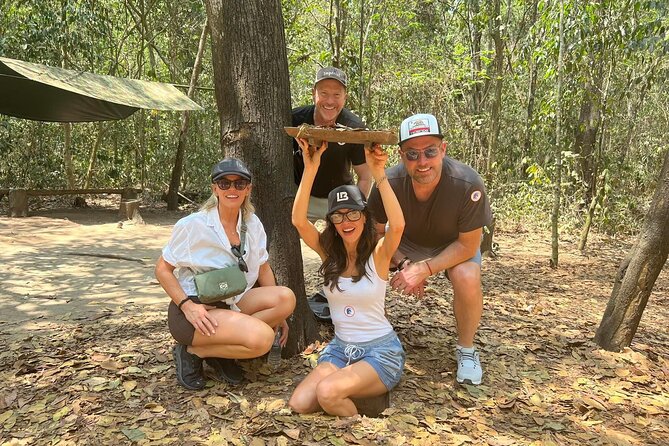
This is a combo day that makes sense if you’re short on time. You start by leaving Ho Chi Minh City for a long, meaningful history stop at Cu Chi—then you come back to see Saigon’s best-known places in a guided loop. The pacing is built around contrasts: the tight, underground reality of wartime survival, followed by open-air landmarks, museums, and a busy market district.
The tour’s strength is that it doesn’t treat history like a checklist. With an English guide, the sites connect to each other: the tunnels show ingenuity and survival tactics, and the Saigon museums and palaces show how the war era shaped the country’s political story and public memory. It’s a lot, but it’s also a very efficient way to get oriented fast.
You can also read our reviews of more city tours in Ho Chi Minh City



Price and value: what $116 includes (and what you’ll likely pay extra)
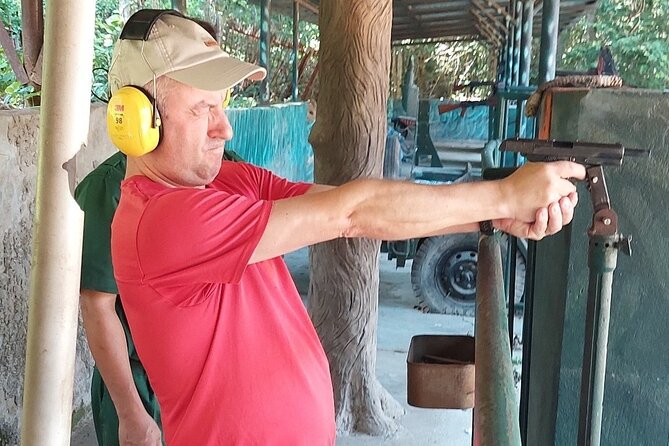
At $116, you’re not buying a bare-bones sightseeing run. You’re paying for transportation, an English guide, major admission fees, and meals.
Included items that matter in real life:
- Air-conditioned vehicle plus private transportation
- Lunch at a local restaurant
- Mineral water & wet tissue
- Tapioca & tea during the day
- Admission fees for the main sights (Cu Chi, cathedral, museum, palace, post office, and market)
Not included (so plan ahead):
- Shooting range fee if you choose to fire weapons (optional)
- Alcoholic beverages
- VAT
So is it good value? For many visitors, yes—because admissions and guide time would add up fast if you tried to assemble it yourself. Also, the private format saves you mental energy. You don’t have to manage transfers between scattered sites or negotiate timing on the fly.
The 7–8 hour rhythm: pickup, travel time, and a pace that doesn’t feel rushed
You’re looking at roughly 7 to 8 hours total, and “remaining time” is specifically accounted for as transportation. That’s important because Cu Chi is about 55 miles northwest of Ho Chi Minh City, so the day naturally includes a substantial drive.
What helps the experience:
- Pickup is offered, which removes a big logistical headache.
- The vehicle is air-conditioned, which matters on a long day in Vietnam’s heat.
- The schedule is structured with set time blocks at each landmark (for example, shorter stops like the cathedral and longer ones like Ben Thanh Market).
The pace is built to get you through the essentials without skipping everything. Still, if you like deep, slow museum reading, keep in mind that you only get about an hour at the War Remnants Museum and 1.5 hours at the Reunification Palace. It’s enough to get the main ideas, but you won’t “live” in the exhibits.
Cu Chi Tunnels: what 2 hours underground really teaches you
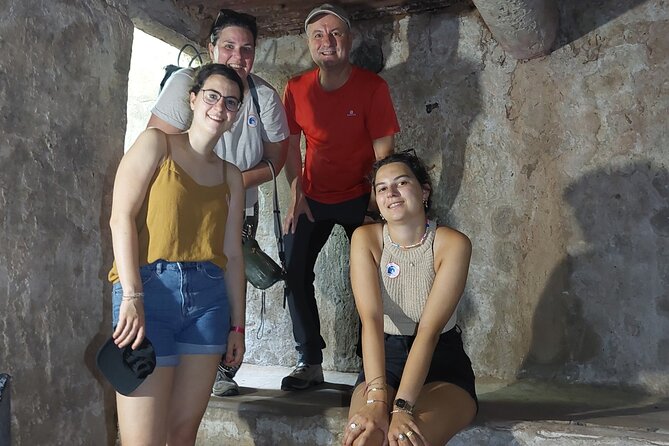
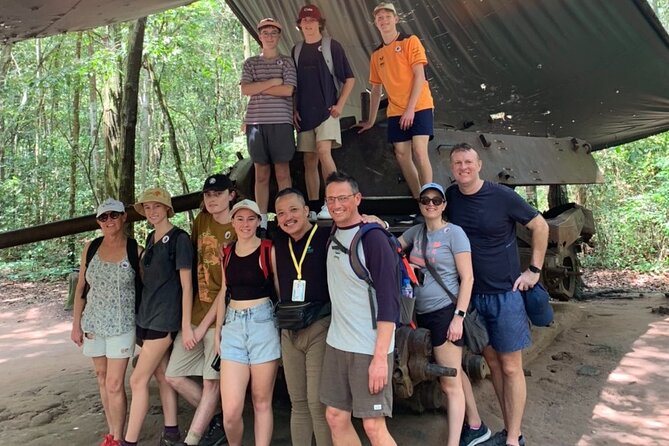
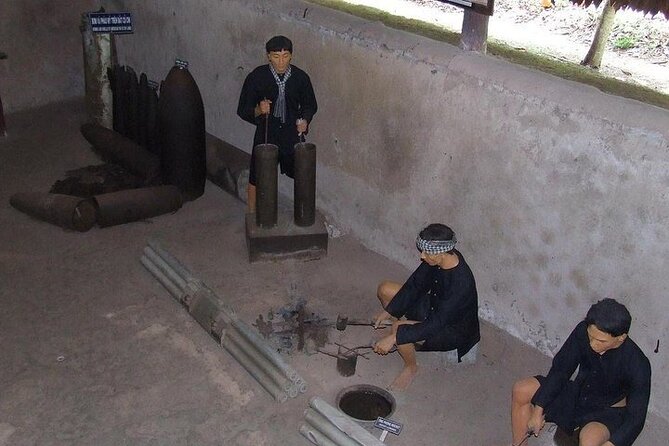
Cu Chi Tunnels is the emotional anchor of this day. The tunnels are an extensive, hand-dug underground network created by Vietnamese resistance fighters. The story goes beyond one location too: the tunnels are believed to extend far enough that they may have reached toward neighboring Cambodia.
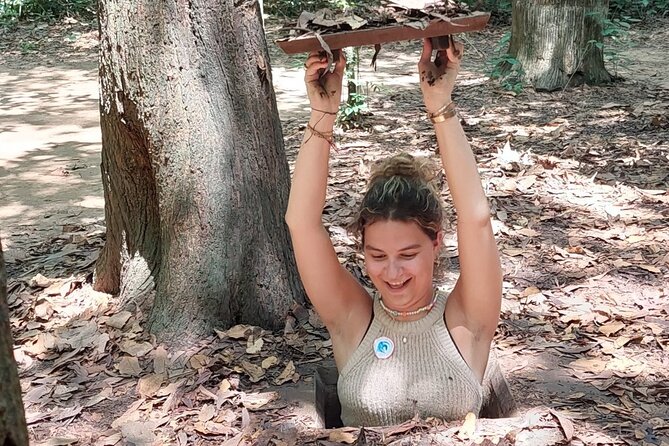
You’ll spend about 2 hours here, and the experience is more than standing and looking. There’s time in areas designed to help you understand the system, including the chance to crawl through part of the tunnel network. That physical element is where Cu Chi stops being abstract history and starts feeling personal—your body is forced to understand the limits and constraints people faced.
Crawl time and why it matters
Even if you don’t love tight spaces, the crawl portion is usually the moment people remember most. It gives you an instinctive sense of how movement, ventilation, and space would have shaped daily survival underground. If you’re claustrophobic, you should treat the tunnel section as the potential stress point of the whole day.
You can also read our reviews of more private tours in Ho Chi Minh City





Optional shooting range: powerful but not included
The tour also offers an optional chance to try firing an AK-47 or M16 at an on-site shooting range. The tour notes the shooting range fee is not included, so you’ll decide on the spot whether it’s worth the extra cost for you.
I think this optional stop is best for people who want a more hands-on, adrenaline-driven experience. If you’d rather keep the day focused on reflection and context, you can still enjoy Cu Chi fully without it.
Reunification Palace: a political time capsule you can walk through
Back in Ho Chi Minh City, the day turns from wartime survival to wartime power. The Reunification Palace (Independence Palace) is a landmark tied to Vietnam’s political leadership and a key moment in the city’s modern history.
You’ll have about 1.5 hours here, with admission included. The palace was designed by architect Ngô Viết Thụ and served as the home and workplace of the president of the Republic of Vietnam. That matters because it’s not just a building; it’s a setting for how decisions were made and how a nation’s leadership operated during a tense era.
A practical note: because it’s a palace you move through rooms and spaces with a guided context, you’ll get more out of it if you pay attention to what the guide points out—especially the layout and how the building functioned.
War Remnants Museum: powerful evidence, not a light stop
The War Remnants Museum is the other heavy hitter on this route, with about 1 hour on-site. The museum focuses on research, collecting, preserving, and displaying materials—especially evidence tied to the crimes and consequences of wars involving invading forces.
This is the kind of stop that can hit emotionally. If you prefer your history more analytical and less graphic, you may want to mentally pace yourself during the exhibit rooms. The good news: with a time limit built into the day, you still get a complete overview without having to spend all afternoon absorbing hard material.
Notre Dame Cathedral and Central Post Office: French-era architecture as a time marker
After the bigger history sites, the itinerary gives you classic Saigon architecture moments—brief, but meaningful because they show the city’s layered past.
Notre Dame Cathedral of Saigon (short and sweet)
You’ll have about 10 minutes at the Immaculate Conception Cathedral Basilica (Notre Dame Cathedral of Saigon). Construction began in 1863 and finished in 1880, designed by French architect J. Bourad.
At 10 minutes, this is more of a quick landmark moment than a deep architectural tour. But that’s not a problem if you want to check off an iconic exterior and get the historical timeline from your guide.
Saigon Central Post Office (a comfortable 30 minutes)
Next is the Saigon Central Post Office, with about 30 minutes and admission included. Built from 1886–1891, it blends Gothic, Renaissance, and French colonial design elements.
This is one of those stops that’s visually enjoyable even if you’re not a design buff. The time box is long enough for photos and a quick orientation, but short enough that you don’t lose the rest of the day to lingering.
Ben Thanh Market: souvenirs, but also a sensory reset
After museums and palaces, Ben Thanh Market helps reset the day. You’ll spend about 1 hour here, and the market is located in District 1.
It’s one of the earliest surviving structures in Saigon and is an important symbol of the city. It’s also where you can browse for souvenirs, clothing, and accessories.
The best way to use the time is to go in with a simple plan:
- Pick one or two categories you actually want
- Decide your budget range quickly
- Enjoy the atmosphere without trying to do a full shopping marathon in 60 minutes
If you’re the type who loves to browse for a long time, you might feel the time limit. Still, as a guided stop that fits neatly before the return transfer, it’s a smart inclusion.
Lunch, tapioca & tea: small breaks that keep the day humane
A full-day tour can go wrong if meals are rushed or forgotten. Here, you get lunch included at a local restaurant, plus tapioca & tea and mineral water during the day.
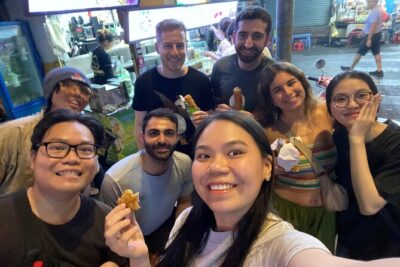
That snack/tea break is especially helpful during the long travel rhythm. A number of visitors mention trying steamed cassava as part of the included snack, and it’s a simple way to taste something local without turning the day into a food quest.
Also, the tour includes wet tissue, which sounds minor until you’re sweating and moving through multiple stops. It’s the kind of practical detail that makes the day feel smoother.
English guide Typhoon Honey: how good guiding changes the whole experience
The quality of an English guide matters a lot on this kind of day. Cu Chi and Saigon’s war-era sites both need context. Otherwise, you’re just looking at walls and artifacts.
Guides like Typhoon Honey (named in feedback) are described as friendly, funny, and strongly history-focused, with English that makes it easy to follow. That combination helps you connect:
- what resistance fighters built underground
- what the political leadership did above ground
- what the museum choices communicate about memory and consequences
If you’re even moderately interested in Vietnam’s 20th-century history, this guided approach is the difference between a pass-through tour and a tour that actually sticks.
Weather and expectations: plan for a schedule tied to conditions
This experience requires good weather. If the tour is canceled due to poor weather, you’re offered a different date or a full refund. Since you’re traveling out of the city to Cu Chi and back, weather can affect comfort and driving conditions.
Also, because the day includes both tight underground sections and multiple indoor/architectural stops, you’ll want to keep a flexible mindset. You’ll get plenty of structure, but you’re also spending hours moving between very different spaces.
Should you book this private Cu Chi and Saigon day?
Book it if you want:
- a one-day way to cover Cu Chi Tunnels plus the biggest Saigon landmarks
- a guided route that gives context (not just photo stops)
- a smoother day with pickup, a/c transport, and admissions + lunch handled
Skip or think twice if:
- you’re uncomfortable with tight underground spaces (the crawl is a major part of Cu Chi)
- you want a slow, deep museum day (time at each site is limited)
- you’d rather not deal with optional add-ons like the shooting range fee
For first-timers who are balancing time and impact, this is a strong choice. It gives you the war story on one side of the day and Saigon’s landmark identity on the other—cleanly packaged into a private, guided full-day format.
FAQ
How long is the Cu Chi Tunnels and Ho Chi Minh City tour?
The tour runs about 7 to 8 hours.
Is pickup included?
Pickup is offered.
Does the price include admission tickets?
Yes. Admission fees for the included sights are listed as included.
What meals and drinks are included?
Lunch is included, along with tapioca and tea. Mineral water and wet tissue are also provided. Alcoholic beverages are not included.
Is the shooting range fee included?
No. The shooting range fee is listed as optional and not included.
What happens if the weather is poor?
The experience requires good weather. If it’s canceled due to poor weather, you’ll be offered a different date or a full refund.