REVIEW · HO CHI MINH CITY
Cu Chi Tunnel Half Day – Small Group Tour
Book on Viator →Operated by GADT Travel · Bookable on Viator
Cu Chi tunnels shift how you picture war underground. This small-group half-day outing (about 7 hours) takes you past the surface and into the tunnel world with a professional English guide, then follows up with classic Cu Chi food culture like cassava, rice paper, and rice wine. The best part is that you are not stuck with only glass cases; you get real time walking the tunnels yourself.
I like the small group setup a lot because you get more chance to ask questions while still moving at a good pace. I also like that the tour includes hotel pickup and drop-off in District 1, plus an English-speaking guide, entrance fees, and bottled mineral water, so you can show up and go.
One thing to consider: it is a long day in the heat, and there is no meal included. You will want to plan for snacks or dinner later, and bring what the operator asks for like sun protection.
In This Review
- Key things to know before you go
- Cu Chi Tunnels: what the underground system really meant
- District 1 pickup and a smooth start in Ho Chi Minh City
- Inside the tunnels: an hour that feels hands-on, not rushed
- Tea and cassava: why the tour adds a simple food break
- Rice paper and rice wine village: learning after the underground
- Group size, guide quality, and how that affects your experience
- Price and logistics: does $27.04 really make sense?
- Who this tour fits best (and who should check first)
- Should you book the Cu Chi Tunnels half-day small-group tour?
- FAQ
- How long is the Cu Chi Tunnel small-group tour?
- Do they pick me up from my hotel?
- What group size is this tour limited to?
- Is an English-speaking guide included?
- What is included in the ticket price?
- What happens during the Cu Chi Tunnels portion?
- Is there a meal included?
- Does the tour include learning about rice paper and rice wine?
- What if I need to cancel?
- What if the weather is bad?
Key things to know before you go
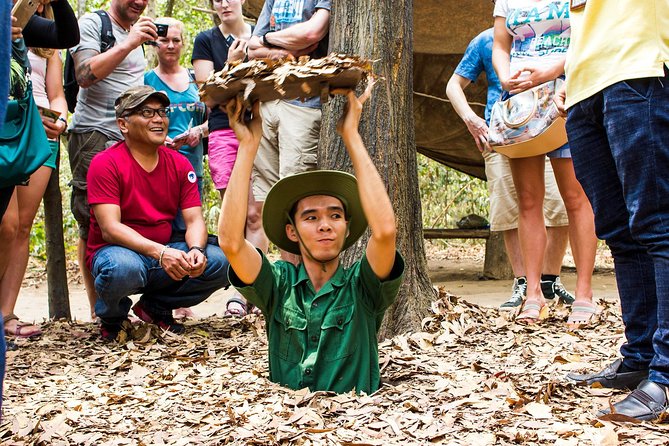
- Small group format (max 12): the Premium group cap keeps the experience more manageable.
- Your tunnel hour is on foot: watch a short intro video, then explore for about an hour.
- War-era function, not just walls: clinics, rooms, kitchens, storage, and underground offices show up in the story.
- Included Cu Chi taste test: you get tea and cassava as part of the day’s flow.
- Food culture lesson continues: you also learn about the rice paper and rice wine village of Cu Chi.
- District 1 pickup only: outside that area, you may need to meet at 112 Tran Hung Dao.
Cu Chi Tunnels: what the underground system really meant
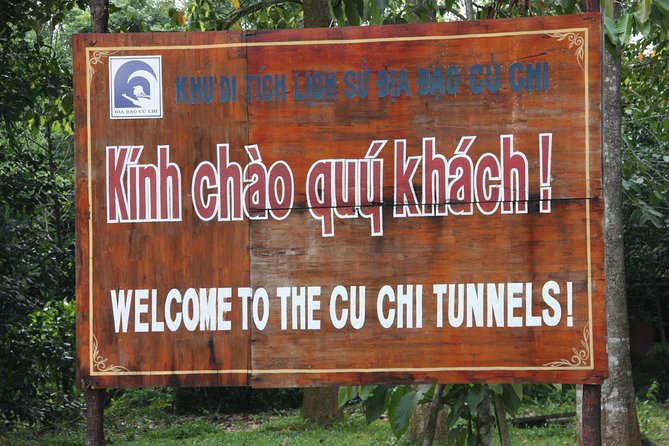
Cu Chi is famous for its tunnel network, a system that stretches over 200 kilometers and became legendary for its role during the Vietnam War. The tour focuses on how this place worked as a hidden community, not just as a dramatic set of crawl spaces.
What I like about how the experience is framed is that you are shown how daily life and survival had to happen underground. The underground world includes clinics, rooms, kitchens, storage, and even an underground office system. When you hear those functions and then see the tunnels with your own eyes, the history feels practical instead of abstract.
You will also watch a short introductory video about how the tunnels were constructed before entering. That timing matters: it helps you get your bearings fast, so your hour of exploring is more than walking around and hoping you are understanding the point.
The tour is also built around a clear rhythm: video, then tunnel time, then food. That flow keeps the day from dragging, and it gives you something real to associate with what you just saw underground.
You can also read our reviews of more tours and experiences in Ho Chi Minh City.



District 1 pickup and a smooth start in Ho Chi Minh City
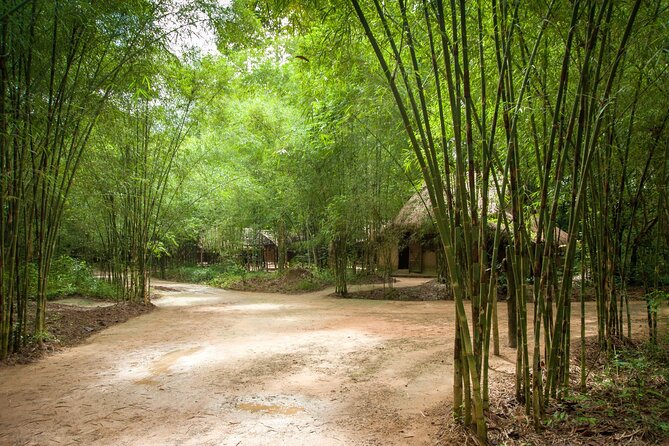
The day begins with pickup from your hotel in central District 1. If your hotel is not in the pickup streets listed by the operator, you join from the meeting point at 112 Tran Hung Dao Street, District 1.
This matters more than it sounds. In Ho Chi Minh City, transit can be chaotic, and this tour tries to remove that stress by meeting you where you already are. It is also listed as near public transportation, which gives you a backup if pickup timing ever changes.
The tour runs about 7 hours, so you are committing to a real half-day style itinerary with travel time included. Plan your morning accordingly. You do not want to start with a late breakfast plan and then suddenly feel rushed about being ready for pickup.
Also, you get a mobile ticket, which is convenient if you prefer to keep your trip documents in your phone instead of printing.
Inside the tunnels: an hour that feels hands-on, not rushed
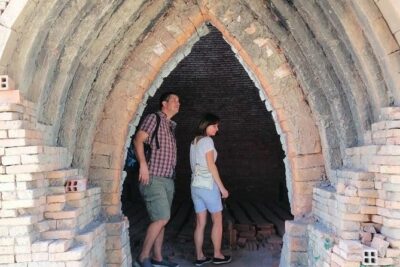
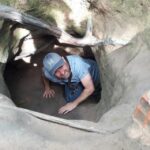
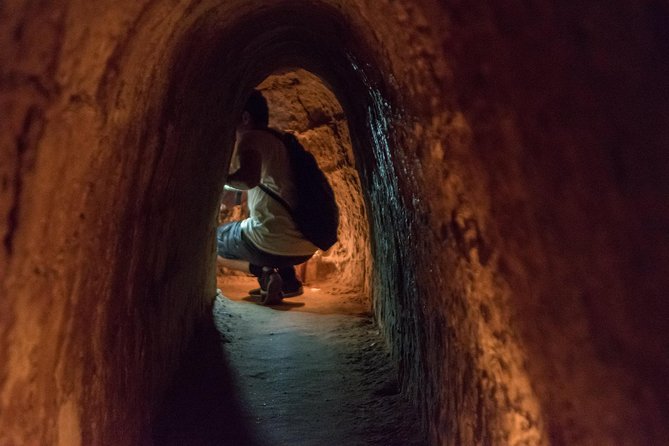
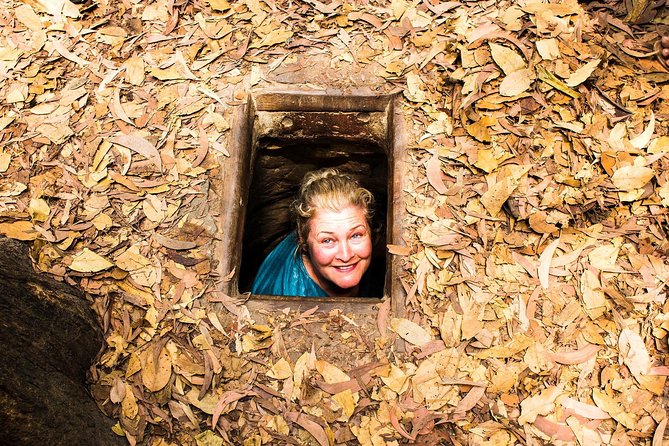
Once you arrive at Cu Chi, you start with a short intro video that explains how the tunnels were built. It is not long, but it is just enough to set up what you are about to see. Then you enter and spend about one hour exploring the tunnels.
That hour is the core of the value here. Instead of only looking at photos or reading signage, you are moving through the underground spaces yourself. You get to see the layout and imagine how people navigated the system with purpose.
The experience is described as exploring every corner of the tunnel, with the guide connecting what you see to how the system functioned. Since the tunnels included areas like clinics, kitchens, storage, and offices, the guide’s job is to help you connect the dots while you are still there.
A small caution: tunnel environments tend to be physically demanding simply because space underground can feel tight and the air can be different from street level. The tour does not list specific fitness restrictions, so if you have mobility concerns, it is smart to ask the operator what to expect before you book. At minimum, go in prepared for sustained time outdoors in between the tunnel session.
Tea and cassava: why the tour adds a simple food break
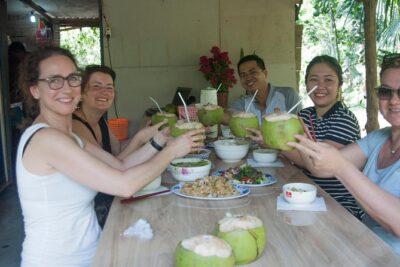
After the tunnel walk, the tour includes tea and cassava. This is one of those small inclusions that makes a big difference because it gives the day a human scale.
Cassava shows up in the guide’s explanation as guerrilla-warriors’ food during wartime. Even if you only know it as a common ingredient, the context changes how you think about it. It is not framed like a restaurant stop. It is framed like a survival reality: food that could support people living with constraints.
The tea break also gives you a reset. You have just spent time underground, then you come back to open air and warm up a bit. For many people, that timing makes the day feel less intense and more manageable.
The tour includes mineral water, which is helpful in a city heat situation like this. You are also given a clear suggestion to bring sun cream and a hat, and I agree with that practical call. Even if the tunneling portion is only an hour, the waiting and travel time can add up quickly.
Rice paper and rice wine village: learning after the underground
The tunnel part ends, and the tour keeps going by teaching you about the famous Cu Chi rice paper and rice wine village. This is a smart pairing because it links war-era ingenuity to everyday food production.
You are not just leaving with underground photos. You are also leaving with a sense of how Cu Chi’s identity shows up in food. Rice paper and rice wine are not random souvenirs. They are part of the local craft culture, and the tour’s focus suggests the guide wants you to understand the food-making tradition, not just taste something and move on.
One way to think about this segment: it gives your brain somewhere to land after the heavier content. Underground history can feel intense, and then switching to local food production makes the day feel more balanced.
If you enjoy connecting stories to real-world practices—how people make and use food—you will probably appreciate this part of the route. If your only goal is tunnel photos, this segment may feel more like a learning stop than a must-see spectacle.



Group size, guide quality, and how that affects your experience
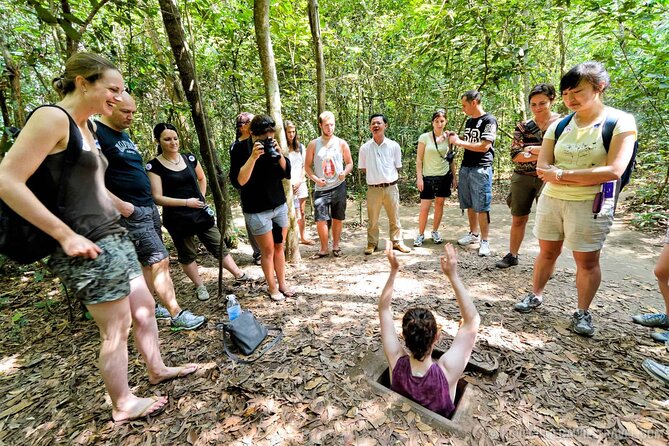
This experience runs with a maximum of 12 travelers, with an option that can be bigger (maximum 25) versus Premium (maximum 12). In plain terms: your day quality depends on how many people you are sharing it with.
A smaller group usually means the guide can respond to questions more directly and keep the pace comfortable. It also makes it easier to hear explanations while you are walking and to stay oriented while exploring.
The guide is listed as professional English speaking, and the tone from the overall feedback is that the guide keeps things engaging and informative, with a sense of humor. That matters because tunnel history is complex. When the guide is good at explaining it clearly, the one-hour exploration becomes much more meaningful.
With an average rating of 5 across 19 reviews and a 100% recommendation rate, there is clearly strong satisfaction here. I treat that as a signal that the guide-led portion is doing its job.
Price and logistics: does $27.04 really make sense?
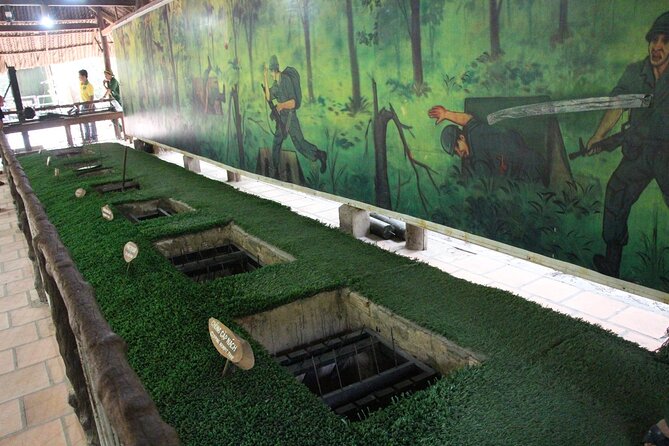
At $27.04 per person, the price looks low compared with what you often pay for guided tours that include transport, entrance fees, and a longer time window. The key is what is included: hotel pickup and drop-off in District 1, a guide, entrance fees, mineral water, and the main tunnel admission.
What you should watch is what is not included. The tour does not include a meal, tips, or personal expenses. It also does not cover pickup outside District 1. So the final cost depends on where you are staying and what you plan to eat that day.
Here is how I judge value for this kind of outing: you are paying for (1) a guided explanation, (2) access to the tunnels, and (3) a way to get there without navigating the logistics yourself. The included mineral water and entrance fees help you avoid surprise add-ons.
If you are staying in District 1 and prefer not to organize transport, the package feels like it earns its price. If you are outside District 1, you may spend extra time or money getting to the meeting point, and the value becomes more variable.
Who this tour fits best (and who should check first)
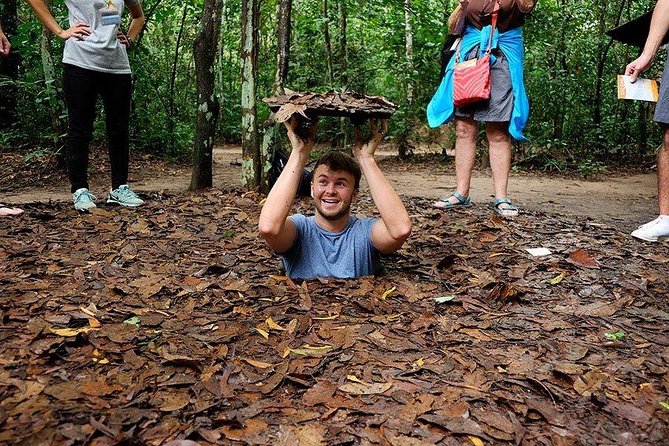
This tour is a strong fit if you want a guided tunnel experience that is structured: video, tunnel exploration for about an hour, then food-based context with tea, cassava, and the rice paper and rice wine village lesson.
It also fits well if you like clear explanations and a guide who can make heavy topics easier to handle. The small-group cap helps here, especially for people who do not want a crowded experience.
You might think twice if:
- You do not like spending long hours outdoors, since there is no meal included and it is a full stretch of time.
- You are sensitive to tight, underground spaces. The tour does not list restrictions, so check with the operator if that is a concern for you.
- You need guaranteed pickup where you are staying outside District 1.
If you are traveling alone, this is still workable because you are not just buying a ticket; you are getting a guide and pickup. If you are traveling with friends, the small group format still keeps the day from feeling like a nonstop herd.
Should you book the Cu Chi Tunnels half-day small-group tour?
If your priority is to see Cu Chi’s tunnel network with a guided explanation and then connect it to food culture, I think this is a solid booking. The mix of tunnel exploration plus tea and cassava plus rice paper and rice wine village learning is a practical way to understand the place without turning the day into only a memorial-style stop.
I would book it especially if:
- You are staying in District 1 and want pickup/drop-off.
- You want a maximum 12-person group for a more conversational feel.
- You prefer a short, structured tunnel session instead of trying to plan everything on your own.
Book with a little realism about planning: bring what the operator asks for like sun cream and a hat, and plan to eat outside the included parts since no meal is provided.
If the weather is poor, the tour notes it may be canceled and you’ll be offered a different date or a full refund. So keep your schedule flexible if you can.
FAQ
How long is the Cu Chi Tunnel small-group tour?
It runs for about 7 hours (approx.) from pickup to drop-off.
Do they pick me up from my hotel?
Yes, pickup and drop-off are offered in Ho Chi Minh City District 1. If pickup at your hotel is not possible, you will meet at 112 Tran Hung Dao Street, District 1.
What group size is this tour limited to?
This activity has a maximum of 12 travelers.
Is an English-speaking guide included?
Yes. The tour includes a professional English-speaking guide.
What is included in the ticket price?
Included are hotel pickup and drop-off in District 1, the guide, mineral water, and entrance fees.
What happens during the Cu Chi Tunnels portion?
You watch a short introductory video about tunnel construction, then explore the tunnels for about one hour, followed by tea and cassava.
Is there a meal included?
No meal is included in the package.
Does the tour include learning about rice paper and rice wine?
Yes. After the tunnel experience, you learn about the famous rice paper and rice wine village of Cu Chi.
What if I need to cancel?
Cancellation is free, and you can cancel up to 24 hours in advance for a full refund.
What if the weather is bad?
The tour requires good weather. If it is canceled due to poor weather, you will be offered a different date or a full refund.
If you tell me your hotel area (or nearest cross-street) in District 1, I can help you sanity-check whether pickup is likely and how to plan your meal timing.