REVIEW · HO CHI MINH CITY
Explore HCMC by US Army Jeep: History & Food
Book on Viator →Operated by Vietnam Tours VIP · Bookable on Viator
Ho Chi Minh City feels different from a vintage Jeep. Open-air cruising plus tight, story-filled stops turns major sights into a real, moving timeline. You’ll hit big icons like Reunification Palace and the War Remnants Museum, then swap gears for temples and crafts.
What I like most is the balance: you get classic landmark photos, but also the kind of on-the-street context that makes the city click. I also really appreciate the built-in value—entrance fees and bottled water are included, so you can focus on the sights instead of counting cash mid-tour.
One possible drawback: this is a 4-hour route, so each stop is time-limited. If you want lots of slow wandering, you’ll need to plan a longer follow-up day on your own.
In This Review
- Key highlights you should know
- Why a former US Army Jeep makes sense in Ho Chi Minh City
- The 4-hour flow: what the schedule really feels like
- Starting points: Opera House, French architecture, and getting oriented
- Reunification Palace: the day’s biggest history anchor
- Central Post Office: a short food moment in a historic building
- Notre Dame Cathedral, Dong Khoi Street, and Nguyen Hue Street photos
- Bitexco Financial Tower and Ba Son Bridge: modern Vietnam between monuments
- Emperor Jade Pagoda: shift from war-era sights to Taoist faith
- Former U.S. Embassy in Saigon: a war-era marker you can’t ignore
- Sơn Mài Đại Việt lacquer workshop: souvenirs with a story
- War Remnants Museum: emotional weight, but planned time
- Ending near your hotel or Ben Thanh Market
- Price and value: what $69 gets you (and what to watch)
- Who will enjoy this most
- Should you book? My practical take
- FAQ
- How long is the US Army Jeep tour?
- What’s included in the tour price?
- Is pickup and drop-off offered?
- Is this a private tour?
- What sights are included on the route?
- Are entrance fees included?
- Is food included?
- What vehicle do you ride in?
- Where do I end the tour?
- Is tipping included?
- Is there a cancellation option if plans change?
Key highlights you should know
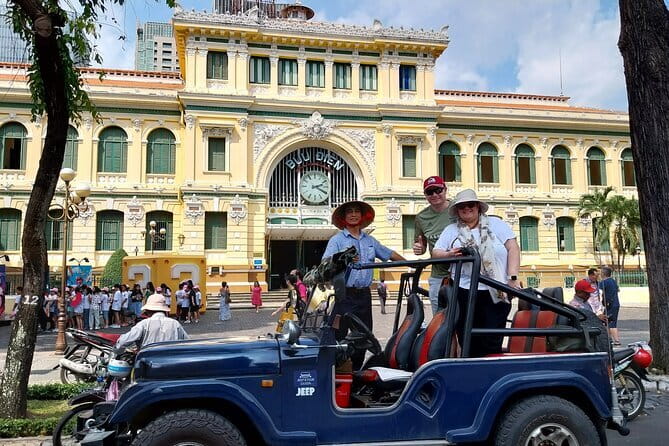
- Former US Army Jeep, open-air style: great views, real street energy, and a fun change from sitting in a van
- English-speaking guide with strong storytelling: history is explained clearly, not just pointed out
- Sơn Mài Đại Việt lacquer workshop stop: watch artists at work and buy souvenirs with context
- Reunification Palace + War Remnants Museum: major Vietnam War history in two very different settings
- Central Post Office food moment: eat or snack in a historic, French-built space before you move on
Why a former US Army Jeep makes sense in Ho Chi Minh City

Ho Chi Minh City (Saigon) can be intense: traffic noise, scooters everywhere, and big distances between sites. That’s exactly why an open-air vintage Jeep works so well. The ride keeps you moving, but you still get that street-level feel—glimpses of daily life between the famous stops. If you like photos where you can see the road and the buildings at the same time, this format helps.
The Jeep also brings a helpful kind of focus. In a car, it’s easy to treat each stop like a quick checkbox. On this tour, your guide’s narrative ties the places together as the day moves from French-colonial landmarks to war-era sites to religion and craft. It’s history with gears on.
And yes, it’s fun. But it’s also practical: you’re not wasting time trying to figure out how to connect distant attractions. Pickup is offered in District 1, and the route is built around the most central sights.
You can also read our reviews of more food & drink experiences in Ho Chi Minh City


The 4-hour flow: what the schedule really feels like
You’re signing up for a half-day. That means the tour aims to hit a lot of ground without claiming you’ll see everything in full depth. The time breakdown is built around short visits plus travel.
Here’s the rhythm you can expect:
- a central start area with landmark viewing
- a major history anchor with a longer stop (Reunification Palace)
- quick-hit sightseeing on broad streets and iconic buildings
- a calm break at a temple
- a hands-on craft stop at a lacquer workshop
- a heavier museum stop before you’re dropped back near your hotel or at Ben Thanh
You’ll also hear that the remaining time is allotted for travel, which matters because Ho Chi Minh City traffic can change fast. If the schedule feels tight, that’s normal for a 4-hour, multi-site route.
Starting points: Opera House, French architecture, and getting oriented
The first major stop described is the Saigon Opera House. It’s one of the city’s most striking colonial-era structures, built in 1897 by French architect Eugène Ferret. Even if you don’t go inside, you get a strong visual marker of how this city was shaped before the 20th-century conflicts.
This opening matters because it gives you a reference point. After that, everything else you see—cathedrals, streets, and later war landmarks—feels more connected. You’re not just hopping between unrelated stops.
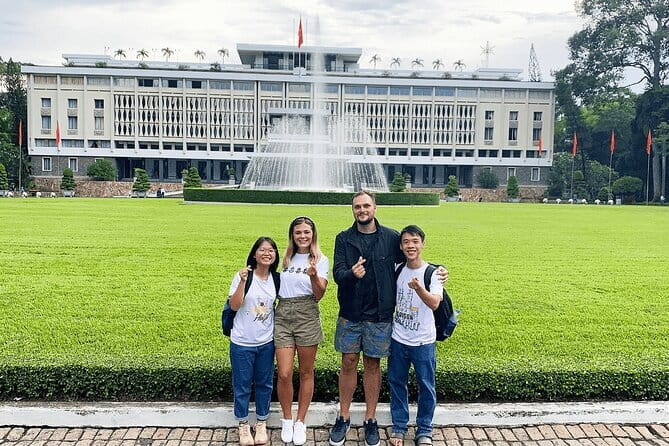
Reunification Palace: the day’s biggest history anchor
Your first longer landmark stop is Reunification Palace (also called Independence Palace), with about 30 minutes and admission included. This place is a symbol of Vietnam’s turbulent modern history and resilience, and the building itself is the lesson. You’re dealing with a site where architecture is part of the storytelling.
What you should do with your time here:
- Slow down just enough to orient yourself to the key spaces.
- Pay attention to how the guide frames what you’re seeing, since you don’t have hours to wander.
- Plan to leave with questions. The museum stop later will help connect dots.
The biggest “win” of the Jeep format is that you can get to this site quickly and then roll into the next stops without losing momentum.
Central Post Office: a short food moment in a historic building
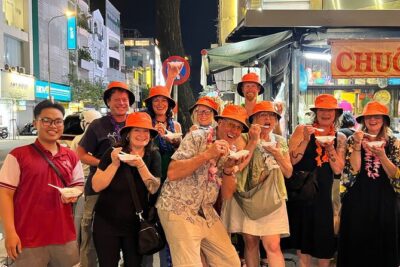
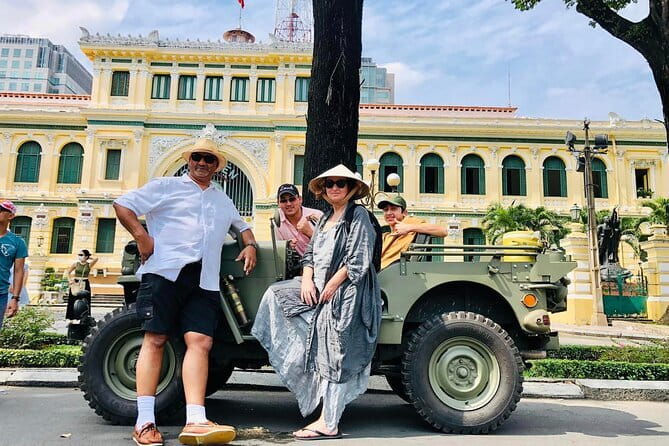
Next up is Saigon Central Post Office, about 10 minutes with admission included. The special thing about this stop is how it’s handled: the tour frames it as a dining moment inside or around the grandeur of the post office building. That’s a clever way to add a practical break without turning the day into pure museum time.
I like stops like this because they break the day. After Reunification Palace, you’ll likely want something normal and human—something to eat, grab a drink, or just reset. And the post office is visually memorable, so the snack doesn’t feel like a random detour.
A small consideration: since it’s only about 10 minutes, don’t expect a long meal. Think quick, easy, and local enough to keep you comfortable for the rest of the ride.
You can also read our reviews of more tours and experiences in Ho Chi Minh City





Notre Dame Cathedral, Dong Khoi Street, and Nguyen Hue Street photos

Then you shift into “Saigon in motion” sightseeing:
- Notre Dame Cathedral Basilica of Saigon (built between 1877 and 1880 by French colonists)
- Đồng Khởi Street, known for French colonial architecture
- Nguyễn Huệ Street, a major pedestrian boulevard where you get lively city views
Some stops here are more about quick orientation and photos than deep exploration. That’s okay. If you’re trying to understand the city’s visual language, these streets help you connect the dots quickly—what was built, what still shows the colonial footprint, and where daily life clusters now.
The Jeep ride is helpful on this section because you’re not stuck waiting at far-too-long intersections. You get the “moving viewpoint” effect, especially when the city opens up around major boulevards.
Bitexco Financial Tower and Ba Son Bridge: modern Vietnam between monuments

From classic landmarks, the route also includes modern landmarks like Bitexco Financial Tower, which reaches 262.5 meters (861 feet). It’s a clear signal of the city’s later economic growth and present-day skyline.
You’ll also pass Ba Son Bridge (also called Thu Thiem 2 Bridge). The details provided describe it as connecting District 1 with the Thu Thiem new urban area in District 2 across the Saigon River. Even if your stop time here is short, these modern infrastructure points are useful context: they show how the city is reshaping itself while earlier history sits nearby.
Emperor Jade Pagoda: shift from war-era sights to Taoist faith
Next is Emperor Jade Pagoda (Chùa Ngọc Hoàng), built in 1909, a Taoist temple dedicated to the Jade Emperor. Your visit is about 20 minutes, with admission included.
This stop provides a necessary change of pace. After war history and city architecture, the pagoda gives you a different lens on Vietnam’s spirituality and everyday beliefs. It’s also a great place for calmer photos than you’ll get on major streets.
Practical note: in a temple setting, you’ll want to be mindful and follow your guide’s lead on where to stand and how to move. Since your time is limited, the guide’s direction becomes your best time management.
Former U.S. Embassy in Saigon: a war-era marker you can’t ignore
The route includes the former U.S. Embassy in Saigon, listed at 4 Le Duan Boulevard. The provided description frames it as a key Vietnam War-era symbol of American involvement.
You may not spend a lot of time here compared with Reunification Palace or the War Remnants Museum, but it’s a meaningful connection point. Seeing it in the broader city context helps you understand how war history is not confined to museums. It’s embedded in the urban map.
Sơn Mài Đại Việt lacquer workshop: souvenirs with a story
This is one of the most praised parts of the tour. The stop is Sơn mài Đại Việt (Dai Viet Lacquerware Factory), with about 30 minutes and admission included.
This is where the tour earns its history-and-food theme by adding craft and daily culture. You’ll watch lacquer artists work, and that changes how you shop. Instead of buying a souvenir that looks pretty on a shelf, you’re buying something with visible process and skill behind it.
I especially like that the day doesn’t rush past it. Thirty minutes is enough time to:
- see how the artists approach the work
- ask questions through your guide
- pick out something you’ll actually use, display, or gift
If you’re planning to bring home lacquer, this is one of the smarter times to do it. It’s right in the middle of the route, so you’re not scrambling at the end while tired and short on options.
War Remnants Museum: emotional weight, but planned time
The final major anchor is the War Remnants Museum, with about 40 minutes and admission included. This museum is known for presenting Vietnam’s turbulent history and the impact of war in a direct, serious way.
Here’s how to make the most of limited time:
- Don’t try to read every label cover to cover. Use the guide’s highlights and focus on the sections that connect to what you saw at Reunification Palace.
- Expect the tone to be heavy. Give yourself permission to move through some rooms faster if you need to.
- Take one or two moments to slow down and absorb. The payoff is stronger than speed-reading.
I also like that the Jeep tour ends with the museum before you’re dropped off. It prevents you from stacking even more heavy visits afterward.
Ending near your hotel or Ben Thanh Market
At the end, you’re dropped off back at your hotel in District 1 or at Ben Thanh Market. That’s a practical finish. Ben Thanh is a common base area for visitors, and returning near where you’ll eat or walk next makes the tour feel like a clean half-day plan instead of a stop-and-start adventure.
Price and value: what $69 gets you (and what to watch)
At $69 per person for about 4 hours, this tour is best judged by what’s included:
- Open-air former US Army Jeep
- English-speaking tour expert
- admission fees plus bottled water
- District 1 pickup and drop-off
- private format for your group (so you’re not mixed with strangers)
In plain terms, you’re paying for two things: the vehicle experience and the guide-led connections between sites. If you tried to DIY all these locations, you’d spend time coordinating transport and still pay for many admissions. The Jeep ride can make the day feel like one coherent trip instead of a series of short taxi stops.
Two things to consider:
- Admission is included, but tipping/gratuities aren’t.
- Because it’s private but time-limited, it’s not built for slow museum marathons. If you want maximum time per site, you may prefer a full-day plan.
Who will enjoy this most
This tour makes the most sense if you:
- want a fun transport twist (open-air Jeep) without giving up major historic sites
- like getting a guide’s narrative while you see key landmarks
- care about more than just photos and want at least one hands-on cultural stop at Sơn mài Đại Việt
- prefer a half-day structure that still covers big names like Reunification Palace and the War Remnants Museum
It also works well if you’re staying around District 1 and want pickup and easy return.
Should you book? My practical take
Book this tour if you want a high-energy, well-timed overview of Ho Chi Minh City’s modern story, delivered through an open-air Jeep experience. The mix of Reunification Palace, War Remnants Museum, a Taoist temple visit, and the lacquer workshop at Sơn Mài Đại Việt gives you variety without feeling random. You’ll come away understanding why these places matter and how daily culture sits beside war history.
Skip it or plan extra time if you’re the type who hates time limits. With only about 4 hours, some stops are quick hits. You’ll enjoy it most if you treat it as a smart first pass, then return later for deeper exploring on your own.
If you want to make the booking decision faster, choose it when your schedule is tight and you value a guided route more than long self-guided wandering.
FAQ
How long is the US Army Jeep tour?
It runs about 4 hours (approx.).
What’s included in the tour price?
The tour includes an English-speaking tour expert, an open-air former Jeep, entrance fees, bottled water, and pickup/drop-off at District 1.
Is pickup and drop-off offered?
Yes. You’ll be picked up at hotels in District 1 and transferred back afterward, or dropped off at Ben Thanh Market.
Is this a private tour?
Yes. It’s private, meaning only your group participates.
What sights are included on the route?
The tour includes stops such as Reunification Palace, Saigon Central Post Office, Notre Dame Cathedral Basilica of Saigon, Dong Khoi Street, Nguyen Hue Street, Emperor Jade Pagoda, the former U.S. Embassy area, Sơn Mài Đại Việt, and the War Remnants Museum, plus other major points.
Are entrance fees included?
Yes, entrance fees are included.
Is food included?
The tour includes a dining moment tied to the Saigon Central Post Office stop.
What vehicle do you ride in?
You ride in an open-air former Jeep.
Where do I end the tour?
You finish with drop-off at your hotel or at Ben Thanh Market.
Is tipping included?
No. Tipping/gratuities are not included.
Is there a cancellation option if plans change?
Yes. You can cancel for a full refund up to 24 hours in advance.