REVIEW · HO CHI MINH CITY
From Ho Chi Minh: Cu Chi Tunnels Small Group Maximum 12 Pax
Book on GetYourGuide →Operated by ROYAL TRAVEL COMPANY · Bookable on GetYourGuide
Underground Vietnam hits different. On this Cu Chi Tunnels small-group tour from Ho Chi Minh City, I like how the day starts with real wartime documentary footage, then turns into a physical walkthrough of the underground maze. I also like the hands-on stops: the narrow-tunnel crawl and the tapioca cooked the way locals ate it during the war.
One key drawback to plan for: the tunnel ticket and any bullet fee for the shooting range are extra, so your final cost can rise above the starting price. If you want a specific language guide, also double-check the language option and any surcharge before you go, since English is covered but other languages may cost more.
In This Review
- Key things to know before you go
- From Ho Chi Minh City to the tunnels: the real pace of a 6-hour day
- The documentary above ground: why the story starts before you crawl
- Spider-web tunnel networks: exploring hideouts like a living system
- Crawling the narrow tunnels: the part that makes it real
- Hoang Cam tapioca and tea: a war-era food moment you’ll actually remember
- Shooting range time: real guns, real bullets, extra cost
- Price and value: what $30 really includes, and what to budget for
- Choosing the right guide language (and avoiding surprises)
- Who should book this Cu Chi Tunnels tour—and who should think twice
- Should you book Royal Travel Company’s Cu Chi Tunnels tour?
- FAQ
- How long is the Cu Chi Tunnels tour?
- Where do you get picked up in Ho Chi Minh City?
- Is the tunnel ticket included in the price?
- Does the tour include an English-speaking guide?
- Is the shooting range included, and how much are bullets?
- What food do you get during the tour?
- How big is the group?
- What is the cancellation policy?
Key things to know before you go
- Max 12 people keeps the day from feeling like a cattle line.
- Wartime documentary + authentic footage gives context before you go underground.
- Spider-web tunnel networks show how hiding and movement worked in practice.
- Narrow tunnel crawl is the most intense part of the experience.
- Hoang Cam stove tapioca and tea are a memorable, war-era detail.
- Real guns at the range (optional) add adrenaline, but bullets cost extra.
From Ho Chi Minh City to the tunnels: the real pace of a 6-hour day
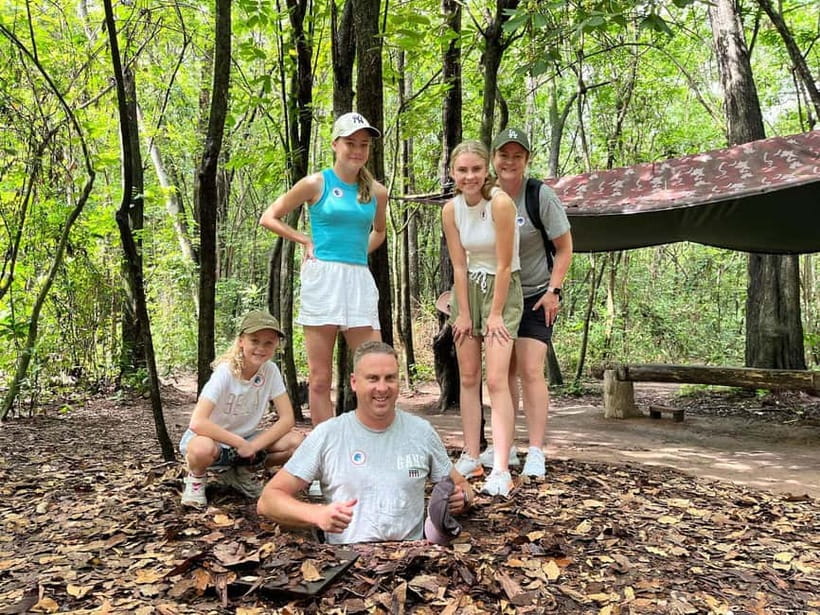
This tour is designed as a focused half-day: plan on about 6 hours total, from pickup to drop-off back in Ho Chi Minh City. You’ll ride in an AC car with bottled water, and the pickup is straightforward, typically arranged in front of your hotel and/or through the center-area meeting point.
The small-group size matters here. With a maximum of 12 people, you’re more likely to get clear answers and not get swallowed by the logistics of a huge bus. If your group is smaller, you’ll usually feel more flexible during the stops, especially when the guide is explaining the layout and what to look for.
If you’re short on time in Vietnam, this format is a practical way to see the Cu Chi Tunnels without turning your day into a long, exhausting transfer marathon.
You can also read our reviews of more tours and experiences in Ho Chi Minh City.



The documentary above ground: why the story starts before you crawl
One of the strongest parts of this tour is that it doesn’t rush you underground. Before the tunnel work begins, you watch a documentary about the Cu Chi Tunnels during the war and you see short clips that include authentic wartime footage recorded by cameramen.
For me, this is exactly how the visit should work. The tunnels are easier to understand when you first get the big picture: guerrillas using hiding, deception, and movement to survive. The guide also shows how camouflage was created using leaves to blend into surroundings, and how the underground system served as a secret refuge.
Think of this segment as your mental map. It helps you make sense of what you’re going to see later: why the tunnels were built the way they were, and how the network functioned like an interconnected system rather than random holes in the ground.
Spider-web tunnel networks: exploring hideouts like a living system
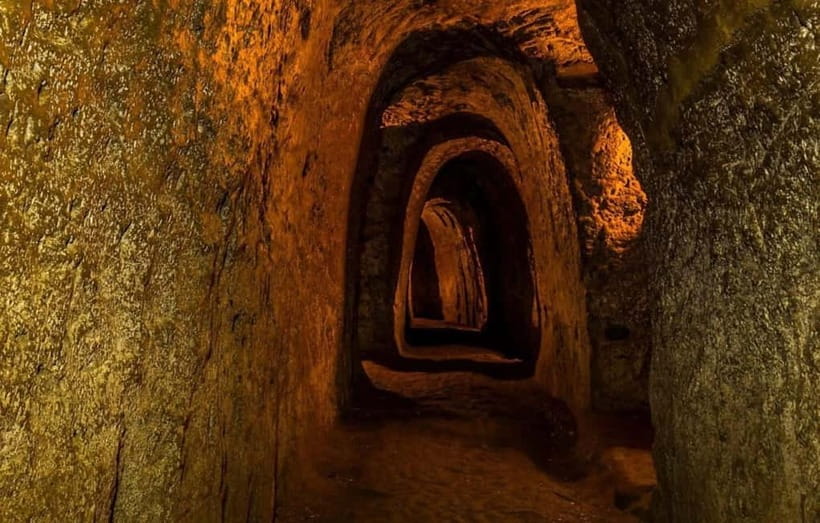
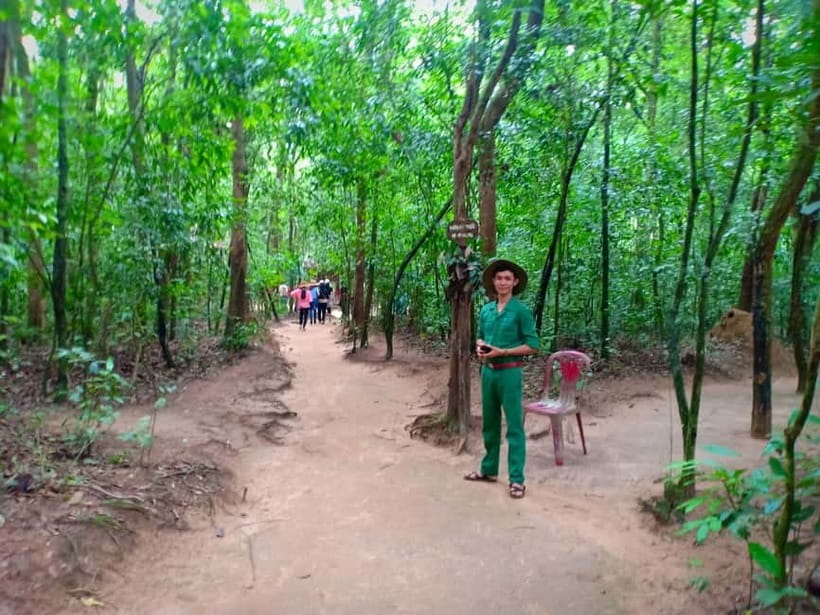
Once you’re at Cu Chi, you don’t just get a quick glance at a couple of passages. The tour focuses on the networks of tunnels—the kind that feel like a spider’s web when you’re viewing the layout and hearing how different sections were connected.
As you explore, you’ll learn how guerrillas lived and resisted underground: secret hideouts, linked routes, and the logic behind the refuge system. You’ll also see evidence of how the tunnels supported both survival and movement during conflict, which is a big part of why this site is still talked about so much.
A nice bonus is that you’re not left with only static exhibits. The guide points out what matters so you can connect the physical space to the story: where concealment was possible, why the network was intricate, and what the underground environment demanded from people using it.
Crawling the narrow tunnels: the part that makes it real
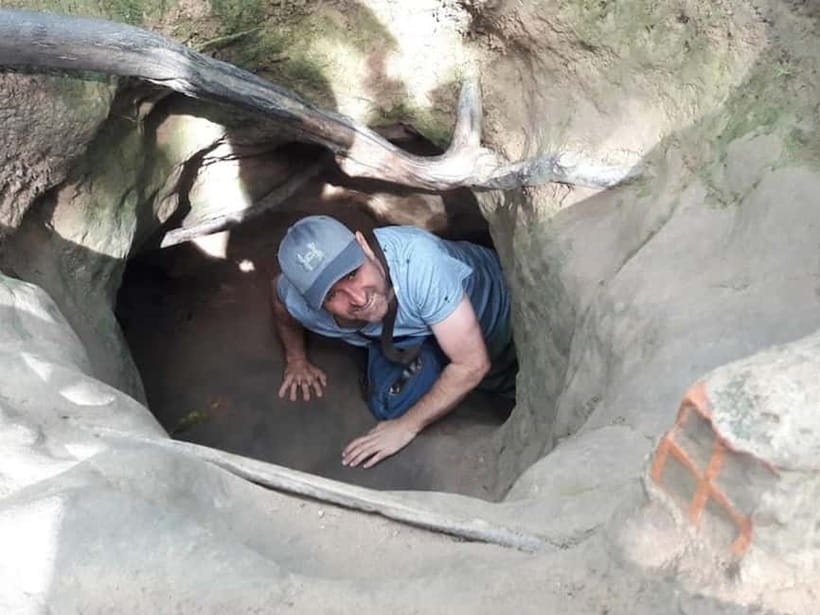
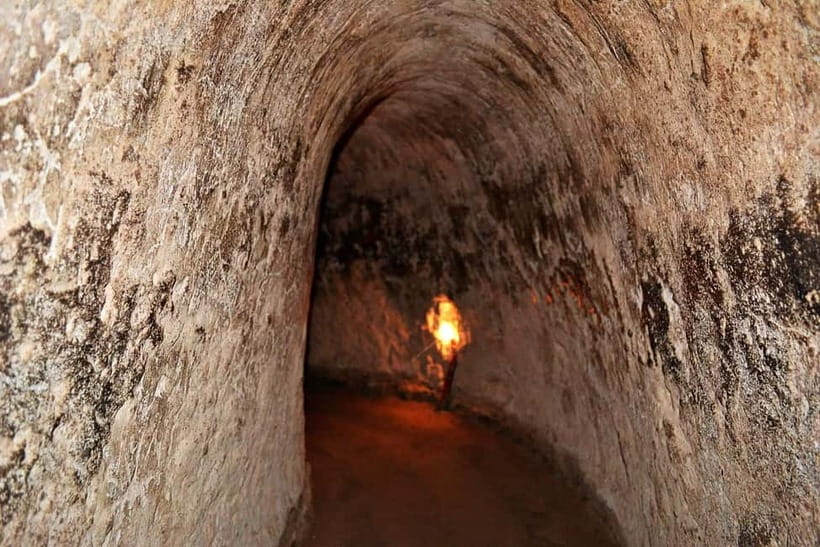
Yes, you will go inside. The highlight is the chance to crawl through the very narrow tunnels, so you can get a true sense of how guerrillas moved and lived in tight spaces.
This is where the tour becomes less like sightseeing and more like a physical lesson. Your body understands it faster than your brain does. You’ll feel low ceilings, cramped turns, and the effort required just to move from one section to the next.
So here’s the consideration I’d take seriously: if you dislike tight spaces or you’re dealing with mobility issues, this portion may be uncomfortable. The tour wording is clear about narrow tunnels, so you’ll know what you’re signing up for. Wear closed-toe shoes and long clothing if you have it, because you’ll want practical coverage for crawling.
Hoang Cam tapioca and tea: a war-era food moment you’ll actually remember
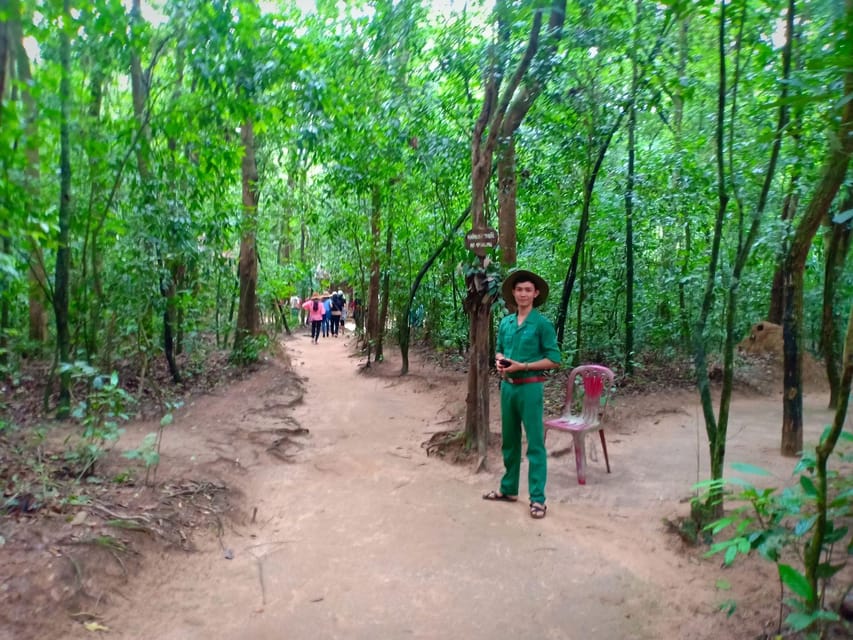
Food stops often feel like an afterthought on tours. Not here. You’ll taste tapioca that locals ate during wartime, and it’s prepared using the Hoang Cam stove, described as a special stove that can hide smoke.
Even if you’ve never studied Vietnam’s wartime food culture, this detail makes sense. When people must hide, smoke is a giveaway. So the stove design isn’t just a cooking gimmick; it’s a survival tool, tied directly to how cooking could be done without betraying positions.
You also get a light snack with tapioca and tea as part of the tour. It’s not a full meal replacement, but it’s enough to anchor the experience with something sensory, not just visual.
If you like history that shows up in daily life—how people adapted to danger—this food moment is one of the quieter wins of the day.



Shooting range time: real guns, real bullets, extra cost
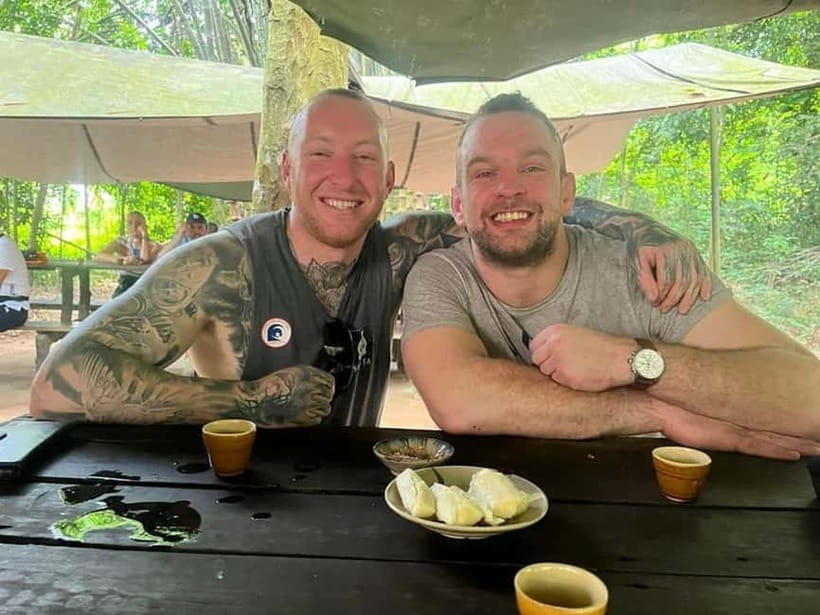
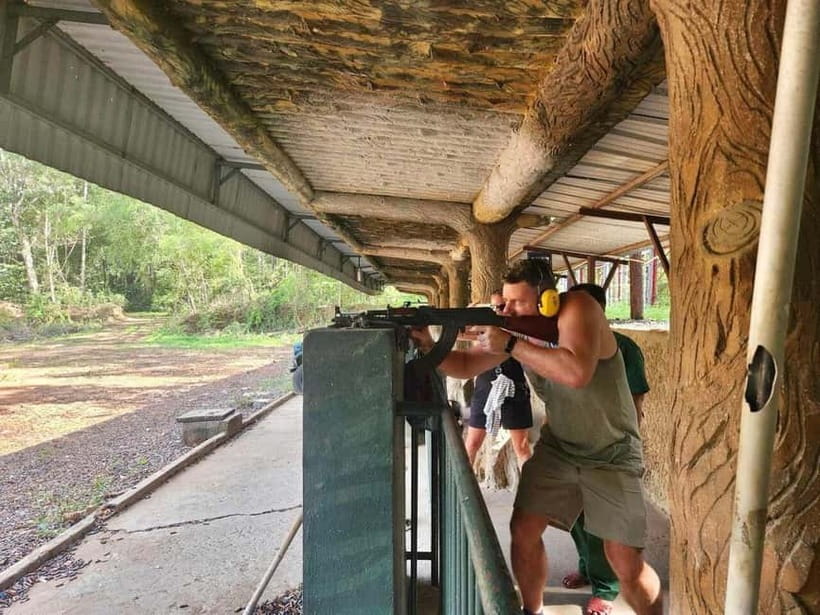
The tour can include a shooting range experience with real guns like the AK-47 and M-60. You should treat this as optional and plan your budget accordingly because the bullet fee is not included.
The approximate cost is 600,000 VND for a pack of 10 bullets. If you want to do it, that’s the number to keep in mind when you compare value versus other Cu Chi options that advertise a lower total.
One practical tip: don’t wait until the end of the day to decide. If you’re thinking about the shooting add-on, decide early so the money part doesn’t become a last-minute stress.
Also remember: the tour can mix education with adrenaline. If your group includes people who are more history-focused, the tunnel crawl and documentary are the core. The range is an extra layer.
Price and value: what $30 really includes, and what to budget for
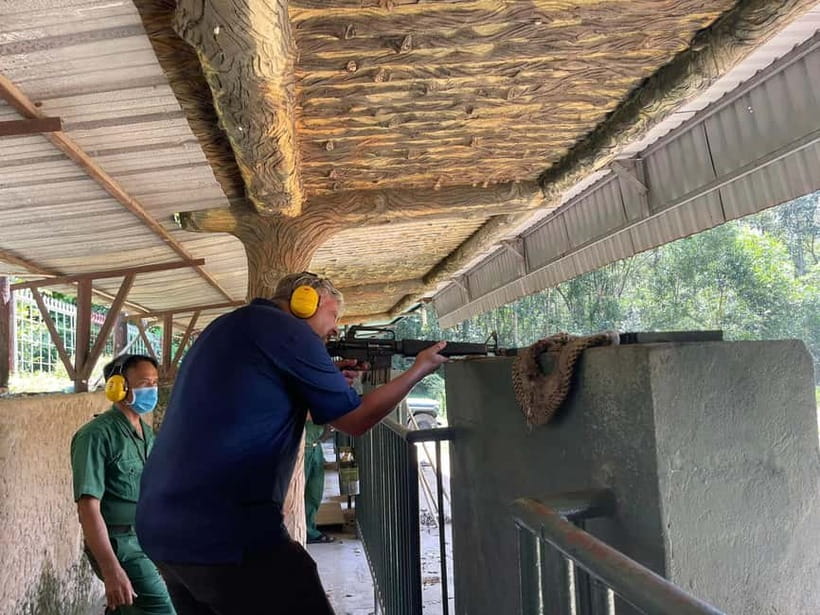
The advertised price is about $30 per person, but the tour is also very clear about what’s included and what isn’t. Your money covers AC transport, pickup and drop-off at the center of Ho Chi Minh City, and an English-speaking tour guide (other languages have a surcharge). You also get bottled water on the car and the light snack (tapioca and tea) at the tunnels.
What isn’t included is the ticket for Cu Chi Tunnels and the bullet fee for shooting, if you add that. And during Vietnam holidays, there’s a 30% surcharge on the total price.
So how do you judge value? I look at this way: you’re paying mainly for guided interpretation, logistics, and the in-experience touches like the tunnels crawl and the war-era food. If you’re going independently, you’d still pay transport and you might miss the story that helps you understand what you’re seeing.
One more value point: the tour holds its size down (max 12 pax). That often means better attention during the tunnels, and fewer people asking questions at once.
Choosing the right guide language (and avoiding surprises)
You’ll have a live tour guide available in multiple languages, including English plus Chinese, French, Japanese, Spanish, Korean, Russian, German, and Italian. English is included, while other languages come with a surcharge.
This matters because the tour’s main payoff is explanation. When a guide is clear, you understand the tunnel layout and why the camouflage and refuge strategies worked. Some guides were specifically noted for strong communication and adaptation to the group’s needs, which is what you want for a site this emotionally heavy and physically narrow.
If you’re booking Spanish, French, or another language, I’d confirm your language request clearly before pickup. It’s worth it, because once you’re on the road, it becomes harder to fix.
Who should book this Cu Chi Tunnels tour—and who should think twice

This tour is a strong match if you want Vietnam history with hands-on components. It suits you if you like learning that includes real context (documentary and authentic footage), then turns into a physical understanding (crawl and tunnel exploration). The small group also helps if you prefer more direct conversation with your guide.
It’s also a good fit if you want a stop that’s not just photos. The Hoang Cam tapioca and the smoke-hiding Hoang Cam stove add a practical cultural detail you can carry home.
Think twice if any of the following apply:
- You strongly dislike tight spaces, because the tunnels are narrow by design.
- You hate added expenses, because the ticket and shooting bullet fee are not included.
- You’re booking a non-English language and you haven’t confirmed the option in advance, since other languages may cost extra.
Should you book Royal Travel Company’s Cu Chi Tunnels tour?
If you want a straightforward way to see the Cu Chi Tunnels from Ho Chi Minh City with a guide who explains the underground system, this is a solid choice. I like that it combines documentary context, tunnel exploration, and a war-era food experience, all inside a 6-hour window.
The decision comes down to your budget and comfort. If you’re okay adding the tunnel ticket and maybe the 600,000 VND bullet pack for the range, you’ll feel like the tour price covers real value. If you’re on a tight budget or you’re skipping the shooting part, you can still enjoy the core experience, but plan the extra costs early so the day stays stress-free.
With a strong overall rating of 4.5 out of 5 from 20 reviews, this tour consistently hits the key beats: organization, guidance, and the main highlights you came for.
FAQ
How long is the Cu Chi Tunnels tour?
The tour duration is 6 hours.
Where do you get picked up in Ho Chi Minh City?
Pickup is arranged at your hotel, and the tour also mentions pickup and drop-off at the center of Ho Chi Minh City.
Is the tunnel ticket included in the price?
No. The ticket is not included.
Does the tour include an English-speaking guide?
Yes. An English-speaking tour guide is included, and other languages may require an additional surcharge.
Is the shooting range included, and how much are bullets?
The shooting range guns are mentioned as part of the experience, but the bullet fee is not included. The price is roughly 600,000 VND per pack of 10 bullets.
What food do you get during the tour?
You get a light snack with tapioca and tea at Cu Chi Tunnels.
How big is the group?
The tour is described as a small group with a maximum of 12 people.
What is the cancellation policy?
You can cancel up to 24 hours in advance for a full refund.