REVIEW · HO CHI MINH CITY
Historical Walking Tour of Saigon
Book on Viator →Operated by Viup Travel · Bookable on Viator
Saigon history is best seen on foot. This tour strings together major landmarks tied to colonial French design and the Vietnam War, with short, focused stops and clear explanations. I especially like the small group size (max 10) and the included egg coffee stop to refuel mid-walk. One thing to think about: it’s still a solid walking pace for about 2.5–3 hours, so comfortable shoes matter.
You can choose a morning, afternoon, or evening departure (7:00 AM, 2:30 PM, or 6:00 PM). A mobile ticket keeps things simple, and the route ends near Le Méridien Saigon so you can roll right into dinner or a riverside stroll.
In This Review
- Key Highlights to Know Before You Go
- Why This Saigon Walking Route Works in 2.5–3 Hours
- Independence Palace: Where the Vietnam War Story Lives
- Central Post Office: French Design in Plain Sight
- Saigon Notre Dame Cathedral: Photos, Past, and Perspective
- Opera House Area: Entertainment Under French Rule
- People’s Committee Building and Nguyen Hue Street: Power Meets People
- Ba Son Bridge: Skyline Views After Old Saigon
- Egg Coffee at 3T Cà Phê Trứng: A Break That Actually Matters
- Price and Value: Does $36 Make Sense?
- When to Go: Morning vs Afternoon vs Evening
- Practical Stuff That Makes or Breaks a Walking Tour
- Where You Start and Where You Finish
- Should You Book This Historical Walking Tour?
- FAQ
- FAQ
- How long is the Historical Walking Tour of Saigon?
- How much does it cost?
- What time options are available?
- Is egg coffee included?
- Are the attraction entrances included?
- Where does the tour start and end?
- What’s included in the price besides coffee?
- What’s the group size limit?
- Is the tour affected by weather?
- Can I cancel for a refund?
Key Highlights to Know Before You Go
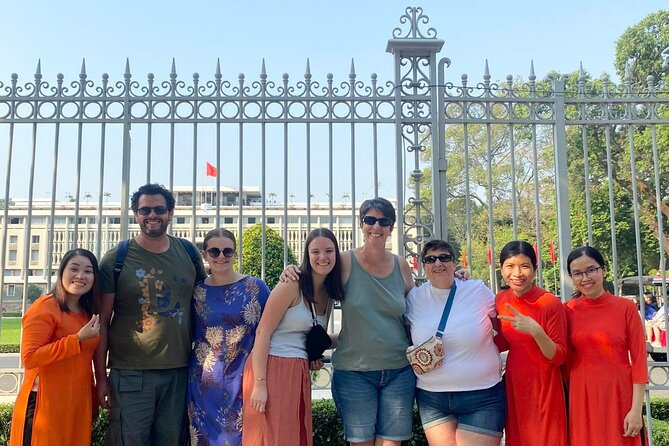
- Small group cap (up to 10) means easier questions and less crowd stress at photo stops
- French-era buildings on one route, including the Central Post Office and the Opera House area
- Independence Palace viewing from outside ties the Vietnam War story to what’s still standing today
- Ba Son Bridge skyline views help you shift from “old Saigon” to the modern city fast
- Nguyen Hue Street is part of the plan, so you get people-watching with a purpose
- 3T Cà Phê Trứng for egg coffee is included, not an add-on
Why This Saigon Walking Route Works in 2.5–3 Hours
Ho Chi Minh City can feel like a lot at once. This tour gets you oriented fast by grouping the most famous sights into one walk, then using those buildings to explain how Saigon changed over centuries.
The timing is short enough that you’re not stuck in a long bus tour, but long enough to get context at each stop. Expect a steady walking rhythm plus brief moments to look around, take photos, and listen. The tour also stays flexible about time of day: you can pick morning, afternoon, or evening depending on your energy and your plans.
One practical advantage is the format. You’re not trying to do five different attractions with separate tickets and separate schedules. Here, the main “cost” is your time and walking comfort—and most of the key sights on the route are listed as free admission for this experience.
You can also read our reviews of more walking tours in Ho Chi Minh City



Independence Palace: Where the Vietnam War Story Lives
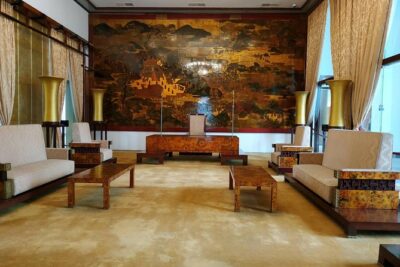
The walk starts at the Independence Palace area, with a focus on what you can see from outside. Even without entering, this is an anchor point for understanding modern Vietnamese history. The building and its surroundings are tied to the Vietnam War’s ups and downs, and your guide’s explanations help connect political events to real streets and real architecture.
What I like about this kind of stop is that it gives you a timeline. Once you understand what this place represents, the later sights make more sense. If you’re the type who wants a “why does this building matter?” answer, this first stop sets you up well.
Possible drawback: because you’re viewing from outside, you won’t get the experience of walking every interior room. If you only want deep museum-style details, you may need a separate visit elsewhere. But as a history primer, it works.
Central Post Office: French Design in Plain Sight
Next up is the Central Post Office, designed by a French architect. This is where you start noticing the French imprint in a very concrete way: proportions, layout, and that old-world “institution” feeling.
Even if you’re not into architecture, the post office is easy to enjoy. It’s a landmark that’s easy to recognize and photograph, and the tour’s framing helps you understand why the French left behind more than just buildings—they also shaped how the city functioned.
This stop is also listed as free admission, which keeps it from feeling like an “extra-cost trap.” You can spend a short time looking closely, then move on while the story is still fresh.
Saigon Notre Dame Cathedral: Photos, Past, and Perspective
Then comes Saigon Notre Dame Cathedral, described as one of the oldest churches in the city with over 100 years of history. You’ll have time for photos in front, plus some context about what you’re seeing and why the church still matters in the city’s cultural mix.
One smart thing about this stop: it’s paired with a history lens. The tour points out older houses opposite the cathedral, which helps you notice that it’s not just one “pretty church photo.” It’s a snapshot of older Saigon built into the surrounding streets.
Timing is tight, but that’s the point. In a multi-stop walk like this, brief but meaningful stops are better than one long site where you lose the thread of the larger story.
Opera House Area: Entertainment Under French Rule
The route continues to the Saigon Opera House, also known as the Ho Chi Minh Municipal Theater. This is another French-built highlight, and it gets treated as more than a photo stop. Your guide’s explanations focus on how French rule played out through public life and entertainment.
What’s useful here is the shift in theme. Earlier you’re thinking war and politics. Now you’re thinking lifestyle—how people lived, gathered, and enjoyed performances under colonial influence. It gives your mental map a broader range than “just war history.”
This stop is short, but it’s a nice change of pace. If you want a Saigon walk that includes culture, not only conflict, this is a good piece.
You can also read our reviews of more historical tours in Ho Chi Minh City






People’s Committee Building and Nguyen Hue Street: Power Meets People
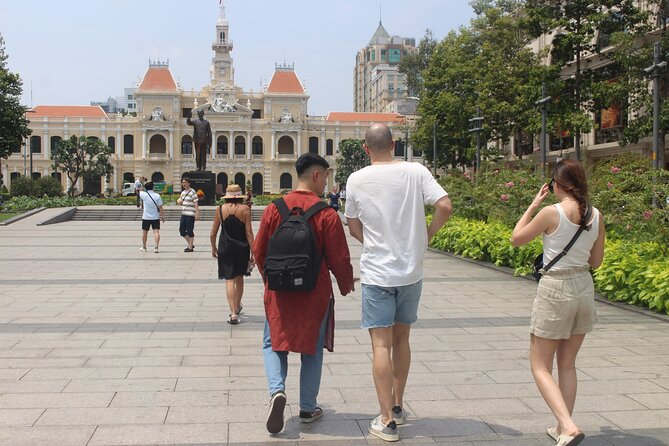
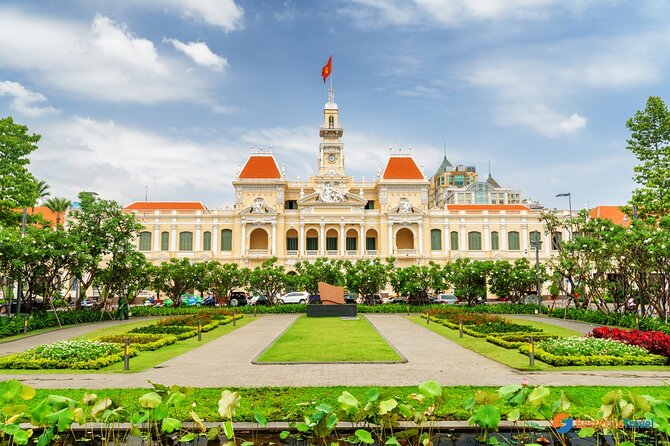
The People’s Committee Building is next, and it’s presented as a symbol of Ho Chi Minh City. The focus is on its Western-style architecture and its role as a government workplace. That may sound dry, but the storytelling style turns it into a way to understand how power and city design can look similar across different eras.
Right after that, you connect to Nguyen Hue area. You’ll walk the Nguyen Hue walking street and take photos with a statue in the vicinity. Then the route gives you time on Nguyen Hue Street itself—often where you’ll see the young generation out and about.
I like that this pairing happens after you’ve seen government and colonial-era architecture. It stops the tour from becoming a “look, listen, leave” loop. You end with a more human Saigon scene: people walking, taking photos, enjoying the central district energy.
The only consideration: Nguyen Hue can be busy depending on the time of day. Evening tends to feel more social, while afternoon can bring heat and crowds. If you’re sensitive to crowd noise, pick your time carefully.
Ba Son Bridge: Skyline Views After Old Saigon

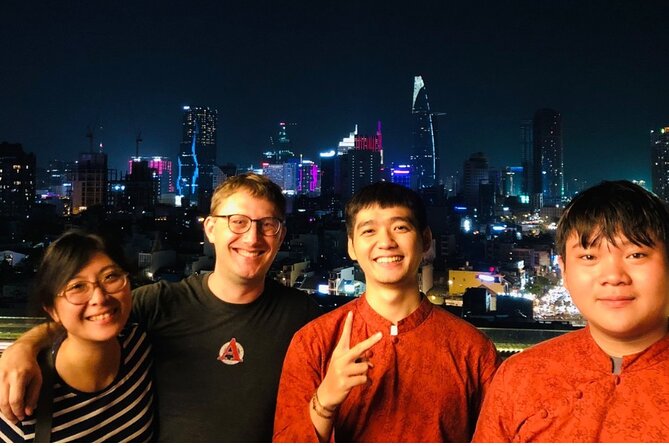
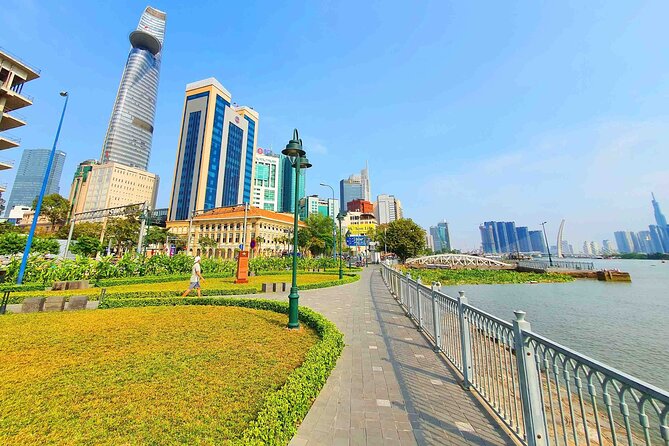
After Nguyen Hue, the tour heads to Cầu Ba Son (Ba Son Bridge). This is one of the newer symbols of Ho Chi Minh City, and it works as a visual reset. Instead of only looking at historical buildings, you step onto a bridge for city views.
Your guide sets you up to see the scale of modern development, including views toward the city’s two tallest buildings. Even if you don’t know the names, you’ll understand the contrast: old colonial-era structures and war history give way to a skyline built later.
This stop also helps the pace. It’s an easier “stand and look” moment compared with constant walking, and the views make it feel like a real payoff in the middle of the tour.
Egg Coffee at 3T Cà Phê Trứng: A Break That Actually Matters
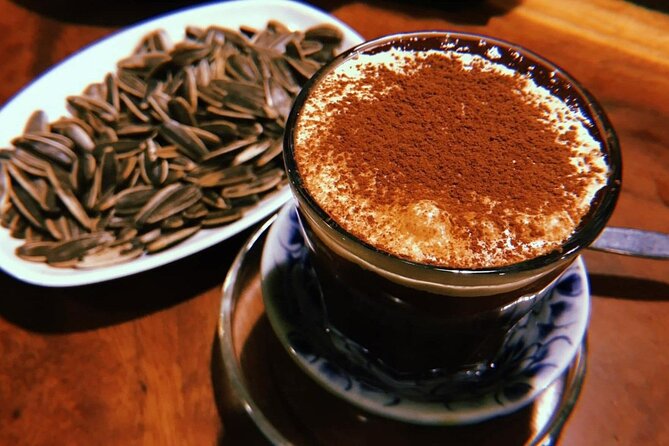
About halfway through your walk, you get a coffee stop at 3T Cà Phê Trứng. The tour includes egg coffee (plus coffee and/or tea is listed as included), and you’ll have roughly 25 minutes here.
Egg coffee is one of those Vietnam specialties that’s worth trying because it’s specific, not generic cafe stuff. It’s also a good break from standing at monuments. In a walking tour, this kind of pause is practical: you rehydrate, you cool off, and you give your brain a moment to absorb what you just heard.
You’re also in a part of the route where you can slow down and watch street life. The tour description highlights watching the streets next to the Saigon River area, which is a nice sensory change after architecture and history stops.
If you don’t drink coffee, tea is included as well—so you still get the break without needing to order anything extra.
Price and Value: Does $36 Make Sense?
At $36 per person, the best way to judge this tour is to look at what’s included and what you avoid paying separately.
From what’s listed:
- Most major stops have free admission for this experience
- Coffee and/or tea is included, with the egg coffee stop called out specifically
- The group is small (max 10)
- You get a structured walk that covers multiple “top Saigon” landmarks in one go
Compared to piecing together separate attraction tickets, grab-busting your way between sites, and then paying for at least one guided stop on top, this is fairly straightforward value. You’re paying for time saved and for the guide’s explanations tying the buildings together.
Is it the cheapest option in town? Maybe not. But for a short, high-foot-traffic city like Saigon, it can be a good way to avoid wasting a half day on logistics.
If your schedule is tight and you want a history lens rather than just photo stops, this is the kind of tour that earns its price.
When to Go: Morning vs Afternoon vs Evening
This tour runs three different starting times:
- Morning at 7:00 AM
- Afternoon at 2:30 PM
- Evening at 6:00 PM
Here’s how I’d choose based on what the tour includes.
- Morning: great if you want cooler walking conditions and a calmer feel before the city fully ramps up. It also pairs well with museums or other indoor plans later.
- Afternoon: ideal if your day is already set and you want the tour as your main Saigon activity. The downside is the sun and more street activity, depending on weather.
- Evening: the route’s energy often feels more social, especially around Nguyen Hue. It’s also a nicer time to be outside if your heat tolerance is lower.
One more factor: the experience is said to require good weather. If rain or bad conditions are forecast, the tour may be rescheduled or refunded. So it’s smart to stay flexible with your day.
Practical Stuff That Makes or Breaks a Walking Tour
A few details matter a lot for comfort here.
- Moderate fitness level: it’s listed for travelers with moderate physical fitness. Plan on steady walking, not just short “stops and starts.”
- Shoes: bring shoes you trust. You’ll be on sidewalks and crossing between stops, and you’ll want grip.
- Mobile ticket: you won’t be dealing with printed vouchers, which reduces hassle when you’re moving between places.
- Nearby public transportation: the meeting area is near transit, which helps if you’re coming from another part of the city.
Group size is capped at 10 travelers, which usually means the guide can slow down for questions and keep people from getting lost at busy intersections. That’s a big quality-of-life issue in Saigon.
Where You Start and Where You Finish
You meet at 179 Đ. Nam Kỳ Khởi Nghĩa, Phường Bến Thành, Quận 1, Hồ Chí Minh, Vietnam. The tour ends in front of the Le Méridien Saigon, at 3C Đ. Tôn Đức Thắng, Bến Nghé, Quận 1, Hồ Chí Minh, Vietnam—after the Ba Son Bridge segment.
I like that ending spot because it lands you in a practical area for food and evening plans. It also makes it easier to grab a taxi or walk toward other parts of District 1 without needing to backtrack.
Should You Book This Historical Walking Tour?
Book it if you want:
- A single walk that covers several top Saigon landmarks in a short time
- A guide-led explanation focused on Saigon’s history and culture, not just sightseeing
- A built-in break with egg coffee (at 3T Cà Phê Trứng)
- A small group experience that stays manageable
Skip it or pair it with something else if:
- You want long, deep visits inside major sites (this is focused on short stops and what you can see, often outside)
- You know you can’t do 2.5–3 hours of walking at a moderate pace
One last reason I’d lean toward booking: this tour is built around contrasts—French colonial buildings, war-era significance, then modern skyline views. It gives you a “big picture” of Ho Chi Minh City without making you spend the whole day in transit.
FAQ
FAQ
How long is the Historical Walking Tour of Saigon?
The tour lasts about 2 hours 30 minutes to 3 hours.
How much does it cost?
It’s priced at $36.00 per person.
What time options are available?
You can choose a morning tour starting at 7:00 AM, an afternoon tour starting at 2:30 PM, or an evening tour starting at 6:00 PM.
Is egg coffee included?
Yes. Egg coffee at 3T Cà Phê Trứng is included during the tour.
Are the attraction entrances included?
The stops listed on the tour show admission ticket free for those locations.
Where does the tour start and end?
It starts at 179 Đ. Nam Kỳ Khởi Nghĩa, Phường Bến Thành, Quận 1, and ends in front of Le Méridien Saigon (3C Đ. Tôn Đức Thắng, Bến Nghé, Quận 1).
What’s included in the price besides coffee?
Coffee and/or tea are included.
What’s the group size limit?
The tour has a maximum of 10 travelers.
Is the tour affected by weather?
Yes. The experience requires good weather. If it’s canceled due to poor weather, you’ll be offered a different date or a full refund.
Can I cancel for a refund?
Yes, there’s free cancellation. You can cancel up to 24 hours in advance for a full refund.