REVIEW · HO CHI MINH CITY
Best Options for Private Ho Chi Minh City Shore Excursions
Book on Viator →Operated by Maximus Travel Vietnam · Bookable on Viator
Saigon can feel like a blur. This private shore excursion slows it down by stacking the big hits with the kind of flexibility you need on a cruise day. You get cruise port pickup and drop-off by private vehicle, then a fully-personalized plan that can mix the city, the Cu Chi Tunnels, and the Mekong Delta around your interests.
Two things I really like: the pacing is helped by having a private, professional guide who can explain what you’re seeing (not just point), and the day includes a traditional Vietnamese lunch. One thing to consider is the sheer ambition of the route: with Saigon sights plus Cu Chi and the Mekong, this is an 8–12 hour outing, so it can be a long day in traffic and heat.
In This Review
- Key moments worth planning around
- What you’re really buying for $109 in Ho Chi Minh City
- Cruise-day logistics: the big advantage is time, not comfort
- Saigon’s French landmarks: Notre Dame and the Central Post Office
- Saigon Notre Dame Cathedral (about 15 minutes)
- Saigon Central Post Office (about 15 minutes)
- The Independence Palace stop that frames the modern story
- War Remnants Museum: don’t rush, but don’t skip
- The colonial government buildings and Opera House: a 45-minute “Saigon still exists”
- People’s Committee Building (about 15 minutes)
- Saigon Opera House (about 15 minutes)
- Chinatown in Cholon: Phố Tau Sai Gon and Ba Thien Hau Temple
- Ben Thanh Market: souvenirs, snack options, and a reality check
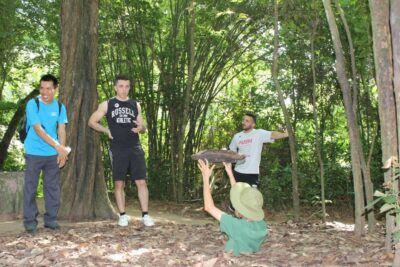
- Cu Chi Tunnels: the underground war museum, scheduled for about 2 hours
- My Tho and the Mekong Delta: time to feel the region
- The guides: why the right person changes everything
- What to pack and how to survive an 8–12 hour day
- Price and value: where your money actually goes
- Should you book this private shore excursion?
- FAQ
- FAQ
- Is this a private tour?
- How long is the tour?
- Does it include cruise port pickup and drop-off?
- What meals are included?
- Which major sites are part of the day?
- Are any admission tickets included?
- What’s included besides the guide and transport?
Key moments worth planning around
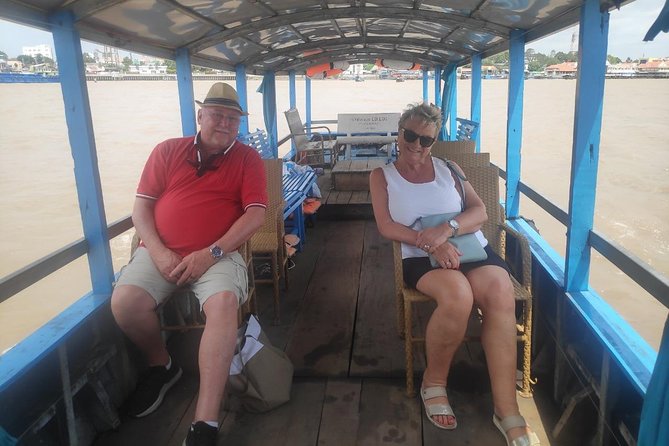
- Cruise-friendly door-to-door transport: private pickup and return to your port with a comfortable vehicle
- A guide who steers, not just talks: you get help understanding major sites, not only ticking boxes
- French Saigon + war sites in one sweep: Notre Dame, the Central Post Office, Independence Palace, and the War Remnants Museum
- Cu Chi Tunnels time budgeted at about 2 hours: enough to see the underground story without rushing every detail
- Cholon and Mazu Temple add real texture: Chinatown history and Chinese sea goddess worship, plus Ben Thanh Market nearby
- Lunch is built in: traditional Vietnamese food is included, so you’re not hunting mid-day
What you’re really buying for $109 in Ho Chi Minh City
At $109 per person, this is priced like a thoughtful private day, not a cheap bus tour. What makes the value feel real is the package: private cruise pickup/drop-off, a professional guide, Vietnamese lunch, bottled water, and “all fees and taxes.” On top of that, the route includes a mix of free stops and a couple of paid entry sites.
It also helps that the tour is designed to be flexible. The plan you see has clear anchors, but the experience is meant for people who want choices—especially cruise passengers with limited time in port. If you’re the kind of traveler who wants to know why a place matters, a private guide pays off fast.
One more practical detail: you receive a mobile ticket, which is handy on busy days. And because it’s private, your group is the group—no squeezing in with strangers, no scrambling to find where your guide disappeared to.
You can also read our reviews of more city tours in Ho Chi Minh City



Cruise-day logistics: the big advantage is time, not comfort
The biggest win here is the way the day is structured around your port. Instead of losing time to public transit or waiting in lines for the next bus, you get pickup and drop-off by a private comfortable vehicle. That matters in Ho Chi Minh City, where traffic can turn a tight schedule into a stressful one.
Also, private doesn’t only mean nicer rides. It means your guide can keep the day running in a sensible order: seeing the central landmarks while they’re close together, then moving outward for Cu Chi and the Mekong without the usual group shuffles. If you have any must-sees—coffee stops, photography priorities, or a stronger focus on war history versus markets—this kind of setup is made for that.
If your ship schedule is strict, remember the day is still 8–12 hours. You’ll want to treat this as a full outing, not a casual stroll.
Saigon’s French landmarks: Notre Dame and the Central Post Office
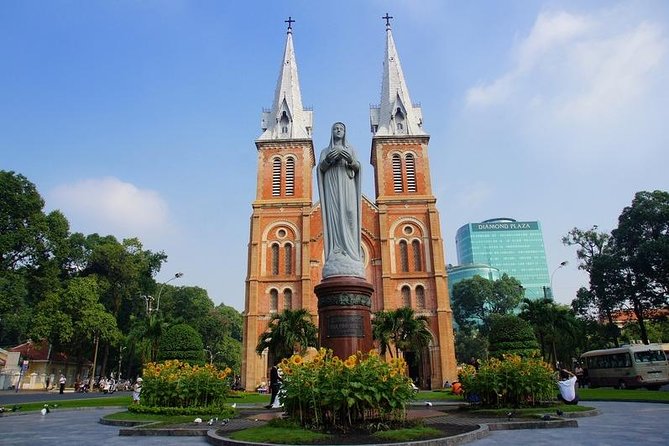
The day starts with two famous landmarks that sit side by side, so they’re easy to pair and hard to miss: Saigon Notre Dame Cathedral and Saigon Central Post Office.
Saigon Notre Dame Cathedral (about 15 minutes)
Built in the late 1880s by French colonists, Notre Dame is one of the remaining Catholic strongholds in a country that’s mostly Buddhist. It’s located in Paris Square, which is already a clue that you’re in the French-era pocket of the city.
What to do with your time here: look up, notice the façade details, and treat it as a “then and now” checkpoint. Even if you’re not a church person, it’s a quick way to understand how colonial Saigon tried to look like Europe.
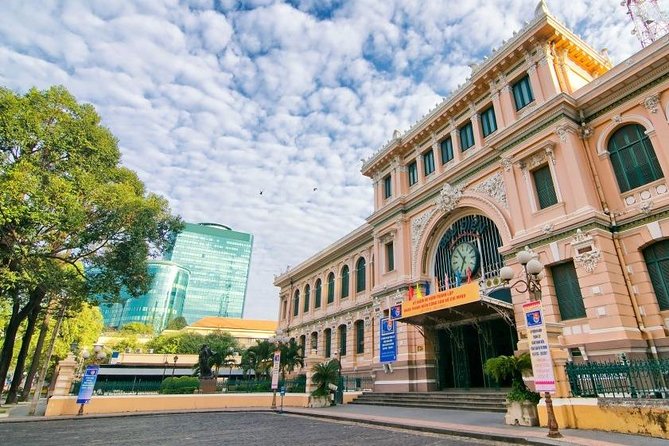
Saigon Central Post Office (about 15 minutes)
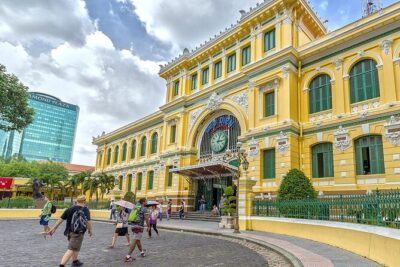
Right next door, you’ll find a grand, well-preserved French-era building that many people call one of the best post offices in Southeast Asia. It’s famous enough that you’ll recognize it from photos, but seeing the scale in person lands better.
This is one of those stops where speed can work in your favor. You don’t need hours to appreciate it—you need a few minutes to take in the architecture and then move on before the heat and crowds push you into “just get me through it” mode.
You can also read our reviews of more private tours in Ho Chi Minh City




The Independence Palace stop that frames the modern story
Next comes Independence Palace, tied to Vietnamese political history and the dramatic events of 1975. The palace was the base of General Ngo Dinh Diem until his death in 1963, and later it entered world history during the end of the Vietnam War.
You’ll spend about 45 minutes here, with admission included. This stop helps you connect dates to places—so when you see other memorials and museums later, they won’t feel like random headlines. It’s also a strong “anchoring point” in a long day: after it, the tour shifts from political symbolism to the human cost of war.
War Remnants Museum: don’t rush, but don’t skip
Then you go to the War Remnants Museum (about 30 minutes, admission included). It first opened in 1975 and was once known as the Museum of American War Crimes. The exhibits are graphic in photos and content, so it’s not a light stop.
What I recommend here is a quick strategy: don’t try to read everything. Pick one or two exhibit sections that match what you want to understand—how people lived, what the war left behind, and how the country presents that history. With only 30 minutes, your goal is to leave with a clear impression, not a complete textbook.
A good guide can make a big difference. When the person leading the tour knows how to explain what you’re seeing, the museum becomes more than shocking images. It becomes context.
The colonial government buildings and Opera House: a 45-minute “Saigon still exists”
After the heavy museum time, you get a breather through architecture and city landmarks.
People’s Committee Building (about 15 minutes)
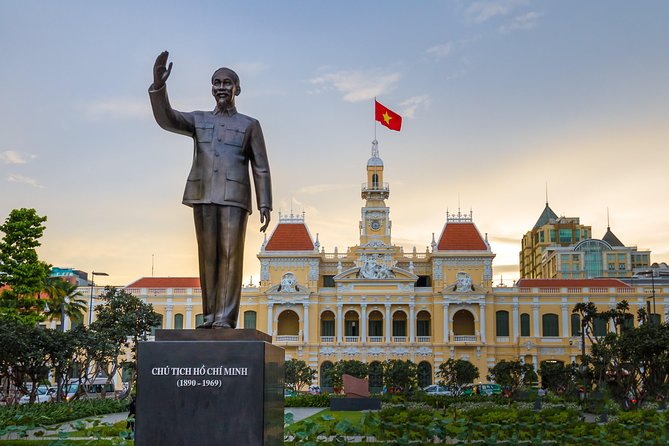
This French colonial-style building sits in a landscaped garden space and was originally constructed as a hotel in 1898. The short stop time works because it’s mostly about exterior impressions and quick orientation.
Saigon Opera House (about 15 minutes)
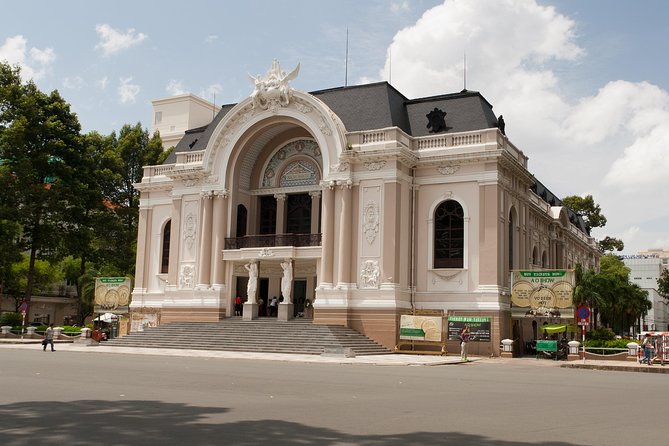
The Saigon Opera House is at the intersection of Le Loi and Dong Khoi, close to both Notre Dame and the Central Post Office. It’s an elegant colonial building, and even if you’re not watching a show, it’s a useful snapshot of how colonial planners imagined Saigon.
If you’re traveling with someone who likes photos, these two stops are easy wins. If you’d rather keep momentum, you’ll still be able to get the highlights without losing too much time.
Chinatown in Cholon: Phố Tau Sai Gon and Ba Thien Hau Temple
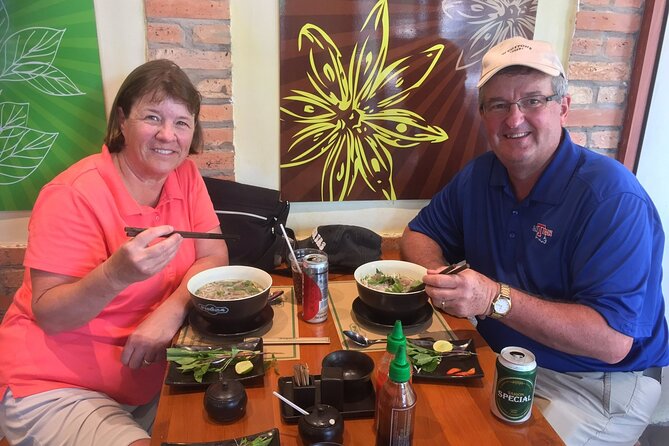
Next, the tour heads to Chợ Lớn (District 5), with a stop at Phố Tau Sai Gon for about 30 minutes. Cholon is Vietnam’s largest Chinatown, with roots dating back to 1778. The story is part immigration history and part survival history, including how Chinese communities sought safety during periods of conflict.
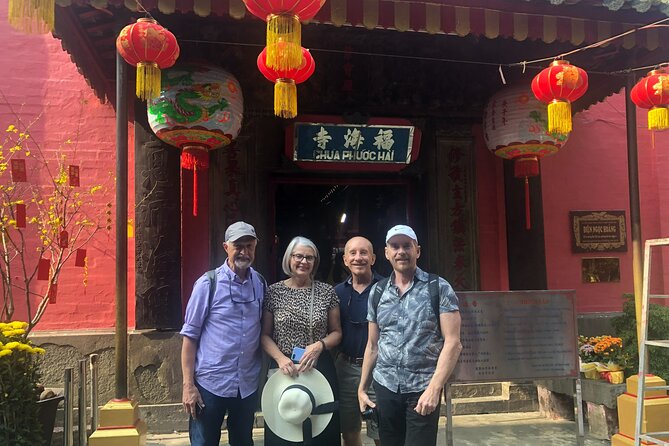
Then you’ll visit Ba Thien Hau Temple (about 15 minutes). This temple is dedicated to Mazu, the Chinese sea goddess. The belief is that she protects and rescues people on the sea, even described through the idea of flying around on a mat or cloud.
This part of the day adds something the more famous landmarks don’t: lived religion and cultural continuity. It also breaks up the Western and war-history framing of earlier stops. You’ll likely find the tone shifts from monuments to everyday meaning.
Ben Thanh Market: souvenirs, snack options, and a reality check
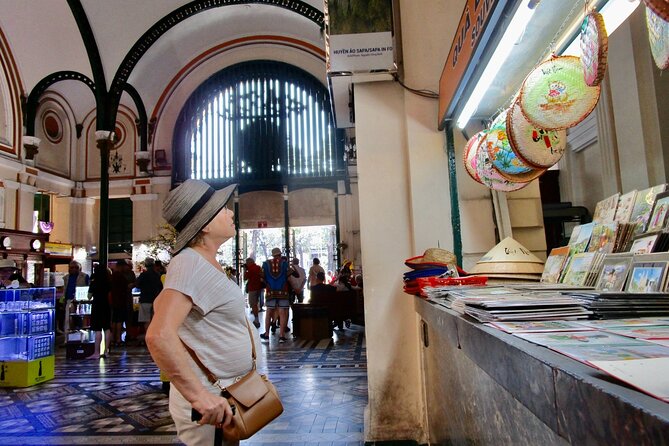
After temples and Chinatown history, the tour includes Ben Thanh Market for about 30 minutes. It’s a central shopping stop in District 1, known for handicrafts, branded goods, Vietnamese art, and souvenirs. The market also has eating stalls inside, so it’s not only a shopping area.
In a tight day, 30 minutes is enough to do two things well: pick up small gifts and get a quick feel for the local shopping rhythm. If you go in with a list, you’ll finish without wandering yourself into “I bought stuff I didn’t need” territory.
Cu Chi Tunnels: the underground war museum, scheduled for about 2 hours
This is the big detour outside the city core: Cu Chi Tunnels, spending about 2 hours. The tunnels are part of a massive war museum complex, and they offer a glimpse into underground life of Vietnamese soldiers in 1948. The site includes more than 120 km of underground tunneling.
Admission is listed as free for this portion, which makes it a strong value play in the overall day. The real point of the time is to understand the scale: these weren’t small hiding holes. They were a system, built for movement, survival, and strategy.
What to watch for with this stop: keep expectations realistic. Even with two hours, you won’t see every corner of a huge site. I’d focus on the sections that explain how tunneling worked and what daily life underground meant. That approach keeps you from getting lost in details and then leaving with a vague feeling of “underground stuff happened.”
My Tho and the Mekong Delta: time to feel the region
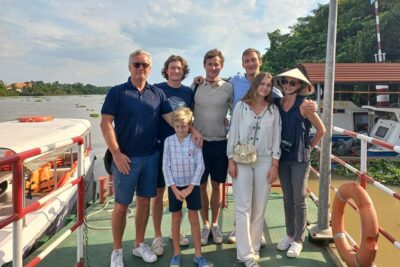
To finish, you’ll head to My Tho, part of the Mekong Delta. The Mekong Delta is described as a network of distributaries in southwestern Vietnam between Ho Chi Minh City and Cambodia. The river system originates far away and flows through multiple countries, but for your day, the key point is how the delta region spreads water into many paths.
The stop is about 2 hours. Admission is listed as free for this portion, and that’s another value-friendly piece of the puzzle.
Since the exact activities at My Tho aren’t spelled out in your itinerary details, I’d think of this as a region-time stop: you’ll have a chance to see how the landscape and daily life shift away from central Saigon. If you’re hoping for a specific kind of Mekong activity, ask your guide ahead of time what’s realistically included in the route on your day.
The guides: why the right person changes everything
A private tour lives or dies on the guide. In the feedback patterns I saw for this kind of route, the praise is consistent: guides help you understand what you’re looking at, and they add extra stops that fit your pace.
Names that show up with strong recommendations include Evelyn, Peter, Thong (driver), Liam (guide), Barney, Dorothy, and Sunny. The common thread is practical storytelling and smart additions, like pointing out where to find a good local Vietnamese coffee shop (including one described as about 89 years old) and steering people toward good food choices such as chicken pho.
That’s exactly what you want on a long day. When your guide is good, you spend less time guessing and more time noticing.
If you want the day tailored, speak up early. For example: If you want more time on markets and less time on photo stops, tell your guide. If you want the war history portion to be deeper, flag that too.
What to pack and how to survive an 8–12 hour day
Even with private transport and a guided plan, you’ll still be outdoors in Ho Chi Minh City heat. So I plan for long-days basics:
- Comfortable shoes for cathedral floors, museum exhibits, and market walking
- Sun protection and water awareness (bottled water is included, but you can still sweat through a day)
- Patience with time: you’re stacking many places, so it’s normal for each stop to be “just long enough”
Also, think about your priorities before you lock in the route. This tour mixes city landmarks, war history, Cu Chi, and the Mekong. That’s great if you want one trip that covers a lot. If you’re more focused on one theme, the flexibility to adjust which blocks you emphasize can make the day feel less like a checklist.
Price and value: where your money actually goes
This $109 price makes sense when you look at what’s included:
- Cruise port pickup and drop-off via private vehicle
- Private professional tour guide
- Traditional Vietnamese lunch
- All fees and taxes
- Bottled water
You also get admission structure built into the day: some stops are free, while Independence Palace and the War Remnants Museum have admission included. Cu Chi Tunnels and My Tho are also listed with admission as free in your details, which is a nice bonus.
Not included is personal expenses, so budgeting for snacks beyond the lunch is still on you. But with the lunch built in, you’ll avoid one of the most annoying parts of cruise days: searching for food while the schedule ticks away.
Should you book this private shore excursion?
If you’re on a cruise and you want one organized day that covers the headline sites plus a real taste of both war history and the Mekong region, I think this is a strong choice. It’s especially worth booking if you like structure with flexibility—someone guiding you while you still get to shape how the day feels.
Book it if:
- You want private cruise pickup and a guide who explains what you’re seeing
- You’d like a mix of Saigon landmarks, Cu Chi, and the Mekong without piecing together separate tours
- You value having lunch included instead of improvising mid-day
Skip it (or adjust the plan) if:
- You want a relaxed, unhurried day with fewer stops
- You’re sensitive to long driving days and tight stop times
FAQ
FAQ
Is this a private tour?
Yes. It’s a private tour/activity, meaning only your group participates.
How long is the tour?
The duration is listed as about 8 to 12 hours.
Does it include cruise port pickup and drop-off?
Yes. The tour includes cruise port pickup and drop-off by a private comfortable vehicle.
What meals are included?
A Vietnamese traditional lunch is included.
Which major sites are part of the day?
The listed stops include Saigon Notre Dame Cathedral, Saigon Central Post Office, Independence Palace, the War Remnants Museum, the People’s Committee Building, Saigon Opera House, Phố Tau Sai Gon (Chợ Lớn/Quận 5), Ba Thien Hau Temple, Ben Thanh Market, Cu Chi Tunnels, and My Tho (Mekong Delta).
Are any admission tickets included?
Yes. Admission ticket for Independence Palace and the War Remnants Museum is included. Several other stops show admission as free in the itinerary details.
What’s included besides the guide and transport?
The tour includes all fees and taxes, bottled water, and a mobile ticket.