REVIEW · HO CHI MINH CITY
Cu Chi Ben Duoc Tunnels: Authentic & Less Touristy (Max 10)
Book on Viator →Operated by Hana Tourist Vietnam · Bookable on Viator
Cu Chi can feel like a blur of souvenir stalls and quick photo stops. This Ben Duoc tour is different: it takes you into the quieter tunnel section with a guide who explains what you’re actually seeing. I especially like the small group size and the fact that the day is built around the tunnels, not just the drive.
You’ll still have to handle the tunnels on their terms. The crawling spaces are narrow and low, so you’ll want good shoes and a willingness to stoop and move slowly; agility matters more than fitness levels.
In This Review
- Key things I’d pay attention to
- Ben Duoc vs. Ben Dinh: why this quieter Cu Chi side feels more real
- Pickup, drive time, and small-group pacing from Ho Chi Minh City
- The tunnel experience: narrow crawling, traps, and the places people worked
- Wartime snacks and the optional AK-47/M16 shooting range
- Guides matter: what I’d look for when you get Ken, Tri, or Nhu
- War Remnants Museum add-on: the context piece for morning groups
- Price and value at about $21: what’s included and where costs can pop up
- Who this Ben Duoc tour is best for (and who should rethink it)
- Should you book this Cu Chi Ben Duoc tunnel tour?
- FAQ
- How long is the Cu Chi Ben Duoc Tunnels tour?
- What’s included in the price?
- Do I have to pay extra to shoot at the shooting range?
- Is the War Remnants Museum included?
- How big is the group?
- Are hotel pickups available?
- Is cancellation free?
Key things I’d pay attention to

- Ben Duoc instead of the busiest Cu Chi zone, so you spend more time inside and less time waiting around
- Max 10 people, which makes it easier to keep a calm pace while you crawl
- You get the full tunnel set: narrow passages, traps, a command area, and underground medical/working spaces
- Wartime snack break with tapioca and tea, plus water and tissues on the ride
- Optional shooting range for an extra fee, with a no-pressure setup for those who’d rather not
- Optional War Remnants Museum add-on (morning shared group), giving you context for what you’ll see underground
Ben Duoc vs. Ben Dinh: why this quieter Cu Chi side feels more real
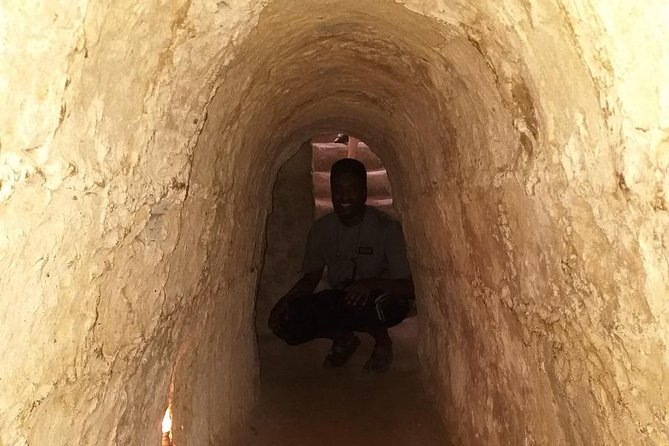
Cu Chi has a reputation. Some visits feel like a fast walk through a theme-park version of history. This one steers you toward Ben Duoc, which is described as bigger than the Ben Dinh tunnels and part of the less crowded stretch.
That matters because the tunnels themselves aren’t impressive from a distance. They’re impressive when you’re inside them, moving through the same kind of tight, low space that shaped daily life. Ben Duoc’s layout gives you more chances to understand how people survived—where they stored supplies, how they organized work, and how they hid and protected themselves.
Also, this tour isn’t only about the tunnel entrance you can photograph. You get a short war documentary first, then time to explore the underground network in a way that feels grounded rather than rushed.
You can also read our reviews of more tours and experiences in Ho Chi Minh City.



Pickup, drive time, and small-group pacing from Ho Chi Minh City
This tour is built for convenience. If you want it, you can be picked up from 400+ Ho Chi Minh City hotels, then ride in an air-conditioned vehicle toward the Cu Chi area. Group size is kept small—up to 10 travelers—so you’re not stuck in a human line at every stop.
Timing comes in two flavors:
- Morning trip: pickup around 7:30–8:00, finish around 14:30
- Noon trip: pickup around 12:00–12:30, finish around 19:00
The drive can be long. Some people plan for roughly 3–3.5 hours away from the city. That’s not a deal-breaker, but it is the reality. If you hate long rides and you’re the type who gets cranky without a schedule, you’ll want to bring water and snacks for the road, and settle in.
The good part is that the tour keeps moving. You’re not just transferred and forgotten—you’ve got an English-speaking guide, plus water and tissue on board.
The tunnel experience: narrow crawling, traps, and the places people worked
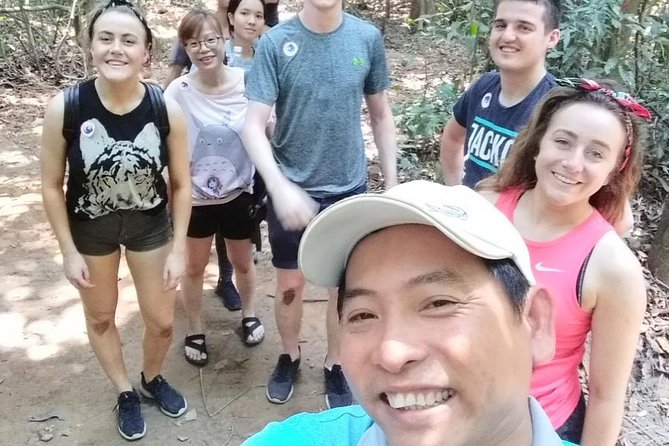
The heart of this tour is Ben Duoc’s tunnel complex. You’ll start with a short documentary about the war, then move into exploration where you can actually feel the engineering choices.
Here’s what you can expect to see and do underground:
- Crawl through narrow tunnels where you have to stoop, and sometimes move slowly on purpose
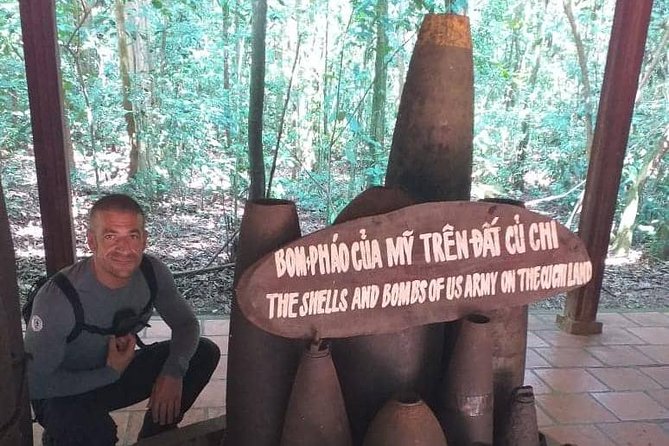
- Camouflaged trapdoors and deadly traps, which make it clear how concealment wasn’t a side idea—it was the main idea
- A command center, where decisions would have been organized under extreme pressure
- Weapon storage spaces
- A hospital bunker, showing how even medical care had to be built into survival
One big practical point: tunnel access seems to be handled with comfort in mind. There’s an approach where you can choose whether to take the smallest, tightest sections. That’s helpful if you’re not sure how your body will handle low ceilings and long crouches.
Be honest with yourself: you’ll likely spend time in sections that feel small enough that shoes will matter. One tip I’d follow is to wear comfortable shoes and dress for the reality of dirt and mud. You might walk around outside between tunnels too, so bring clothes you won’t mind getting a little messy.
Wartime snacks and the optional AK-47/M16 shooting range
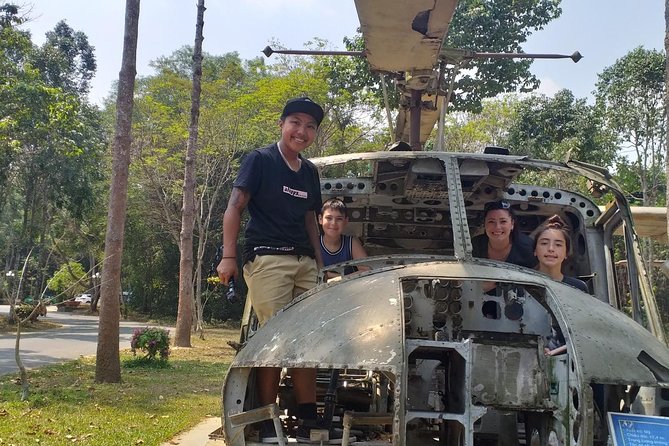
Part of what makes this tour feel human is the wartime snack break. You’ll stop for tapioca and tea—simple food you can picture as part of soldier life under harsh conditions. You’ll also have drinking water provided, plus cool tissues.
Then there’s the optional shooting range. You can pay extra if you want to try firing an AK-47 or M16. This is one of those choices where you can decide your comfort level without guilt. If you’d rather not shoot, you can wait in the air-conditioned vehicle while others do the extra activity.
Two smart tips:
- If you’re sensitive to noise or you’re traveling with kids, skip the range and focus on the tunnel parts that explain daily survival.
- If you’re the type who likes hands-on experiences, this can add a “felt experience” layer—just remember it’s still optional.
Guides matter: what I’d look for when you get Ken, Tri, or Nhu

The best thing about this tour is how often the guide experience shows up as the difference between good and unforgettable. The tunnel site is intense, but a strong guide keeps it clear, not chaotic.
From the guides’ names you might meet here—Ken, Tri, Nhu, Linda, Z, Edward, and even Treis/Tre—the common thread is communication style: clear English, structured explanations, and a sense of humor that helps you process heavy content without feeling lectured.
A great guide will do things like:
- Explain the logic of the tunnel layout, not just the dates
- Point out why traps and camouflage were essential
- Keep the group moving at a pace that doesn’t turn exploration into a sprint
One practical benefit of a good guide is crowd management. You can’t control how many people exist in the world, but you can control whether your group gets swallowed by the flow. More than one experience here notes that the group stayed ahead of crowds, which makes your tunnel time less rushed.




War Remnants Museum add-on: the context piece for morning groups
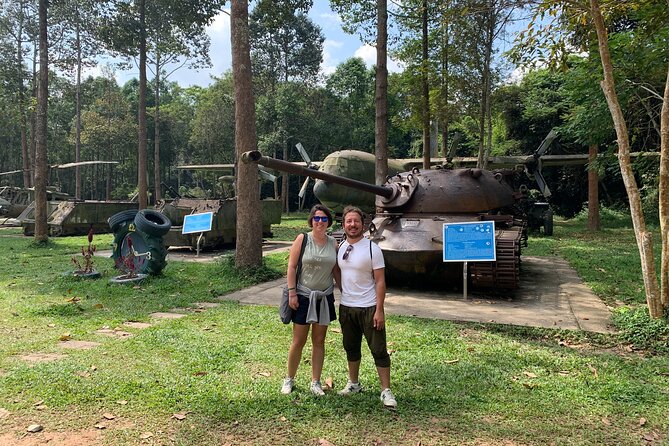
If you choose the morning shared group, you can add the War Remnants Museum. The day runs from the tunnels, then around noon the group returns toward Saigon, and you get about one hour at the museum to explore on your own.
That museum stop can work like the missing chapter. The tunnels show how people survived underground. The museum helps you place that survival in a wider story using photos, videos, and information you can read freely during your hour.
You can also pay extra for an audio guide if you want. If you prefer to keep your schedule tight and your brain less overloaded, treat this museum as optional context rather than a second main attraction. One hour is enough to get grounded without turning the day into a museum marathon.
Price and value at about $21: what’s included and where costs can pop up
At around $21 per person, this is usually one of the best bargains in Ho Chi Minh City for a guided, ticketed, half-day experience. The value comes from what’s bundled:
- English-speaking guide
- Air-conditioned vehicle
- Entrance fees
- Drinking water and cool tissue
- Snacks at the tunnel site (tapioca and tea)
Where extra costs may appear:
- Shooting range (optional, additional expense)
- Personal spending (souvenirs, snacks beyond what’s provided)
- Tips/gratuities for your local guide (not included)
One more thing to keep in mind: some routes include a brief stop tied to local crafts. There’s at least one example of a stop connected to handicrafts made by people affected by Agent Orange. Whether you love that stop or find it a pause you’d rather skip depends on your style. If you hate any detour, ask your guide before you leave the city area.
Who this Ben Duoc tour is best for (and who should rethink it)
This is a great fit if you want:
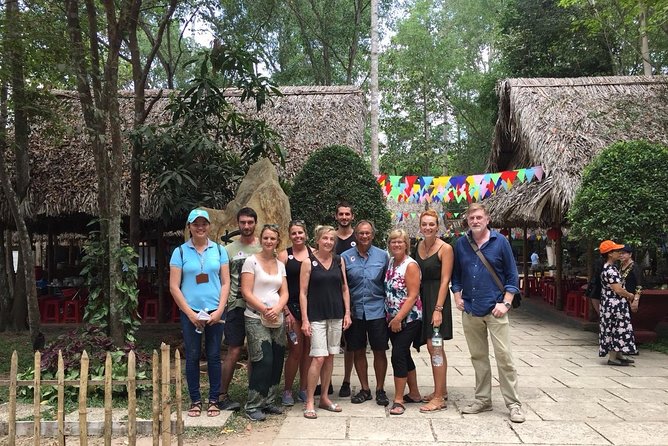
- A more authentic, less touristy tunnel experience
- A small group that doesn’t feel like a cattle line
- A guided explanation that makes the tunnel details click
It’s also a solid choice for families, as long as kids can handle discomfort. There are examples of a 7-year-old doing the trip and enjoying learning with a guide who can explain in a way children can follow.
Who should rethink it:
- If you have leg or knee problems, the tight crawling and uneven footing may limit what you can do underground. Even then, the visit may still be worth it because the tour has plenty to see outside the smallest sections—but be prepared for the possibility you won’t go into every tunnel.
- If you absolutely hate crawling/stooping, you may find the main activity frustrating rather than fascinating.
Should you book this Cu Chi Ben Duoc tunnel tour?
Book it if you want Cu Chi without the loud, crowded feeling—and you like tours that treat the tunnels as the main event, not a quick checkbox. The small group size, the focus on Ben Duoc, and the guided walk through traps, command areas, and medical spaces are the reasons this works.
I’d choose the morning option if you want the museum context too. I’d choose the noon option if you prefer a later start and you’re not chasing extra stops after the tunnels.
Before you go, do two simple things:
- Wear shoes you’re willing to get dirty and that can handle you stooping and moving on uneven ground
- Go in with the mindset that this is physical and slightly uncomfortable—because that’s part of understanding what survival meant here
If that sounds like your kind of history tour, this Ben Duoc experience is a strong value and a smart way to spend your time in Ho Chi Minh City.
FAQ
How long is the Cu Chi Ben Duoc Tunnels tour?
It’s about 6 to 7 hours. The morning trip finishes around 14:30, and the noon trip finishes around 19:00.
What’s included in the price?
The tour includes an English-speaking guide, air-conditioned vehicle, entrance fee, drinking water, cool tissue, and snacks (tapioca and tea) at the tunnels.
Do I have to pay extra to shoot at the shooting range?
Yes. Shooting at the range is optional and costs extra. The tour mentions trying AK-47 or M16 as the optional activity.
Is the War Remnants Museum included?
It’s optional. The museum add-on is available only for the morning shared group option, with about one hour to explore.
How big is the group?
The tour has a maximum of 10 travelers.
Are hotel pickups available?
Yes. Pickup is offered from 400+ hotels in Ho Chi Minh City, if you want it.
Is cancellation free?
Yes. You can cancel up to 24 hours in advance for a full refund.