REVIEW · HO CHI MINH CITY
FULL Day – CAI RANG FLOATING MARKET, COOKING CLASS AND EXPLORE THE COUNTRYSIDE
Book on Viator →Operated by Winter Spring Homestay · Bookable on Viator
Starting at 3:00 a.m. sounds wild, but the payoff is a full Mekong Delta day with real people, real food, and a calm countryside reset. This trip is interesting because you see the Cai Rang floating market, then you spend hours on land with a family cooking lunch from scratch. The best part for me is the hands-on rhythm: breakfast on the river, stops for how food is made, and then a cooking class at the family home.
I also like how personal it feels. The hosts run it as a home-to-home day, not a factory-style show, and guides you might meet include Kieu Trinh (and other guides like Trieu Trinh). One thing to consider is the pace: you’re up before dawn, you’ll be moving a lot, and the schedule is weather-dependent.
In This Review
- What I’d expect on your plates and schedule
- Key things worth getting excited about
- The 3:00 a.m. pickup: why it matters in the Mekong Delta
- Cai Rang Floating Market and breakfast on the Mekong
- Rice noodle factory and the small canals detour
- Muoi Cuong cacao orchard: a stop that adds flavor to the day
- Traditional market shopping: picking ingredients for your own meal
- Cooking class at a countryside family home
- Hammock time and countryside loops: fruit picking and rice fields
- Price and value at $119 per person
- Who should book this day trip
- Should you book Winter Spring Homestay’s Mekong Delta day?
- FAQ
- Is pickup included, and when does the day start?
- How long is the tour?
- What places do we visit?
- What do you cook in the class?
- When do we return to Ho Chi Minh City?
- How big are the groups?
- Is the tour dependent on weather?
- What’s the cancellation window?
What I’d expect on your plates and schedule
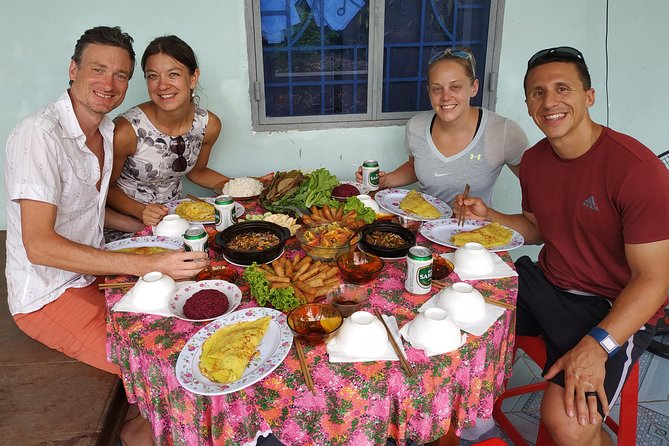
You’ll get a breakfast in the Mekong area, then head into the floating market scene, plus stops at a rice noodle factory/traditional bakery mill and a cacao orchard. After that, you buy cooking materials at a traditional market, learn to make classic dishes, and eat lunch with a countryside family. The day closes with downtime (including hammock time) and a countryside loop for seasonal fruit and rice-field life, returning around 3 to 4 p.m.
Key things worth getting excited about
- Cai Rang Floating Market early enough to see the action while the day is still fresh
- Mekong breakfast paired with market time, so you don’t just arrive and leave
- Rice noodle factory / bakery mill stop that explains the food supply chain
- Cacao orchard visit on the way, with real context before you eat anything chocolatey
- Cook at a family home and learn dishes like bánh xèo and spring rolls
- Hammock + countryside fruit/fields so the day isn’t only rushing between stops
You can also read our reviews of more shopping tours in Ho Chi Minh City
The 3:00 a.m. pickup: why it matters in the Mekong Delta
This tour starts with pickup in Ho Chi Minh City at 3:00 a.m. That’s the price you pay for seeing the Mekong Delta at a useful time. Floating markets work best when boats are actively moving and the morning atmosphere is still pleasant. Later in the day, you can still see plenty, but the feeling changes.
The upside is that the itinerary is built around that early start. You’re not just traveling in the dark and arriving to a half-finished day. You’ll reach the Mekong region for breakfast and then get market time, which is the main reason this trip is worth doing. Plan to treat the first hours as a “commute with purpose” rather than a normal travel day.
One practical note: because the pickup is very early, you’ll want to sleep at least a bit the night before and keep your essentials packed the night before. Think water, a small snack if you need one, and something light for the ride.
Cai Rang Floating Market and breakfast on the Mekong
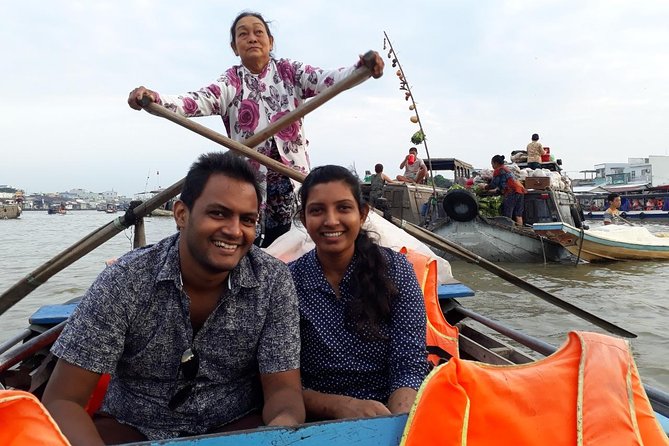
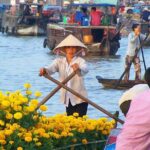
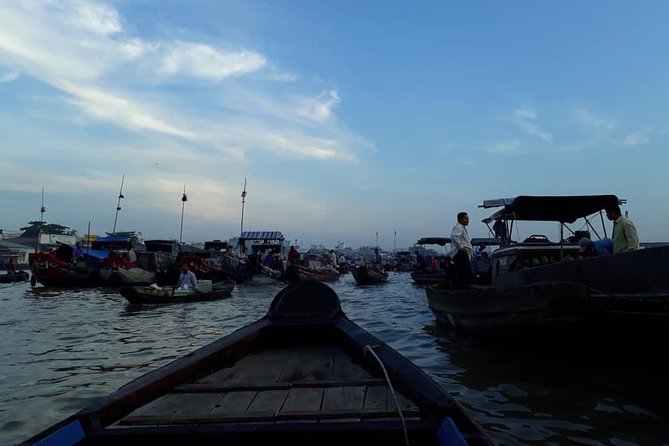
The highlight is the Cai Rang floating market, where the main action is boats, goods, and quick trading. The tour is structured so you have breakfast in the Mekong area, then you experience the market. That matters. If you arrive hungry and rushed, you miss details. If you eat first, you can actually slow down and observe what’s happening.
You’ll also get a sense of how daily life links with food logistics. Markets like this aren’t just for tourists; they’re tied to how ingredients move through the delta. Even when you’re just watching, you’re seeing why “food” in Vietnam has a geography, not just a menu.
Drawback to know: floating market time means you’ll be exposed to morning weather and the kind of humidity that can creep up on you. Dress comfortably, and bring a layer you can adjust as the day warms.
Rice noodle factory and the small canals detour
After the market, you’ll visit a rice noodle factory and a traditional bakery mill. This is one of my favorite types of stops because it connects what you eat to how it’s made. Rice noodles are the foundation of a lot of Vietnamese dishes, and seeing the process helps you understand why the texture and timing matter.
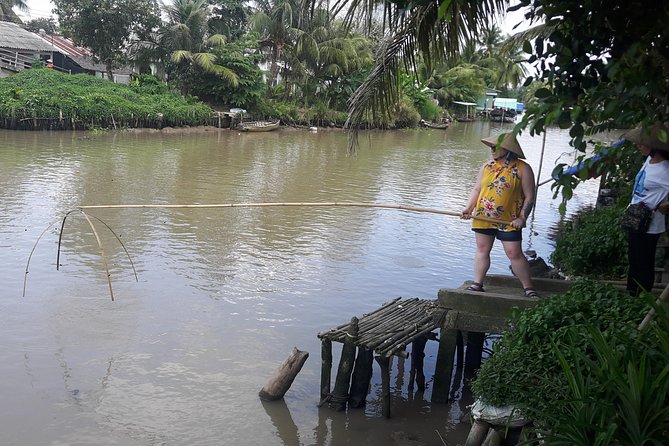
You’ll also get time around small canals. Even if you’re not there for a long scenic cruise, canals are part of the delta story. They show the geography behind the floating commerce you saw earlier.
What to watch for: this part can be a little more “process-focused” than “photo-focused.” If you enjoy watching how food is produced and asking questions, it will click. If you only want dramatic views, you might wish for more time outdoors. Either way, it’s a useful pause in a long day.
Muoi Cuong cacao orchard: a stop that adds flavor to the day
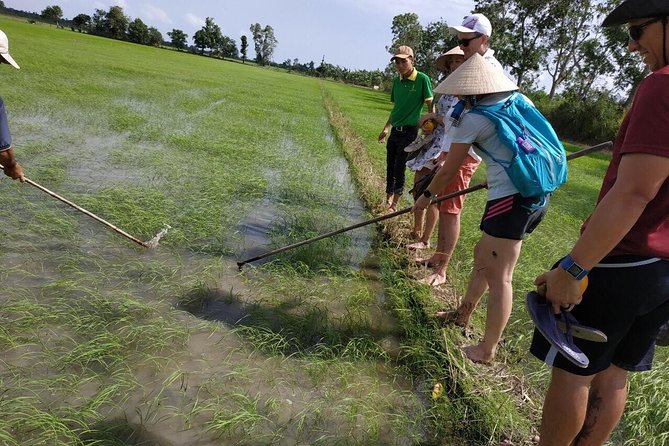
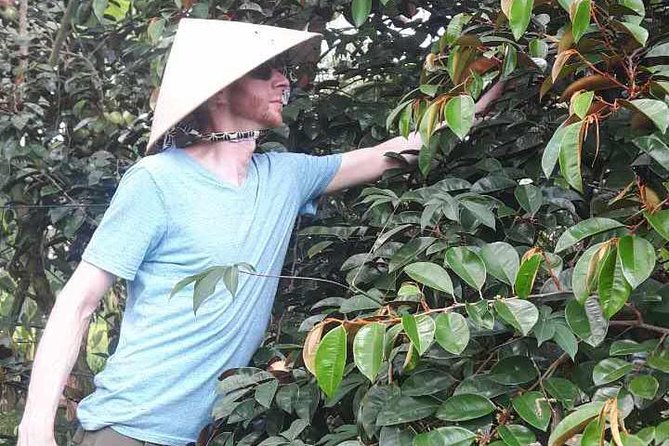
On the way through the region, the itinerary includes a cacao orchard stop (Muoi Cuong Cocoa Farm). This is the kind of detour that keeps the day from feeling repetitive. Instead of only markets and cooking, you get a look at a crop that connects agriculture to food culture.
You may not leave with a chocolate “tour souvenir” in hand, but you’ll leave with a better sense of where agricultural products come from. That’s especially valuable here because later you’re going to cook and taste what the region produces—so the day feels like one story instead of separate attractions.
Practical tip: orchard stops often mean more time outdoors and walking on uneven ground. Wear comfortable shoes you don’t mind getting dusty.
You can also read our reviews of more tours and experiences in Ho Chi Minh City
Traditional market shopping: picking ingredients for your own meal
Before the cooking class, you’ll visit a traditional market where you buy materials for the lesson. This is a smart way to make the cooking feel personal. You’re not just watching someone cook; you’re choosing ingredients that will land on your plate later.
This is also where you’ll get a quick education in local market thinking—what people buy, how they choose, and how vendors package goods for daily life. Even if you don’t know Vietnamese food terms yet, seeing the ingredients side-by-side helps you understand the dishes you’ll make later.
If you like learning by doing, take your time at this stop. Ask simple questions if you can, and pay attention to how items look and smell. That’s the kind of detail you can actually use when you cook again at home.
Cooking class at a countryside family home
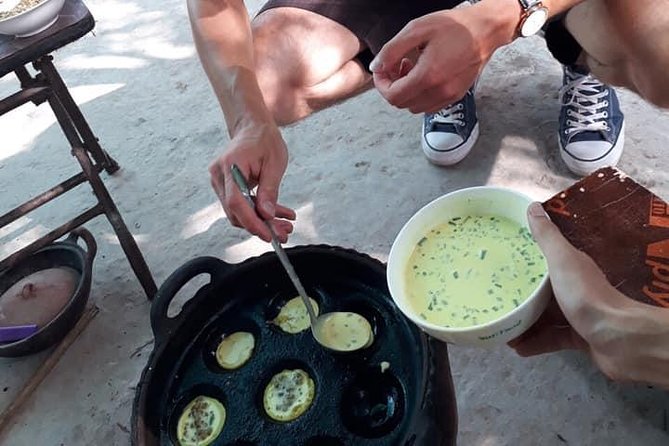
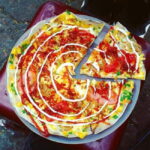
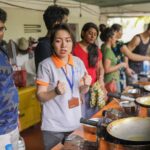
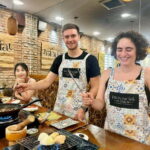
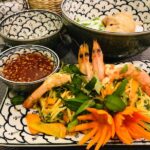
The cooking class is the heart of the day. You’ll learn and then have lunch at a local family home in the countryside—described as the hosts’ family home in the region. In the past, guests have specifically mentioned cooking bánh xèo and spring rolls. That’s a strong combo because it covers different techniques: batter-style cooking and rolling/filling work.
What makes this section valuable isn’t only the recipe. It’s the context. You’re cooking in a real home setting, and that changes the tone from “class” to “shared meal.” You can pick up small practical habits—how to handle wrappers, how thick or thin batter should be, and how people pace a meal when they’re feeding family members.
You’ll also buy ingredients earlier at the market, so you can trace your steps. That makes the whole thing stick. After lunch, you don’t just remember dishes—you remember the route your food took to your table.
Small consideration: because this is a home-style setup, you should expect a more casual rhythm than a polished restaurant kitchen. That’s not a drawback if you’re in the right mood, but it is worth knowing.
Hammock time and countryside loops: fruit picking and rice fields
After lunch, you’ll get a downtime break that many Mekong tours skip. The schedule includes relaxing at the countryside home and even nap time with a hammock. That’s more than cute. It’s a real recovery moment in a very long day, especially after the early pickup and the morning outing.
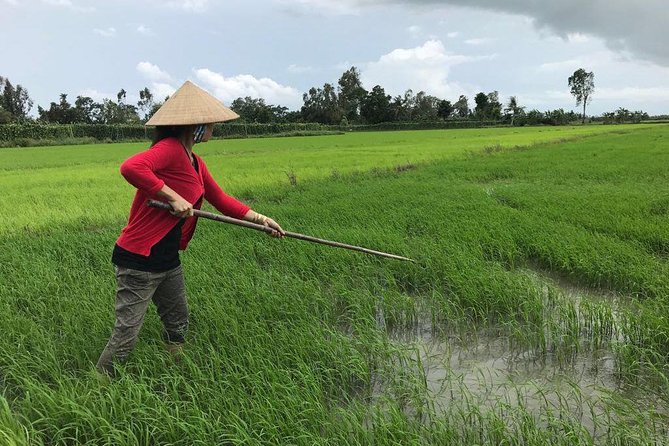
Then you’ll go around the countryside to experience how people live: seasonal fruit gardens and rice-field areas are specifically mentioned. You can often pick fruit by yourself, and that hands-on part is where the day feels different from a standard day trip. You’re not only observing agriculture—you’re participating in it.
Why this matters: the Mekong Delta is famous, but it can turn into a list of photo spots. This portion slows you down and gives you time to notice the textures—how fields look at different times, what seasonal fruit actually means in daily routines, and how the delta feels when you’re away from the market noise.
Practical note: fruit and field time means the day is still active. Bring water, keep sun protection in mind, and don’t plan any other commitments right afterward.
Price and value at $119 per person
At $119 per person, this tour isn’t the cheapest option for Vietnam, but it also isn’t just a long bus ride to a single sight. You’re paying for multiple elements that normally cost extra or require separate booking: early Mekong floating market access, breakfast, a rice noodle factory/bakery mill visit, a cacao orchard stop, traditional market shopping, a real cooking class with lunch at a local family home, and then countryside downtime and field/fruit time.
The value gets better if you care about the “how” and not only the “what.” Watching the noodle process, seeing cacao in an orchard, and cooking bánh xèo and spring rolls with a family adds up. If your main goal is quick sightseeing with minimal interaction, you may find the day long for the cost.
One more value point: it’s capped at a maximum of 60 travelers, which usually helps the group feel more manageable—especially during the cooking and countryside segments.
Who should book this day trip
This fits best if you want a Mekong day that mixes food culture with everyday rural life. Book it if:
- you enjoy cooking and want hands-on instruction
- you like markets and also want to see how ingredients are produced
- you’re okay with an early start in exchange for a meaningful morning
- you want a slower countryside finish, including downtime like hammock relaxation
It may be less ideal if:
- you dislike early mornings and long travel days
- you expect a perfectly timed “tour bus show” feel
- you want lots of long, dramatic viewing time rather than food and process stops
Should you book Winter Spring Homestay’s Mekong Delta day?
I’d say yes if your goal is a Vietnam food-and-life experience, not just a highlight checklist. The biggest strengths are the order of the day—floating market plus breakfast, then food production stops, then cooking and lunch with a family, and finally fruit and fields with a breather in between. It has that rare combination: structure and warmth.
Before you book, be honest about your tolerance for early pickup and a packed day length. If you’re excited by food culture and you can handle getting up before most of the city wakes up, this is a very solid choice.
FAQ
Is pickup included, and when does the day start?
Pickup is offered, and the start time in Ho Chi Minh City is 3:00 a.m.
How long is the tour?
The duration is about 10 hours.
What places do we visit?
You’ll visit the Cai Rang Floating Market, a rice noodle factory / traditional bakery mill, a Muoi Cuong cacao orchard stop, and a traditional market for cooking ingredients. The day also includes a family countryside lunch and time around rice fields and seasonal fruit areas.
What do you cook in the class?
The cooking class includes making bánh xèo and spring rolls.
When do we return to Ho Chi Minh City?
You come back around 3 to 4 p.m.
How big are the groups?
The tour has a maximum of 60 travelers.
Is the tour dependent on weather?
Yes. It requires good weather, and if it’s canceled due to poor weather, you’ll be offered a different date or a full refund.
What’s the cancellation window?
You can cancel up to 24 hours in advance for a full refund. If you cancel less than 24 hours before the start time, the amount isn’t refunded.