Saigon’s bunker story is easy to miss. This small-group Ho Chi Minh City walk turns downtown landmarks into context, with stops like the War Remnants Museum and the Saigon Secret Weapons Cellar. I really like the way the day balances big sights with quieter, human-scale stories (including a family home stop). One possible drawback: you’ll pay a small entrance fee at the bunker and museum, and the war content is heavy.
I also like the tips-only setup, so the tour price stays low and you’re free to adjust your tip to what you felt you got. You’re out for about 2 to 3 hours, with a guide fluent in English, plus a mobile ticket for easy check-in.
If you want a fast first look at Saigon’s colonial and post-colonial mix—while still understanding the Vietnam War beyond headlines—this is a smart match. Just know you’re choosing a history-heavy walk, not a “sit and sip” afternoon.
In This Review
- Key Points to Know Before You Go
- A Small-Group Saigon Walk That Mixes Sights With Stories
- Price and Practical Costs: Tips-Only, Plus Two Entry Fees
- Where You Start and How the Route Flows
- Colonial Saigon on Foot: Opera House, Post Office, Basilica, and More
- Secret Weapons Cellar: Saigon’s War-Time Survival Space
- A Local Living Room Stop: Coffee Stories and Family Photos
- Thích Quảng Đức Memorial and Jade Emperor Pagoda: Faith in Public View
- Old Saigon Power Spots: French Archbishop’s Palace and a First Colonial School
- War Remnants Museum: The Vietnam War Through Exhibits and Artifacts
- Independence Palace: Reunification in Preserved Rooms
- If You Want a Guided First Look, This Fits
- Should You Book This Hidden Bunker and Vietnam War Tour?
- FAQ
- How long is the Ho Chi Minh City hidden bunker and Vietnam War walking tour?
- Where does the tour start and end?
- Is there an admission fee?
- What is the group size like?
- What does the price include?
- Is the tour suitable for most travelers?
- Is there a vegetarian option?
- Do I get a ticket on my phone?
- Is there free cancellation?
Key Points to Know Before You Go
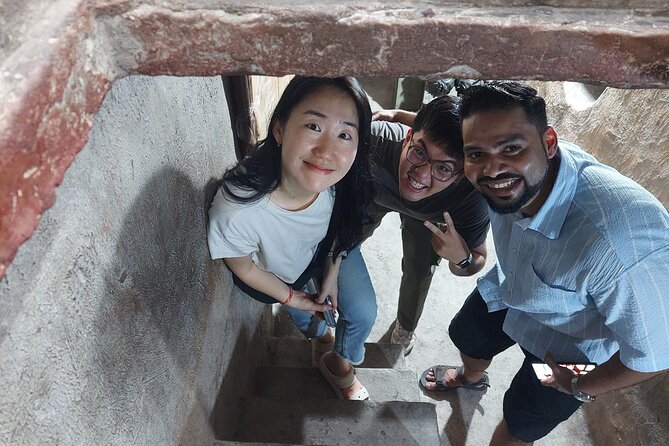
- Secret Weapons Cellar: a Vietnam War relic that many visitors skip
- Tight group size: described as no larger than eight for a more personal feel
- Human-scale stops: including a guide-family visit over coffee and photos
- Two landmark history hits: War Remnants Museum plus major war memorials
- Colonial architecture walking route: French-era buildings in the city center
A Small-Group Saigon Walk That Mixes Sights With Stories
This tour is designed for people who want downtown Ho Chi Minh City to make sense quickly. You’re not just checking boxes—you’re walking through the same streets that shaped modern Vietnam, then stopping at places where the city’s layers show up in plain sight.
One of the best parts is the group size. The experience is described as intimate, capped at eight travelers (with the overall activity listed as having a maximum of 20). That matters because you get more back-and-forth with your guide, and you’re less likely to get stuck at the back of a crowd when questions come up.
Another strong point is the pacing. In about half a day, you move between colonial landmarks, religious sites, and Vietnam War locations. That mix is useful for a first trip, because you see how the city’s public face and its difficult history live side by side.
You can also read our reviews of more walking tours in Ho Chi Minh City



Price and Practical Costs: Tips-Only, Plus Two Entry Fees
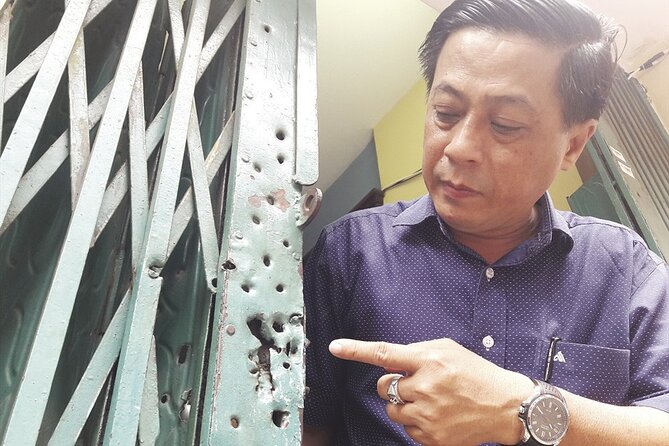
The listed price is $0.71 per person, and the tour operates on a tips-only basis. In practical terms, you should think of this as a guided walking experience where your tip is the real “payment,” and the small ticket price is just a booking component.
You also need to budget for two site admissions: about $2 per person for the Weapon Bunker and the War Remnants Museum. Everything else is handled through the walk and guide-led viewing points.
Is it good value? For Ho Chi Minh City, yes—especially if you’re new and want meaning, not just photos. The guide also takes you off the tourist path for at least one more personal stop (a family visit in a local living room), which is hard to replicate on your own.
If you’re traveling on a tight schedule, the 2 to 3 hour length is another value point. It’s short enough to fit between other city plans, but long enough to cover multiple key themes.
Where You Start and How the Route Flows
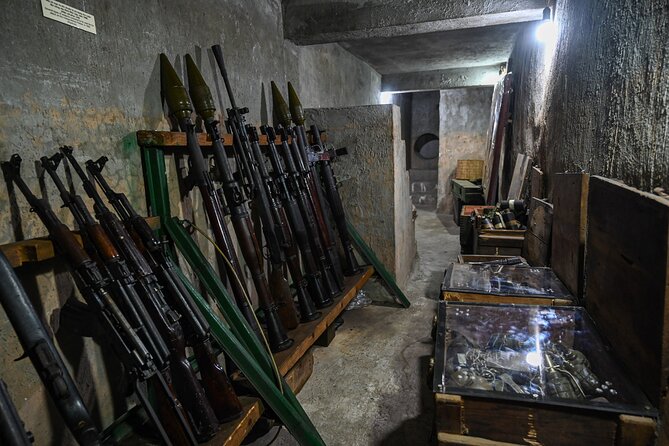
You meet at 7-Eleven, 23 Tôn Thất Tùng, Phường Phạm Ngũ Lão, Quận 1. The end point is Independence Palace near Ben Thanh, District 1. The route is designed as a true walking tour, and it’s near public transportation, which helps if you’re arriving from somewhere else in the city.
You’ll also use a mobile ticket, which is one less thing to manage once you’re in Vietnam. The tour confirmation happens at booking, so you don’t need to hunt for a name list the day of.
If you’re sensitive to long periods on your feet, plan comfortable shoes. This is a walking day through central streets and museum-adjacent areas, so a light, packable layer helps too. The tour lasts roughly 2 to 3 hours, with several stops around 10 to 20 minutes each.
Colonial Saigon on Foot: Opera House, Post Office, Basilica, and More

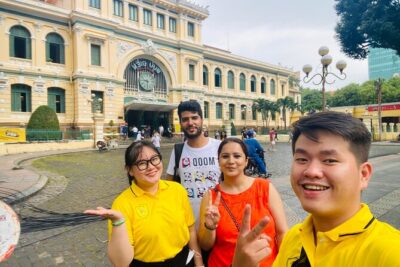
Even before you hit the war-specific sites, the city landmarks matter. The tour is built around downtown Saigon’s iconic colonial quarter, and you’ll see major buildings that shaped administrative and public life during French rule and afterward.
This portion is where you get the “mental map.” You’ll be pointed toward sights like:
- Saigon Opera House
- People’s Committee Building
- Central Post Office
- Saigon Notre-Dame Basilica
- Reunification Palace / Independence Palace area
Why this matters: the colonial architecture isn’t decoration. It’s part of the story of power—who ruled, how the city was organized, and how the public square looked before later conflicts.
The tour’s walking format also helps you connect the architecture to the history stops. When you later stand in places tied to the Vietnam War, the surrounding city doesn’t feel random. You’ll see the logic of the layout.
Secret Weapons Cellar: Saigon’s War-Time Survival Space
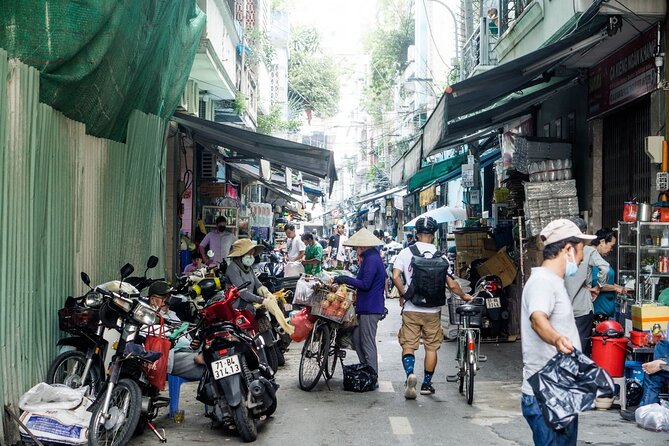
The most “wow” stop for first-timers is the Saigon Secret Weapons Bunker, also described as the Secret Weapons Cellar. It’s typically overlooked, and that’s exactly why it’s worth your time.
You’ll spend about 20 minutes at this location. The focus isn’t just the fact that the bunker existed—it’s the ingenuity and resourcefulness it represents. In a short time, you get a sense of how people prepared for danger in a city under pressure.
Practical note: plan for a small admission fee at this site (listed as $2 per person). If you’re claustrophobic, you should take it slowly and listen to your guide’s pace. This is a bunker, so the atmosphere may feel tighter and cooler than the street.
The bigger value here is context. After seeing the bunker, the rest of the tour’s war memorials and museum exhibits land harder, because you already understand the idea of survival and secrecy in daily life.
You can also read our reviews of more city tours in Ho Chi Minh City





A Local Living Room Stop: Coffee Stories and Family Photos

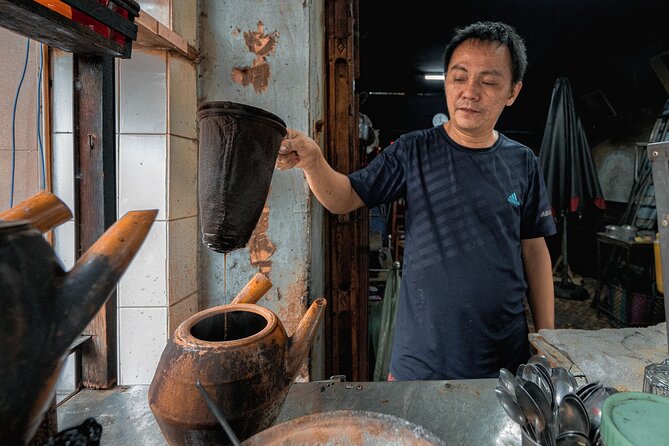
Next comes a stop designed to move you beyond monuments. You’ll visit the home of your guide’s family, where history shows up in photos on the wall and stories told over coffee.
You’ll spend about 20 minutes here, stepping off the main tourist route and into a space that feels lived-in, not staged. The point isn’t just to “see locals.” It’s to hear how the past is remembered in a personal way—through family context, not museum labels.
One detail that stays with you: some guides are known for real-world help, not just narration. For example, Joseph has been described as going the extra mile—organizing transfers from a cruise port and even lending some dong so guests could buy an iced coconut coffee when they arrived without currency. Even if you don’t need that kind of help, it’s a good sign that your guide is paying attention to your day.
This stop can be a morale boost in the middle of heavy content. You get a human pause before you hit the most difficult memorial and museum material.
Thích Quảng Đức Memorial and Jade Emperor Pagoda: Faith in Public View
The tour includes the Thích Quảng Đức Memorial, a tribute to the Buddhist monk who self-immolated in protest against the Vietnam War. You’ll spend about 20 minutes here.
This stop isn’t presented as a distant lesson. It’s framed as a moving reminder of how the war shaped moral action and public conscience. The emotional tone is serious, so give yourself a moment before you move on.
In addition, the experience highlights Vietnamese religion through a stop at the Jade Emperor Pagoda. This adds a different layer to your understanding of the city: not only suffering and politics, but also belief, tradition, and the way people structure meaning.
You’re getting two angles of faith:
- faith as protest and conscience
- faith as lived spiritual practice
Together, they make the tour feel less one-note. You leave with a fuller sense of how belief operates in Vietnam’s public life, not just inside temples.
Old Saigon Power Spots: French Archbishop’s Palace and a First Colonial School
After the memorial, the route brings you to the imposing French Archbishop’s Palace, known as Tòa Tổng Giám Mục Sài Gòn. You’ll spend around 10 minutes here, and the time is enough to notice what’s unusual about it.
This is described as Saigon’s oldest building, with connections to Lord Nguyen Anh and a tiled chapel built in 1790—years before Emperor Gia Long. That timeline detail matters because it shows the city wasn’t simply “French, then modern.” It had earlier roots, and later French-era architecture layered onto older foundations.
Then you’ll visit Lê Quý Đôn High School, described as the first French colonial school in Saigon. You’ll get about 10 minutes there.
Even if you’re not a school-architecture nerd, this stop gives you a practical insight: colonial education was part of shaping the future. The buildings and institutions weren’t separate from the political project—they were tools.
War Remnants Museum: The Vietnam War Through Exhibits and Artifacts
This is the centerpiece for many visitors, and it’s easy to see why. You’ll spend about 1 hour at the War Remnants Museum.
The museum is described as powerful and haunting, with photographs, exhibits, and military artifacts that show the impact of the Vietnam War. Expect a heavy tone. The value isn’t just scale. It’s how the exhibits connect cause and effect—how war decisions show up on people’s lives.
Admission for the War Remnants Museum is not included, and you’ll typically need that $2 per person budget for entry.
My practical advice: don’t rush this hour. If you feel overwhelmed, ask your guide what to focus on first. The guide can often point you toward the sections that best answer your questions, whether you’re trying to understand key events or just make sense of the war’s human cost.
The museum is where the tour’s earlier stops start to click. When you remember what a bunker represented, the idea of hiding, survival, and preparation stops being abstract.
Independence Palace: Reunification in Preserved Rooms
The last big stop is Independence Palace (also referred to as Reunification Palace). You’ll spend about 10 minutes here.
This place is where the Vietnam War ended in 1975. It was once the presidential home and command center, and now it functions as a symbol of reunification. The short visit is enough to get the shape of the building and the meaning of its spaces, including the preserved rooms and the rooftop helipad.
One thing I like about ending here is the emotional shift. You start with a bunker and war memorials, then you walk into a site that points to a different chapter. Even in a brief visit, you get a sense of change—without the tour pretending the past became tidy.
If You Want a Guided First Look, This Fits
This tour works especially well if:
- you’re short on time and want downtown Saigon covered in one outing
- you want the war story told with a mix of places, not just one museum
- you prefer a smaller group where you can ask questions
- you like your history connected to architecture and everyday life
It’s also a good option if you want your guide to handle the “why” behind the sights. You’ll get a local expert fluent in English, and the personal stops (like the family visit) are hard to recreate on your own.
If you’re mainly seeking leisure photography and light sightseeing, you might find parts of this day emotionally intense. The bunker and museum aren’t gentle. You’re signing up for Vietnam War context.
Should You Book This Hidden Bunker and Vietnam War Tour?
Book it if you want a smart, guided shortcut to understanding Ho Chi Minh City’s layers: colonial buildings, public religion, and the Vietnam War’s impact. The small-group format and the thoughtful mix of stops—especially the secret weapons cellar plus the War Remnants Museum—make it a high-value first-timer choice.
Skip it (or go with different expectations) if you’re not interested in war history or you hate emotionally heavy content. Also, if you’re trying to avoid any extra costs, remember the $2 per person admissions for the bunker and museum.
One more practical tip: wear comfortable shoes and bring water. A day like this moves fast between emotionally different spaces, and comfort makes it easier to stay present.
FAQ
How long is the Ho Chi Minh City hidden bunker and Vietnam War walking tour?
It lasts about 2 to 3 hours.
Where does the tour start and end?
It starts at 7-Eleven, 23 Tôn Thất Tùng, Phường Phạm Ngũ Lão, Quận 1, and ends at Independence Palace near Ben Thanh, District 1.
Is there an admission fee?
Yes. A $2 per person admission fee is listed for the Weapon Bunker and the War Museum.
What is the group size like?
The experience is described as no larger than eight travelers, and the activity is listed with a maximum of 20 travelers.
What does the price include?
The tour includes a local expert fluent in English and operates on a tips-only basis. A small listed price is shown, but tips are part of the model.
Is the tour suitable for most travelers?
The tour lists that most travelers can participate.
Is there a vegetarian option?
Yes. A vegetarian option is available if you advise at booking.
Do I get a ticket on my phone?
Yes, it uses a mobile ticket.
Is there free cancellation?
Yes, free cancellation is available up to 24 hours in advance for a full refund.