REVIEW · HO CHI MINH CITY
Ho Chi Minh City: Five Faiths of Saigon Guided Tour
Book on GetYourGuide →Operated by VIVA VIETNAM · Bookable on GetYourGuide
Saigon can feel like a stack of different worlds in one street. This half-day Ho Chi Minh City tour is interesting because you’re not just looking at buildings—you’re learning how people pray, celebrate, and share space. You’ll walk through five major faith landmarks and hear how they connect to everyday life in Vietnam’s biggest city.
I especially like the order of the stops. You start with Islam at the Central Mosque, then move through Taoist and Buddhist-style worship spaces, and end with Cao Dai, which shows a distinctly Vietnamese idea of faith-unity. I also like that the guide brings the sites to life with historical context and practical explanations, not just dates.
One possible drawback: a couple of places may not be fully accessible. The Pink Tan Dinh Church is noted as not open for visits on weekends, and even when the church is closed, you’ll likely only be able to view it from outside—still worth it, but it changes the experience.
In This Review
- Key highlights worth knowing
- Five Faiths in Four Hours: What the Half-Day Really Covers
- First Stop: Saigon Central Mosque and the Islam of Daily Prayer
- Jade Emperor Pagoda: Taoist Temple Mood, Incense Smoke, and Lunar New Year Prayers
- Pink Tan Dinh Church: French-Colonial Catholic Architecture (and Weekend Closures)
- Mariamman Hindu Temple: Color, Devotion, and South Indian Roots in Saigon
- Cao Dai Temple: Vietnam’s Syncretic Faith and the Idea of One Spirit
- Price and Logistics: Is $34 Good Value for This Kind of Tour?
- What to Bring (and What Religious Sites Will Ask of You)
- How the Guides Make (or Break) a Religious Landmark Tour
- Who This Tour Fits Best (and Who Might Want Another Plan)
- Should You Book the Ho Chi Minh City Five Faiths Tour?
- FAQ
- FAQ
- How long is the Ho Chi Minh City Five Faiths of Saigon Guided Tour?
- How much does this tour cost?
- What sites are included in the tour?
- What languages are the live guides available in?
- Is the tour price all-inclusive?
- What is the meeting point for the tour?
- Are there any rules about shoes or clothing?
- What about cancellations and booking flexibility?
Key highlights worth knowing
- Five faith stops in one 4-hour flow: mosque, Taoist-style temple, Pink Church, Hindu temple, and Cao Dai
- Caodaism is a standout concept: a uniquely Vietnamese religion focused on unity of belief
- Architecture as a language: smoke, carvings, colors, and French-colonial church design
- Guides who can answer questions: Daniel, Stephanie, and Japanese-speaking guides like Tōさん are praised for clear explanations
- Photo opportunities, but with limits: some areas restrict photography, and indoor rules vary
- Practical reality check: shoes are not allowed inside religious spaces
Five Faiths in Four Hours: What the Half-Day Really Covers
This is a focused, 4-hour religious sightseeing tour built for people who want meaning, not just photos. For $34, you get a local guide, entrance fees, and a small-group format, which makes a big difference when you’re learning what to look for in each place.
The pace is brisk enough to hit five landmarks, but you still get guided time at each stop. Plan for a classic city-tour rhythm: short walks, quick photo moments, then a guided explanation while you’re there. If you like structure, this works. If you prefer slow wandering, you might want extra time on your own afterward.
You can also read our reviews of more guided tours in Ho Chi Minh City


First Stop: Saigon Central Mosque and the Islam of Daily Prayer
Your tour starts at the Saigon Central Mosque, a calm place of worship that helps you get your bearings fast. Even before you go into the details, you’ll feel the shift from street noise to prayer space. This is a good first stop because it sets the tone for respect: you’re learning how a community practices faith, not treating the mosque like a sightseeing prop.
The guide typically shares what Muslim residents and visitors in Vietnam do there and how the community fits into the city. Expect a mix of viewing and guided explanation, with time for photos. If you’re the kind of person who asks questions, this is usually a great moment to do it, because you’re starting with a site where the purpose is straightforward and clear.
Practical note: you’ll want comfortable shoes, but remember religious sites often require you to remove them. Bring socks if you’re the type who gets uncomfortable barefoot, since the tour asks for respectful visiting attire.
Jade Emperor Pagoda: Taoist Temple Mood, Incense Smoke, and Lunar New Year Prayers
Next comes the Jade Emperor Pagoda, which is famous for its atmosphere and ornate details. When you walk in, it’s the sensory stuff that hits first: carved surfaces, incense smoke, and that feeling of being in a place people visit for real hopes. The guide explains what locals come for—things like prosperity, fertility, and good fortune—especially around Lunar New Year.
This stop is valuable because it shows you how faith isn’t only about belief. It’s also about rhythm—when people come, what they ask for, and why certain symbols matter. Even if you don’t consider yourself religious, it’s easy to understand the human side of prayer here.
One more reason I like this stop: it teaches you how to look. Instead of only seeing “a temple,” you learn the meaning behind what you’re noticing—carvings, iconography, and the overall worship setup.
Pink Tan Dinh Church: French-Colonial Catholic Architecture (and Weekend Closures)
Then you’ll see the Pink Tan Dinh Church, one of the most recognizable church facades in Saigon. It’s a standout because it ties the city’s religious life to the colonial story—architecture that came with French-era influence, now part of Vietnamese Catholic heritage.
You’ll get a photo stop and guided tour time, but here’s the key consideration: the Pink Church is not open for visits on weekends. On a weekend tour, you’ll likely be standing outside instead of going in. That’s still worthwhile if you’re studying architecture and urban history, but it’s good to know upfront so you don’t expect full interior access.
If you’re visiting during the week, you may get a more complete experience. Either way, the exterior view is dramatic, and the guide’s context helps you understand why this color and style look the way they do in Saigon.
Mariamman Hindu Temple: Color, Devotion, and South Indian Roots in Saigon
After the church, the tour turns to Saigon’s Indian heritage at the Mariamman Hindu Temple. This is where the experience becomes less about one dominant “style” and more about seeing how different communities make space for their own traditions.
The focus here is the Tamil community worshiping the goddess Mariamman. Expect a mix of color, movement, and devotion. You’ll see the temple not as a static monument, but as a functioning spiritual place with its own visual language.
This stop is especially good if you want to understand religion as culture. Hindu worship here isn’t presented as a museum topic. The guide explains the meaning behind what you’re seeing, so the colors and rituals make more sense instead of feeling random.
You can also read our reviews of more city tours in Ho Chi Minh City



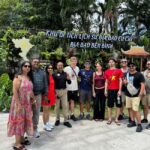

Cao Dai Temple: Vietnam’s Syncretic Faith and the Idea of One Spirit
The final stop is the Cao Dai temple, and it’s often the part people remember. Cao Dai is a uniquely Vietnamese religion, built around a vision of unity—how different faiths can share a spiritual belief. In a city where religions sit close together, this is the logical ending point.
Expect vivid architecture and symbolic ritual elements. Even if you can’t read the meanings instantly, your guide helps connect the visuals to the bigger idea: Cao Dai isn’t only about aesthetics. It’s about how faith groups can coexist through shared values.
This is also where good guidance matters most. Some guides, including Daniel in past groups, are praised for very clear explanations and for using tools like maps and images on their phones to make complex concepts easier. If you’re a solo traveler, there’s an added bonus: guides who enjoy taking photos can help you get solid shots without you awkwardly setting up your camera every time.
Price and Logistics: Is $34 Good Value for This Kind of Tour?
At $34 per person for a 4-hour small-group tour, the value is mostly in what’s included. Entrance fees are part of the price, and you’re paying for a local guide who explains cultural and historical meaning at each stop.
What’s not included is just as important: meals and transportation to and from the meeting point. The tour itself handles moving between stops as part of the experience, and based on how these tours often run through District 1, you should expect short transfers and city walking. Comfortable shoes matter.
So is it “cheap”? Not always. But compared with piecing together five separate visits with self-guided research and separate ticketing, this price is fair—especially because you’re paying for the human explanations that turn landmarks into understanding.
What to Bring (and What Religious Sites Will Ask of You)
This tour is straightforward about expectations, which makes planning easy.
Bring:
- Comfortable shoes
- Camera
- Water
And keep in mind:
- Shoes are not allowed inside religious areas.
- Respectful attire is recommended. That isn’t about being formal; it’s about not distracting from the purpose of worship.
- Photography may be restricted in certain areas, so plan to treat the guide’s instructions as part of the experience, not an inconvenience.
If you want smoother photos, wear clothing that helps you move easily and remove shoes without a fuss. It’ll make the quick transitions between stops feel less like chores.
How the Guides Make (or Break) a Religious Landmark Tour
This type of tour lives or dies by interpretation. You can see a pagoda or a church on a street map, but you won’t automatically understand what people are doing there or what each symbol means.
The tour runs with live guides in Japanese, English, and Vietnamese. Past groups have praised guides like Stephanie for being super informative and answering many questions, and praised Tōさん for being kind and for adding extra local experiences alongside the faith-focused stops.
Look for these signals when your guide starts explaining:
- clear, organized explanations you can follow
- willingness to answer questions on the spot
- an ability to connect architecture to the actual practice of faith
When that happens, the tour becomes more than sightseeing. It becomes a quick, respectful education you can carry with you for the rest of your time in Saigon.
Who This Tour Fits Best (and Who Might Want Another Plan)
You’ll likely enjoy this tour if you:
- want a structured introduction to Saigon beyond war-history museums
- like cultural learning with real-world examples
- enjoy architecture and symbols, especially when a guide explains them
It’s also great if you’re short on time. Five faith landmarks in four hours is the right format for a first visit to District 1.
You might want a different approach if you:
- hate any rule about removing shoes or adjusting attire
- get frustrated when indoor access is limited on certain days
- prefer slower, freeform exploration rather than a set itinerary
Should You Book the Ho Chi Minh City Five Faiths Tour?
If you want one good half-day that connects faith, architecture, and city life, this tour is an easy recommendation. The price is reasonable, entrance fees are included, and the small-group setup means you’ll get more than a drive-by look.
Book it especially if Cao Dai is on your “I’ve heard of it” list. The way this tour frames Caodaism makes it easier to understand why it feels so distinct in Vietnam’s religious landscape.
Before you book, just check your timing. If you’re going on a weekend, know that the Pink Tan Dinh Church may not be open for visiting, so you’ll likely spend more time on exterior views.
FAQ
FAQ
How long is the Ho Chi Minh City Five Faiths of Saigon Guided Tour?
The tour lasts 4 hours.
How much does this tour cost?
The price is $34 per person.
What sites are included in the tour?
You’ll visit five religious landmarks: Saigon Central Mosque, Jade Emperor Pagoda, Pink Tan Dinh Church, Mariamman Hindu Temple, and Cao Dai temple.
What languages are the live guides available in?
The guide is available in Japanese, English, and Vietnamese.
Is the tour price all-inclusive?
The price includes a local guide, all entrance fees, and a small group experience. It does not include meals or transportation to and from the meeting point.
What is the meeting point for the tour?
The meeting point can vary depending on your booking, with options listed at Khách sạn Sheraton Sài Gòn or Nhà hát Thành phố Hồ Chí Minh.
Are there any rules about shoes or clothing?
You should wear respectful attire. Shoes are not allowed in the religious sites you visit.
What about cancellations and booking flexibility?
You can cancel up to 24 hours in advance for a full refund, and there is also an option to reserve now & pay later.