REVIEW · HO CHI MINH CITY
Mastering Egg Coffee-Course on 4 traditional types of Viet coffee
Book on Viator →Operated by The Provincial Table Cooking Class · Bookable on Viator
Four cups, one lesson.
This Ho Chi Minh City workshop turns Vietnamese coffee into something you can actually repeat at home. I love that you make all four traditional drinks side-by-side—Cà Phê Trứng Lòng Đỏ, Cà Phê Sữa Đá, Cà Phê Muối Biển, and Cà Phê Cốt Dừa—and you practice technique, not just tasting. I also like how the class emphasizes layering and presentation, so each cup looks as good as it tastes. One thing to consider: with four coffees in about 2 hours, the caffeine can hit hard, especially if you pick an afternoon slot.
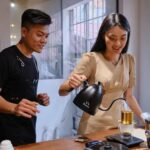
You’ll start with a quick look at Vietnamese coffee culture, then move into hands-on brewing using traditional drip methods. The head barista leads the steps, and the host (Long/Sarah) keeps the vibe relaxed and the timing moving so you’re not stuck waiting for other people. It’s a small group (max 15), and the Q&A at the end gives you a clear, practical way to order and judge Vietnamese coffee back on the street.
In This Review
- Quick hits before you go
- What you make: four Vietnamese coffees in one focused session
- Brewing technique and layered presentation that you can repeat
- Cà Phê Trứng Lòng Đỏ: egg coffee and the silky red-yolk effect
- The other three cups: condensed milk, sea salt, and coconut
- Dark Roast Condensed Milk Coffee (Cà Phê Sữa Đá)
- Sea Salt Coffee (Cà Phê Muối Biển)
- Coconut Milk Coffee (Cà Phê Cốt Dừa)
- Caffeine timing, group size, and the pace of the lesson
- Price and what you really get for $25
- FAQ
- How long is the coffee course?
- How many coffees do I make in the class?
- Is the class limited in group size?
- What’s the price per person?
- Where does the experience start and end?
- Do I need to bring anything?
- Do I get a mobile ticket?
- Is confirmation sent after booking?
- Is there a Q&A at the end?
- Can I cancel for a full refund?
- Should you book this egg coffee course in Ho Chi Minh City?
Quick hits before you go
- Hands-on for four drinks: you make each one, not just watch
- Traditional drip methods: learn the steps for brewing and layering
- Taste the bitter-sweet balance that defines Vietnamese coffee
- Small group energy (max 15): easy to chat while you work
- Paced by a funny, engaging host (Long/Sarah): less awkward, more learning
- Special gifts: everyone gets something to take home
What you make: four Vietnamese coffees in one focused session
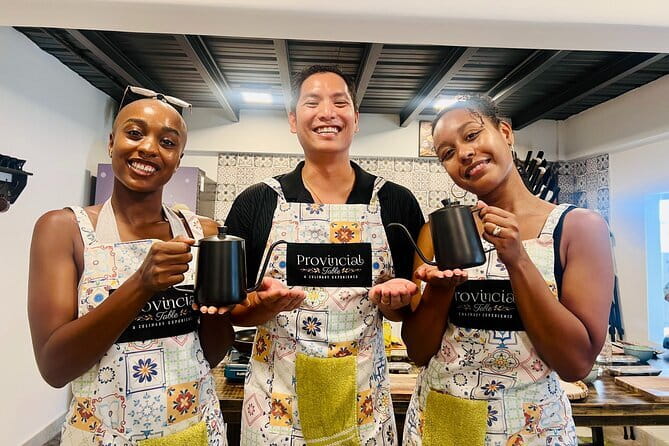
This is a short course with a clear goal: by the end, you should be able to brew a Vietnamese coffee the way locals expect it. You’ll learn by making four cups that each highlight a different ingredient and flavor direction, so you’ll start to understand why Vietnamese coffee tastes the way it does.
Here’s the set you’ll be working through:
- Egg Coffee (Cà Phê Trứng Lòng Đỏ)
- Dark Roast Condensed Milk Coffee (Cà Phê Sữa Đá)
- Sea Salt Coffee (Cà Phê Muối Biển)
- Coconut Milk Coffee (Cà Phê Cốt Dừa)
The value for me isn’t just the variety. It’s that each cup trains your palate differently. Egg coffee teaches texture and richness. Condensed milk coffee teaches sweetness and body. Sea salt coffee teaches contrast. Coconut coffee teaches smooth aroma and mellow sweetness.
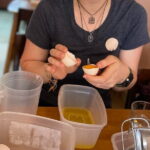
One practical upside: the class provides the accoutrements for you to master the process. That means you’re not fumbling around trying to find the right tools in a busy café before you even understand what you’re tasting.
You can also read our reviews of more tours and experiences in Ho Chi Minh City
Brewing technique and layered presentation that you can repeat
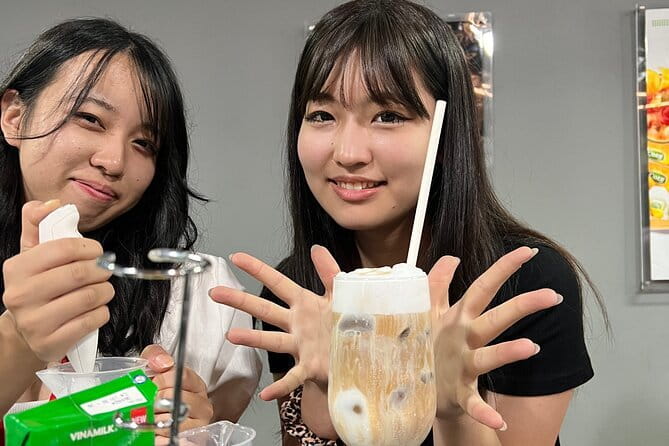
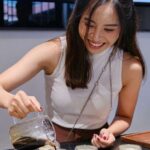
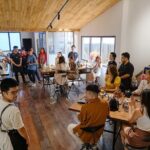
The class is guided by the head barista, and it’s built around the meticulous steps of steeping and brewing. That matters because Vietnamese coffee isn’t just about strong coffee—it’s about how the brew comes together and how it lands in the cup.
You’ll focus on two skills:
1) Steeping and brewing steps using traditional drip methods
2) Presentation and layering, so the textures don’t just taste good—they look good too
In plain terms, layering changes your experience even before the first sip. When the drink separates properly, the first spoonful can taste one way, and the next moment shifts in temperature and texture. The class explicitly calls out the interplay of temperatures, textures, and flavors, and that’s exactly the kind of detail that stops Vietnamese coffee from feeling like a one-note shot.
If you like learning by doing, you’ll appreciate the pacing. The host Long/Sarah has a reputation for keeping things moving and engaging, which is a big deal in a class like this. No one wants a slow lesson when you have coffee to build.
And you get more than technique at the end. There’s a Q&A, plus discussion on how coffee culture in Vietnam keeps changing—useful if you want to understand why the drinks you see in cafés sometimes feel different from what you expected.
Cà Phê Trứng Lòng Đỏ: egg coffee and the silky red-yolk effect
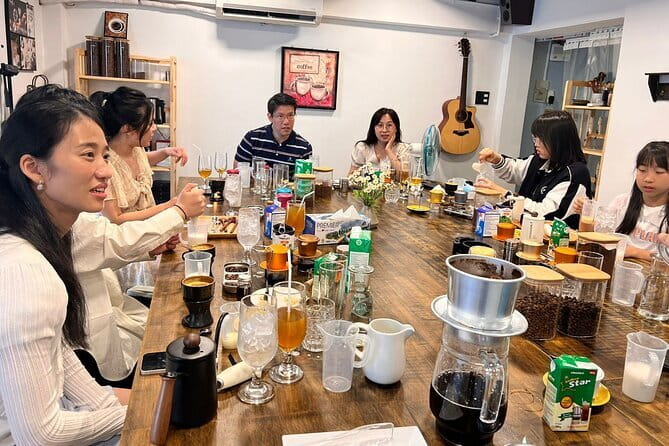
Egg coffee is the one people often chase first, and for good reason. Cà Phê Trứng Lòng Đỏ is built around a rich egg component that creates a creamy feel and a sweet, almost custard-like texture on top.
In this workshop, you’re not only tasting egg coffee—you’re learning how to build it correctly. The big lesson is that the egg element affects both:
- Texture (how it feels in the mouth)
- Balance (how sweetness and bitterness meet)
Vietnamese drip coffee has a deeper, bolder base, so without careful mixing and layering, egg coffee can end up either too heavy or too sweet. The class’s emphasis on bitter and sweet balance helps you avoid the extremes. You learn what the cup should feel like when everything is in harmony.
A practical tip after you make it: pay attention to temperature changes as you drink. Egg coffee often shifts as it sits slightly, and that’s part of the experience. If you like your coffee to evolve while you sip, this is a good one to savor slowly.
The other three cups: condensed milk, sea salt, and coconut
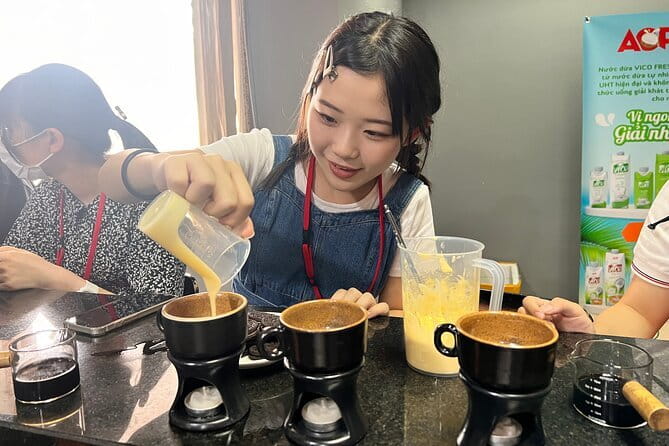
After egg coffee, the workshop cycles through three more classic styles. This is where you learn the “why” behind Vietnamese coffee flavors: each ingredient changes the way the brew reads on your palate.
Dark Roast Condensed Milk Coffee (Cà Phê Sữa Đá)
This one is built on a dark roasted coffee base paired with condensed milk. You’ll learn how the sweetness settles over the bitterness so the drink feels round, not harsh.
If you usually find strong coffee intimidating, this is often the gateway. The condensed milk softens the edge, so you can focus on the coffee character without getting knocked over by pure bitterness.





Sea Salt Coffee (Cà Phê Muối Biển)
Sea salt coffee is all about contrast. Salt doesn’t make the coffee taste like an overly salty drink—it sharpens flavor and helps sweetness and bitterness feel clearer.
The practical win here is palate training. You’ll taste how a small ingredient can change the perception of the whole cup. If you like desserts where salt makes the chocolate taste more intense, this has the same logic.
Coconut Milk Coffee (Cà Phê Cốt Dừa)
Coconut milk coffee brings a different kind of comfort. Instead of just sweetness, you get a smoother, rounder flavor profile that feels calmer on the tongue.
This cup is a great follow-up if egg coffee felt a little too rich or if condensed milk coffee felt too sugary. Coconut gives you a mellow sweetness with a distinct aroma.
Across all three, the class keeps returning to the same idea: technique and presentation shape the end result. When you build each cup the right way, you get those layered textures and the flavor shifts that make Vietnamese coffee feel like a real beverage, not just caffeine.
Caffeine timing, group size, and the pace of the lesson
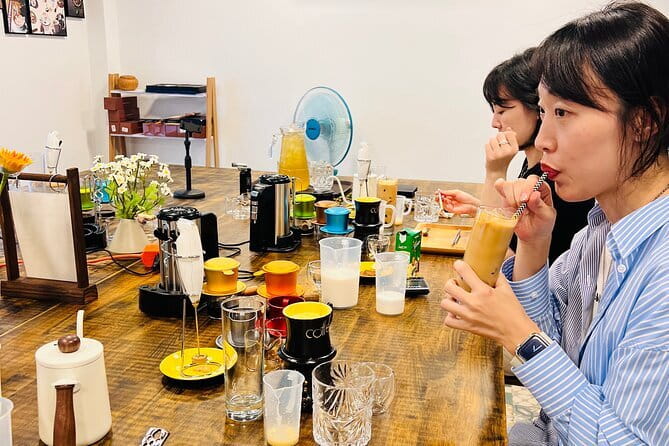
This workshop runs about 2 hours and includes four coffees. That’s a lot of caffeine in a short window, so timing matters more than you might expect.
One straightforward lesson from the vibe of the class: if you’re doing the afternoon session, plan for a caffeine wake-up moment that may be stronger than you’re used to. If mornings work better for your schedule, you’ll probably enjoy the experience more—coffee tastes nicer when you’re relaxed, not when you’re trying to fight your own buzz on the street later.
The group size is capped at 15, which is ideal for a hands-on class. You get enough interaction to meet people, but you’re not stuck waiting while the whole room catches up. That small-group feel also helps the host keep the pacing tight.
And yes, people bring curiosity, not just hunger for caffeine. The relaxed pace makes it easier to talk to others who are also learning what Vietnamese coffee tastes like when you build it from scratch.
Price and what you really get for $25
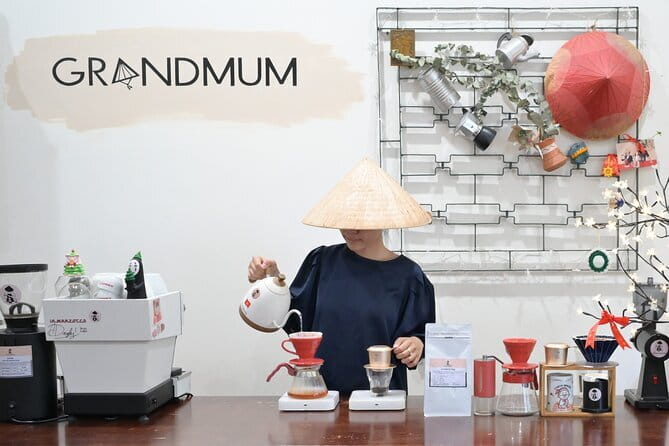
At $25 per person for about 2 hours, this class is priced like a true experience, not like a quick tasting. You’re not paying mainly for drinks—you’re paying for guided technique, the tools provided, and the chance to make four different versions correctly.
What you get that makes the price feel fair:
- Four cups you actively create, not just sample
- Head barista instruction with a focus on steps and layering
- Provided accoutrements, so you can learn without extra shopping
- Q&A plus culture talk, so you leave with more than a sugar buzz
- Special gifts for all participants
If you’re the type who likes bringing skills home—how to order, how to judge quality, how to recreate a flavor at least halfway—this is good value. If you only want caffeine with zero interest in technique or explanation, then it might feel pricier than a normal café stop. But if you like learning and you enjoy tasting through the lens of method, $25 is a reasonable trade.
The meeting point is in District 1 at 131/3 Nguyễn Thị Minh Khai, Phường Phạm Ngũ Lão, Quận 1 (711106). It’s near public transportation, so you should have an easier time getting there than for classes farther out of the center.
FAQ
How long is the coffee course?
The workshop runs for about 2 hours.
How many coffees do I make in the class?
You’ll learn to make four Vietnamese coffee styles: egg coffee, dark roast condensed milk coffee, sea salt coffee, and coconut milk coffee.
Is the class limited in group size?
Yes. The maximum group size is 15 travelers.
What’s the price per person?
The price is $25.00 per person.
Where does the experience start and end?
It starts at 131/3 Nguyễn Thị Minh Khai, Phường Phạm Ngũ Lão, Quận 1, Thành phố Hồ Chí Minh and ends back at the meeting point.
Do I need to bring anything?
The class description says each participant receives the accoutrements needed to master the coffee preparation.
Do I get a mobile ticket?
Yes, the experience uses a mobile ticket.
Is confirmation sent after booking?
You’ll receive confirmation at the time of booking.
Is there a Q&A at the end?
Yes. The class concludes with a Q&A session and discussion about evolving Vietnamese coffee culture.
Can I cancel for a full refund?
Yes, you can cancel for a full refund if you cancel at least 24 hours before the start time.
Should you book this egg coffee course in Ho Chi Minh City?
Yes—especially if you want more than a caffeine stop. If you enjoy hands-on learning and you’re curious about how Vietnamese coffee flavors get built through technique and layering, this class is a strong match.
I’d book it if you want to leave with a practical skill: how to think about bitter-sweet balance and texture shifts, not just which drink you liked most. Skip it only if you’re highly sensitive to caffeine or you’d rather spend two hours simply sightseeing instead of mastering four cups.