REVIEW · HO CHI MINH CITY
Small-group Cooking Class with Market visiting (4-5 hours)
Book on Viator →Operated by Asiana Link Travel · Bookable on Viator
Saigon food lessons are best when you start at the source. This small-group class combines a market visit with cooking instruction and a sit-down lunch you helped make. You’ll also get the cultural bits that explain why Vietnamese dishes taste the way they do, not just how to cook them.
I especially like the way the chef guides your hands-on cooking so you’re not just watching. The market portion also gives you a practical sense of what you’re buying, from rice varieties to herbs and sauce ingredients. One thing to consider: hotel pickup by cyclo is only one-way and only from District 1, so plan your start and end around that.
In This Review
- Key moments to watch for
- Cyclo Pickup and Market Start: Easy Half-Day, Real-World Saigon
- Why the cyclo matters
- Time reality check
- What You Learn in the Market: Rice Varieties, Herbs, and Sauce Logic
- Rice: more than a side dish
- Herbs, aromatics, and the fish sauce foundation
- Inside the Kitchen: Traditional Tools, Yin-Yang Balance, and Chopstick Skills
- Traditional utensils you can connect to everyday cooking
- The cultural layer: history and influences
- Yin-Yang balance in food talk
- Chopsticks: yes, that counts
- The Cooking Portion: How You Build Several Dishes with Chef Guidance
- Small-group size helps your results
- Teaching style: patient, clear, and question-friendly
- Nước mắm technique and blending flavors
- Vegetarian option exists
- Lunch After Class: Eat What You Made (and Ask Better Questions)
- The value of chatting with the instructor
- Bring your appetite, but also your questions
- Price and Value: Is $60 Worth It in Ho Chi Minh City?
- Who Should Book This Cooking Class (and Who Might Skip It)
- Should You Book This Half-Day Cooking Class with Market Visiting?
- FAQ
- How long is the cooking class with market visiting?
- What’s included in the price?
- Where does the tour start and end?
- Is there a vegetarian option?
- Can I get hotel pickup?
- How big is the group?
- Can I cancel for a full refund?
Key moments to watch for
- Market walking first: You’ll see ingredients up close, including lots of rice varieties and fresh flavor-makers.
- Real technique, not just recipes: Expect help with mixing flavors and understanding nước mắm (fish sauce) as a building block.
- Traditional kitchen context: You’ll be introduced to kitchen tools tied to older Vietnamese everyday life.
- Culture in the cooking: The class touches on influences on Vietnamese cuisine and ideas like Yin-Yang balance.
- Chef-led learning with patience: Hosts and chefs such as Camellia, Daniel, My, Joey, and chefs like Quy/Qi and Manh have been praised for clear teaching.
- Lunch right after: You eat what you make and can ask questions while it’s still fresh in your mind.
Cyclo Pickup and Market Start: Easy Half-Day, Real-World Saigon
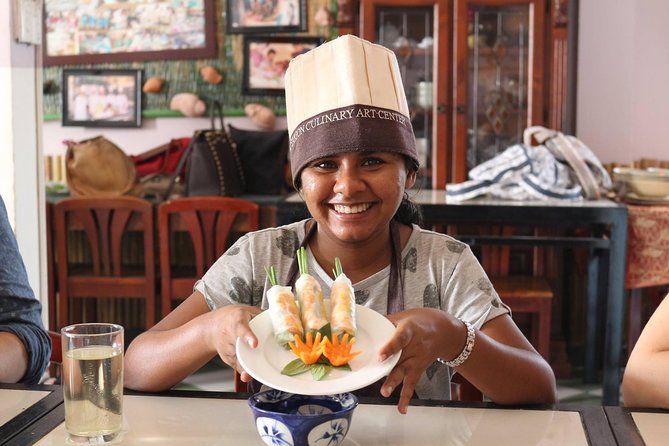
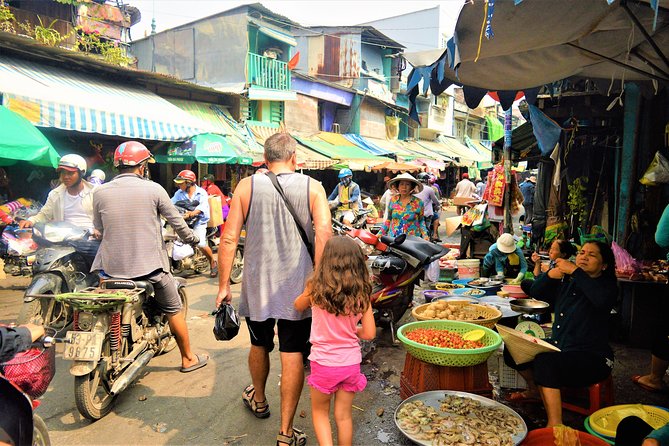
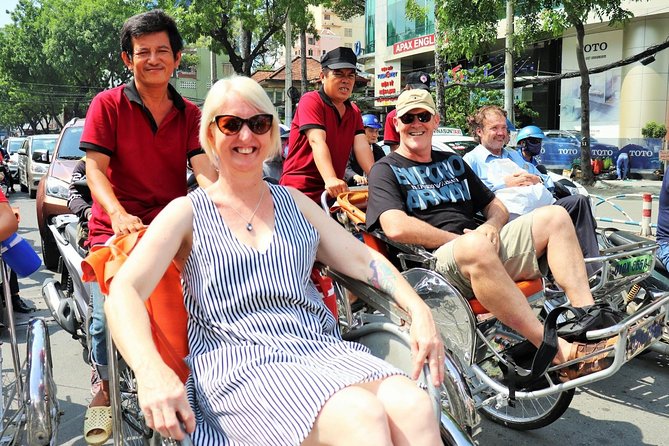
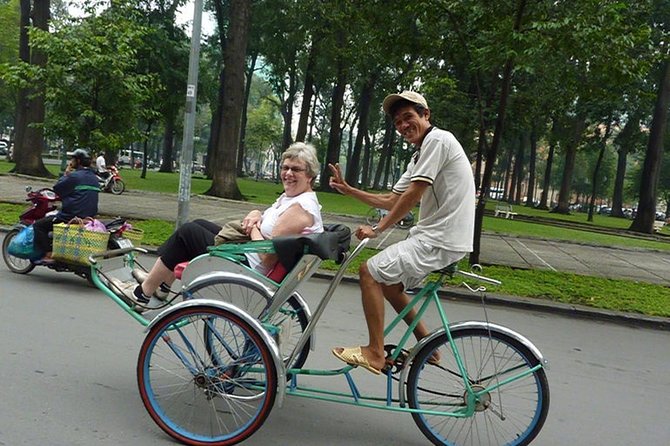
This is the kind of food tour that feels efficient without feeling rushed. You start with a cyclo experience tied to getting you out into the city’s daily food world, and then you transition into the market where Vietnamese ingredients are the main characters.
If you’re staying in District 1, you’ll get one-way hotel pickup by cyclo. If not, you’ll base yourself around the meeting point at Mekong River Tours [Asiana Link Travel], 60 Tôn Thất Đạm, Bến Nghé, Quận 1. Either way, you’re set up for a straightforward half-day: go out, learn, cook, eat, and return to the meeting point area afterward.
You can also read our reviews of more shopping tours in Ho Chi Minh City


Why the cyclo matters
It’s not just a cute transport detail. A slower ride helps you notice the texture of the streets before you hit the market. You arrive with better context, and that makes ingredient explanations land faster when your host starts pointing out what’s what.
Time reality check
The description lists this as about 3 hours (approx.), though it’s positioned as a half-day experience. Plan around a morning or early afternoon window, and remember you’re trading some flexibility for structure: market walking plus cooking plus lunch.
What You Learn in the Market: Rice Varieties, Herbs, and Sauce Logic
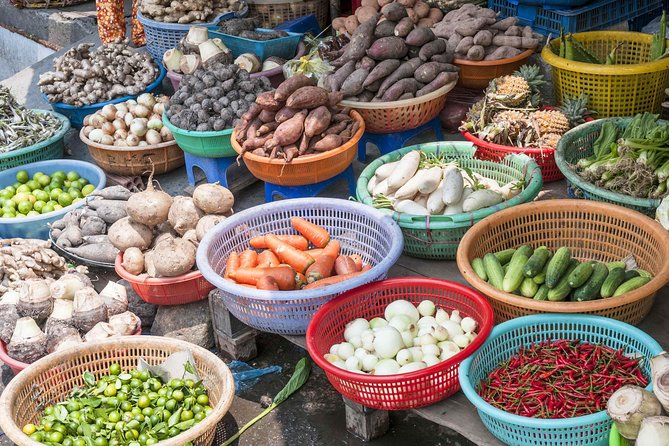
The market stop is where this tour earns its value. You don’t just taste; you learn to identify ingredients and understand how Vietnamese cooking builds flavor step by step. One of the strongest themes is rice.
Rice: more than a side dish
Expect to see many rice varieties and learn some practical techniques for cooking different kinds. Rice in Vietnam can be a world of textures, not just a default grain. In a hands-on class, that matters because your rice method affects everything you serve it with.
You can also read our reviews of more tours and experiences in Ho Chi Minh City




Herbs, aromatics, and the fish sauce foundation
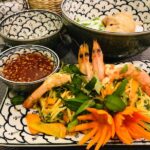
You’ll also get guided help recognizing key ingredients and how they blend with spices. The class specifically highlights nước mắm (fish sauce)—not as a mysterious bottled thing, but as a component with a role in balancing salty, savory, and deep flavor.
This is the difference between a cooking class that teaches recipes and one that teaches logic. When you understand why nước mắm shows up, you’ll be able to adapt the flavors when you cook later at home.
Inside the Kitchen: Traditional Tools, Yin-Yang Balance, and Chopstick Skills
After the market, you move into the cooking space where traditional Vietnamese kitchen life gets explained. That part can feel abstract at first—until you see how it connects to the tools and the way meals are prepared.
Traditional utensils you can connect to everyday cooking
You’ll be introduced to kitchen utensils still closely linked to how Vietnamese kitchens worked in the past. Even if you never use those exact tools at home, the concept helps: Vietnamese cooking relies on speed, timing, balance, and understanding textures.
The cultural layer: history and influences
The class also covers context, including roots in Hue Citadel Imperial Cuisine and later effects from both Western and other Eastern influences. You don’t need to be a Vietnam history buff to appreciate this. When you understand where flavors and dining habits came from, the dishes feel less random.
Yin-Yang balance in food talk
Expect a quick look at the idea of Yin-Yang balance. I like when a class treats this as a framework people use while cooking and eating, not as a pop-mysticism lecture. It gives you another way to think about balance—especially when sauces and herbs are involved.
Chopsticks: yes, that counts
The tour specifically includes dining etiquette and technique to master chopsticks. If you’ve avoided learning chopsticks because you’re used to forks, this is a small, useful upgrade. Even a short confidence boost here can make your meals in Vietnam less awkward and more fun.
The Cooking Portion: How You Build Several Dishes with Chef Guidance
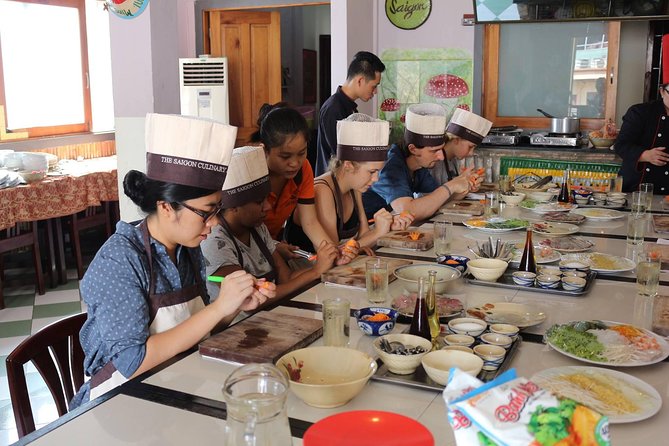
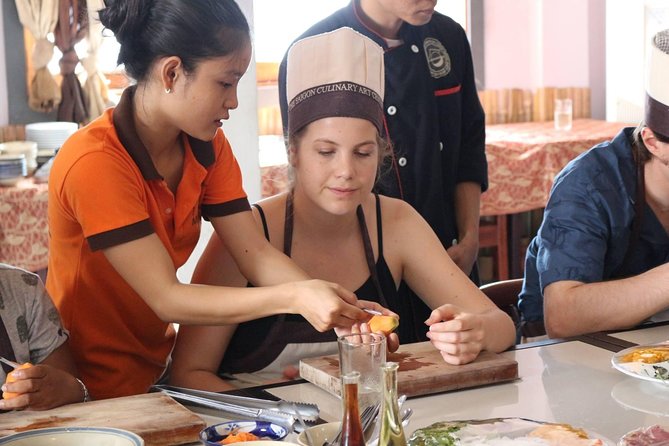
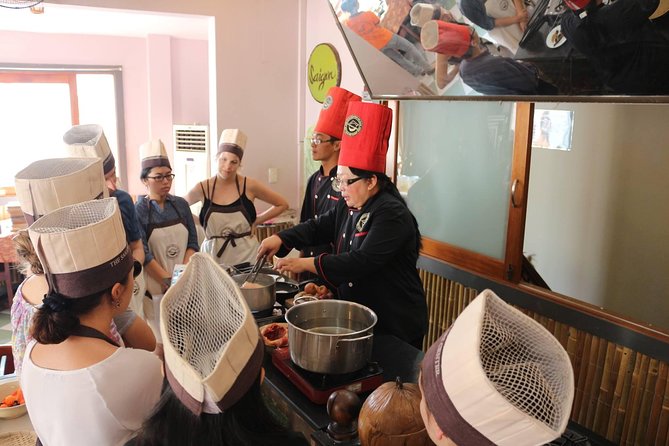
This is the hands-on part: you prepare and cook a selection of favorite Vietnamese dishes with guidance from the chef-instructor. The most common win in this kind of class is whether the teaching actually helps you get results on your plate.
Small-group size helps your results
The group size max is 20 travelers, and the class is designed as a small group. That tends to mean you can get answers fast when you’re stuck—whether it’s how to cut something, when to add an ingredient, or how to adjust flavor.
Teaching style: patient, clear, and question-friendly
Many previous guests praised the clarity and patience of the instruction, including chefs like Quy/Qi and Manh, and hosts like Camellia, Joey, Daniel, and My. In plain terms: when the chef explains why a step matters, you move with more confidence.
Nước mắm technique and blending flavors
You’ll learn how ingredients and spices blend into the famous fish sauce-based flavor profile. The big practical benefit is this: even if you don’t cook the exact same dishes later, you’ll know the flavor direction to chase.
Vegetarian option exists
If you want vegetarian, there is a vegetarian option—just tell the operator when booking and share any dietary requirements. This matters because it’s not always guaranteed that substitutes still follow the same cooking logic.
Lunch After Class: Eat What You Made (and Ask Better Questions)
Lunch is included, and it’s served after your cooking session—so you get a satisfying payoff right away. This setup is smarter than doing the cooking and eating later, because you’re still thinking about each step while you eat.
The value of chatting with the instructor
A lot of cooking class meals are quiet. Here, you can chat with the instructor after lunch. That’s where you can ask the practical questions you didn’t know you needed: what to buy next time, what to adjust for your pantry, and which ingredients really drive the flavor.
Bring your appetite, but also your questions
You’ll likely leave with a better feel for Vietnamese flavor balance—especially around fish sauce and rice. That means your next meal in Ho Chi Minh City becomes more readable, and your spice choices get less guessy.
Price and Value: Is $60 Worth It in Ho Chi Minh City?
At $60 per person, this isn’t a budget-only activity, but it also isn’t overpriced for what you get in a food-focused city. You’re paying for four things that most low-cost cooking classes only partially cover:
- Market guidance plus ingredient identification (not just cooking)
- Chef-led instruction during the prep and cooking
- A meal of what you made
- Cyclo hotel pickup one-way in District 1, plus bottled water
For me, the key value signal is that the market visit isn’t ornamental. Seeing rice varieties and understanding ingredient roles usually makes the cooking session click faster, and that makes the lunch afterward more satisfying.
If you’re the kind of traveler who likes to learn by doing—cutting, mixing, tasting, fixing—this price starts to look fair. If you just want one dish and don’t care about ingredients or technique, a simpler food tour might fit better.
Who Should Book This Cooking Class (and Who Might Skip It)
This class is a great match for:
- Food travelers who want technique and context, not only recipes
- First-time visitors who want a structured start to Vietnamese cooking in Ho Chi Minh City
- People who enjoy learning from a chef-instructor and asking follow-up questions
- Anyone interested in rice variety, nước mắm logic, dining etiquette, and chopstick basics
You might want a different option if:
- You need a longer, slower experience with plenty of free time during the day
- You prefer fully self-guided exploration and don’t want a guided market walk
- Your schedule can’t work around pickup in District 1 and returning to the meeting point
Should You Book This Half-Day Cooking Class with Market Visiting?
If you want a high-satisfaction food day that teaches you more than you can get from eating out, I’d book it. The market-to-kitchen flow is the best part: you learn ingredients while you’re surrounded by them, then you handle the same ingredients yourself. That’s the kind of learning that sticks.
Go for it if you’ll enjoy instruction, chopsticks etiquette, rice technique, and the way the class explains how Vietnamese flavor balance works. If you’re on the fence, think about your goal: do you want to cook better after the trip? If yes, this is exactly the kind of tour that helps you get there.
FAQ
How long is the cooking class with market visiting?
It’s listed as about 3 hours (approx.) and described as a half-day experience.
What’s included in the price?
Included are hotel pickup one-way by cyclo in District 1, a tour escort/host, market visiting, the cooking class fee, lunch, and bottled water.
Where does the tour start and end?
The start is Mekong River Tours [Asiana Link Travel], 60 Tôn Thất Đạm, Bến Nghé, Quận 1, Hồ Chí Minh. It ends back at the meeting point.
Is there a vegetarian option?
Yes. A vegetarian option is available, and you should advise at booking time.
Can I get hotel pickup?
Hotel pickup is offered one-way only in District 1 by cyclo.
How big is the group?
The maximum group size is 20 travelers.
Can I cancel for a full refund?
Yes. You can cancel up to 24 hours in advance for a full refund.