REVIEW · HO CHI MINH CITY
Essential Saigon Walking Tour: All Must-see
Book on Viator →Operated by Vietravel DMC · Bookable on Viator
Saigon rewards you fastest on foot. This 2.5-hour guided walk strings together major French-colonial sights and war-era landmarks, with local guide storytelling that helps everything click. I like the simple $5 value and the practical extras (water, hand fan, postcard), but the main drawback is that you’ll be walking in the heat and humidity unless the weather is kind.
You start in District 3 at Vietravel headquarters and finish near the Saigon River area, so the route gives you a clean overview of central sights without a lot of backtracking. The tour uses a mobile ticket, runs at two daily start times (9:00 A.M. and 4:00 P.M.), and keeps admissions stress-free since stops are listed as free to enter.
The pacing is short-stop focused: you spend about 10–30 minutes at each highlight, which is perfect if you want orientation rather than deep museum time. If you’re the type who hates group logistics, do note the tour can include up to 300 people, so crowded days may feel a bit louder and less quiet.
In This Review
- Key things I’d prioritize before you book
- Vietravel Headquarters is a smart start point (and a warm-up for your route)
- Turtle Lake first: eight sides, yin-yang symbolism, and a quiet breather
- Independence (Reunification) Palace: the best orientation stop for the center
- Notre Dame Cathedral of Saigon: French design you can actually spot
- Central Post Office on Pham Ngoc Thach: where East and West meet in one building
- Saigon Opera House: elite origins and the Pearl of the Far East label
- People’s Committee Building: colonial-style government architecture in District 1
- Café Apartment near Nguyen Hue Walking Street: a smaller stop with big photo energy
- Bach Dang Quay Park: a calm finish by the Saigon River
- What you actually get for $5: free admissions plus useful extras
- Guide energy is the difference-maker: Luna and Tam as examples
- Walking comfort in Saigon: beat the heat, don’t fight the route
- Who this Saigon walking tour fits best
- Should you book this Essential Saigon Walking Tour?
- FAQ
- How much does the Saigon walking tour cost?
- How long is the tour?
- What time does the tour start?
- Where do I meet the guide and where does the tour end?
- What’s included in the price?
- What should I bring or plan for?
- Are tips included?
- What happens if the weather is poor?
Key things I’d prioritize before you book
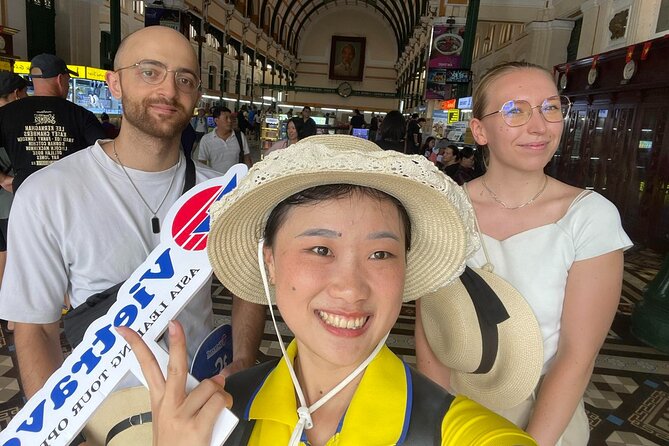
- Real value at $5 with water, a hand fan, a postcard, and a 10% coupon for a next trip
- Local guide explanations that connect buildings to the city’s changing story
- Free admissions listed for every stop, so you’re not budgeting for tickets mid-walk
- Short, high-impact stops (most are 10–15 minutes, with two longer pauses)
- Two start times daily so you can pick morning or late afternoon light
- Weather matters, since it requires good conditions
Vietravel Headquarters is a smart start point (and a warm-up for your route)
The tour begins at Vietravel headquarters, 190 Pasteur, in District 3, at either 9:00 A.M. or 4:00 P.M. This is useful because you get a quick briefing before you head into the walk, including key notes from the guide and a chance to refill your water.
I like the way this setup reduces the usual early-day confusion. Instead of wandering first, you get a plan, then you start checking off recognizable landmarks. You also get bottled water as part of the experience, which matters when Saigon is already hot before you even leave the lobby.
At the end, you’re dropped near Ben Bach Dang in District 1 (Tôn Đức Thắng, Ward 2). Ending by the river zone is handy since it gives you a natural place to continue sightseeing or grab a drink afterward—without needing to jump right back into transit.
You can also read our reviews of more walking tours in Ho Chi Minh City



Turtle Lake first: eight sides, yin-yang symbolism, and a quiet breather

Turtle Lake is the first real landmark stop, and it’s a great choice for a kickoff. The structure is described as eight-sided and wrapped in an aura of mystery, with a yin-and-yang concept woven into its design.
This early stop does two practical jobs. First, it gives you something different from the bigger monuments right away, so the walking doesn’t feel like a checklist robot. Second, it sets a tone: your guide isn’t just pointing at famous buildings, they’re explaining why details matter.
You only spend about 15 minutes here, so don’t expect a long photo session. Use this as your moment to reset, ask questions, and get comfortable with the group pace before the bigger stops.
Independence (Reunification) Palace: the best orientation stop for the center
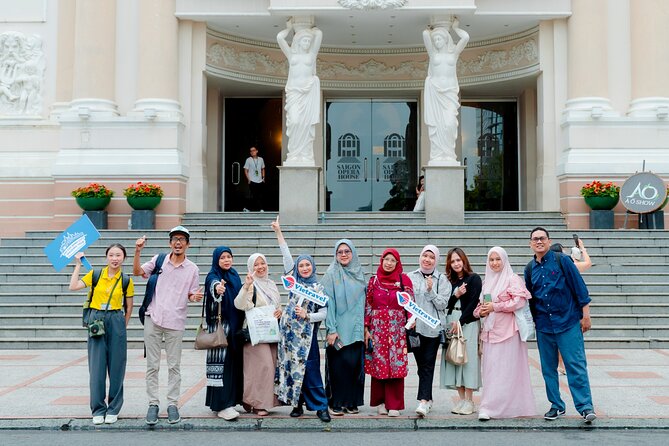
Next up is the Independence Palace—often called the Reunification Palace. It’s one of the city’s most recognized historical sites, and your guide frames it as the former presidential residence.
This stop is valuable because it anchors you in a specific Saigon story. Even if you know very little going in, the palace becomes a reference point for understanding the rest of the route. You’re not just seeing architecture; you’re learning how the city re-invented itself around major events.
You’ll have about 15 minutes at the palace area, which is enough for the essentials: look around, absorb what the building represents, and let your guide connect it to what you’ll see later. If you’re the type who wants longer time inside, you’ll likely come back on your own later—but for an orientation walk, this length works.
Notre Dame Cathedral of Saigon: French design you can actually spot
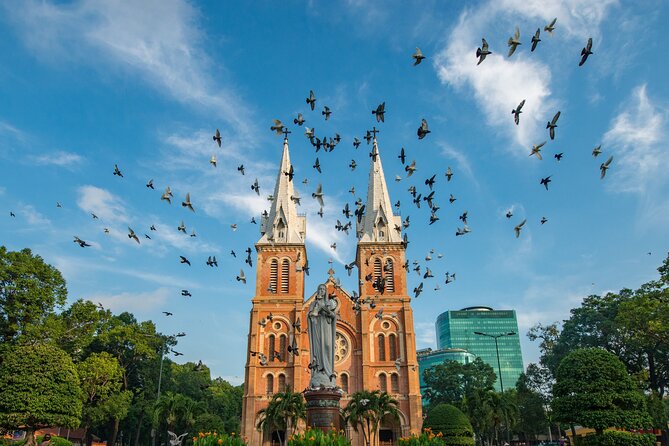
From there, the tour shifts to French colonial style with the Notre-Dame Cathedral Basilica of Saigon. It’s described as a stunning architectural marvel built by the French, and it’s considered a replica of the Notre-Dame Cathedral in Paris.
I like this stop because it’s immediately legible. Even if you don’t read every sign, the building’s design gives you a clear visual story. It’s also a good moment to take steady photos without rushing, since the cathedral is one of those landmarks people naturally orbit.
Plan for about 15 minutes at this stop. That’s enough time to appreciate the façade and get your bearings for the rest of the central area walk.
Central Post Office on Pham Ngoc Thach: where East and West meet in one building
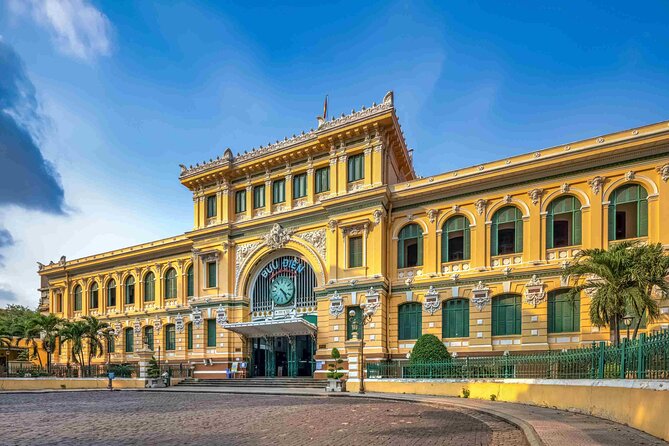
After the cathedral, you stroll down Pham Ngoc Thach Street toward the Saigon Central Post Office. This is a strong stop for travelers who like cultural “translation” moments—your guide explains how Eastern and Western influences converge here through shared design ideas and customs.
The tour gives this location about 30 minutes, which is longer than most stops. That extra time is a hint: this is where you’ll probably want to pause more, look at details, and ask questions. It’s also the kind of building that looks great from multiple angles, so use the time to move around a bit rather than snapping one photo and moving on.
This is one of the stops where you feel the value of a guide most. The building is impressive, sure, but understanding why it’s a blend makes it more than just a photo background.






Saigon Opera House: elite origins and the Pearl of the Far East label
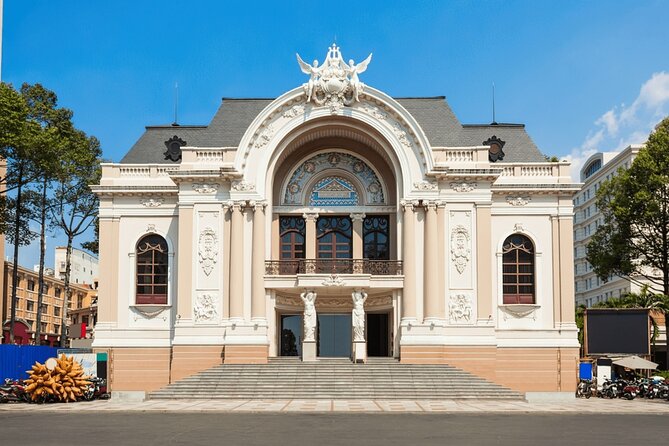
Across the street, you’ll reach the Saigon Opera House, officially the Ho Chi Minh Municipal Theater. The tour notes it once served as a gathering place for the elite, and that it reflects Saigon’s evolution into the Pearl of the Far East.
This is a great example of how your guide’s storytelling can change what you notice. Instead of treating the opera house as just another old building, you’re learning how power and prestige shaped public spaces in the city.
You get about 10 minutes here, so think of it as a fast visual scan plus a few meaningful context points. It’s enough time to appreciate the exterior and understand the role it played, without eating up your day.
People’s Committee Building: colonial-style government architecture in District 1
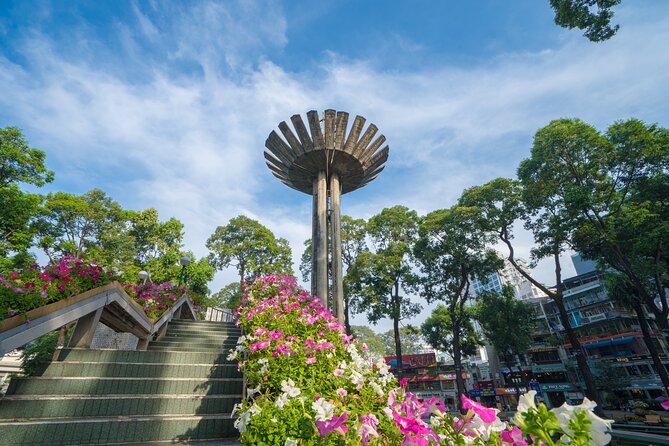
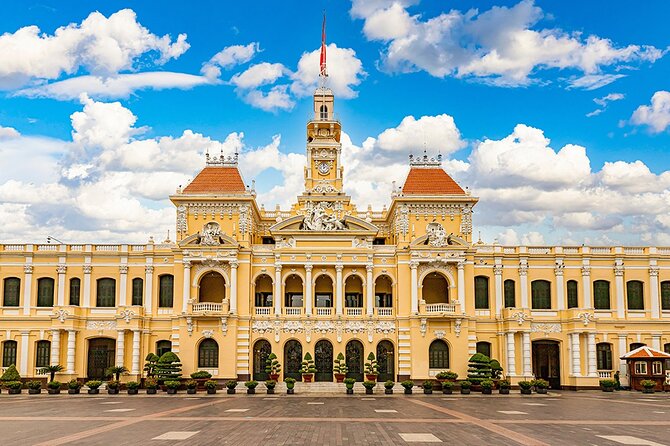
The walking tour then heads to the People’s Committee Building. It’s described as a magnificent colonial-style structure on Lê Thánh Tôn Street in District 1, functioning as the city’s executive government body.
This is one of those stops that can surprise you in a good way. Government buildings often feel cold or off-limits to visitors, but when someone explains their setting and function, you see the city’s structure more clearly. It’s not just sightseeing; it’s learning how the city actually runs.
You’ll have about 10 minutes here. That means it’s a quick look, a context briefing, and then onward. If you’re hoping for a long linger, plan to return later on your own.
Café Apartment near Nguyen Hue Walking Street: a smaller stop with big photo energy
One of the best parts of the route is the Cafe Apartment stop tucked away near Nguyen Hue Walking Street. The listing calls it one of Saigon’s most charming areas, noting that it began as an old French-era apartment block and was transformed into something visitors can experience.
This stop feels different from the big monuments. It’s quieter, more textured, and easy to slow down for photos without feeling like you’re in a rigid “line up and move” moment. Even in a short 10-minute block, it gives you variety in the day’s visual rhythm.
If you care about streetscapes and the way old structures get reused, this is the point where the tour starts to feel less like history class and more like city reading.
Bach Dang Quay Park: a calm finish by the Saigon River
The tour’s final stop is Bach Dang Quay Park by the Saigon River. It’s described as a tranquil stretch that has silently watched the city’s transformation for centuries, and it was once a hub for grand arrivals and significant moments (the description cuts off, but the point is clear: movement and arrivals mattered here).
This is a good closing stop because it slows the pace right when your legs may be asking questions. You’ll get about 20 minutes here, which is long enough to sit, breathe, and take in the river edges after a concentrated run of landmarks.
Ending at this calmer point also sets you up well for later plans. You finish in a central location, and you’re not stuck with an awkward “now what” moment.
What you actually get for $5: free admissions plus useful extras
Let’s talk value, because $5 can sound too good to be true. But for this tour, the math is surprisingly clear.
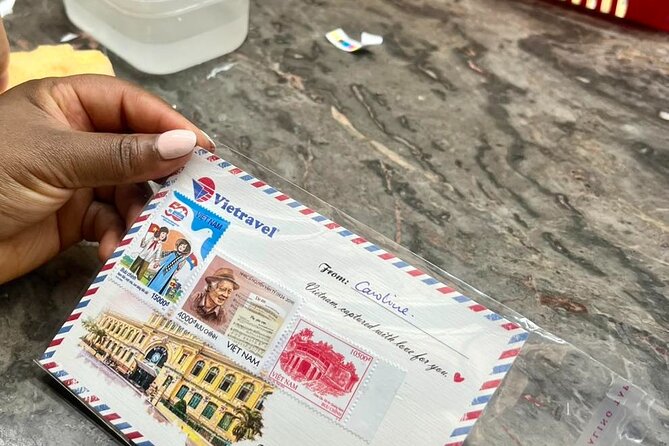
Included items are: bottled water, a private tour guide, a hand fan, a postcard, and a 10% coupon discount for next trip with the company. Plus, each stop is listed with admission tickets as free, which removes a common annoyance on walking tours.
A quick reality check: the tour is not listing meals or drinks as included. Tips for the guide and driver are also not included, and you’ll want some cash on hand for that. If you’re traveling with a strict budget, this is still one of the easier ways to get oriented, since a lot is already handled.
Also keep in mind the tour can include up to 300 travelers. That doesn’t automatically mean you’ll feel swallowed, but it does mean you should arrive ready to share the space and listen closely.
Guide energy is the difference-maker: Luna and Tam as examples
The best part of this kind of tour is the guide, and the provided experiences strongly emphasize enthusiasm and clear explanations. A guide named Luna is mentioned multiple times for passion, warmth, and an ability to connect history and culture in a way that felt personal and easy to follow.
Another guide named Tam is highlighted for deep knowledge and a genuine passion that made the experience feel emotionally meaningful, not just informational. The pattern is consistent: you’re not only getting dates and facts, you’re getting context that helps you interpret what you see.
A couple more practical details show up in the experiences. Some guides share photos afterward as an added bonus, and in at least one case, a guide added a song during the walk. That’s not something you should count on, but it does suggest the guiding style can be more human and playful than the usual lecture format.
There’s also mention of advice about customs in certain areas and the guide being accommodating about concerns, including helping keep the experience fun even when conditions weren’t ideal. You may not control the weather, but you can control your preparation.
Walking comfort in Saigon: beat the heat, don’t fight the route
This tour is all walking, and the itinerary is packed enough that you’ll feel the day in your feet. The tour also requires good weather, so if you’re booking for a rainy season week, keep your plan flexible.
A few practical things help a lot:
- Start with comfortable shoes you can walk in for a couple hours.
- Bring sun protection anyway, even though you’ll get a hand fan.
- Hydrate early. Bottled water is included, and you can refill at the start.
Because many stops are short, you won’t have long to regroup. Pace yourself, listen during the explanations, and use your own free moments to take photos rather than stopping too long each time.
Who this Saigon walking tour fits best
This experience is ideal if you want a structured overview of central Ho Chi Minh City without paying extra for tickets. It’s also a strong pick for first-timers who want to understand how French architecture and major historical landmarks fit into the same city map.
You’ll probably enjoy it most if:
- you like walking and can handle a steady pace
- you want local context instead of only seeing famous buildings
- you’re traveling on a tight budget and want to keep costs low
If you’re the type who needs quiet, solo sightseeing time, or you hate group movement, you may find the crowd factor (up to 300 travelers) a bit much on peak days.
Should you book this Essential Saigon Walking Tour?
If you’re deciding between skipping a guided start and just roaming, I’d book it. For $5, you’re buying a guide-led route that hits big recognizable landmarks, includes free admissions for the stops, and gives you practical extras like water and a fan.
I would skip or reconsider only if you already feel confident navigating the central sites alone and you’re set on longer individual time in museums or interiors. For everyone else, this is a smart, low-pressure way to get your bearings fast and understand what you’re looking at while you’re looking at it.
FAQ
How much does the Saigon walking tour cost?
The price is $5.00 per person.
How long is the tour?
It runs for about 2 hours 30 minutes.
What time does the tour start?
It starts at 9:00 A.M. or 4:00 P.M., depending on the chosen slot.
Where do I meet the guide and where does the tour end?
You meet at Vietravel Headquarters Building, 190 Pasteur, District 3, and the tour ends near Ben Bach Dang at Tôn Đức Thắng, Ward 2, District 1.
What’s included in the price?
Included items are bottled water, a private tour guide, a hand fan, a postcard, and a 10% coupon discount for your next trip. The tour also lists admission tickets for the stops as free.
What should I bring or plan for?
Bring comfortable walking shoes and plan for weather. Drinks during meals and personal expenses are not included.
Are tips included?
No. Tips for the guide and driver are not included.
What happens if the weather is poor?
The tour requires good weather. If it’s canceled due to poor weather, you’ll be offered a different date or a full refund.