REVIEW · HO CHI MINH CITY
Bean to bar Chocolate Workshop in Ho Chi Minh City
Book on Viator →Operated by Ban Cacao - Vietnamese chocolate maker · Bookable on Viator
Chocolate starts as a weird-smelling pod. Then it turns into dessert.
This 2-hour bean-to-bar workshop with Ban Cacao is fun and surprisingly hands-on: you’ll see the whole pods-to-bars process, from choosing cacao beans to finishing a chocolate bar you decorate yourself. I especially like that you get to work with the traditional setup, including a granite stone mortar, and not just watch someone else do it. You’ll also taste fresh cacao pods, which gives you a real sense of what cacao is like before it becomes chocolate.
The one thing to consider is that the active parts can be tiring, especially the grinding. If you’re bringing kids, plan for a slower pace and expect it to be more work than a quick cookie workshop.
In This Review
- Key highlights I think you’ll care about
- Entering the Ban Cacao Workshop in District 1
- What you’ll make: from fresh cacao fruit to your finished chocolate bar
- Tasting fresh cacao pods: the moment that changes your expectations
- Husking cacao beans: hands-on work that feels satisfying
- Making cacao paste with a granite stone mortar
- Building your chocolate bar: molding, temperature, and ingredients
- Decorating your bar and taking it home the right way
- Price and value: is $32 fair for a 2-hour bean-to-bar class?
- How to plan your day around the 2-hour workshop
- Is this workshop good for kids and families?
- Who should book this in Ho Chi Minh City?
- Quick decision: should you book Ban Cacao’s workshop?
- FAQ
- Where does the workshop start?
- How long is the bean-to-bar workshop?
- How much does it cost?
- Is there a group limit?
- What will I do during the class?
- What ingredients and tools are used?
- Do I get anything to drink?
- What do I take home?
- How does ticketing work?
- What is the cancellation policy?
Key highlights I think you’ll care about
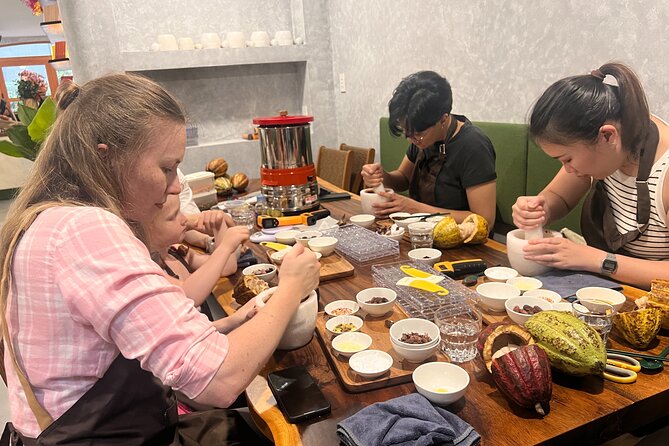
- Pods-to-bars, from bean selection to finished bar so you understand what changes at each step
- Tasting fresh cacao pods to experience cacao in its original form, not just chocolate
- Granite stone mortar cacao paste using a traditional method (and yes, it takes effort)
- Hands-on molding and decorating with wrapping paper you can personalize
- Small group size (max 10) for easier questions and a smoother flow
Entering the Ban Cacao Workshop in District 1
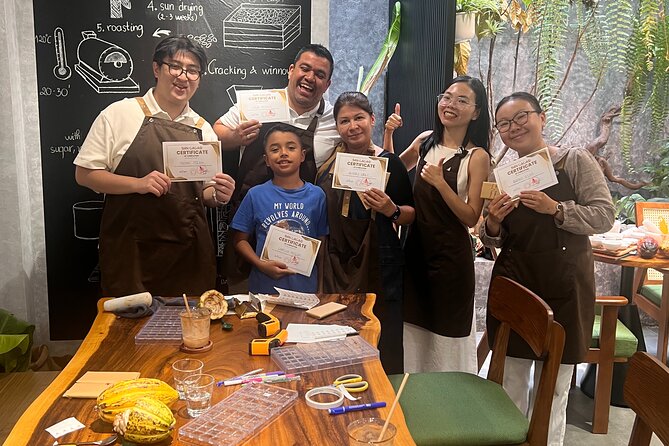
The experience meets at 89/14 Hàm Nghi, Phường Nguyễn Thái Bình, Quận 1. It’s in central Ho Chi Minh City, and it’s described as near public transportation, which matters because you don’t want to burn time crossing the city just for a short class.
This is also a small-group workshop, with a maximum of 10 travelers. That’s a sweet spot. Big classes can feel rushed and impersonal; here you’re more likely to get real guidance when your hands (or patience) run into the process.
You’ll use a mobile ticket, and you’ll get confirmation at the time of booking. The session runs about 2 hours, and it ends back at the meeting point, which makes it easy to slot into a day of sightseeing.
You can also read our reviews of more city tours in Ho Chi Minh City



What you’ll make: from fresh cacao fruit to your finished chocolate bar
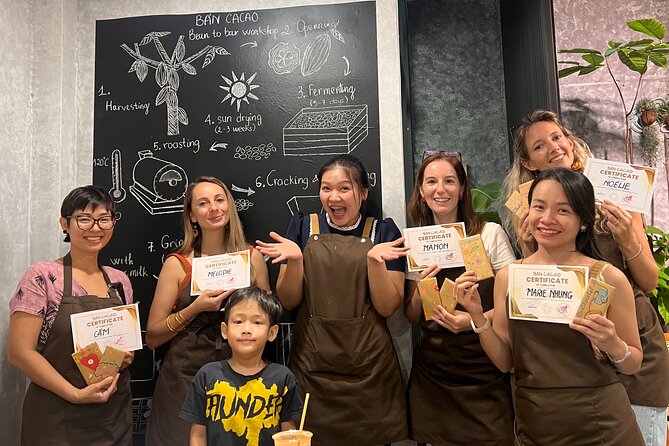
This workshop isn’t just about eating chocolate. The point is to understand how cacao turns into a bar, and how Vietnamese makers work with local cacao.
You’ll start with the process overview and context. The class includes an explanation of the pods-to-bars chocolate making process plus the history of cacao in Vietnam, along with how Vietnamese chocolate is made using local ingredients. Even if you know nothing going in, that background helps you connect what you’re doing later with what the ingredients are doing in the final bar.
Then you move into the physical steps:
- Taste fresh cacao pods
- Husk your own cacao beans
- Make cacao paste in a traditional way with a granite stone mortar
- Make your own chocolate bar from early steps through finishing
- Decorate your chocolate and take it home, using wrapping paper
It’s a full workflow. You won’t just dip a mold and call it a day.
Tasting fresh cacao pods: the moment that changes your expectations
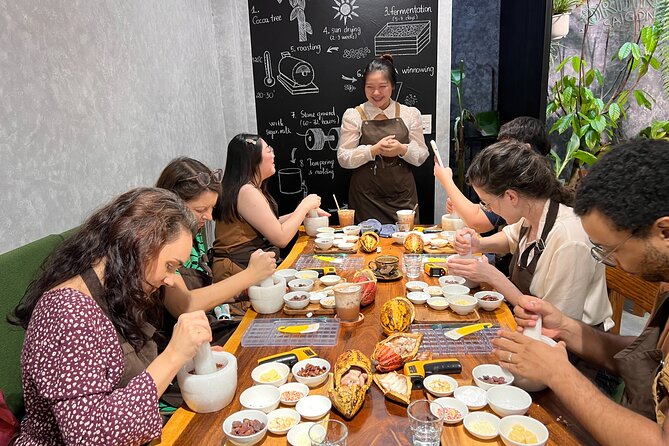
Before the grinding, you get to taste the fresh cacao pods. This is one of the best parts because it resets your idea of what “chocolate flavor” means.
Fresh cacao pod tasting is different from tasting chocolate. You’re meeting cacao closer to its natural state, which helps you understand why the process matters: husking, paste-making, and transforming flavors into something sweet and smooth takes real work.
Also, cacao pods are messy in a way that makes the class feel grounded and real. It’s not staged. You’re learning what cacao starts as, not just what it becomes after processing.
Husking cacao beans: hands-on work that feels satisfying
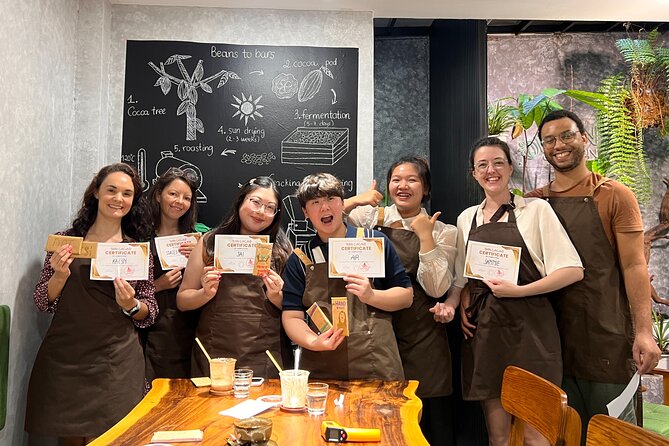
Next comes husking your own cacao beans. If you’ve only seen cacao as chocolate bars, this is the step that makes the whole thing click. You’re separating what you need from what you don’t, and that’s a big part of “bean to bar.”
This stage is tactile and a little awkward at first. That’s normal. Expect to take your time. The workshop format helps here because you’re not doing this at home without guidance, tools, or a timeline.
It’s also a confidence-builder. Once you’ve husked your beans, you feel like you’re actually part of the production line, not just watching chocolate happen.
Making cacao paste with a granite stone mortar
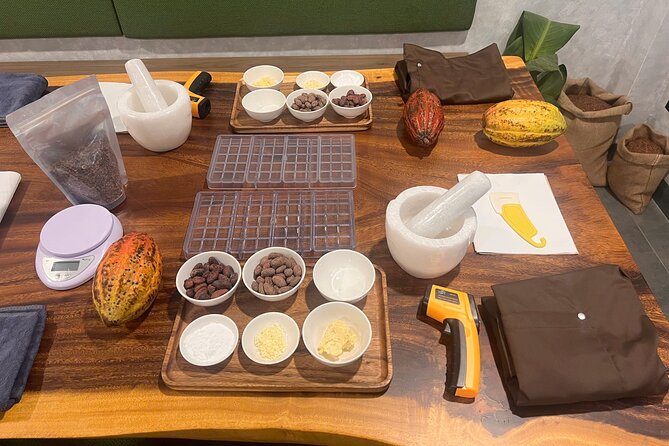
Here’s where the workshop gets truly traditional: making your own cacao paste using a granite stone mortar.
A mortar like this isn’t about fancy equipment. It’s about method. You grind the cacao in the traditional way, turning beans into a paste you can build with. And yes, it takes effort. One of the most consistent notes from families is that the grinding can be tiring, especially for younger kids. If you’re traveling with children, that’s the step you’ll want to manage: take breaks, expect some frustration, and don’t schedule a marathon of other activities right after.
For adults, I like this part because it slows you down just enough to learn. You can’t rush granite-and-cacao. Your hands give you feedback, and that makes the learning stick.
The class also uses tools like a thermometer and a scale, which signals that you’re not only doing “craft.” You’re doing craft with some real accuracy—important when you’re aiming for a proper set and a consistent bar texture.
You can also read our reviews of more drinking tours in Ho Chi Minh City



Building your chocolate bar: molding, temperature, and ingredients
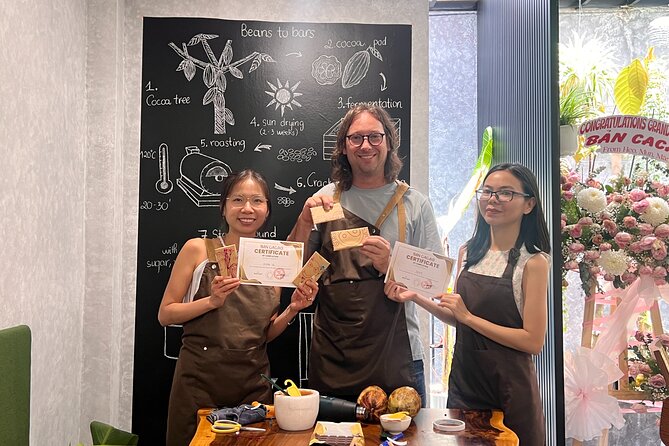
After cacao paste, you move into making the bar. The workshop uses the ingredients and tools you’d expect in a serious bean-to-bar process:
- Fresh cacao fruits
- Cacao beans
- Cacao nibs
- Cacao butter
- Cane sugar
- Tools: granite mortar, thermometer, scale, chocolate mold, and wrapping paper
The presence of a thermometer and scale matters. Chocolate-making isn’t only romantic. It’s also timing, heat, and ratio. You’re learning how makers control the process so it turns from paste into something that sets properly.
Then you’ll mold your chocolate. This is where you get that satisfying moment of seeing it take form. And unlike tastings where you simply sample and leave, you’ll be actively building a bar that’s yours.
Decorating your bar and taking it home the right way
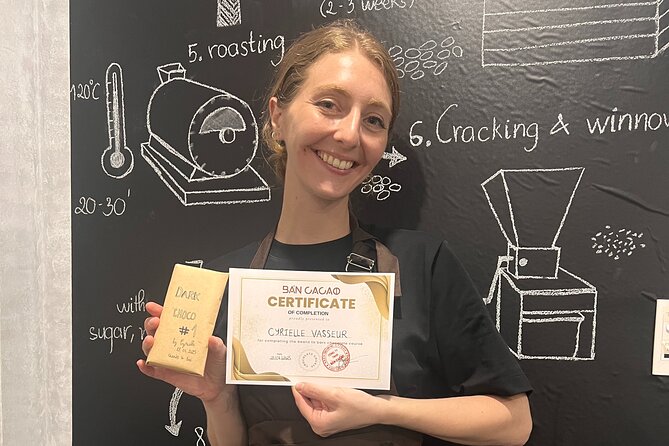
The workshop isn’t finished when the chocolate sets. You also get to decorate your own chocolate and take it home, with wrapping paper included.
This is a small detail that makes a big difference for value. You’re not just leaving with a snack. You’re leaving with something you made that looks gift-worthy (even if it’s just for your own fridge bragging rights).
And if you’re traveling with family, this is the part that usually gets the biggest smile. It turns a technical process into something personal.
Price and value: is $32 fair for a 2-hour bean-to-bar class?
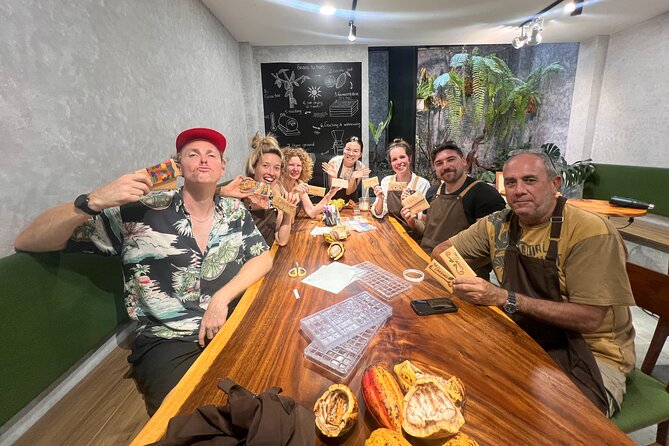
At $32 per person for about 2 hours, this workshop is priced like a hands-on activity, not like a tasting-only tour. The value comes from the fact that you do real work: husking beans, making cacao paste with a granite mortar, and finishing a chocolate bar that you take away.
You’re also getting more than one experience in one session: cacao education, pod tasting, and the practical steps of turning cacao into a bar. Add in that the class is capped at a small group size, and you can see why it feels fair.
One more value factor: the class includes a drink each. Based on experiences shared by families, it’s typically hot or iced chocolate, which makes the class feel complete and not like you’re paying for “mostly labor.”
If you’re comparing it to buying chocolate alone, this wins because you’re paying for understanding plus a take-home product made by your own hands.
How to plan your day around the 2-hour workshop
Because this is a short class, timing matters. Give yourself space to feel the full process rather than rushing out for your next stop.
Here’s how I’d plan it:
- Schedule it earlier in the day if you’re easily worn out by hands-on grinding.
- If you’re bringing kids, expect the grinding step to be the hardest part. The workshop is still doable, but plan for extra patience.
- Wear something you don’t mind getting a little messy. Cacao has a way of clinging in a friendly, annoying way.
Also, remember you’ll be walking around during pod/bean handling and tools are part of the process. Keep your schedule light before and after so you don’t feel rushed.
Is this workshop good for kids and families?
It’s a strong option for families, especially if your child can handle a hands-on activity for about 2 hours. One key consideration is the grinding part. Some families find that it’s quite tiring for younger kids, so it’s best for children who are at least around 8 years old or who are used to manual tasks.
The upside is that kids get a clear payoff. They taste cacao pods, make paste, shape chocolate, and decorate something they can take home. That’s a full arc, and it usually keeps attention better than a lecture-style class.
For adults, this is equally rewarding if you like practical learning and you want a break from temple-to-temple sightseeing.
Who should book this in Ho Chi Minh City?
You should book if:
- You want something hands-on and different from the usual Saigon food stops
- You like learning processes, not just tasting outcomes
- You’re traveling with family and want a structured activity
- You’re curious about how Vietnamese makers work with local cacao
You might skip it if:
- You want a totally low-effort activity
- You hate any kind of manual grinding or messy food handling
- You’re only looking for a quick chocolate snack
Quick decision: should you book Ban Cacao’s workshop?
If you like practical experiences, this one earns a yes. You’ll learn the full pods-to-bars workflow, taste cacao in a raw form, and make a bar you can actually take home and show off. The small group size keeps it friendly, and the included drink makes it feel like a complete outing.
Just go in with realistic expectations about the grinding step. If you’re prepared for a little effort, you’ll leave with a better understanding of chocolate—and a very personal souvenir.
FAQ
Where does the workshop start?
It starts at 89/14 Hàm Nghi, Phường Nguyễn Thái Bình, Quận 1, Ho Chi Minh City, Vietnam. The activity ends back at the meeting point.
How long is the bean-to-bar workshop?
The class runs for about 2 hours.
How much does it cost?
It costs $32.00 per person.
Is there a group limit?
Yes. The workshop has a maximum of 10 travelers.
What will I do during the class?
You’ll learn the pods-to-bars process, taste fresh cacao pods, husk cacao beans, make cacao paste using a granite stone mortar, and make your own chocolate bar from start steps to a finished bar. You’ll also decorate your chocolate and take it home.
What ingredients and tools are used?
Ingredients include fresh cacao fruits, cacao beans, cacao nibs, cacao butter, and cane sugar. Tools include a granite mortar, thermometer, scale, chocolate mold, and wrapping paper.
Do I get anything to drink?
The class includes a drink for each participant, typically hot or iced chocolate.
What do I take home?
You take home your finished chocolate bar, plus you decorate it using the included wrapping paper.
How does ticketing work?
You receive a mobile ticket. Confirmation is received at the time of booking.
What is the cancellation policy?
Cancellation is free if you cancel up to 24 hours in advance for a full refund. If you cancel less than 24 hours before the start time, the amount paid is not refunded.