REVIEW · HO CHI MINH CITY
Experience half-day cooking class with market visit
Book on Viator →Operated by "Mai" Home - The Saigon Culinary Art Centre · Bookable on Viator
One market walk can change how you cook.
This half-day class with Mai Home – The Saigon Culinary Art Centre turns Ho Chi Minh City’s food scene into hands-on skills, not just a meal. I like that you learn dishes connected to Vietnam’s three regions (north, central, south) and also get practical techniques you can repeat at home. A second thing I really appreciated is how the session ends with a proper sit-down lunch or dinner you made yourself, plus a recipe booklet and other take-home keepsakes.
There is one consideration: the Ben Thanh Market visit depends on the session time, and after 12:00, the operator notes many food stalls are closed. So if you want the market portion, book the morning option and plan your timing around it.
In This Review
- Key highlights worth planning for
- Ben Thanh Market First, Kitchen Later
- What You Cook: North, Central, and South in One Session
- Fruit Carving: The Skill That Feels Like a Party Trick
- Your Meal: Lunch or Dinner You Actually Get to Eat
- How the Class Runs in Real Life: Flow, Group Size, and Teaching Style
- Price and Value: Why $42 Can Be a Deal in District 1
- Who Should Book This Cooking Class (and Who Might Skip It)
- Possible Downsides to Keep in Mind
- Should You Book Mai Home’s Half-Day Cooking Class?
- FAQ
- What’s included in the half-day cooking class?
- Is Ben Thanh Market included?
- What dishes might I cook?
- Where does the class start and end?
- How big are the groups?
- Is this class for beginners?
- How flexible is cancellation?
Key highlights worth planning for
- Ben Thanh Market ingredients first (morning sessions) so you understand what you’re cooking
- Three-region Vietnamese menu: north, central, and south flavors in one class
- Hands-on beginner lessons covering basic cooking methods you can reuse
- Fruit carving practice alongside the meal prep
- You eat what you cook: lunch/dinner served at the end with a friendly group vibe
- Take-home recipe booklet + souvenir + certificate
Ben Thanh Market First, Kitchen Later
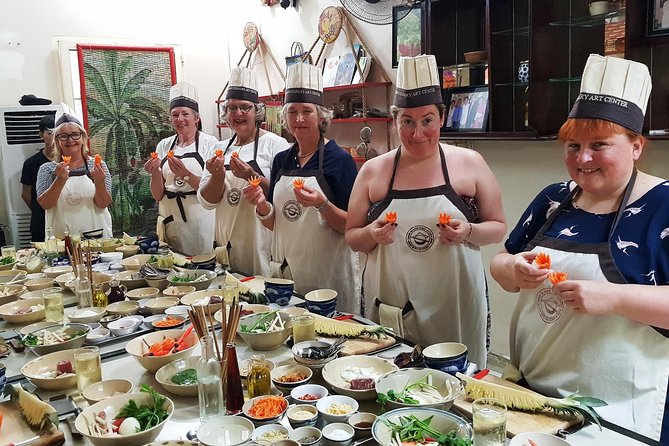
If you’ve ever eaten Vietnamese food and thought, I want to know why it tastes like that, this format helps. You start at the central area by Ben Thanh Market (meeting point is Phan Chu Trinh, Bến Thành, District 1), then you walk with the chef to see ingredients up close before the cutting and cooking begin.
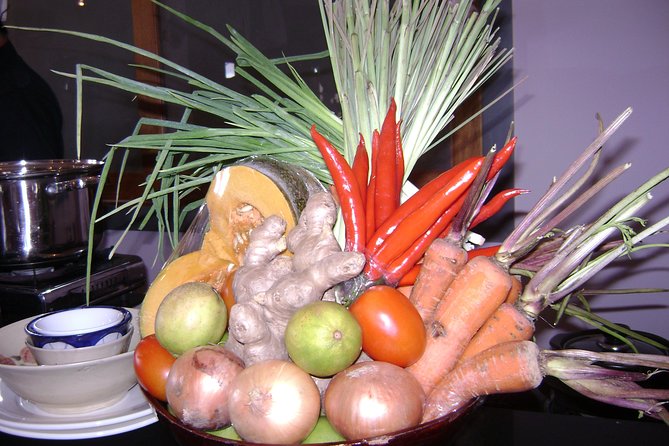
In the market walk, you’re not just taking photos. You get guided context on what things are, how they’re used, and what to look for when you’re later trying to recreate flavors at home. The class also includes a welcome drink right after, so you’re not scrambling to settle in with your hands full.
One small but smart detail: the operator is transparent that the market portion is time-sensitive. They note that after Covid, many food stalls close by 12:00, which is why market time is limited by session. If the market is high on your list, choose the morning course.
You can also read our reviews of more shopping tours in Ho Chi Minh City


What You Cook: North, Central, and South in One Session
The menu design is built for beginners, but it doesn’t feel like watered-down cooking. You learn dishes from all three regions of Vietnam, which is a great way to see how the same country can taste very different depending on where the recipe comes from.
You might make things like:
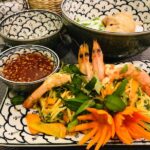
- Beef salad with young banana and star fruit, or typical rolls served with a special dipping sauce
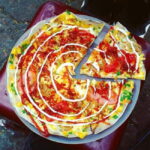
- Braised chicken with ginger, plus an option like a sizzling pancake or chicken noodle soup, typically with steamed rice
- Clay pot chicken is another possible combo you may encounter depending on the day’s menu
- Fruit carving as its own practical skill during the session
Even if you only cook at home a few times a month, the value here is that you learn methods, not just a single dish. The class covers basic cooking methods, so you can adapt the skills to ingredients you can find locally.
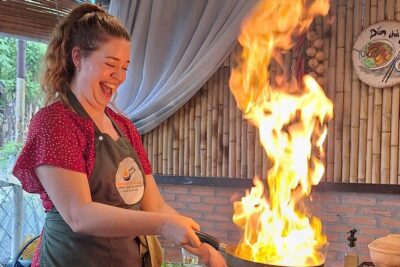
And because the menu changes daily, you’re not locked into one “tourist standard” plate. The chef guides you through each step, and the pacing is geared toward people who might be nervous with a knife, a hot pan, or reading Vietnamese cooking cues they don’t already know.
Fruit Carving: The Skill That Feels Like a Party Trick
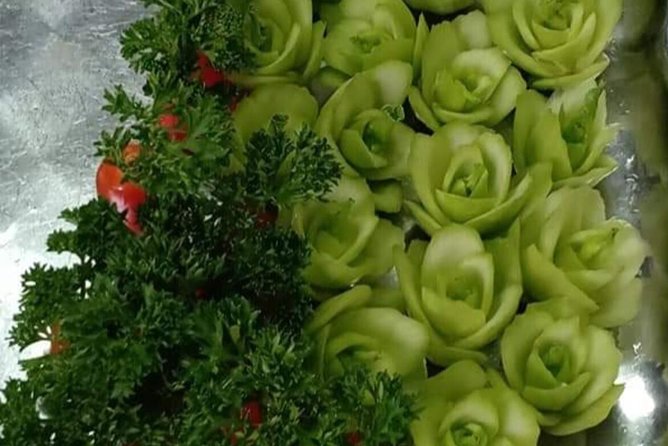
Vietnamese cooking isn’t only about flavor. It’s also about presentation, and this class gives you a real way to practice it. Fruit carving is included, and that matters because it’s visual and interactive, even when you’re a beginner.
You learn techniques you can replicate later—so the end result is less about copying a perfect design and more about understanding the approach. Think of it as building confidence: you finish a meal component that looks impressive, then you eat it while your brain still remembers the steps.
If you’re traveling with kids, fruit carving is often the part they remember most, because it’s hands-on and it feels like you made something special, not just ate well. Even for adults, it’s a fun break from stirring and sautéing.
Your Meal: Lunch or Dinner You Actually Get to Eat
One reason cooking classes can disappoint is when you do a lot of work and get served something that feels separate from what you made. Here, the session ends with a feast—a meal showcasing the dishes you cooked, served in a convivial setting with the people in your group.
You also get iced tea included. The overall experience is designed so you’re not cooking in silence. You’re chatting, sharing small wins (like your first successful dipping sauce), and then sitting down to taste your own handiwork while it’s still fresh.
From a practical standpoint, this is also a time-saver. You’re basically packaging a cooking lesson and a full meal into a half-day block—handy when your schedule in District 1 is already packed with sights.
How the Class Runs in Real Life: Flow, Group Size, and Teaching Style
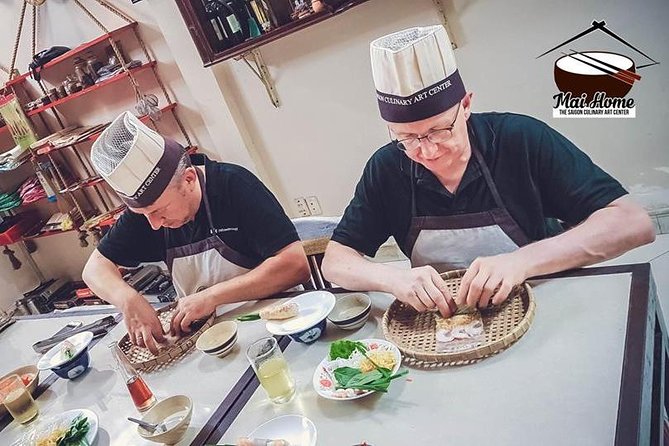
This is a beginner-friendly setup with a max group size of 30 travelers. In a group that size, the chef needs to keep things organized, and that’s exactly what the instruction aims for: you participate step by step so the techniques make sense later.
The teaching style is hands-on. You walk through the ingredients and then move into the kitchen portion where you get guided instruction for each cooking step. You’re not expected to freestyle. You’re coached, and the class format is meant to build confidence so you can recreate the dishes at home.
Language-wise, instruction is described as clear and supportive, which is a big deal if you don’t speak Vietnamese. You’ll likely find you can follow along without feeling lost, especially because cooking is visual and method-based.
Also included are a certificate and a souvenir gift from Mai Home, plus a recipe booklet/manual you can take with you. That last part is underrated: it turns the class from a one-off experience into something you can repeat.
You can also read our reviews of more tours and experiences in Ho Chi Minh City



Price and Value: Why $42 Can Be a Deal in District 1
At $42 per person, you’re paying for a lot of concrete things, not just “a cooking demo.” Your included items are:
- Lunch or dinner
- Market visit (for morning sessions)
- Cooking ingredients
- Recipe book
- Souvenir gift
- Certificate
- Welcome drink and iced tea
If you break it down, the class is effectively a guided food experience plus a full meal. In Ho Chi Minh City, eating well is not expensive compared to Western capitals—but a guided market walk, coached cooking, and take-home materials are what push this into “value” territory rather than just “food tourism.”
Also, demand seems high—this type of class is commonly booked in advance (about a month on average). That’s usually a sign the experience quality is consistent and people plan it into their schedules.
Who Should Book This Cooking Class (and Who Might Skip It)
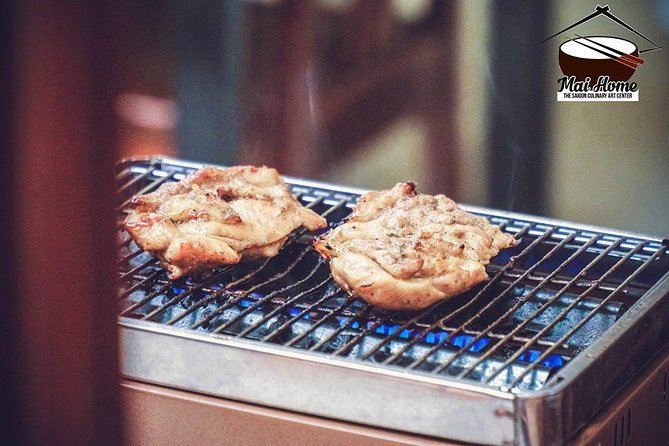
This class is a strong fit if you:
- want an easy entry point into Vietnamese cooking
- like learning by doing, not just watching
- want to understand how regional Vietnam flavors differ (north vs central vs south)
- care about taking home recipes you can follow
You might consider skipping or choosing a different style of class if you:
- already cook Vietnamese food often and want advanced techniques (the structure here is beginner-friendly)
- are specifically chasing a market experience and you’re booking a time slot where the operator may not include it after noon
Possible Downsides to Keep in Mind
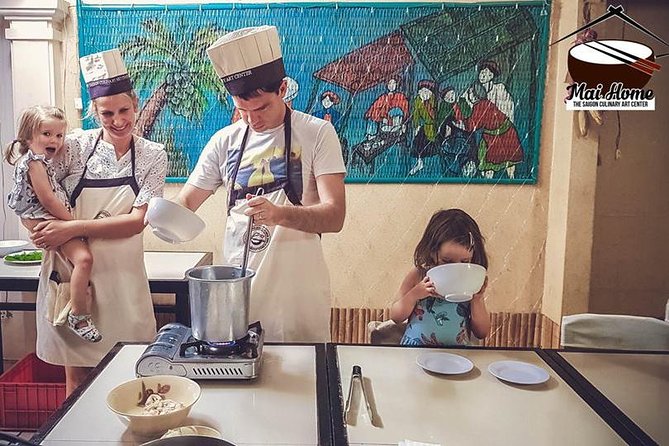
No experience is perfect, so here are the realities to factor in.
First, the market portion is the time-sensitive part. Morning sessions are the safest bet for Ben Thanh Market, while afternoon and evening may not include a market walk because stalls close around noon. If you’re traveling with a tight itinerary, double-check which session you’re selecting.
Second, as with any half-day class, you’ll trade free time for guided structure. You get a lot packed into the morning or afternoon, so it’s best to schedule this on a day where you’re not rushing to make multiple other bookings immediately afterward.
Should You Book Mai Home’s Half-Day Cooking Class?
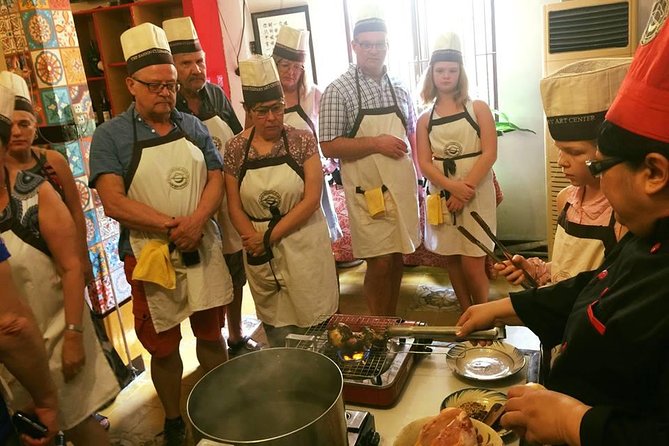
Yes—if you want a practical, beginner-friendly way to understand Vietnamese flavors and leave with more than just photos. I like that it’s built around real skills: market ingredients (when offered), step-by-step cooking, and even fruit carving. Then you sit down to eat the dishes you made, with a recipe booklet and certificate so the day doesn’t disappear the next time you’re hungry.
One last deciding tip: if Ben Thanh Market is a must for your trip, prioritize the morning session. If it’s less important and you mainly want cooking practice and a meal, any session that matches your schedule can still be a satisfying use of half a day.
FAQ
What’s included in the half-day cooking class?
You get lunch or dinner, iced tea, a recipe book, cooking ingredients, a souvenir gift, and a certificate. Morning sessions also include the market visit.
Is Ben Thanh Market included?
It’s included in the morning. The operator also notes that after 12:00 many food stalls are closed, so some later sessions may not include the market visit.
What dishes might I cook?
Menus vary by day, but options mentioned include beef salad with young banana and star fruit (or typical rolls with dipping sauce), braised chicken with ginger with options like a sizzling pancake or chicken noodle soup, and fruit carving.
Where does the class start and end?
It starts at Phan Chu Trinh, Bến Thành, District 1, Ho Chi Minh City, Vietnam, and ends back at the same meeting point.
How big are the groups?
The class has a maximum of 30 travelers.
Is this class for beginners?
Yes. It’s tailored for beginners and covers basic cooking methods.
How flexible is cancellation?
You can cancel for a full refund up to 24 hours before the experience starts (free cancellation).