REVIEW · HO CHI MINH CITY
Explore Cu Chi Tunnels & Saigon History 1 Day Tour
Book on Viator →Operated by Joy Journeys · Bookable on Viator
Crawling underground changes how you see Vietnam. This one-day trip blends Cu Chi Tunnels firsthand war history with major Saigon stops, all with a small group (max 10) and English-speaking guides who explain what you’re actually looking at. I like that you get hands-on tunnel time and quick context, not just photo ops.
Two things stand out for me: the chance to crawl through sections of the tunnels and experience war details like booby traps and touching an ex-US Army tank, and then pair it with the War Remnants Museum so the story has a clear, human meaning. The only real caution is that it’s a long day (about 10 to 11 hours) and includes physical, sometimes tight tunnel crawling, so comfort and energy matter.
In This Review
- Key highlights at a glance
- A small-group Cu Chi day that actually explains what you’re seeing
- Morning logistics: early pickup in District 1, 3, and 4
- Cu Chi Tunnels: booby traps, tank touch, and the crawl you’ll remember
- The lunch pause in Saigon: pho break, regroup, and keep going
- War Remnants Museum: a focused hour on atrocities and perspective
- Secret Weapons Cellar / hidden bunker: guerrilla logistics in a small space
- Notre-Dame Cathedral Basilica: quick Saigon context after the war stops
- Central Post Office and The Last Helicopter: two endings, one city
- Price and what $63 really buys you in a long day
- Who should book this tour?
- Should you book this Cu Chi Tunnels & Saigon History tour?
- FAQ
- What time does the tour start?
- Do they pick up from my hotel?
- How long is the tour?
- What’s included for food and drinks?
- What sites are included besides Cu Chi Tunnels?
- Is admission included?
Key highlights at a glance
- Max 10 guests for calmer pace and more time with your guide
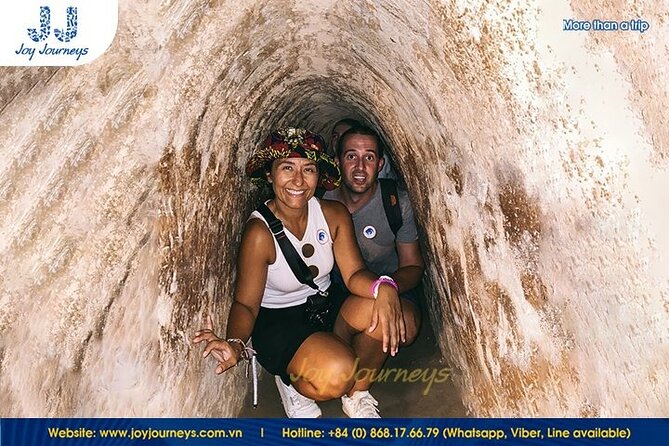
- Cu Chi Tunnels visit includes booby traps, tunnel exploring, and touching an ex-US Army tank
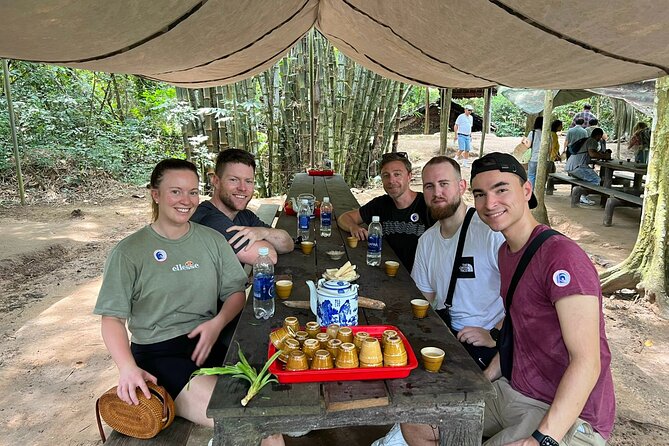
- Viet Cong-style snack moment with locally grown tapioca near the tunnels
- War Remnants Museum focuses on the war’s atrocities (formerly called Museum of American War Crimes)
- Secret Weapons Cellar / hidden bunker stop to understand guerrilla supply and movement
- Saigon classics: Notre-Dame Cathedral Basilica, Central Post Office, and The Last Helicopter sculpture
A small-group Cu Chi day that actually explains what you’re seeing
If you only have a short window in Ho Chi Minh City, this tour is built for maximum meaning per hour. You start early, ride out with a group of up to 10, and spend the heart of the day in Cu Chi—where the Vietnam War wasn’t fought only with guns, but with space, hiding, and survival. Then the day doesn’t end with the tunnels. You come back to Saigon for the War Remnants Museum and historic landmarks that help you connect today’s city to the conflict that shaped it.
The value is in how the stops connect. Cu Chi shows the mechanics of guerrilla warfare underground. The museum puts the human cost into focus. And the Saigon landmarks remind you this happened in the middle of a living, evolving country, not in a separate history box.
The included price is also sensible for what you get. At $63 per person, you’re not just paying for a driver. You’re getting an air-conditioned vehicle, lunch (pho or vegetarian), snacks and bottled water, plus admission where it’s included.
You can also read our reviews of more historical tours in Ho Chi Minh City


Morning logistics: early pickup in District 1, 3, and 4
You start at 7:30 am with pickup offered from accommodations in District 1, District 3, and District 4. Pickup usually takes about 30 minutes, so plan to be ready at your door when the vehicle arrives.
This timing matters. Cu Chi is outside the city center, and a long drive without structure can eat your day. Here, you’re pushed into motion early, then you’re set up to make the most of your time in the tunnels while the weather is still reasonable. The tour also requires good weather, which matters because time outdoors and travel are part of the day.
My practical take: if you dislike early starts, this isn’t the one for you. If you want to pack history into one day without negotiating buses and tickets on your own, the morning structure is a big win.
Cu Chi Tunnels: booby traps, tank touch, and the crawl you’ll remember
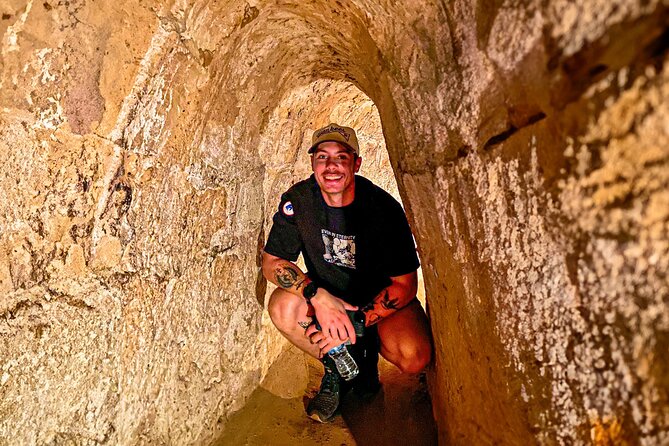
This is the core of the experience. The Cu Chi Tunnels were an extensive underground network used as a critical strategic location during the Vietnam War. They were constructed over several years, and the point of visiting isn’t just to see “cool tunnels.” It’s to understand how underground space changed what was possible—movement, shelter, and supply—while staying hidden.
A good part of the value is in what you do during the visit:
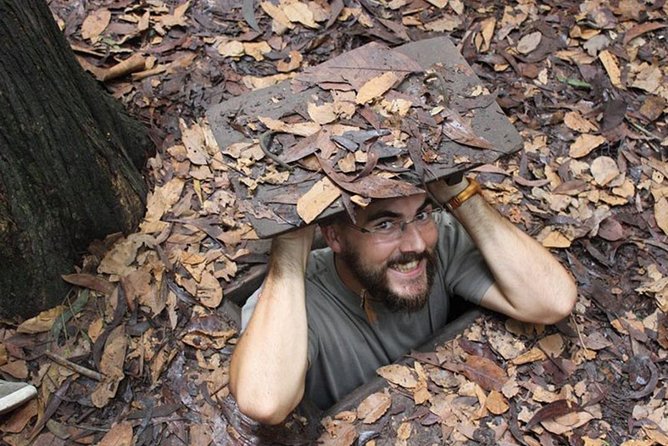
- You see booby traps used during the war.
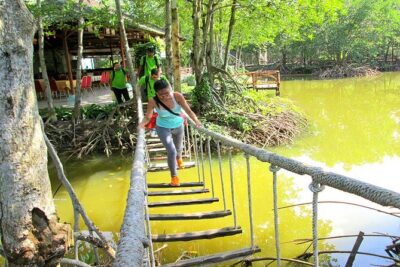
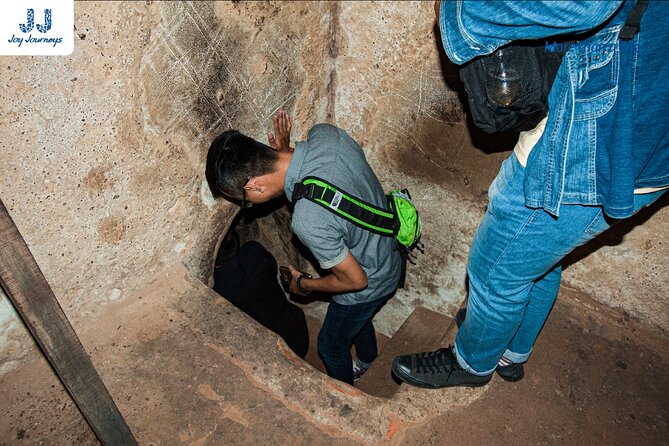
- You explore the tunnel system area on-site, including the chance to crawl inside.
- You can touch an ex-US Army tank tied to the Vietnam War era.
- You taste tapioca, described as Viet Cong food, next to the tunnels.
That “touch the tank” detail sounds small, but it’s memorable because it turns a distant headline into something physical. Same idea with booby traps: you’re not only hearing about tactics; you’re seeing how tactics were designed to punish movement and mistakes.
The tunnel crawl is the part that needs respect. It’s underground and enclosed by nature, so if you’re dealing with claustrophobia or mobility limits, this is where you should think twice. Even if you’re comfortable, you’ll want to be prepared for a slower pace and more physical effort than a normal city tour. Wear practical clothing and expect you’ll feel the tunnel environment in your body—not just your camera.
The lunch pause in Saigon: pho break, regroup, and keep going
After Cu Chi, the tour returns you to Ho Chi Minh City for lunch. The meal is pho—Vietnamese beef or chicken noodle soup—served at a local restaurant. There’s also a vegetarian lunch option if you request it in advance.
This isn’t just a meal stop to fill time. It’s the break that keeps the rest of the day from feeling like one long museum-stroll fatigue. You’ve already spent time in an intense war setting underground, and pho is a practical reset: warm, filling, and easy to eat before you head into more emotional history at the museum.
If you’re sensitive to strong flavors or spice, pho is usually forgiving, but still—eat what feels comfortable. You’ll be better off when you move into the next parts of the day.
War Remnants Museum: a focused hour on atrocities and perspective
Next comes the War Remnants Museum, one of the most direct places to understand the war’s impact in a way you can’t get from tunnel visuals alone. The museum is dedicated to documenting the atrocities of the Vietnam War, and it was formerly known as the Museum of American War Crimes.
You’ll have about 1 hour here. That’s a reasonable amount of time if you want to see a lot without burning out emotionally. This kind of museum can be heavy, and the benefit of a guided structure is that you don’t wander aimlessly or miss what the museum is trying to communicate.
My advice: give yourself permission to move at a pace that feels respectful. Don’t feel you have to read every caption. Aim for a few core themes, then let those images and explanations shape your understanding of what you saw at Cu Chi—because the tunnels were about hiding and survival, but the museum brings the larger human cost into view.
You can also read our reviews of more tours and experiences in Ho Chi Minh City





Secret Weapons Cellar / hidden bunker: guerrilla logistics in a small space
The tour then heads to The Secret Weapons Cellar, a stop designed to explain guerrilla warfare from the Viet Cong perspective. This area was originally built by the Viet Cong during the Vietnam War and served as a base for guerrilla warfare. It was also a way to transport supplies and weapons while staying undetected by American and South Vietnamese forces.
You’ll spend about 30 minutes here. That short time is actually a strength. Guerrilla tactics often sound abstract until you see how the environment supports them. In a hidden cellar-like space, the focus becomes practical: what could be moved, how people could stay concealed, and how survival depended on control of information and movement.
This stop pairs well with the tunnels crawl. Cu Chi shows the wider system. The secret cellar/hideout idea explains the narrower, tactical side of the same approach: staying unseen long enough to act.
Notre-Dame Cathedral Basilica: quick Saigon context after the war stops

After the history-heavy sections, you get a breather with historic architecture in central Saigon. You’ll visit Saigon Notre Dame Cathedral (Notre-Dame Cathedral Basilica of Saigon), located in the heart of the city. It was built in the late 19th century.
The stop is short—about 20 minutes—so think of it as a photo-and-walk moment that changes the tone of your day. It helps you remember you’re not visiting a war theme park. You’re in a city that continues to exist, worship, work, and live around the physical markers of different eras.
If you go at the wrong time of day, you might find crowds. But the main benefit is perspective: from tunnels to stonework built under French influence, all in one morning-to-evening arc.
Central Post Office and The Last Helicopter: two endings, one city
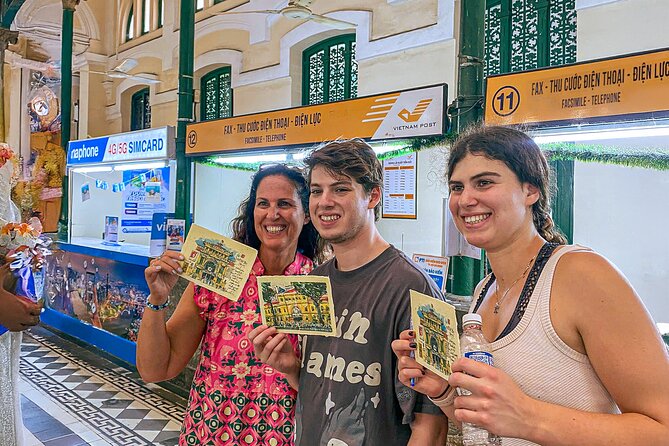
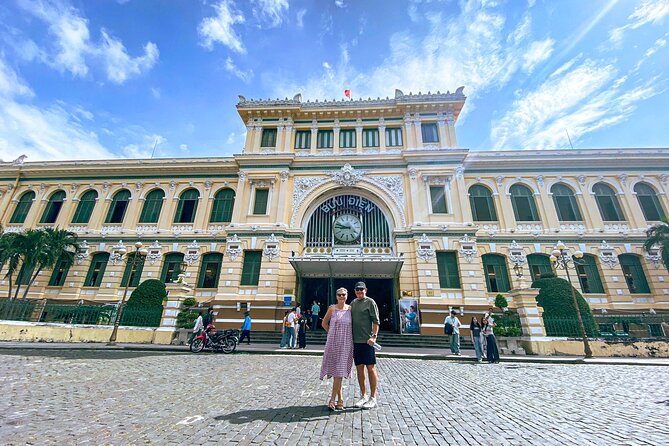
You also stop at the Central Post Office (Saigon Central Post Office), a historic building from the late 19th century during the French colonial period. Like the cathedral, the time here is about 20 minutes—enough for a quick look and a sense of the scale and style of colonial-era design.
Then the day ends with The Last Helicopter sculpture, which commemorates the end of the Vietnam War. It depicts a Huey helicopter taking off, and it’s a symbolic closure after you’ve seen the underground tactics and the museum’s documentation.
What I like about ending here is that it doesn’t drag you into another long indoor site. It gives you a visual, emotional “last page” so your brain can sort the day before dinner and sleep.
Price and what $63 really buys you in a long day
At $63 per person, this tour looks like good value if you factor in everything that’s bundled. Included items cover the stuff that often becomes expensive when you DIY:
- Air-conditioned vehicle
- Lunch (pho or vegetarian on request)
- Bottled water (two per guest) and snacks
- All fees and taxes
- Included admission where specified (including Cu Chi Tunnels, War Remnants Museum, and The Secret Weapons Cellar)
You’re also paying for time efficiency. A one-day structure like this matters in Ho Chi Minh City, where distances and traffic can make independent travel slower than you’d expect.
Where the price can feel less “great” is if you’re already comfortable designing your own day and arranging transport and tickets. But if you’d rather spend your effort on the history stops instead of logistics, the bundle makes sense.
Who should book this tour?
This tour fits best if you:
- Want a one-day Cu Chi + Saigon history mix
- Prefer small group pacing (max 10)
- Like guided context when visiting museums and war-history sites
- Are okay with a long day and some physical effort during the tunnel part
It might be less suitable if you strongly dislike enclosed spaces or you’re not able to crawl. In that case, you should evaluate the tunnel portion carefully before booking.
Should you book this Cu Chi Tunnels & Saigon History tour?
I’d book it if you want more than a checklist. The standout strength here is the connection between underground tactics at Cu Chi and the broader account at the War Remnants Museum, then finishing with Saigon landmarks that give you a sense of where this history sits in the modern city. The small group size is a practical upgrade, and the included lunch, water, and admissions make the day feel well planned.
If you’re sensitive to emotional material or physical crawling, treat the tunnel crawl as the deciding factor. For the right traveler, though, this is one of those tours where you leave with context, not just photos.
FAQ
What time does the tour start?
The tour start time is 7:30 am.
Do they pick up from my hotel?
Yes. Pickup is offered from accommodations in District 1, District 3, and District 4. Pickup usually takes around 30 minutes.
How long is the tour?
The duration is about 10 to 11 hours (approx.).
What’s included for food and drinks?
Lunch is pho (beef or chicken) or vegetarian lunch on request. The tour also includes snacks and two bottles of bottled water per guest.
What sites are included besides Cu Chi Tunnels?
You also visit the War Remnants Museum, The Secret Weapons Cellar, Saigon Notre Dame Cathedral, the Central Post Office, and The Last Helicopter sculpture.
Is admission included?
Admission is included for Cu Chi Tunnels, the War Remnants Museum, and The Secret Weapons Cellar. Other listed stops are marked as admission free.