REVIEW · HO CHI MINH CITY
City Tour By Motorbike w/ War Museum & Reunification Palace
Book on GetYourGuide →Operated by Saigon Adventure Travel · Bookable on GetYourGuide
Saigon changes fast when you see it by scooter. I like the safety-first motorbike ride and how quickly you hit the real must-sees, especially the War Remnants Museum and Reunification Palace. It’s a compact way to understand why Saigon looks the way it does now—right down to the mix of French buildings and modern city life.
One thing to plan for: the war sites are emotionally heavy, and you’ll also need to follow dress rules for places of worship (covered knees and shoulders). It’s an efficient tour, but it’s not meant for slow wandering or a totally light mood.
In This Review
- Key highlights at a glance
- A 4-hour Saigon ride that makes the city make sense
- Scooter logistics: how the ride actually feels in traffic
- French Saigon: Notre-Dame, the Central Post Office, and Opera-area elegance
- Ho Chi Minh City’s war story: War Remnants Museum
- Reunification Palace: the presidency-era snapshot of April 30, 1975
- Pagoda quiet meets city chaos: Jade Emperor Pagoda and what to notice
- Ben Thanh Market: practical shopping energy and a real city pulse
- Nguyen Hue Walking Street and civic landmarks: the modern Saigon contrast
- Price and value: is $28 a fair deal for a 4-hour scooter tour?
- What I’d bring (and what could trip you up)
- Guides and the local viewpoint: what the best tours share
- Who should book this motorbike tour (and who should choose something else)
- Should you book this Saigon tour?
- FAQ
- How long is the City Tour by Motorbike?
- How much does it cost?
- What’s included in the tour price?
- Are the War Remnants Museum and Reunification Palace included?
- What places does the tour visit?
- Is pickup available?
- What languages is the guide available in?
- Do I need to bring anything specific?
- What clothing is not allowed?
- What’s the policy for cancellation and pay later?
Key highlights at a glance
- War Remnants Museum + Reunification Palace included with entrance fees in the price
- French colonial icons like the Notre-Dame Basilica and Central Post Office
- Local viewpoint on the Vietnam War through an English-speaking guide’s explanations and Q&A
- Scooter driving that feels careful in real Ho Chi Minh City traffic (91% perfect transport score)
- Ben Thanh Market stop for classic sights and a quick feel of daily city trade
- Kumquat juice included to make the afternoon feel a bit more special
A 4-hour Saigon ride that makes the city make sense
This is the kind of half-day tour that helps you get your bearings fast. In just 4 hours, you’ll move through key areas of Ho Chi Minh City (the former Saigon) and see how the city’s history shows up in architecture, monuments, and everyday life.
The value here isn’t only that you visit famous places. It’s that you visit them in a sensible order—so the story adds up. You start with central landmarks, then hit the big war-era stops (War Remnants Museum and Reunification Palace), and finish with a more “live city” feeling at the market and major streets.
You can also read our reviews of more city tours in Ho Chi Minh City



Scooter logistics: how the ride actually feels in traffic

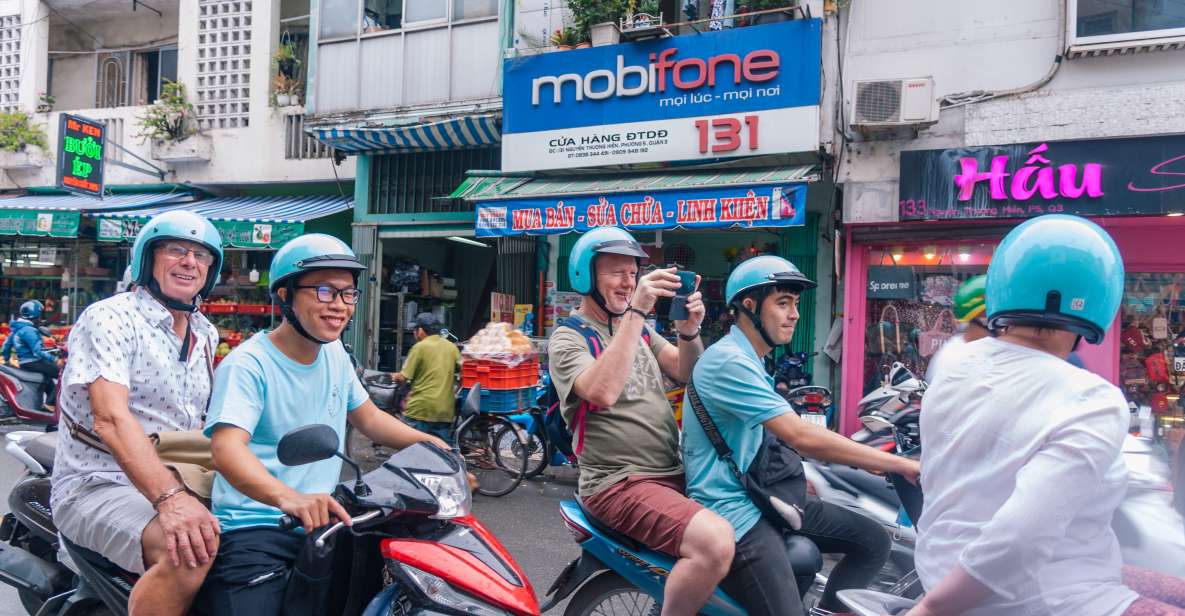
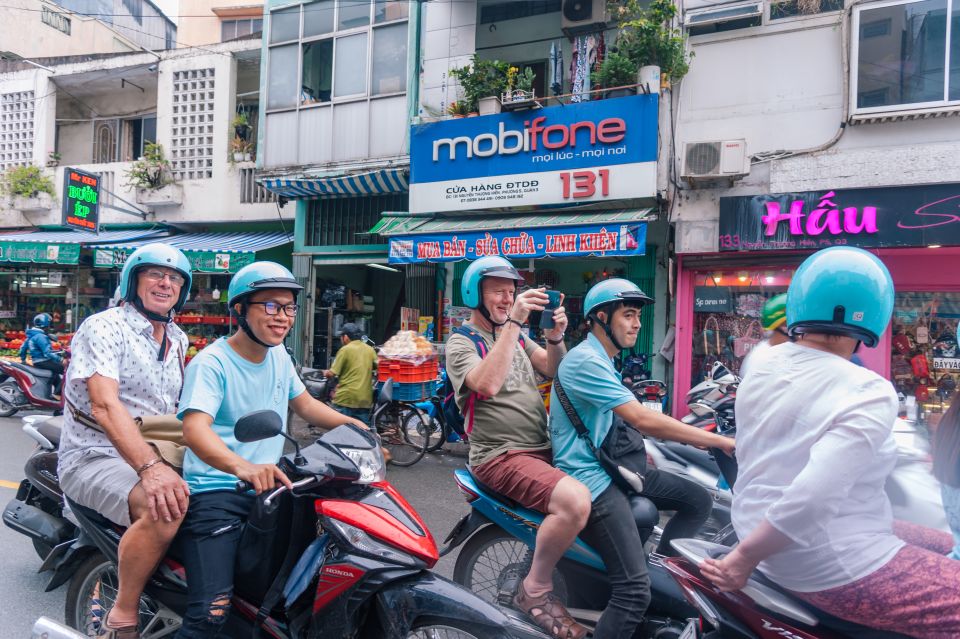
Riding pillion on a scooter is one of those “sounds scary, feels manageable” experiences—if you’re with a driver who rides with care. The tour includes a scooter with a driver, and the transport score is a strong 91% perfect rating from past riders.
What I like in a tour like this is the practicality. Scooters cut through the stop-and-go of city streets better than walking, and you don’t spend your precious half-day stuck in long transit gaps. You’re also able to see more ground than a standard walking route.
Practical notes to make it work smoothly:
- Wear comfortable shoes and clothes you can move in.
- Sunglasses and a light layer can help, since Saigon weather can shift quickly.
- The tour has a clear dress expectation: no shorts, no short skirts, no sleeveless shirts. For temples and pagodas, you must cover knees and shoulders.
If you’re very sensitive to motorcycles or you get anxious in traffic, consider the private tour option. Same idea, often with a bit more control over pacing and comfort.
French Saigon: Notre-Dame, the Central Post Office, and Opera-area elegance
One of the best ways to appreciate Saigon is to see how French colonial design still shapes the skyline. On this tour, that starts right away with Saigon Notre-Dame Basilica (also called Cathedral Notre-Dame), built by French colonists between 1863 and 1880. The building looks “European” in feel, but its existence here is the point—Saigon absorbed outside influence and kept changing.
Next comes the Saigon Central Post Office, constructed from 1886 to 1891. The architecture is described as a blend of classic Gothic, Renaissance, and French colonial elements. Even if you’re not an architecture nerd, it’s a good stop because it’s visually distinct and it gives you a concrete reference for what French rule looked like in everyday infrastructure.
Then you’ll pass through the Opera House area and the broader civic-landmark zone. The goal isn’t just postcard pictures. It’s to notice how these buildings still sit in the middle of a modern city rhythm, and how history leaves physical fingerprints.
A small watch-out: places like Notre-Dame are religious sites, so expect the earlier-mentioned clothing rule to matter. If you show up in “summer-only” outfits, you might have to adjust on the spot.
Ho Chi Minh City’s war story: War Remnants Museum

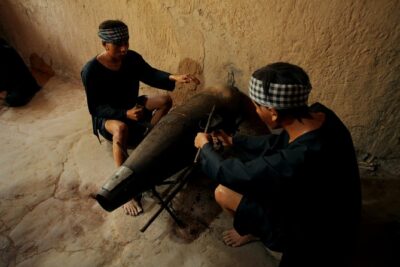
If you only choose one intense stop on a Saigon trip, make it this museum. The War Remnants Museum is where you’ll see countless artifacts, photographs, and pictures documenting the second Indochina war. The tone can be confronting, and that’s not a flaw—it’s the point.
What makes it work on a guided scooter tour is that the museum doesn’t become a disconnected “thing you saw.” The guide’s job is to connect what you’re looking at with what happened to Vietnam, and to share context in a way that’s understandable without oversimplifying.
In past tours, riders highlighted guides who could answer lots of questions and explain details in clear English. Names that came up in feedback include Nhi, Tris, Johnny, and Bean—and that pattern matters. You’re not just receiving a script; you’re getting room for conversation and clarification.
If you’re the type who gets emotionally drained by war imagery, give yourself permission to go at your own pace inside. You don’t have to “power through” every display.
Reunification Palace: the presidency-era snapshot of April 30, 1975
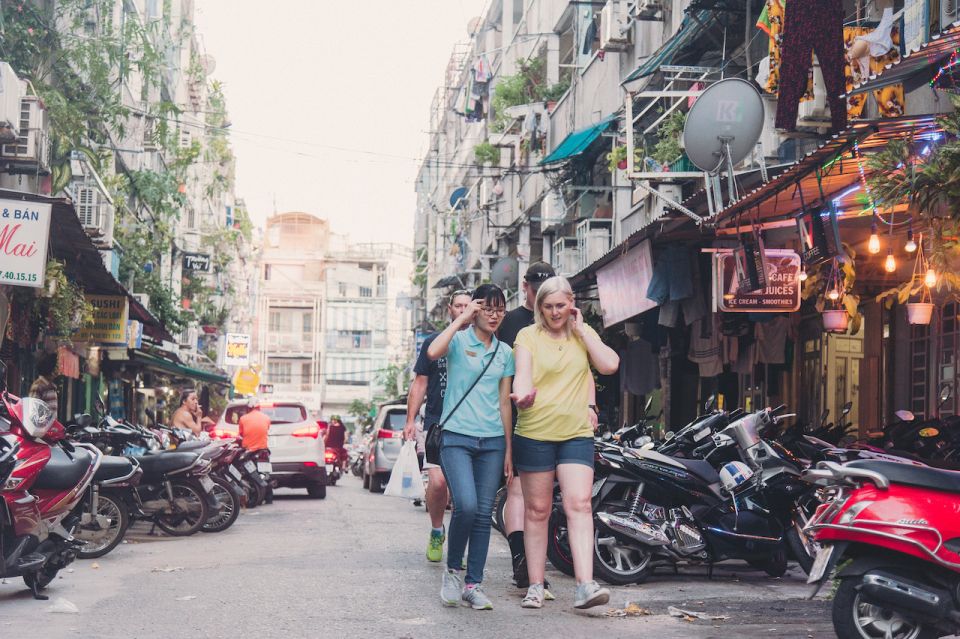
After the museum’s broader documentation, Reunification Palace brings it down to a specific place and moment. It was the residence of the President of the Republic of Vietnam until April 30, 1975—so the atmosphere carries that sense of “this is where major decisions were made.”
This stop pairs well with the museum because it shifts from “what the war produced” to “what the war ended with.” Even if you already know the timeline, standing in rooms tied to that era helps history feel less abstract.
One practical note: because this is a major national landmark, it can be busy. The tour’s value is that you’re not coordinating entrance timing on your own—you’re guided straight through the core experience. Entrance fees for the museum and palace are included, so you’re not doing last-minute math.
You can also read our reviews of more museum experiences in Ho Chi Minh City






Pagoda quiet meets city chaos: Jade Emperor Pagoda and what to notice

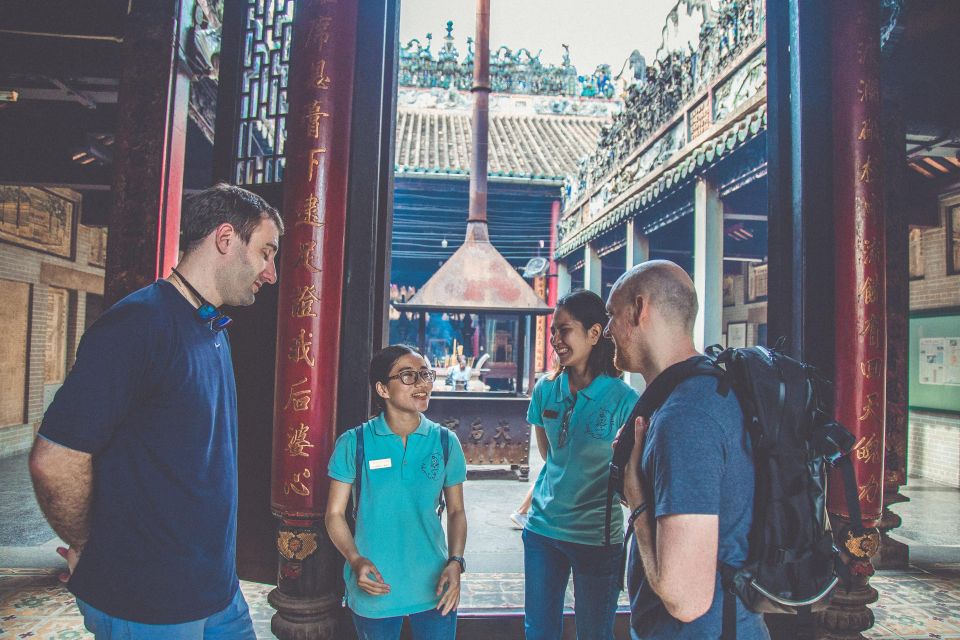
The Jade Emperor Pagoda adds a different texture to the tour. You get a break from war-era material and civic buildings, and you step into a religious space with its own visual language and routines.
Even if you’re not a regular temple visitor, it’s worth using this stop to notice details: incense, altar areas, and how visitors behave inside the space. This is one of the best times on the schedule to slow your mind down for a minute.
The clothing rule is the key thing to remember. Temples and pagodas require covering knees and shoulders. If you’re traveling with light clothes, plan for a small scarf or layer so you’re not stuck improvising.
Ben Thanh Market: practical shopping energy and a real city pulse

Ben Thanh Market is one of Saigon’s classic experiences. It’s also one of the best “you are in Vietnam right now” stops on a short tour.
The market is described as one of the oldest in Ho Chi Minh City, appearing before the French invaded Saigon. Built at the beginning of the 17th century for small traders exchanging goods on the Ben Nghe River’s bank, next to a harbor near Gia Dinh Citadel, it has layers of meaning behind the ordinary act of buying snacks or browsing stalls.
For me, the best way to use Ben Thanh is not to rush. Even a short stop can teach you bargaining rhythms, snack choices, and what kinds of souvenirs are actually common here. Keep an eye out for things you can realistically use on your trip, not just stuff that will sit in your suitcase.
If you hate crowds or you get overwhelmed by constant selling, set your own limit. This is a quick “market introduction,” not a full shopping marathon.
Nguyen Hue Walking Street and civic landmarks: the modern Saigon contrast
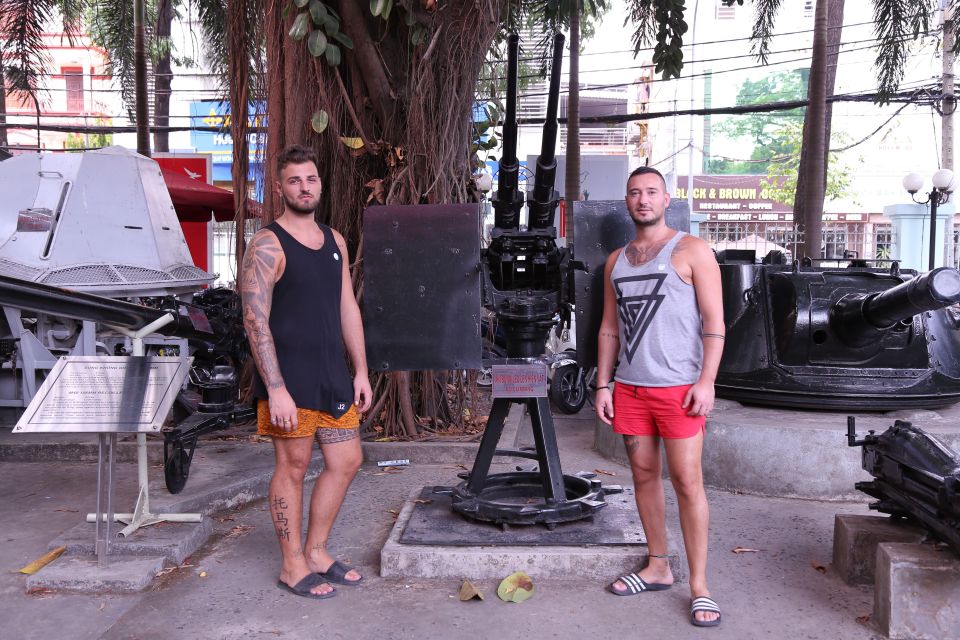
By the time you’re in the Nguyen Hue Walking Street area and the broader Ho Chi Minh City People’s Committee / City Hall region, the tour becomes more about contrast.
You’ve just seen war-era sites and French colonial architecture. Now you’re in the part of Saigon that feels like the city’s present-tense identity—pedestrian energy, central government-adjacent presence, and the sense that modern Ho Chi Minh City is still shaping itself.
This part of the tour works best if you use it for observation:
- Look at how new life crowds around old buildings.
- Notice how big streets and central institutions pull people into predictable flows.
- Pay attention to what locals do with their time in the area.
Price and value: is $28 a fair deal for a 4-hour scooter tour?
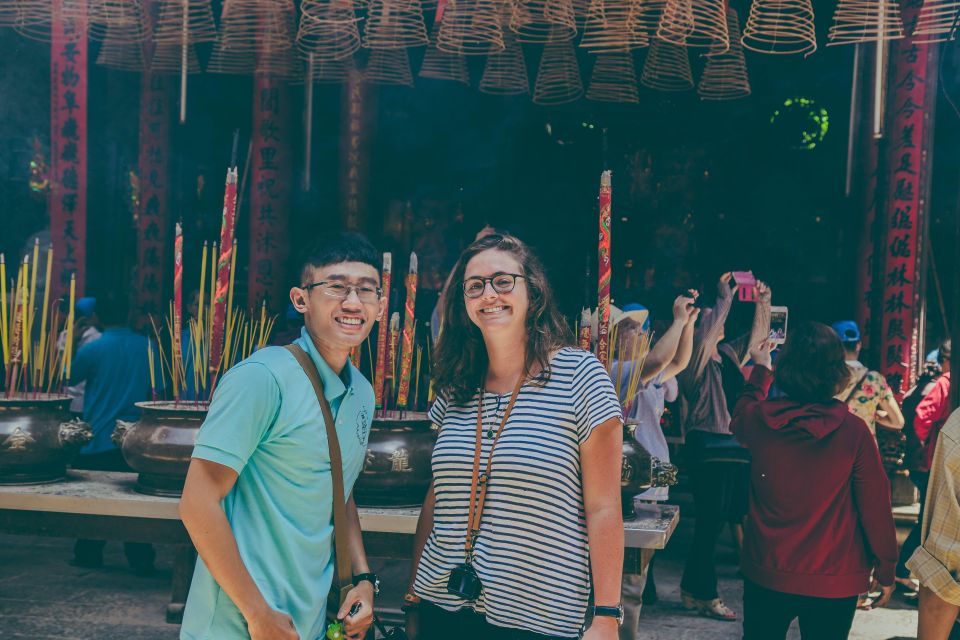
At $28 per person for 4 hours, this tour is priced like a solid “greatest hits” experience—especially because entrance fees for War Remnants Museum and Reunification Palace are included. Entrance tickets at these sites alone can add up, and you also get an English-speaking guide, a scooter driver, and Kumquat juice.
The big question isn’t whether it’s cheap. It’s whether you’re paying for convenience and context. Here, you are:
- You get a route that hits the most important landmarks without you doing transportation juggling.
- You get guided explanations tied to the Vietnam War and why it matters to the city.
- You get a scooter ride that helps you cover more ground in fewer hours.
Also, you have a private tour option if you want the same stops with less group pacing.
What I’d bring (and what could trip you up)
This tour is easy to prepare for, but the dress rules are strict enough to matter.
Bring:
- Comfortable shoes (you’ll step in and out often)
- Comfortable clothes that allow movement
- Something to cover up if you’re in a tank top or skirt (you need covered knees and shoulders for temples and pagodas)
Don’t show up with:
- Shorts
- Short skirts
- Sleeveless shirts
One more practical detail: pickup is optional and limited to District 1 and 3. If you’re not in those areas, there may be an extra charge. If you’d rather meet up, the tour’s stated meeting point is Cyclo Resto, 133 Nguyễn Du, Phường Bến Thành, Quận 1.
Guides and the local viewpoint: what the best tours share
The biggest reason this tour earns such high ratings isn’t only that it covers famous places. It’s the way the guide connects dots and keeps the experience interactive.
In feedback, riders mentioned guides like Brandon, Kevin, Johnny, Tris, Thu, Kent, Katherine, Long, Tony, Richard, Katy, Nhi, and Zayne. Across these names, a few themes repeat:
- Guides were described as friendly and careful with explanations.
- Many riders valued being able to ask lots of questions.
- A few guides even helped extend the experience when timing allowed by taking guests to additional spots beyond the standard list.
I’d treat that as a sign of the tour style: you’re not just being transported. You’re getting a human guide who cares about answers and communication.
Who should book this motorbike tour (and who should choose something else)
This is ideal if you:
- Have limited time and want the “Saigon basics” done well
- Enjoy history but also like a guided, conversational pace
- Want to experience Vietnam beyond the museum door, using the scooter to move efficiently
It might not fit you as well if:
- You’re uncomfortable with motorbike rides in busy traffic (even if the tour has a strong safety record)
- You need very light, upbeat sightseeing because the war museum and palace can feel intense
- You don’t want to follow dress rules for religious sites
Should you book this Saigon tour?
Yes, if your goal is a short, high-impact Saigon overview that mixes French architecture, two major war-era sites, and classic city life at Ben Thanh Market. The price makes sense because key entrance fees are included, and the scooter format lets you cover more than you could on foot in the same time.
I’d book it sooner rather than later if you’ll be in District 1 or 3, since pickup is easiest there. And if you’re sensitive to heavy war imagery or motorbike stress, plan accordingly: consider a private option and bring the right clothing so you’re not rushing at the last minute.
FAQ
How long is the City Tour by Motorbike?
The tour lasts 4 hours.
How much does it cost?
The price is $28 per person.
What’s included in the tour price?
You get an English-speaking tour guide, a scooter with driver, entrance fees, and Kumquat juice.
Are the War Remnants Museum and Reunification Palace included?
Yes. Entrance fees for these two stops are included.
What places does the tour visit?
The tour includes stops at Saigon Notre-Dame Basilica (Cathedral Notre-Dame), Saigon Central Post Office, City Hall / Ho Chi Minh City People’s Committee area, Opera House, War Remnants Museum, Jade Emperor Pagoda, and Ben Thanh Market, plus Nguyen Hue Walking Street.
Is pickup available?
Pickup is optional, and pickup is available in District 1 and District 3. Other districts may have an extra charge. There is also a meeting point at Cyclo Resto in District 1.
What languages is the guide available in?
The live guide is available in English and Vietnamese.
Do I need to bring anything specific?
Bring comfortable shoes and comfortable clothes.
What clothing is not allowed?
Shorts, short skirts, and sleeveless shirts are not allowed.
What’s the policy for cancellation and pay later?
Free cancellation is available up to 24 hours in advance for a full refund, and there’s a reserve now, pay later option.