REVIEW · HO CHI MINH CITY
Ho Chi Minh City Full Day Private Tour
Book on Viator →Operated by Vietnam Tours VIP · Bookable on Viator
History feels close here. In one day, you jump time periods in Ho Chi Minh City. This private tour strings together market life, Chinese-style worship spaces, French-era architecture, and the story of Vietnam’s modern turmoil. You get an English-speaking guide, pickup by air-conditioned vehicle, and entrance fees handled for a smooth day.
I especially like the way the route blends everyday local culture with big history stops. Binh Tay Market gives you real Chinatown energy, and the war-and-history museum time helps you connect what you see with what it meant. One possible drawback: it is an 8-hour schedule with several stops, so you’ll want comfortable shoes and patience for a full day pace.
In This Review
- Key highlights you’ll feel in the moment
- A private 8-hour day that hits the big themes fast
- Binh Tay Market in Cho Lon: shopping as culture, not just souvenirs
- Ba Thien Hau Temple: incense, worship, and a rare pocket of calm
- Independence Palace: 1960s architecture with a heavy mood
- Lunch at Gánh Khách Sạn Bông Sen: a buffet that reduces risk
- Sơn mài Đại Việt lacquer craft: what makes lacquer so durable
- Saigon Central Post Office: a French-era icon you can still use
- Museums for wartime and national story: how to pace what you learn
- Price and logistics: where the value actually comes from
- Who this tour suits best
- Should you book this Ho Chi Minh City private tour?
- FAQ
- FAQ
- How long is the Ho Chi Minh City full day private tour?
- Where does the tour start?
- Is pickup included?
- Is lunch included?
- Are entrance fees included?
- Do I get an English-speaking guide?
- How much does the tour cost?
- Is this tour private or shared with other groups?
- What should I budget for since tips are not included?
- What is the cancellation policy?
Key highlights you’ll feel in the moment
- Binh Tay Market in Cho Lon (Chinatown) gives you bargains, snack smells, and an easy entry into local shopping culture
- Ba Thien Hau Temple lets you experience 19th-century devotion with incense coils hanging overhead
- Independence Palace mixes palm-lined grounds with 1960s government-building atmosphere
- Gánh Khách Sạn Bông Sen buffet lunch balances Vietnamese dishes with a Western-style buffet setup
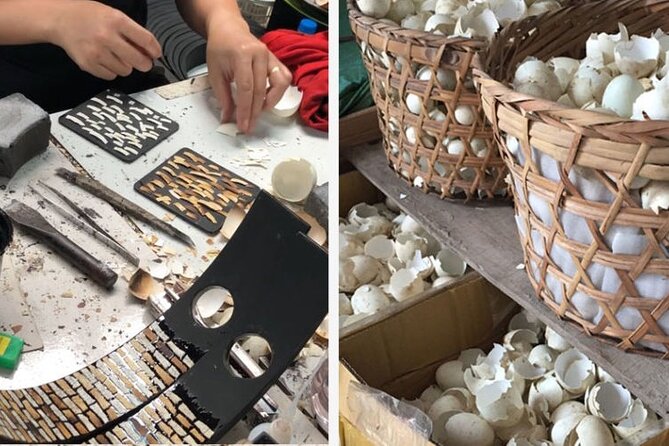
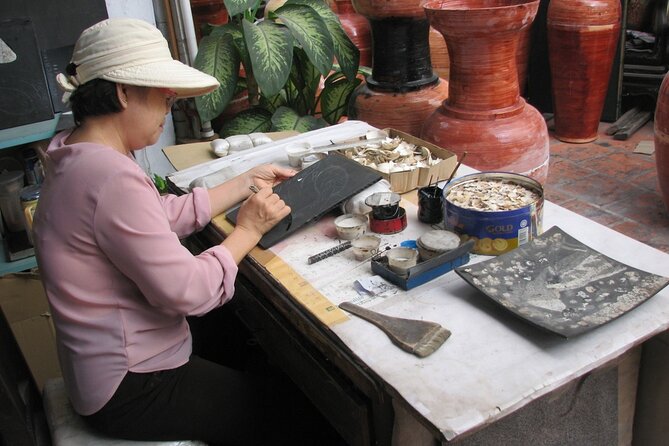
- Sơn mài Đại Việt lacquer craft shows how resin, pigments, and many layers create a durable shine
- Saigon Central Post Office is an 1886–1891 French-era architectural landmark (often linked to Eiffel, designed by Marie-Alfred Foulhoux)
A private 8-hour day that hits the big themes fast
If you only have a single day in Ho Chi Minh City, this tour is built for coverage with context. You’re not just collecting photos. You’re moving through distinct neighborhoods and eras, with a guide to connect the dots as you go.
Price is $100 per person for a private format, and you’re getting more than a ride and a checklist. Entrance fees are included, lunch is included, bottled water is included, and you have an air-conditioned vehicle with pickup. That matters in Ho Chi Minh City, where time and transit effort can quietly eat your day.
One more practical note: this is booked about 29 days in advance on average. That’s a hint that popular schedules fill up. If your dates are fixed, you’ll feel better booking earlier rather than rolling the dice.
You can also read our reviews of more city tours in Ho Chi Minh City


Binh Tay Market in Cho Lon: shopping as culture, not just souvenirs
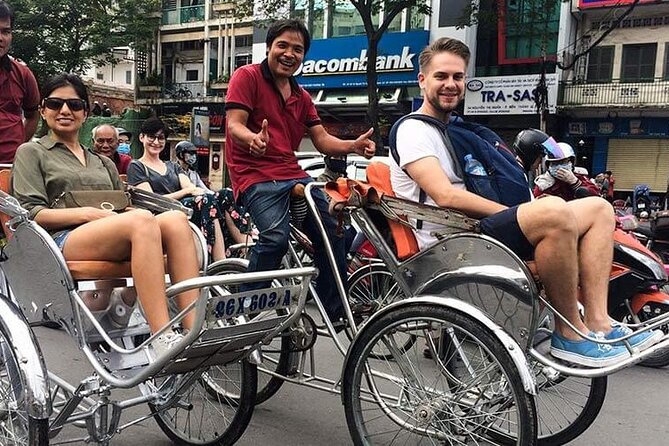
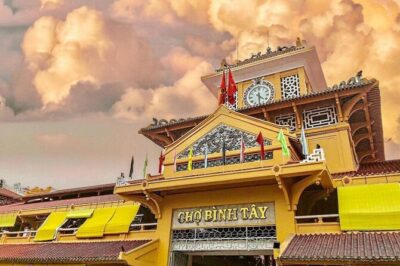
Your day starts at Binh Tay Market in Cho Lon (Chinatown). This place is known for being both historic and still very much alive—goods moving, people chatting, and vendors doing what they do all day. It’s the kind of market where your senses get pulled in fast: spices, snacks, fabrics, and everyday items.
I like that this stop is also practical. Markets help you understand how locals spend time and money, not just what they buy for tourists. If you want to pick up small gifts, consumables, or just try street-style snacks on your own afterward, this is a helpful first orientation point for the neighborhood.
The main consideration is simple: markets mean crowds and strong smells. If you’re sensitive, plan for it. And if you’re buying, keep your focus and don’t rush. Even when a guide is there to help you navigate, your comfort matters more than a bargain.
Ba Thien Hau Temple: incense, worship, and a rare pocket of calm
Next up is Ba Thien Hau Temple, dedicated to the goddess Thien Hau. It dates to the 19th century, and the vibe is devotional without being off-limits. People move through the space with quiet purpose, and visitors stand respectfully among regular worshippers.
What I’d watch for here is the sensory detail: large coils of incense hang overhead, and the air fills with that warm, smoky scent. If you’ve never been in a Chinese temple like this, it can feel like culture you can actually read with your eyes and ears, not just a building description.
This stop is about serenity inside the city’s motion. Even if you’re on a tight schedule, I recommend taking a few minutes to slow down and just look. You’ll catch more—especially at altars and the small details people bring and place.
Independence Palace: 1960s architecture with a heavy mood
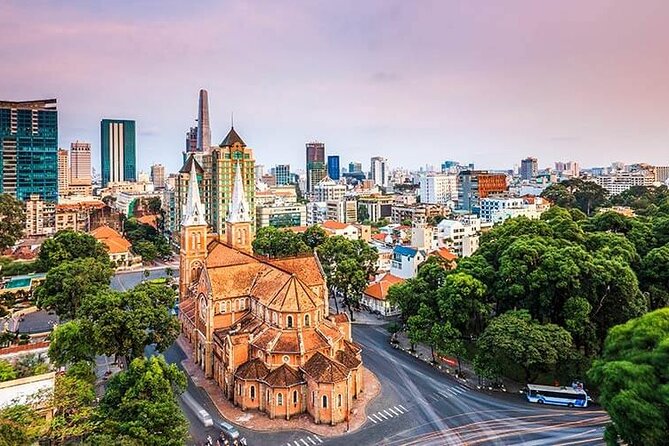
At the Independence Palace, you’ll see a very different atmosphere. The building’s 1960s architecture feels dissonant in a way that’s hard to explain until you’re standing there. Royal palm trees frame it, and inside the halls can feel eerily quiet—like the structure still carries the weight of what happened there.
This isn’t a stop that’s only about aesthetics. It’s about understanding Vietnam’s modern history through physical space: rooms, corridors, and the way a government complex was designed to function. If you care about history beyond headlines, this kind of place helps your brain build a timeline you can picture.
The drawback is emotional temperature. Places tied to conflict can feel intense. Give yourself permission to move at your pace. If you start to feel overloaded, take short breaks outside before continuing.
Lunch at Gánh Khách Sạn Bông Sen: a buffet that reduces risk
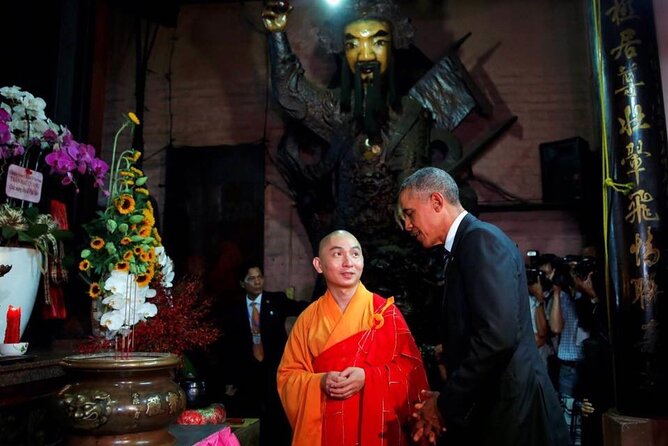
For lunch, you’ll go to the Gánh Khách Sạn Bông Sen buffet. The format is designed to be easy for mixed tastes: traditional Vietnamese dishes alongside a Western-styled buffet setup. It’s a good choice on a day like this because it keeps the schedule tight and reduces decision fatigue.
I like buffet lunch in the middle of a museum-heavy itinerary. You can try a bit of everything, then reset for the afternoon without worrying about finding a specific restaurant. The tour also includes traditional lunch and bottled water, so you’re not doing math on the fly.
The only consideration: buffets can vary in crowd levels depending on the day. If you’re very picky or prefer one specific type of food, you’ll want to plan what you’ll actually eat rather than hoping for a perfect match.
You can also read our reviews of more private tours in Ho Chi Minh City



Sơn mài Đại Việt lacquer craft: what makes lacquer so durable
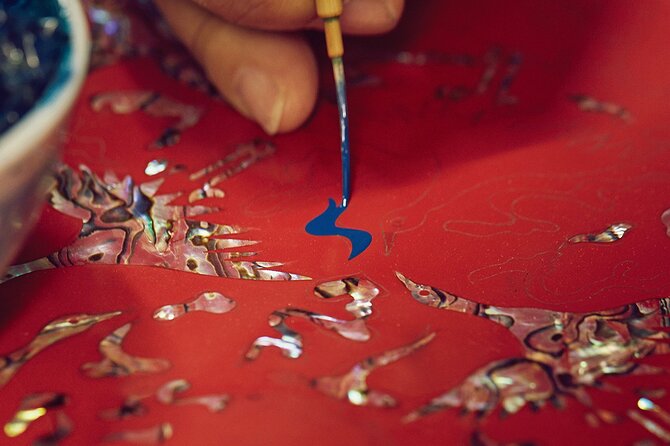
Then comes Sơn mài Đại Việt, a lacquerware stop that’s more interesting than it sounds. Lacquer in Vietnam is not just a shiny finish. The lacquer itself comes from resin of a tree, mixed with coloured pigments and solvents, then applied layer after layer.
That layering is the magic. It’s what creates a finish that’s both shiny and durable. When you see the process in person, the art stops being abstract. You start to understand why lacquerware costs what it costs and why it takes time to make.
This stop is also a nice change of pace from history museums. It gives you something tactile and visual to focus on, and it’s the kind of craft that helps you appreciate Vietnam beyond politics and monuments.
If you’re tempted to buy lacquerware, take your time. Look closely at the finish and layers, and think about weight and how you’ll transport it back home. (The tour includes admission, so you can focus on the art without extra entry hassles.)
Saigon Central Post Office: a French-era icon you can still use
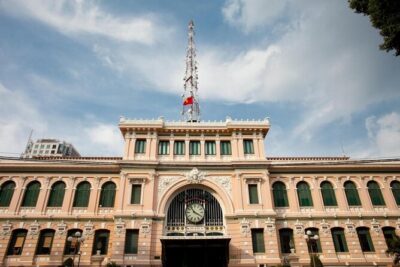
Next you’ll visit Saigon Central Post Office, one of the city’s best-known landmarks. The building was constructed between 1886 and 1891, and it’s designed by Marie-Alfred Foulhoux (often credited to Eiffel). Even if you’re not a building-nerd, the interior space and the layout make you want to stop moving and look.
I like this stop because it feels alive. A post office is a working place, so it’s not purely a monument behind glass. You can connect the architecture to real everyday functions, and that makes it more memorable.
This is also a short stop by design. You’ll get a quick look and then move on, so if you’re the type who wants to read every detail, you may wish you had more time. Still, it’s a strong “wow” moment inside the day.
Museums for wartime and national story: how to pace what you learn
The tour’s second half turns toward Vietnam’s modern past with museum time focused on the Vietnam War at the War Remnants Museum & Vietnam History Museum. Expect a serious tone. These exhibits use artifacts and displays to chronicle the country’s experience and its path through conflict and change.
You’ll also have HCMC History Museum time—built in 1929 with a Sino-French feel—and it includes a rewarding collection that traces Vietnam’s cultural evolution. One highlight mentioned for the collection is coverage reaching back to the Bronze Age Dong Son civilization, which is dated around 2000 BCE.
That pairing is smart. War museums can be emotionally intense, and a broader history museum helps you keep scale. You get context for how the present story connects to older civilizations and cultural shifts.
How to get the most from it: don’t try to absorb everything at once. Pick a few sections that match your interests, then move on. If the content starts to feel heavy, step outside briefly and let your mind reset before returning inside.
Price and logistics: where the value actually comes from
This tour is $100 per person for a private format that lasts about 8 hours. On the surface, that might sound like a splurge. After you break it down, it’s easier to see the value.
Here’s what you’re not paying separately:
- All entrance fees
- Traditional lunch plus bottled water
- Pickup by air-conditioned vehicle
- English-speaking guide
And because it’s private, you’re not forced to match another group’s rhythm. That helps if you like taking photos slowly, pausing to read, or spending a little extra time at one stop without being rushed out.
The main cost consideration is not just money. It’s your energy. A full-day schedule with multiple stops means you’ll likely spend more time on your feet than you’d in a shorter, fewer-stop tour. Plan for that, and the day feels efficient rather than exhausting.
Who this tour suits best
This private day works well for you if:
- You have limited time in Ho Chi Minh City and want a structured plan
- You care about seeing both culture and history in one route
- You want a guide who can explain what you’re looking at as you go
- You prefer convenience: pickup, vehicle, entrances, and lunch included
It may be less ideal if you want a slow, no-schedule day. This route is packed, and the pacing is part of the bargain.
Should you book this Ho Chi Minh City private tour?
I’d book it if you want a single-day plan that makes sense: market life at the start, temples and architecture in the middle, and serious museum time to close the loop. The craft stop at Sơn mài Đại Việt and the classic Saigon Central Post Office add variety, so it doesn’t turn into a march of only one type of sightseeing.
Book it especially if you’re traveling with someone who likes structure. The included lunch, entrance fees, and air-conditioned pickup reduce the usual friction of “figuring it out” on your own.
Before you book, decide if you’re okay with an 8-hour day. If you can handle a full schedule and you’re ready for a mix of uplifting and heavy moments, this tour earns its place.
FAQ
FAQ
How long is the Ho Chi Minh City full day private tour?
It’s about 8 hours.
Where does the tour start?
It starts at Binh Tay Market in Cho Lon (Chinatown).
Is pickup included?
Yes, pickup is offered.
Is lunch included?
Yes. Lunch is included as a traditional buffet lunch at Gánh Khách Sạn Bông Sen, along with bottled water.
Are entrance fees included?
Yes, all entrance fees are included.
Do I get an English-speaking guide?
Yes, the tour includes an English-speaking tour guide.
How much does the tour cost?
The price is $100.00 per person.
Is this tour private or shared with other groups?
It’s a private tour/activity. Only your group will participate.
What should I budget for since tips are not included?
Tips or personal expenses are not included, so you may want to set aside some money for those.
What is the cancellation policy?
Free cancellation is available up to 24 hours in advance of the experience’s start time for a full refund.