REVIEW · HO CHI MINH CITY
Ho Chi Minh City: Half-day History And Culture Tour
Book on GetYourGuide →Operated by Hoi An Express · Bookable on GetYourGuide
Four hours, and Saigon tells its story. This half-day tour packs the key sights you’d otherwise string together on your own, from the War Remnants Museum to Independence Palace, plus Chinatown’s Thien Hau Temple and a traditional lacquerware workshop.
Two things I really like about this tour: you get a guided walk-through of major landmarks without feeling rushed, and the pacing leaves time to understand what you’re seeing, not just snap photos. The other big win is the English live guide, with guides such as Boa (and driver Nam) noted for clear explanations, plus Hành and Quy for detailed, friendly hosting. One possible drawback: it’s only about 4 hours, so you’ll be moving and watching the clock at several stops, especially if you prefer to linger.
In This Review
- Key things worth caring about
- Why this half-day Ho Chi Minh City tour works (and where it doesn’t)
- Pickup, timing, and the smart way to approach a 4-hour route
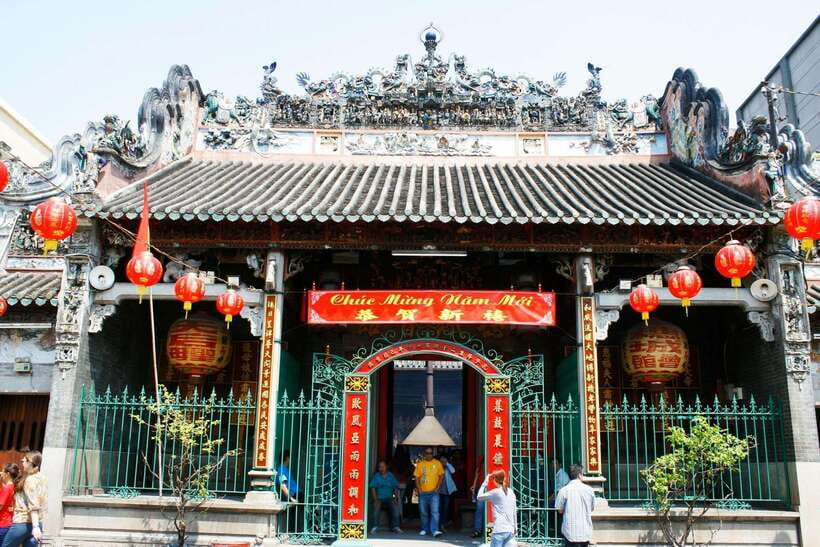
- Thien Hau Temple in Chinatown: quick cultural contrast in 15 minutes
- Independence Palace: the one-hour stop that gives you real context
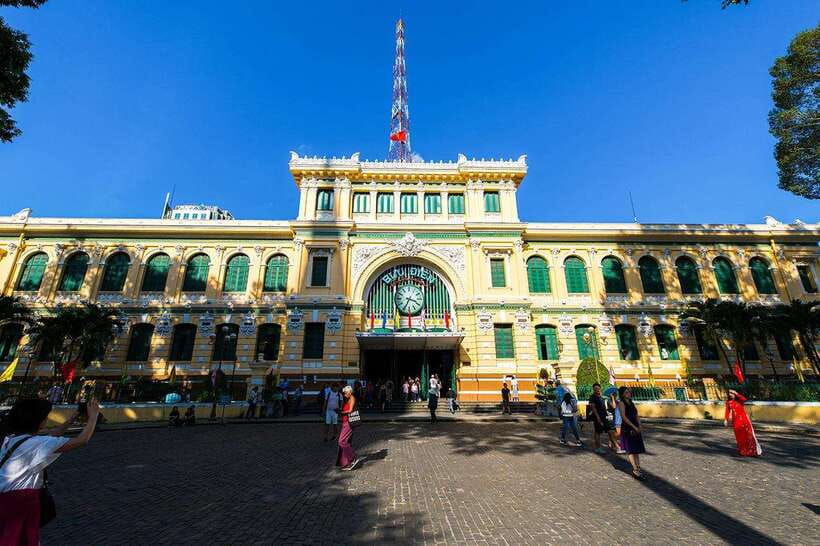
- Saigon Central Post Office and Notre-Dame Cathedral: iconic, efficient, and not too heavy
- Saigon Central Post Office
- Notre-Dame Cathedral
- War Remnants Museum: the stop that carries the emotional weight
- Sơn Mài Phương Nam lacquerware workshop: finishing with craft and technique
- The guides and drivers make a noticeable difference
- Value check: is $36 a fair deal for 4 hours in central Ho Chi Minh City?
- Who should book this tour (and who should consider alternatives)
- A few practical tips so you get more from each stop
- Should you book this Ho Chi Minh City half-day history and culture tour?
- FAQ
- FAQ
- How long is the Ho Chi Minh City half-day history and culture tour?
- What is the price per person?
- Is there an English-speaking guide?
- What stops are included in the itinerary?
- Do I get hotel pickup and drop-off?
- What’s included in the ticket price?
- What isn’t included?
- Are unaccompanied minors allowed?
Key things worth caring about
- War Remnants Museum with guided context so the exhibits land instead of just passing by
- Independence Palace for a slow hour where you can see how power was laid out
- Chinatown stop at Thien Hau Temple (Cho Lon) to mix cultural styles in one route
- Saigon Central Post Office and Notre-Dame Cathedral as quick, iconic photo-and-history moments
- Lacquerware production at Sơn Mài Phương Nam to finish with a hands-on craft focus
Why this half-day Ho Chi Minh City tour works (and where it doesn’t)
Ho Chi Minh City (still often called Saigon) can feel like two cities at once: French-era architecture and wartime memory on one side, modern traffic and local life on the other. This tour is built for that mix. In a short window, you see landmarks tied to major historical turning points, then you end with craft work that shows another kind of heritage: what people make with their hands.
The value for you comes from the structure. Instead of bouncing between unrelated spots, you get a route that clusters the city’s big “why it matters” places. And you’re not doing it cold; the tour runs with a live English guide, which is a huge deal when the details inside museums and government buildings are the whole point.
That said, the tour is compact. You’ll do several guided visits plus short walking segments. If you’re the kind of visitor who always wants a “just one more look” minute—especially at museums—you might wish you had a full day.
You can also read our reviews of more city tours in Ho Chi Minh City



Pickup, timing, and the smart way to approach a 4-hour route
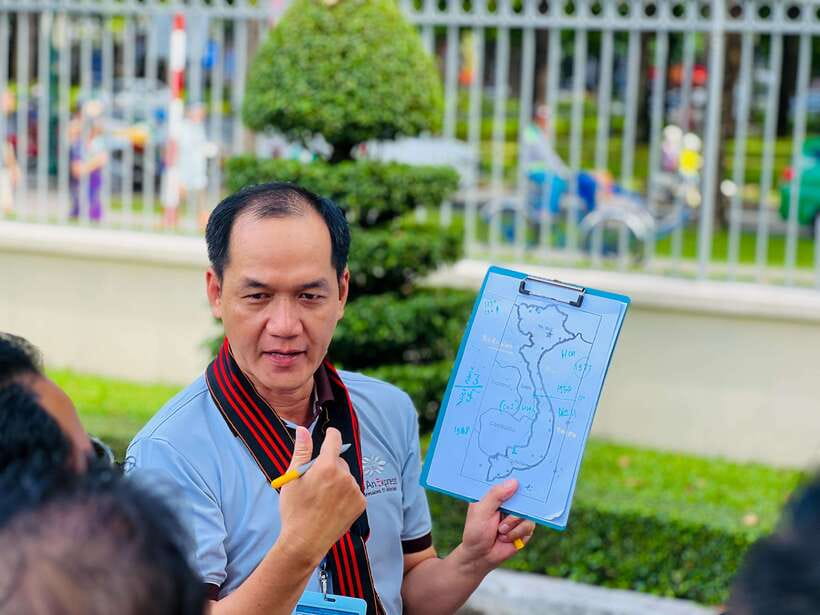
This is a true half-day: the total duration is 4 hours, with starting times you’ll need to check for your dates. Hotel pickup and drop-off are included for Hồ Chí Minh City center areas: Districts 1, 3, 5, 10, plus Phu Nhuan. That saves time and stress, especially if you’re not already comfortable navigating the city.
Because you’re on a schedule, plan your own day around it:
- Wear comfortable shoes. You’ll walk through multiple areas and stand for guided explanations.
- Bring water. Bottled drinking water is included, but you’ll still want it handy.
- If you’re sensitive to crowds or noise, treat this like a sightseeing sprint rather than a slow stroll.
The upside of a timed tour is that it reduces decision fatigue. You won’t spend your morning asking which building to prioritize—you’ll already be there, with context attached.
Thien Hau Temple in Chinatown: quick cultural contrast in 15 minutes
Your first major stop is Thien Hau Temple, located in Cho Lon (Chinatown, District 5). This isn’t just a sightseeing stop; it’s a cultural “tone shift.” Vietnam’s big cities don’t grow in one cultural lane, and Chinatown is one of the clearest places to see that blend in everyday space and religious life.
You’ll have about 15 minutes for a guided visit and sightseeing walk. That’s short, so here’s how to get more out of it: look for the temple’s details and don’t be afraid to let your questions run ahead of your photos. A good guide will help you connect the Lady of the Sea figure—Thien Hau, also known as Mazu—to why the temple matters to worshippers.
What’s great for you: the temple gives your day a cultural depth that isn’t just “war and politics.” It’s also a useful reset before the more intense stops.
Independence Palace: the one-hour stop that gives you real context
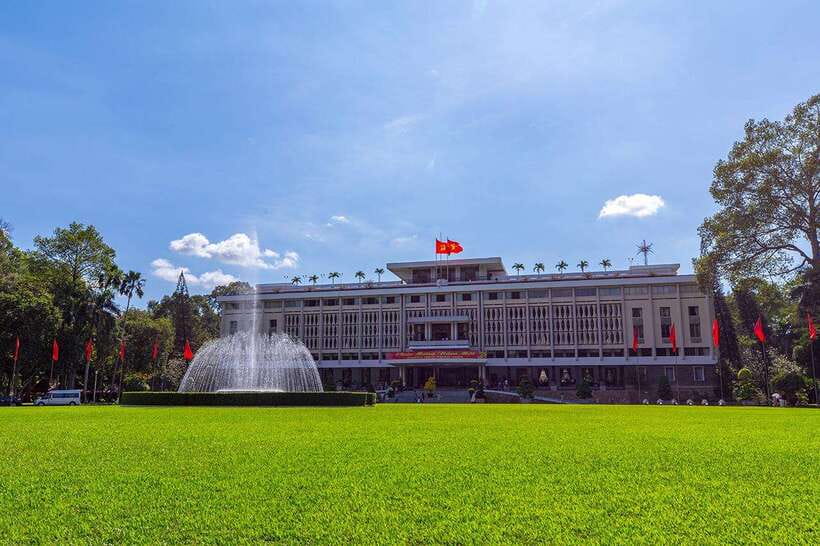
Independence Palace (often still called Reunification Palace) is one of the anchors of this route. You’ll get about 1 hour here, which is long enough to understand the building layout and the story behind it, rather than just chasing viewpoints.
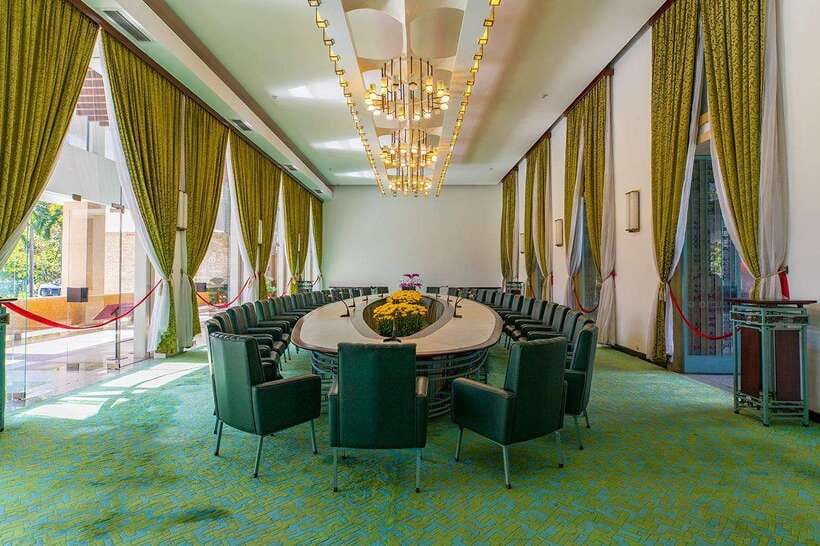
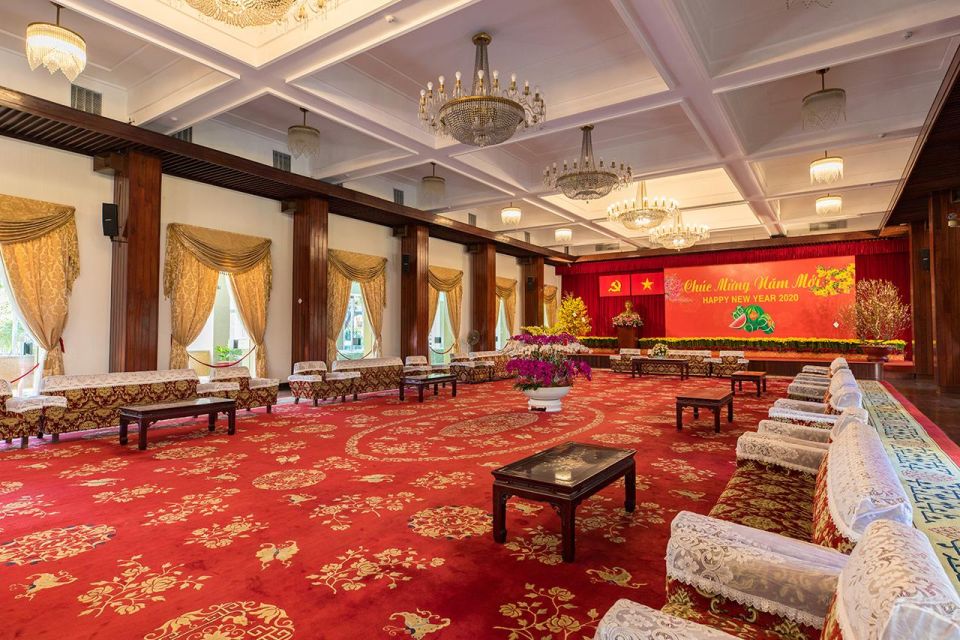
This palace was preserved as the residence of the President of the Republic of Vietnam during the 1960s and 1970s. That timeframe makes the visit more than architectural sightseeing. The rooms and corridors help you imagine how power operated day to day—and how a place designed for authority becomes part of national memory.
Why you’ll probably like this stop: it’s a guided visit with real time. You can move at a normal pace, ask questions, and absorb how the site connects to later events.
Possible drawback: because you’re inside and on a tight tour schedule, it’s not the best stop if you want long, quiet wandering. Still, with a guide at your side, you’ll get more meaning than you would standing alone.
Saigon Central Post Office and Notre-Dame Cathedral: iconic, efficient, and not too heavy
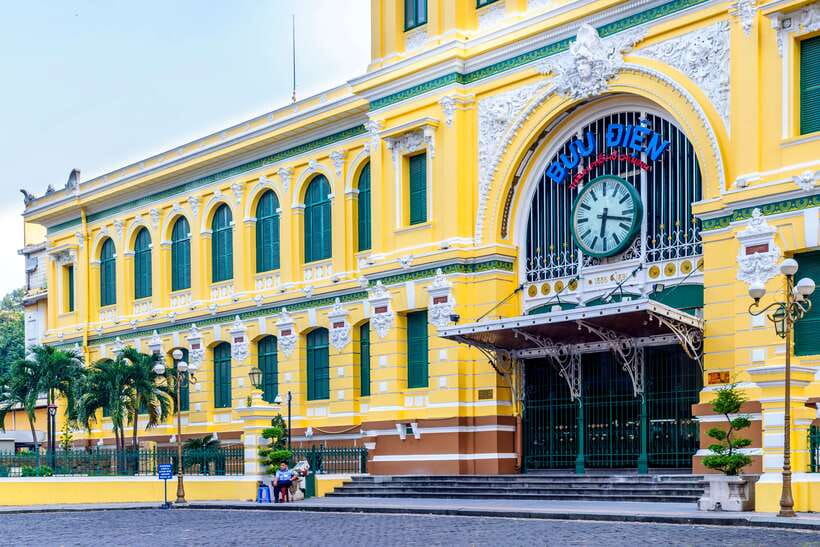
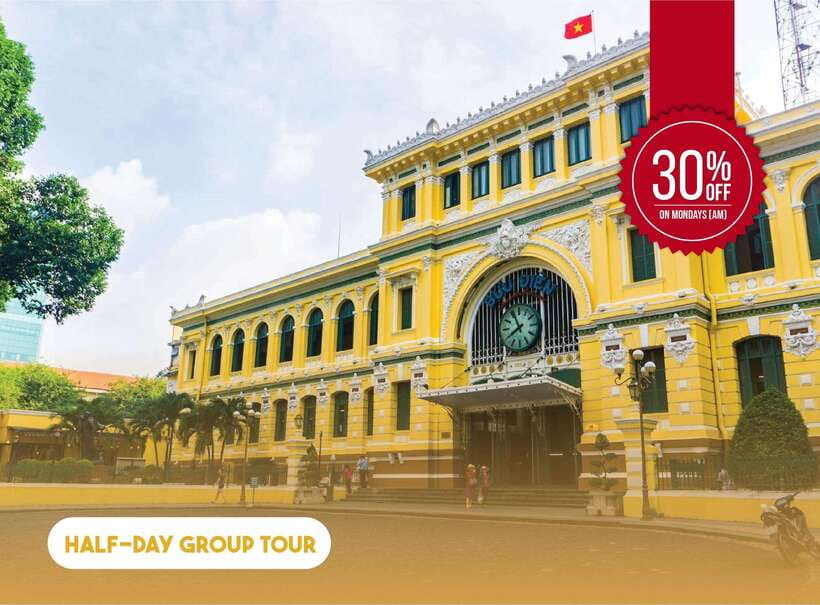
After Independence Palace, the tour shifts to two classic photo-and-walk landmarks: Saigon Central Post Office and Notre-Dame Cathedral.
You can also read our reviews of more historical tours in Ho Chi Minh City






Saigon Central Post Office
You get around 10 minutes here. That’s enough for a quick guided look and to appreciate why the building stands out. It’s one of the strongest “French-colonial era still here” reminders in the city center.
If you love architecture, you’ll get value from the stop, but don’t expect a long interior deep-dive. This is a hop-on/hop-off moment designed to keep the tour flowing.
Notre-Dame Cathedral
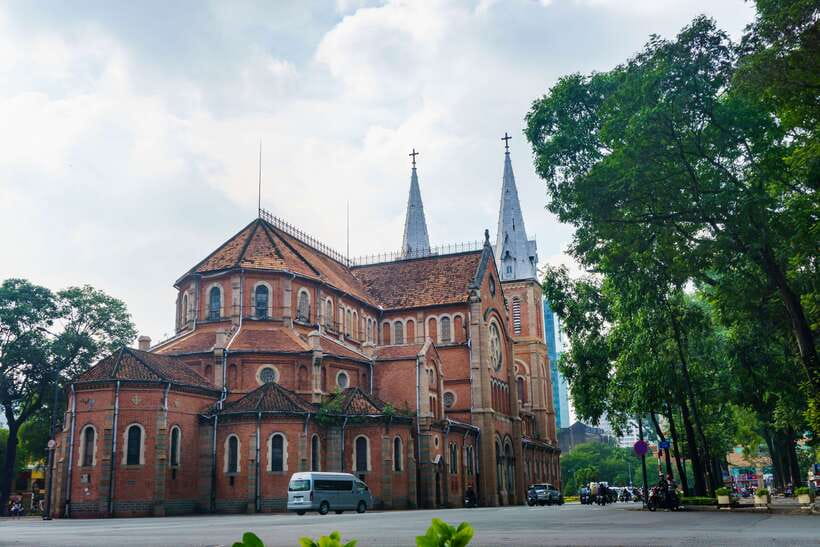
Next is Saigon Notre-Dame Cathedral, with about 15 minutes of visit time. Again, this is efficient rather than exhaustive. It’s iconic for a reason, and your guide’s job here is to put the building into a bigger timeline so it feels more like a landmark with a story instead of a postcard prop.
My practical advice: spend your minutes looking both outward and inward if allowed, but prioritize what your guide points out. In 15 minutes, you can either collect a dozen random views—or learn the building’s role in the city’s evolution.
War Remnants Museum: the stop that carries the emotional weight
Then you head to the War Remnants Museum, where you’ll have about 1 hour for a guided visit and sightseeing walk. This is the most emotionally heavy stop on the route, and it’s also the one where guidance matters most.
The museum is described as a vivid portrayal of the futility of war. Even if you’ve read history before, seeing it in a museum setting with a guide who can explain what you’re looking at can change the way you remember it. Exhibits can be intense, and context helps you understand what you’re being asked to feel and reflect on.
For you, the big benefit is that you’re not tackling it solo. You’ll have a structure: you follow the guide’s pacing, you learn how the exhibit themes connect, and you’re more likely to leave with a clearer takeaway than if you just wandered through rooms.
A consideration: if you’re traveling with kids or anyone who gets overwhelmed by heavy topics, plan your comfort level. This tour does include insurance, but it’s still better to know your limits than to discover them halfway through.
Sơn Mài Phương Nam lacquerware workshop: finishing with craft and technique
The final stop is at a Vietnamese lacquerware factory, specifically Sơn Mài Phương Nam. You’ll spend about 25 minutes here, which makes it a satisfying close: you go from history and memory to an art form you can actually see being made.
Why this matters to your trip: lacquerware is one of those crafts that looks decorative from far away, but up close it’s all process—layers, patience, and technique. Watching the intricate process of traditional lacquerware production gives you a different way to understand culture. Instead of only reading the past, you witness how skills are passed on through making.
This is also a good stop if you want something you can remember later. You’ll likely have a better mental picture of Vietnamese craftsmanship than you would from a quick souvenir glance.
The guides and drivers make a noticeable difference
One of the strongest themes tied to this tour is the quality of the guide and the smoothness of the day. Names like Boa and Hành and Quy come up in how the tour is described: informative explanations, good English, and a friendly, hospitable way of guiding you through each site. Driver Nam is also mentioned alongside the guide, which matters because traffic and timing can make or break a half-day route.
If you get a guide who communicates clearly, your stops won’t feel like a checklist. You’ll understand why each location sits where it does and what it represents. That’s exactly what you want from a short tour.
Value check: is $36 a fair deal for 4 hours in central Ho Chi Minh City?
At $36 per person for about 4 hours, this tour can be a strong value—especially if you’re staying in District 1, 3, 5, 10, or Phu Nhuan, because pickup and drop-off are included.
What you’re paying for isn’t just “transport.”
- Entrance fees are included, which matters because museums and major landmarks can add up.
- Bottled water is included.
- Travel insurance is included.
- You also get a live English guide, which is often the biggest cost you’d otherwise pay privately.
If you were to DIY this route, you’d still spend time figuring out transit, timing, and ticket options. Here, the order is already planned, and the guided context saves you time and guesswork.
The main way it might not feel like a deal: if you already plan to visit most stops independently with a strong guidebook plan, the structured benefit is smaller. But for most visitors, the combination of guided major sites plus included admissions is exactly what you want.
Who should book this tour (and who should consider alternatives)
This is a good fit if:
- You want the headline sites of Ho Chi Minh City in a short window
- You prefer guided explanations in English rather than reading everything on your own
- You like a mix of architecture, major historical landmarks, and cultural craft work
- You’re staying in central districts and want pickup and drop-off
It might be less ideal if:
- You hate timed itineraries and want long, slow museum time
- You’re easily overwhelmed by war-related exhibits
- You’re hoping for a deep, specialist-level historical course. This is a half-day overview, not a full academic treatment.
Also, there are rules for minors: unaccompanied minors aren’t allowed. Every child must be accompanied by an adult, and there’s a maximum adult-to-child ratio described for pricing.
A few practical tips so you get more from each stop
- Start the day mentally ready for emotional content at the War Remnants Museum.
- At Independence Palace and the museum, ask your guide one good question early. You’ll get more from the rest of the visit once you know what to look for.
- At the temples and cathedrals, don’t rush your eyes. In short stops, the details you notice are what make the photos worth keeping.
- If you have time later in the day, leave room for exploring the areas around what you see on the tour. The route gives you a strong “map in your head,” not just a list of addresses.
Should you book this Ho Chi Minh City half-day history and culture tour?
I’d book it if you want a focused, guided introduction to Ho Chi Minh City that doesn’t eat your whole day. It’s especially compelling because the stops are varied and purposeful: Thien Hau Temple for cultural contrast, Independence Palace for political history, Notre-Dame Cathedral and the Old Post Office for architectural anchors, War Remnants Museum for hard-hitting reflection, and lacquerware production for a craft finish.
If your travel style is slow and you’d rather linger in one place, then a longer tour or separate museum visit might suit you better. But if you’re trying to get oriented fast and you value English guidance, this is one of the cleanest ways to see the city’s most important landmarks in half a day.
FAQ
FAQ
How long is the Ho Chi Minh City half-day history and culture tour?
It’s scheduled for 4 hours, though you’ll need to check availability to see the starting times.
What is the price per person?
The price is listed as $36 per person.
Is there an English-speaking guide?
Yes. The tour includes a live tour guide who speaks English.
What stops are included in the itinerary?
The tour includes Thien Hau Temple, Independence Palace, Saigon Central Post Office, Saigon Notre-Dame Cathedral, War Remnants Museum, and a lacquerware factory (Sơn Mài Phương Nam), plus arrival back in Ho Chi Minh City.
Do I get hotel pickup and drop-off?
Yes, hotel pickup and drop-off are included in Ho Chi Minh City Center for Districts 1, 3, 5, 10, and Phu Nhuan.
What’s included in the ticket price?
Included are transfer and transportation as per the itinerary, entrance fees, bottled drinking water, travel insurance, and hotel pickup and drop-off in the listed central districts.
What isn’t included?
Personal expenses aren’t included.
Are unaccompanied minors allowed?
No. Unaccompanied minors are not allowed, and children must be accompanied by an adult according to the tour’s stated rule.