REVIEW · HO CHI MINH CITY
Saigon: City Sightseeing Hop-On Hop-Off Bus Tour
Book on GetYourGuide →Operated by City Sightseeing Worldwide · Bookable on GetYourGuide
Saigon clicks into focus from the bus. The unlimited hop-on hop-off format plus two color-coded routes makes it easy to move at your pace, from French colonial sights to market streets. I also like the free Wi‑Fi and the included guidebook with maps, recommendations, timetables, and coupons.
Next, the 9-language audio guide (with headphones) turns the ride into a moving briefing, so you’re not just staring at rooftops. The main consideration: you’re still riding through traffic between stops, and the audio can be imperfect or the fit-to-building timing can feel a little off—use it for context, then confirm details on the ground.
In This Review
- Key Points Before You Buy
- Why This Saigon Hop-On Hop-Off Loop Makes Sense for First-Time Visitors
- Getting Oriented Fast: How the Timing Works (Red vs. Blue)
- Red Route basics
- Blue Route basics
- Red Route: French Colonial Landmarks and the Saigon Icons You’ll Want on Your Photos
- 1) Saigon Opera House
- 2) Nguyen Hue Street
- 3) Nha Rong Wharf
- 4) Tran Hung Dao Statue
- 5) Museum of Vietnamese History
- 6) War Remnants Museum
- 7) Pham Ngu Lao Street
- 8) Ben Thanh Market
- 9) Independent Palace
- 10) Saigon Notre Dame Cathedral / Central Post Office
- Blue Route: Markets and Pagodas for a Different Side of the City
- 1) Beer Street – Pham Ngu Lao Street
- 2) Ben Thanh Market
- 3) War Remnants Museum
- 4) Ho Thi Ky Flower Market
- 5) Phuoc An society’s premises
- 6) Ong Bon Pagoda
- 7) Binh Tay Market
- 8) Thien Hau Pagoda
- 9) Van Phat Pagoda
- When You’ll Actually Want to Switch Routes
- How I’d Plan a 1-Day vs. 2-Day Pass in Real Life
- The 1-day plan (best for your first afternoon or full day)
- The 2-day plan (best for overlap-free sightseeing)
- What the Hop-On Freedom Really Gives You (Not Just Convenience)
- Comfort, Audio Headphones, and the Stuff That Can Make or Break Your Day
- Top deck vs. downstairs
- The audio guide: useful, but treat it like a tool
- Earphone volume matters
- The Stops You’ll Probably Spend Time At (And Why)
- Price and Value: Is $21 Actually a Good Deal?
- Practical Tips That Save You Hassle at the Opera House Start
- Night Option: Worth It If You See It on Your Dates
- Who This Tour Fits Best (And Who Should Skip It)
- Should You Book the Saigon City Sightseeing Hop-On Hop-Off Bus?
- FAQ
- How long does the Red Route bus loop take?
- How long does the Blue Route bus loop take?
- What time do the buses start and how often do they run?
- What languages are available for the audio guide?
- Can I use a mobile voucher, or do I need paper?
- Is entry to attractions included in the ticket price?
- What do I need to bring, and what’s not allowed?
Key Points Before You Buy
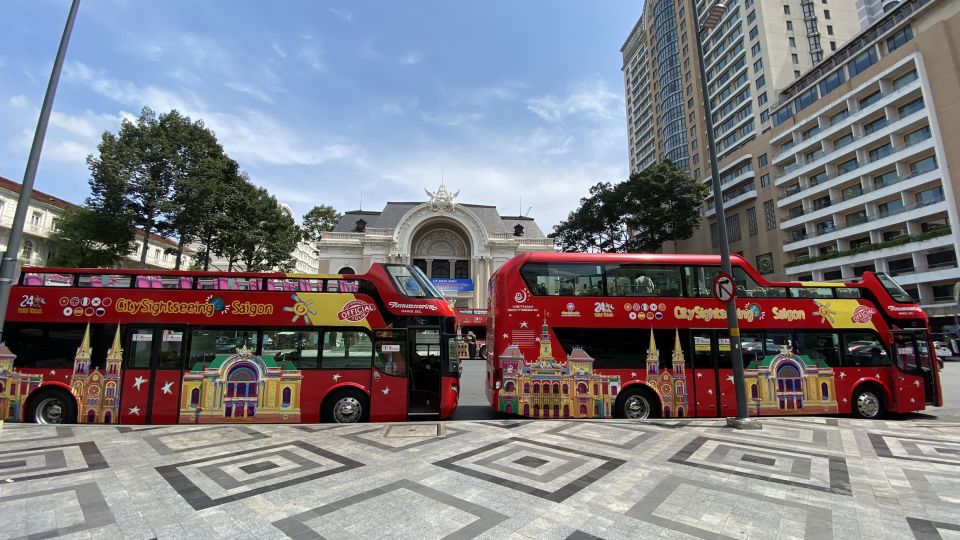
- Two routes, one ticket window: a 1-day or 2-day pass plus overlap areas make backtracking simple.
- 9-language audio with headphones: helpful for understanding what you’re seeing as the bus rolls by.
- Free Wi‑Fi and a real guidebook: you can plan stops without burning mobile data.
- Top-deck views vs. downstairs comfort: choose sun for photos or air-conditioned seating when it’s hot.
- Value depends on your hop count: if you only do a couple stops, a taxi might feel cheaper.
Why This Saigon Hop-On Hop-Off Loop Makes Sense for First-Time Visitors
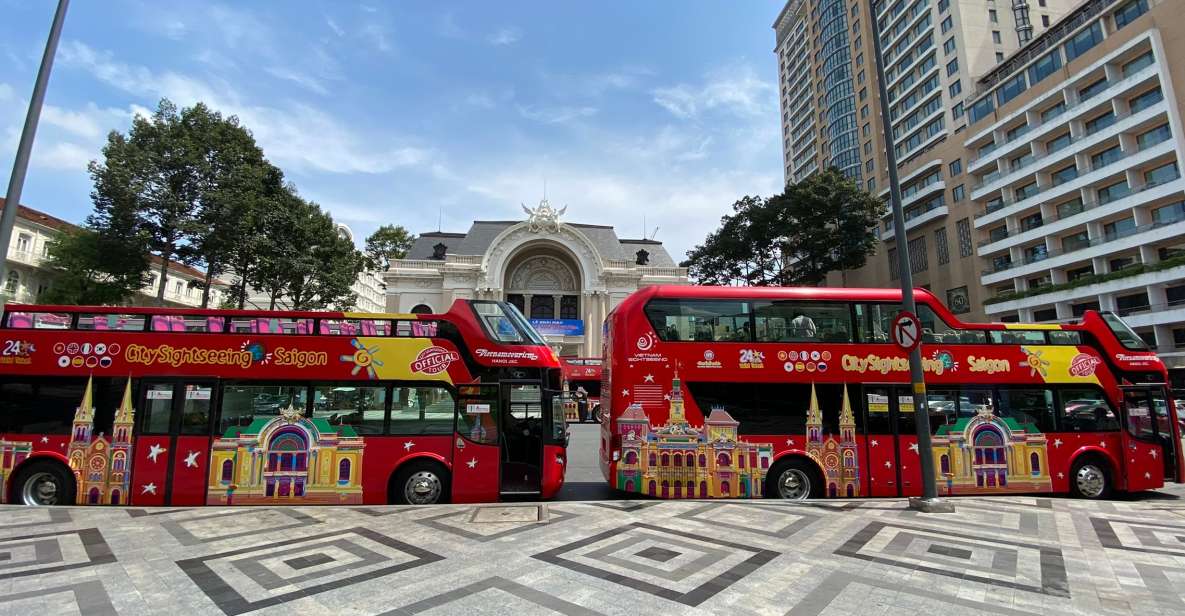
Saigon (officially Ho Chi Minh City) rewards curiosity, but it punishes plan-less wandering. This tour is basically a moving “start here” map: you get a fast overview, plus the freedom to leave the bus and come back later on the next departure.
I like that the system is straightforward. You start at the Saigon Opera House area, you ride one route (red or blue), and you can switch to the other route in the right neighborhood to widen your coverage. It’s also practical that the buses run often enough that you’re not stuck waiting for hours.
One more thing: the tour isn’t only about big landmarks. You’ll also pass through market districts and religious sites, which gives you a fuller sense of how the city actually functions day to day.
You can also read our reviews of more city tours in Ho Chi Minh City



Getting Oriented Fast: How the Timing Works (Red vs. Blue)

Your schedule is built around two separate loops.
Red Route basics
- First departure from Stop 1 (Opera House): 9:00am
- Last departure from Stop 1: 4:00pm
- Frequency: every 30 minutes
- Time on the loop: about 75 minutes
Blue Route basics
- First departure from Stop 1 (Opera House): 9:00am
- Last departure from Stop 1: 3:45pm
- Frequency: every 45 minutes
- Time on the loop: about 80 minutes
In real life, this means you can do a loop, hop off for 60–120 minutes, and still have a reasonable chance to catch the next bus without stressing. If you’re doing only one day, I’d plan to ride one full loop before you commit to museum time or shopping time.
Red Route: French Colonial Landmarks and the Saigon Icons You’ll Want on Your Photos

The Red Route is the one that most strongly feels like the classic “postcard” version of Saigon. It takes you through high-profile areas and sets you up for the city center sights.



1) Saigon Opera House
This is your main starting reference point. It’s a useful place to anchor your bearings because it’s central and easy to find.
2) Nguyen Hue Street
Think of Nguyen Hue as one long pulse of city life. From the top deck, you can get a clean view of how the central streets connect and where crowds swell.
3) Nha Rong Wharf
This stop gives you a sense of the city’s river-side presence. Even if you don’t disembark, the view helps you understand why Saigon’s history is tied to water routes.
4) Tran Hung Dao Statue
A quick visual waypoint for a well-known historic figure. If you’re using the bus to plan what to visit later, this is the kind of stop that helps you build a mental map.
5) Museum of Vietnamese History
This is a good target if you want context before you hit the big war-related sites. Since attraction entry isn’t included, you’ll need tickets separately, but the location alone makes the stop worth it.
6) War Remnants Museum
This is one of the tour’s biggest anchors. Plan for extra time here because it’s not the kind of museum you rush through just to catch the next bus.
7) Pham Ngu Lao Street
This area is known for energy and nightlife, and it also connects you to everyday street culture. If you’re curious, you can hop off to explore on foot, then get back on when you’re done.
8) Ben Thanh Market
Ben Thanh is a must for many first-timers. It’s also a smart “re-board” stop because it’s central for shopping and snacks—though expect crowds and bargaining energy.
9) Independent Palace
This is the kind of sight you visit to understand a turning point in modern history. If you’re trying to pick just one “big ticket” stop on the Red Route, Independent Palace is often a strong contender—just remember entry isn’t included.
10) Saigon Notre Dame Cathedral / Central Post Office
This pair of landmarks is the classic colonial duo. The bus stop is ideal for photos, and if you want to see the details up close, plan on leaving the bus and buying entry where required.
Red Route quick drawback to plan around
The route is packed with worthwhile stops, but that can make it tempting to hop off everywhere. If you do too many quick exits, you spend more time waiting and walking than actually enjoying the sights. For me, the best strategy is: ride the loop once, then choose 2–4 stops for deeper time.
Blue Route: Markets and Pagodas for a Different Side of the City
The Blue Route is the “go beyond District 1” option. It still includes major landmarks, but it also highlights neighborhoods and worship sites that feel different from the cathedral-and-Opera House core.
1) Beer Street – Pham Ngu Lao Street
This is a good first taste of Saigon’s nightlife district. You can keep it casual: hop off briefly to understand the street layout, then ride on before you lose daylight or energy.
2) Ben Thanh Market
Yes, it overlaps. That’s not a problem—it’s actually useful. If you missed Ben Thanh on your Red Route day, the Blue Route brings you back.
3) War Remnants Museum
Again, it overlaps, which makes route-switching easier. If your goal is to focus on this area, you don’t have to decide which route is “correct.”
4) Ho Thi Ky Flower Market
A flower market stop gives you a sensory snapshot. Even if you don’t buy anything, watching the flow of activity helps you understand local rhythms.
5) Phuoc An society’s premises
This one is more niche by name. You might find it interesting if you enjoy community-based stops and want to see how local organizations operate—just don’t assume it’s a mainstream tourist attraction.
6) Ong Bon Pagoda
Pagodas add texture to the city beyond the streets and museums. From the bus, you get a quick read on the area’s character; if you want a closer look, this is a solid hop-off candidate.
7) Binh Tay Market
Binh Tay Market shifts the shopping vibe. It’s a chance to see a different market style than Ben Thanh, which can make your souvenir hunt feel less repetitive.
8) Thien Hau Pagoda
This pagoda stop is another good “slow down” moment. If you’re tired from riding and walking, a hop-off here can reset your pace.
9) Van Phat Pagoda
Another religious stop to round out the Blue Route. It’s a nice final beat if you want your bus day to include more than just history and shopping.
Blue Route drawback to expect
Blue Route buses run less frequently (every 45 minutes instead of every 30). If you plan to hop off at multiple stops, build in extra time so you’re not racing the clock.
When You’ll Actually Want to Switch Routes
You’re not locked into one color. In fact, you’ll get the best coverage by switching at the right moments.
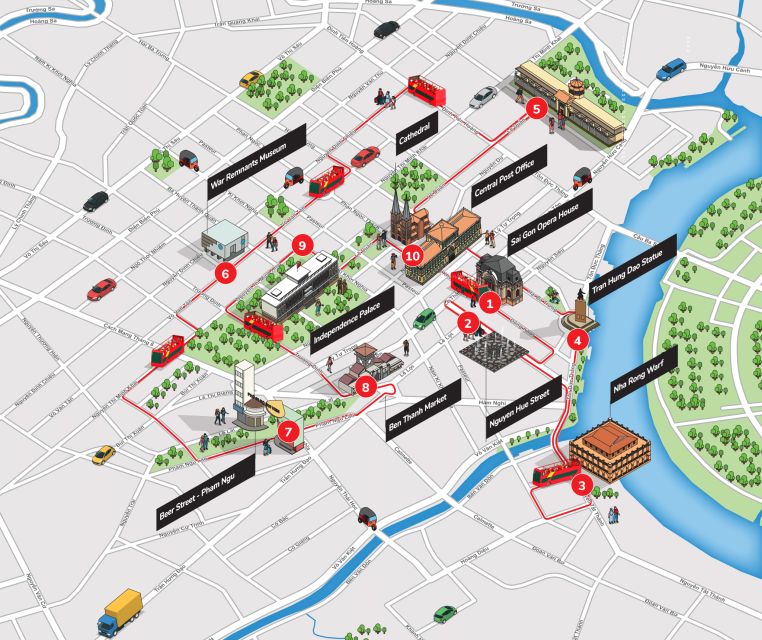
The tour notes that you should switch lines at Stops 6, 7, and 8 on the Red Route, which correspond to Stops 1, 2, and 3 on the Blue Route.
Translated into plain planning terms:
- After you reach the War Remnants Museum zone (and nearby central stops), you can pivot to the Blue Route to head toward markets and pagodas without backtracking across the whole city.
This is especially useful on a 2-day plan, because day one can become “big landmarks,” and day two can become “market-and-religion details.”
How I’d Plan a 1-Day vs. 2-Day Pass in Real Life

You’ve got two options: 1-day or 2-day. The right choice depends on whether you want one overview day or a day-and-a-half of deeper stops.
The 1-day plan (best for your first afternoon or full day)
If you have limited time, I’d do:
- One full loop on either Red or Blue to get the city’s structure.
- Then hop off for a museum stop and a market stop.
- Save the second route (the other color) for a return trip if you can.
This keeps you from spreading out too thin, which is the fastest way to turn hop-on hop-off into “hop-off hop-off.”
The 2-day plan (best for overlap-free sightseeing)
With two days, I’d make it simple:
- Day 1: focus on the Red Route core—Opera House, major city streets, War Remnants Museum area, Ben Thanh, Independence Palace, and the cathedral/post office region.
- Day 2: take the Blue Route for flower market and pagadas, plus revisit Ben Thanh only if you want a second round of shopping or snacks.
Because the routes overlap at Ben Thanh Market and the War Remnants Museum area, you’re not punished if you miss something. It’s there again, just in a different morning rhythm.
What the Hop-On Freedom Really Gives You (Not Just Convenience)

The hop-on hop-off format isn’t only about comfort. It changes how you experience Saigon.
You can:
- See where things are before you commit.
- Leave the bus when you want photos or air-conditioning.
- Avoid walking distances that can be annoying under heat and street traffic.
It’s also helpful if you’re traveling with people who want different things. One person can sprint for a market snack, while the other stays on for an extra loop and catches up later.
Comfort, Audio Headphones, and the Stuff That Can Make or Break Your Day
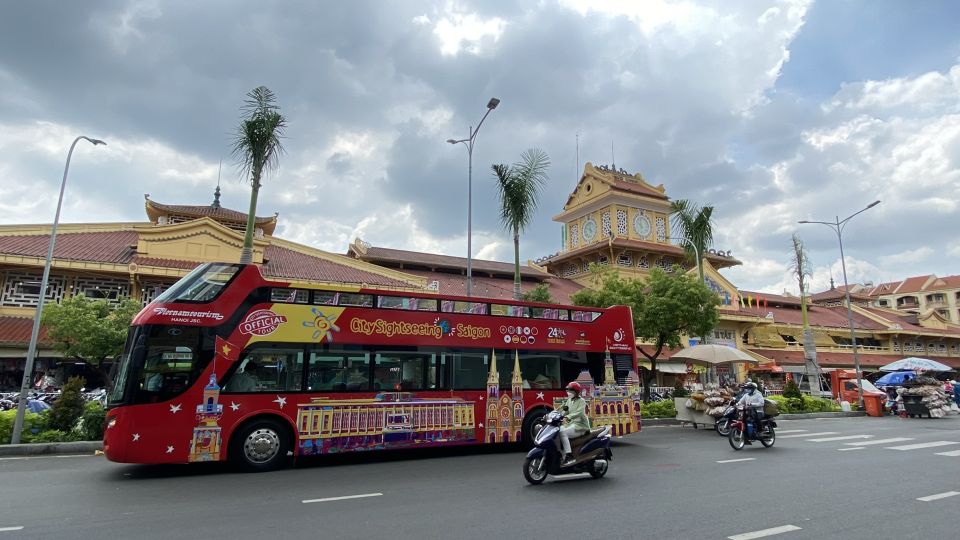
Top deck vs. downstairs
You’ll have two main comfort choices:
- Top deck for skyline and street views, especially at sunset.
- Downstairs for shade and air-conditioned seating when the heat hits.
If you’re photo-happy, the top deck helps. If you’re sensitive to sun or traffic noise, downstairs is a relief.
The audio guide: useful, but treat it like a tool
The audio guide runs in English, Spanish, German, French, Chinese, Japanese, Korean, Vietnamese, and Russian. Headphones are included, so you’re not stuck sharing sound with strangers.
Still, consider this: the narration can sometimes feel out of sync with the buildings in view. So don’t treat the audio as a perfect street-level GPS. Use it to build context, then read signs or ask at the stop when you want precision.
Earphone volume matters
Some riders have had difficulty hearing at times. If you have hearing-sensitive preferences, bring your patience and keep volume accessible. You can also swap positions if the bus audio changes depending on where you sit.
The Stops You’ll Probably Spend Time At (And Why)
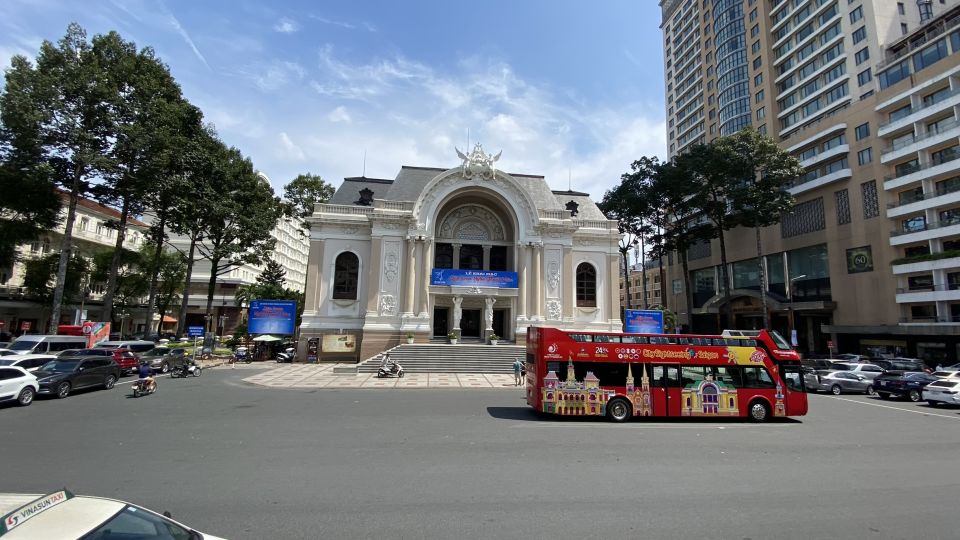
If you want the best “bang per stop” strategy, anchor your deeper time at sights that naturally take more than 10 minutes.
These are the ones that typically deserve real attention:
- War Remnants Museum for serious historical context (entry is not included).
- Independence Palace for modern history and dramatic interiors (entry is not included).
- Notre Dame Cathedral / Central Post Office area for colonial architecture and street photos (entry may require separate tickets).
- Ben Thanh Market if you want shopping and casual local bites, with the caveat that it can get busy.
- Ho Thi Ky Flower Market if you like visual variety and color in your day.
For quick “window shopping” moments, you can treat stops like Tran Hung Dao Statue and Nha Rong Wharf as orientation points. They help you connect the dots without eating your whole schedule.
Price and Value: Is $21 Actually a Good Deal?
At about $21 per person for a 1–2 day pass, this is priced like a practical tool, not like a private tour.
Here’s how value works in the real world:
- If you plan to hop multiple times and see both major districts, the cost per sight drops fast.
- If you only want to do one loop and get off a couple times, taxis or rides via apps might feel cheaper for your exact route.
Also factor in time. In Saigon, time is lost when you’re guessing routes or stuck in traffic with no plan. This bus reduces that stress by keeping you on a structured corridor with predictable stops.
Practical Tips That Save You Hassle at the Opera House Start
- Bring passport or ID card as required.
- You can use mobile or paper vouchers.
- If you bought online and need to exchange a voucher, do it at the ticket counter on the side of Saigon Opera House, facing the Continental Hotel.
- The tour accepts vouchers for travel within 12 months of the selected travel date.
- Since entry fees aren’t included, keep a little budget set aside for museums and palaces.
One small planning note: the bus stop experience can feel chaotic if signage isn’t obvious. The best move is to ask staff or stay close to the operator area near the start point until you’re sure which bus is boarding.
Night Option: Worth It If You See It on Your Dates
Some people highlight an evening or night tour as a separate option, praised for seeing Saigon lit up. If a night departure is listed for your travel days, it can be a smart add-on because it changes the city’s mood completely.
Still, treat it as optional. Your main coverage comes from the daytime Red and Blue routes.
Who This Tour Fits Best (And Who Should Skip It)
This bus tour works well for:
- First-timers who want a fast overview.
- Travelers who want flexibility, not rigid schedules.
- Families, because hopping on and off is easier than coordinating long walks in heat and traffic.
- Anyone who likes architecture and landmark structure, but doesn’t want to plan every route segment.
You might skip it if:
- You already know Saigon well and you’re confident navigating street by street.
- You only want a couple stops and are comfortable using taxis between them.
- You prefer deep walking tours where you control every minute on foot.
Should You Book the Saigon City Sightseeing Hop-On Hop-Off Bus?
Yes—if your goal is orientation plus flexibility. The combination of two routes, frequent departures (especially on Red), free Wi‑Fi, and a multi-language audio guide makes it one of the easiest ways to see core sights without locking yourself into a full-day walking plan.
If you’re the type who wants only one museum and one market, you might do fine with simpler transport. But if you want the city’s big landmarks plus a broader slice of neighborhoods, this is a solid way to spend your time—especially on a first visit when everything feels new and you need a fast mental map.
FAQ
How long does the Red Route bus loop take?
The Red Route runs for about 75 minutes per loop.
How long does the Blue Route bus loop take?
The Blue Route runs for about 80 minutes per loop.
What time do the buses start and how often do they run?
Both routes start at 9:00am from Stop 1. Red departs every 30 minutes, while Blue departs every 45 minutes.
What languages are available for the audio guide?
The audio guide is available in English, Spanish, German, French, Chinese, Japanese, Korean, Vietnamese, and Russian.
Can I use a mobile voucher, or do I need paper?
Mobile and paper vouchers are both accepted.
Is entry to attractions included in the ticket price?
No. Entry to attractions isn’t included, so you’ll need to pay separately for museums and other sights.
What do I need to bring, and what’s not allowed?
Bring a passport or ID card. Pets aren’t allowed, and smoking isn’t allowed.