REVIEW · HO CHI MINH CITY
Ho Chi Minh City – Meditation retreat – 3 days 2 nights
Book on GetYourGuide →Operated by JANGTOURS · Bookable on GetYourGuide
Life slows down fast at a pagoda retreat. I like this one because it teaches the correct meditation method and pairs practice with Buddhist doctrine in a calm, structured routine. The schedule is busy enough to feel purposeful, but it’s also very straightforward: meditate, chant, study, and do daily volunteer work.
One consideration: you’re going to start early, follow quiet house rules, and spend most of your time inside the pagoda grounds and routines. If you want free time to wander gardens or chat casually, you’ll have to be patient—this retreat is built around schedule more than exploring.
In This Review
- Key Things To Know Before You Go
- Where You Go: Ho Chi Minh City to Phat Quang Pagoda
- The Core of the Retreat: Meditation, Chanting, and Doctrine
- Day 1 in Detail: Arrival, First Meditation, Volunteer Work, and Chanting
- Day 2 in Detail: Great Bell, Qigong/Martial Arts, and More Volunteer Practice
- Day 3 in Detail: Final Morning Chanting, One More Volunteer Stretch, and Head Back
- Living Like You Mean It: Pagoda Accommodation and Monastic Life
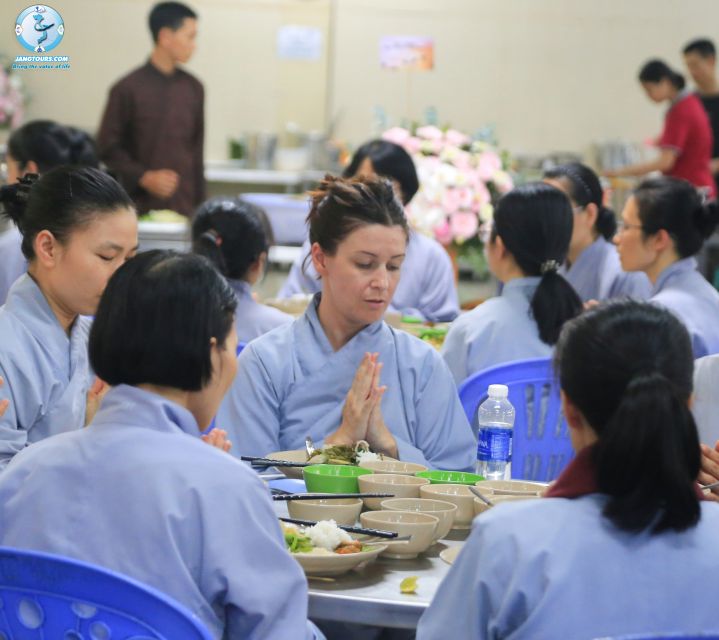
- Food, Schedule, and What the Vegetarian Meals Really Do
- Volunteering for Blessing: Why It’s Included (and Why It Works)
- Price and Value: What $99 Gets You
- Who This Retreat Fits Best (and Who Might Find It Tough)
- Simple Tips to Make Your Stay Easier
- Should You Book This 3-Day HCMC Meditation Retreat?
- FAQ
- How long is the meditation retreat?
- Where does the retreat take place?
- What is the price?
- What activities are included each day?
- Is the food vegetarian?
- What kind of accommodation is provided?
- Does the retreat include transportation?
- Is there a guide or instructor?
- Are there rules I should follow?
- Can I request pickup or drop-off help?
Key Things To Know Before You Go
- Meditation technique first: You don’t just sit. You’re guided through how to do it properly.
- Buddhist doctrine + practice: Sessions mix meditation with study and ritual like chanting and prostrations.
- Volunteer work every day: Cake/tea/tofu making, painting on fabric, and picking vegetables are part of the rhythm.
- Monastic atmosphere: You live alongside monks and nuns, so you’ll see monastic life up close.
- Early mornings and set times: Great Bell, qigong/martial arts practice, and multiple daily sessions keep you on track.
- Quiet and simple expectations: No alcohol/drugs, no noise, and dress rules like no short skirts.
Where You Go: Ho Chi Minh City to Phat Quang Pagoda
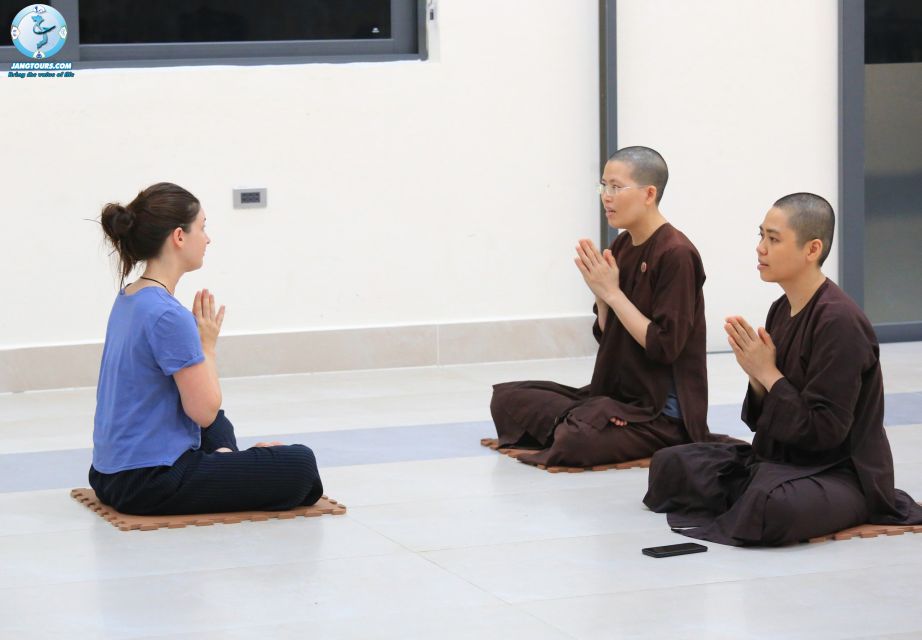
This retreat runs between Ho Chi Minh City and Phat Quang Pagoda in Vung Tau. The timing matters: it’s about 2.5 hours from Ho Chi Minh City center, and the distance is roughly 90 km. That means you should plan for travel time to be real travel time, not “just a short hop.”
Once you arrive, the pagoda setting does most of the work for you. You’re not bouncing between sites all day. Instead, you step into a contained routine where the environment supports focus—quiet buildings, daily chanting, and meals that keep things simple and consistent.
You can also read our reviews of more city tours in Ho Chi Minh City

The Core of the Retreat: Meditation, Chanting, and Doctrine
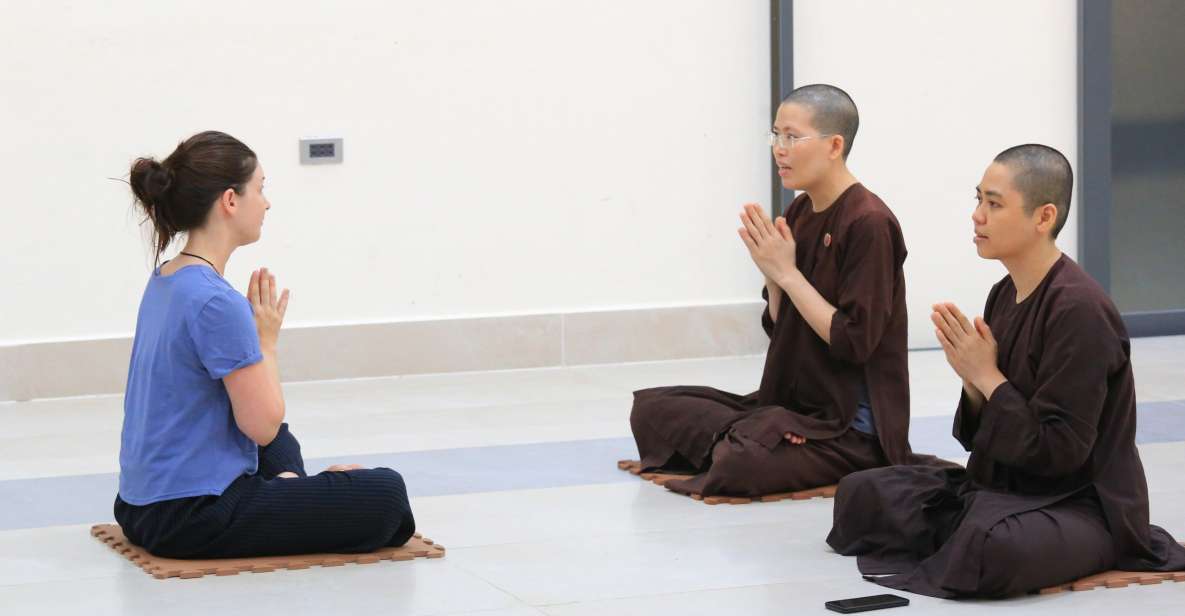
The main promise here is learning meditation the right way. Over the 3 days (3 days, 2 nights), the program keeps bringing you back to core practices: mindfulness meditation sessions, chanting, and Buddhist teachings.
Here’s the practical value: a retreat like this is useful even if you’re new. The structure helps you avoid two common mistakes—either treating meditation like “just sit and hope,” or trying to turn it into an exercise you force your way through. With guided sessions and repeated daily practice, you get a clearer sense of what you’re doing and why.
You’ll also be doing readings as part of the evening routine, and that’s a big deal. Meditation can feel abstract if you never connect it to the ideas behind it. Here, you’re not only practicing; you’re also studying the doctrines that Buddhist practice is built on.
Day 1 in Detail: Arrival, First Meditation, Volunteer Work, and Chanting
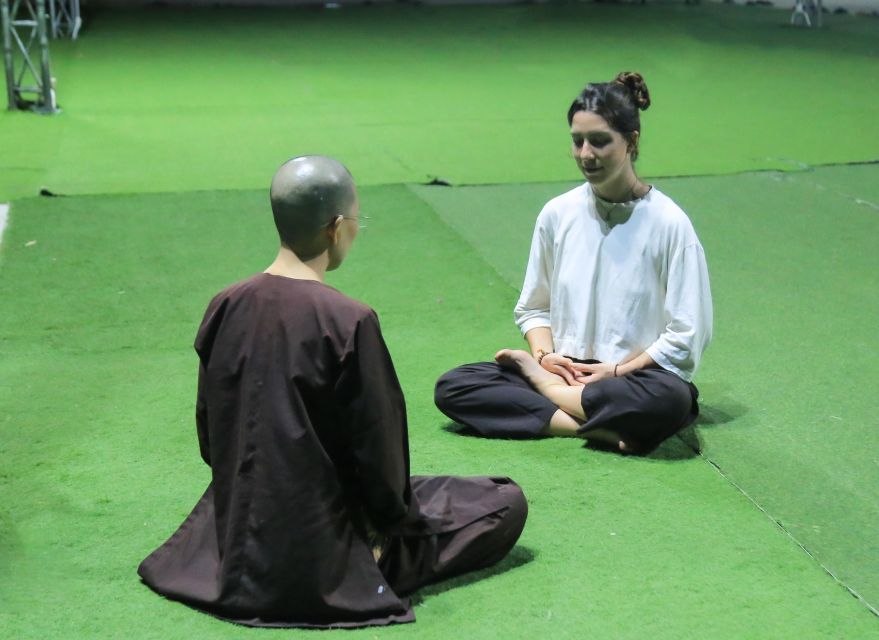
Day 1 has a classic rhythm: arrive, get oriented, eat vegetarian, then settle into the retreat flow.
You start with a transfer to Thien Ton Phat Quang Pagoda. After that, you’ll have a vegetarian lunch around 11:00–11:30. Then the day moves quickly into your first real practice time: a meditation session from 14:00 to 15:00.
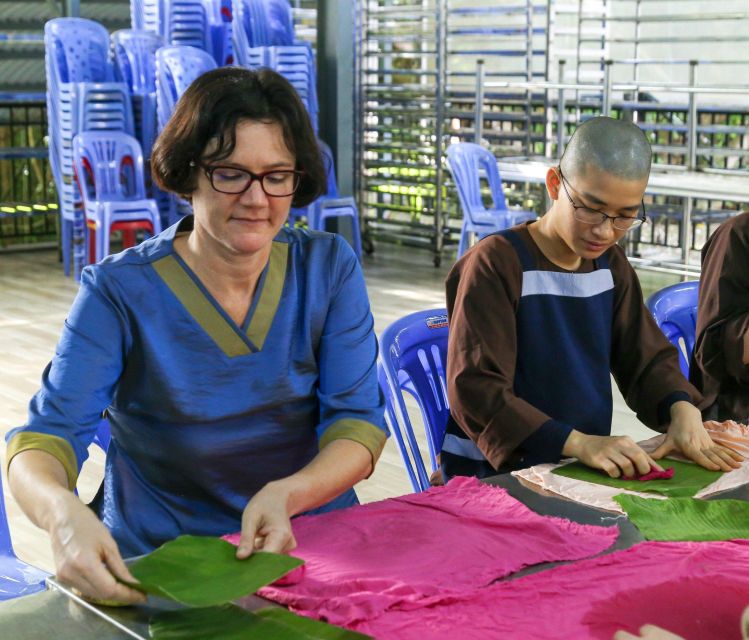
What makes Day 1 work well is the transition from meditation to action. At 15:00–16:50, you’ll do volunteer work—things like making cakes, tea, or tofu, or painting on fabric. This isn’t random busywork. It gives your mind a different kind of training: steady attention, calm effort, and participation in a shared routine.
Dinner is vegetarian from 17:00–18:15, followed by 19:00 chanting and 19:00–19:50 reading. The evening ends with prostration to Buddha, then more meditation, and you go to sleep.
If you’re sensitive to early evenings, know that the night program is still structured. It’s quiet, but it’s not “free time.”
Day 2 in Detail: Great Bell, Qigong/Martial Arts, and More Volunteer Practice
Day 2 is when the retreat really becomes a daily lifestyle. You begin at 4:00–6:00 with the Great Bell period, including meditation and chanting. The early start is intense at first—but it’s also one of the most memorable parts because it shifts your brain into retreat mode immediately.
From 6:10–6:50, you practice qigong/martial art. That adds a physical layer to what you’re learning mentally. Even if you’re not “a fitness person,” it helps you understand that mindfulness doesn’t only live on a cushion.
Breakfast comes at 7:00–7:20, then volunteer work runs from 7:30–10:30. You’ll likely do a mix like making cakes/tea/tofu, painting on fabric, and picking vegetables. This daily repeat matters. Doing the same kinds of tasks across days gives you a feeling of contribution without needing any special skills.
Lunch is around 11:00–11:30, followed by another meditation block 14:00–15:00. Then volunteer work returns 15:00–16:50 with options like cakes/tea/tofu/cooking. Dinner is vegetarian 17:00–18:15, then 18:30 chanting, 19:00–19:50 reading, and again 20:00–21:30 prostration to Buddha plus meditation before bed.
That evening segment can feel long if you’re expecting everything to be gentle and slow. But it also creates consistency—the kind of repetition that helps you stop negotiating with your attention and start observing it.
Day 3 in Detail: Final Morning Chanting, One More Volunteer Stretch, and Head Back
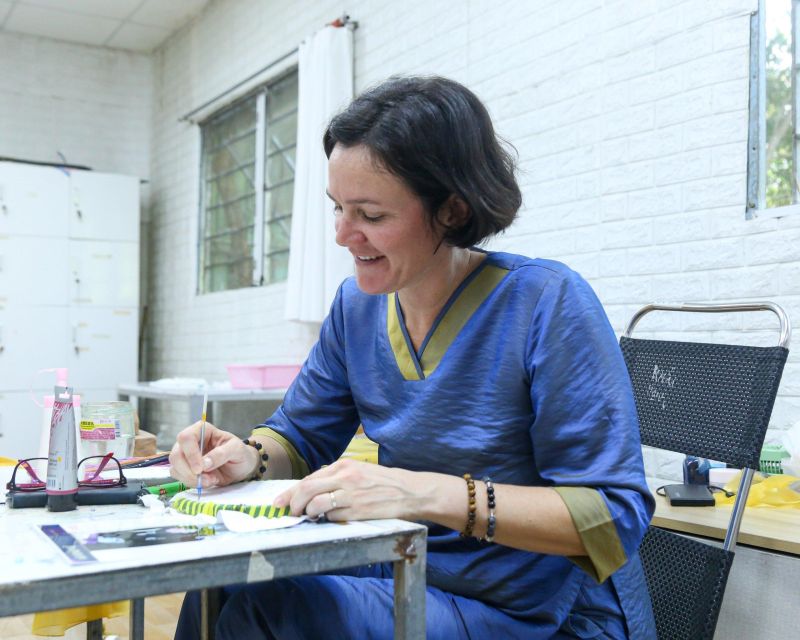
Day 3 keeps the structure, then exits cleanly.
You start again with 4:00–6:00 Great Bell meditation and chanting. 6:10–6:50 brings qigong/martial arts one more time, and 7:00–7:20 is breakfast. You then continue volunteering from 7:30–10:30, again including activities like cakes/tea/tofu or painting on fabric, plus picking vegetables.
Lunch happens around 11:00–11:30, and by 12:00 you’re back on the return route to Ho Chi Minh City.
This last day is shorter, but you still get the full retreat “package”: meditation, chanting, study time, and volunteering. It’s a good format if you want change without turning it into a life project.
You can also read our reviews of more tours and experiences in Ho Chi Minh City

Living Like You Mean It: Pagoda Accommodation and Monastic Life
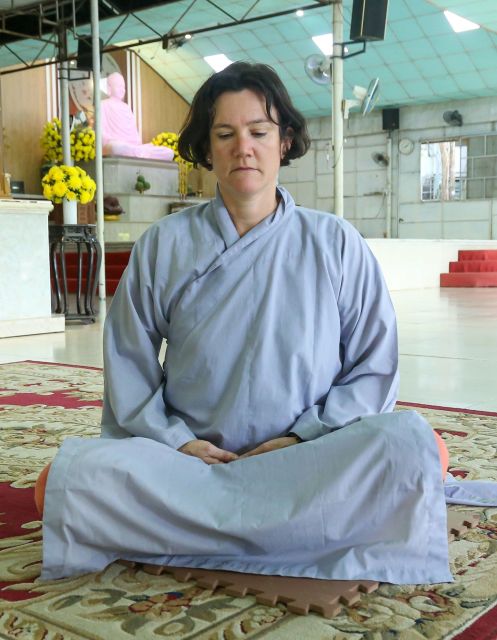
Accommodation is in the pagoda, and the experience includes living alongside monks and nuns. You don’t just watch from the outside. You share the same basic rhythm and respect the same quiet expectations.
This is where the retreat becomes more than a class. When you live in a monastic setting, you start noticing tiny things: how silence works, how meals are handled, and how routines keep everyone aligned. Even if you’re not “religious,” that kind of daily discipline can be deeply grounding.
It also helps explain the rules. You’re told not to make noise, and short skirts are not allowed. Alcohol and drugs are also prohibited. These aren’t just rules on paper. They’re what protects the atmosphere so meditation and rituals can function as they’re meant to.
Food, Schedule, and What the Vegetarian Meals Really Do
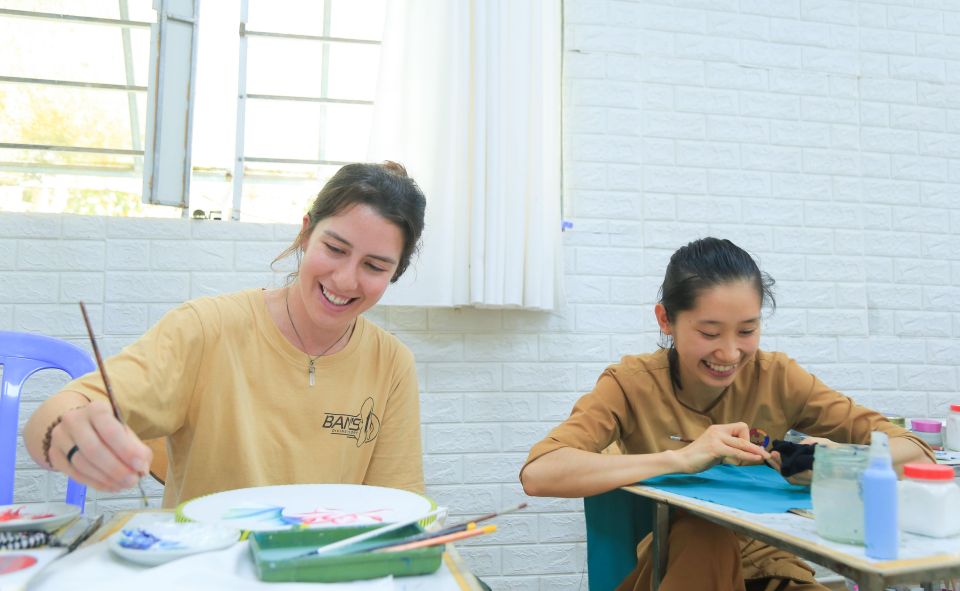
You get full board with vegetarian food: lunch and dinner every day, plus breakfast during the morning schedule. Eating vegetarian also fits the retreat’s overall message of discipline and gentleness.
The practical side: you don’t waste time thinking about food, where to go, or what to eat. In a retreat, time is your most valuable resource. Having meals handled for you keeps you focused on meditation rather than logistics.
The tradeoff is that the schedule is tight. You may feel hungry outside meal windows, but the retreat is designed around those vegetarian meals plus the meditation and chanting periods.
Volunteering for Blessing: Why It’s Included (and Why It Works)
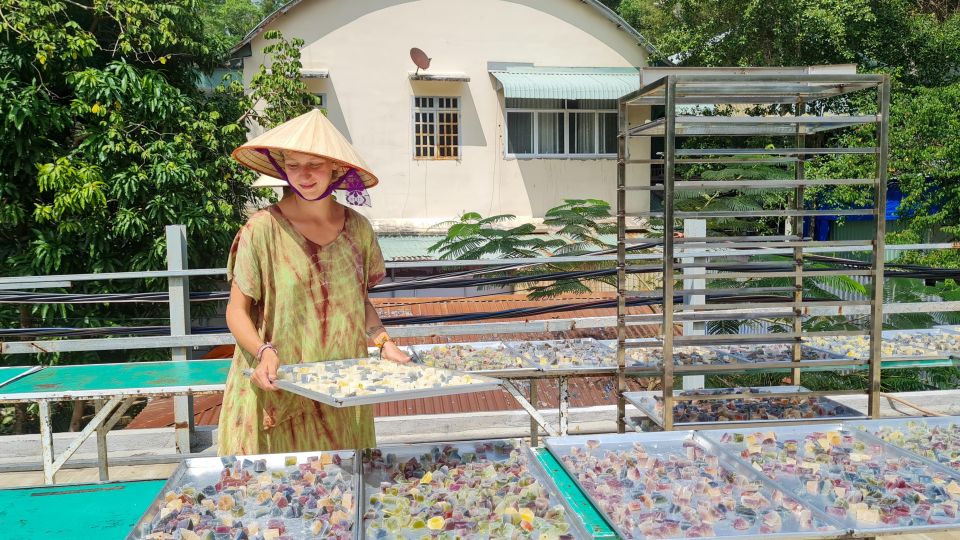
Volunteer work is not an optional “extra.” It runs in multiple blocks on every day, with tasks like:
- making cakes, tea, or tofu
- painting on fabric
- picking vegetables
- sometimes assisting with cooking
The stated intention is to gain blessing for life and meditation. Regardless of your personal beliefs, the format is useful for one main reason: it gives your mind something stable to do when sitting feels hard.
A lot of meditation beginners struggle because they think the goal is to eliminate effort. But real practice includes effort—calm, steady effort. Volunteering gives you a chance to practice that in motion.
It also helps you avoid “performing wellness.” Instead of being a passive participant, you’re contributing. That contribution can make the entire retreat feel more meaningful.
Price and Value: What $99 Gets You
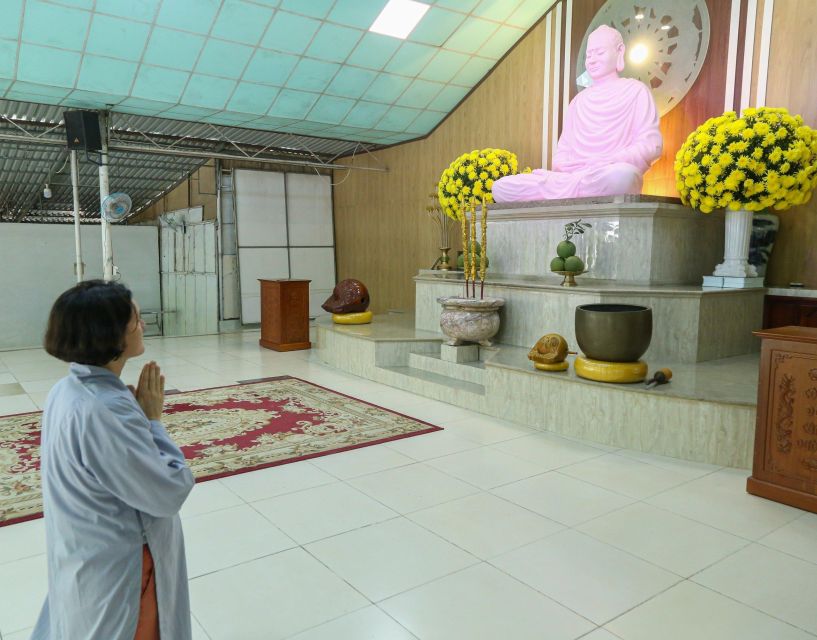
At $99 per person for 3 days and 2 nights, this retreat is priced like a very focused, all-in package rather than a luxury wellness weekend. The value comes from what’s included:
- a local guide on the spot
- full board vegetarian meals
- accommodation in the pagoda
- entrance fees
What’s not included is just as important: transportation from/to the pagoda and pickup/drop-off guidance. Since the pagoda is about 90 km away from Ho Chi Minh City center, travel time is real and should be planned carefully.
If you compare it to paying for a guided meditation class plus a place to stay plus meals, the math often works out well here. You’re not just buying meditation time—you’re buying a structured retreat atmosphere with meals, lodging, and repeated practice blocks.
Also, there’s free cancellation up to 24 hours in advance and a reserve now & pay later option. That reduces risk if your schedule is flexible.
Who This Retreat Fits Best (and Who Might Find It Tough)
This retreat is a strong match if you want:
- a guided meditation practice you can follow without guessing
- a structured routine with chanting, study, and prostrations
- daily volunteering that helps you feel involved, not just entertained
- a chance to live alongside monks and nuns and learn monastic life through daily contact
It may feel less comfortable if you:
- need lots of free time for wandering or independent sightseeing
- dislike early starts and multiple daily sessions
- have trouble with quiet rules and dress expectations (like no short skirts)
The good news: the schedule is predictable. Once you settle in, you know what happens next.
Simple Tips to Make Your Stay Easier
Based on how the retreat runs, I’d plan for the basics:
- pack modest clothing that follows the no short skirts rule
- expect days filled with meditation, chanting, and volunteer work
- bring a calm mindset for repeated quiet sessions
- be ready to participate even if you’re not great at the tasks—you’ll be working with what the program provides
If you want to get the most out of it, treat volunteering like part of the practice, not a break from it.
Should You Book This 3-Day HCMC Meditation Retreat?
I think you should book it if you want a disciplined, low-drama retreat focused on real practice—meditation technique, Buddhist teachings, chanting, and monastic life—with meals and lodging handled. The $99 price feels fair because you’re getting full board, accommodation, and structured guidance, not just a single class.
I’d skip it if you mainly want sightseeing, garden time, or a lot of casual downtime. This isn’t a “wander when you feel like it” experience. It’s a schedule-built retreat.
If your goal is inner calm through routine, study, ritual, and gentle effort, this is exactly the kind of trip that can reset your mental habits.
FAQ
How long is the meditation retreat?
It runs for 3 days and 2 nights.
Where does the retreat take place?
It’s in the Ho Chi Minh City area, with transfers to Thien Ton Phat Quang Pagoda (Phat Quang Pagoda).
What is the price?
The price is $99 per person.
What activities are included each day?
You can expect mindfulness meditation sessions, chanting, Buddhist-related study/reading, volunteer work, and evening practices that include prostration to Buddha and meditation.
Is the food vegetarian?
Yes. Meals are vegetarian, and the retreat includes full board.
What kind of accommodation is provided?
You stay in the pagoda, and accommodation is included.
Does the retreat include transportation?
No. Transportation from/to the pagoda is not included. The pagoda is about 90 km from Ho Chi Minh City center.
Is there a guide or instructor?
Yes, there is a local guide on the spot, and instruction is in English.
Are there rules I should follow?
Yes. You must avoid short skirts, alcohol and drugs, and you should not make noise.
Can I request pickup or drop-off help?
If you want pickup or drop-off services, you’ll need to contact the provider by email or WhatsApp, since it’s not included as part of the standard offering.