REVIEW · HO CHI MINH CITY
Ho Chi Minh City Motorbike Tour with Student | Saigon Adventure
Book on Viator →Operated by Saigon Adventure · Bookable on Viator
The scooter ride hits fast. You fly past Saigon’s big landmarks and then slip into everyday alley life, guided by locals like Finn and Thi, with students behind the handlebars on the back of a motorbike. I like this tour for two reasons: it’s a high-energy way to see the city in 3 to 4 hours, and the stops mix famous sights with quieter stories, like the Thich Quang Duc Monument.
Safety is the one concern many first-timers have, and that’s fair. This company leans hard on good drivers and provides scooter accident insurance up to $5,000, but you still need to be comfortable with the idea of riding pillion through heavy traffic. If heat and motion bother you easily, go in hydrated and plan on a slow pace at stops.
In This Review
- Key points worth knowing
- Why a Saigon scooter tour feels like getting oriented fast
- Price and what you really get for $23
- Where you start in District 1, and how pickup works
- The highlight route: Cathedral, Central Post Office, Opera House, City Hall
- Saigon Cathedral area
- Central Post Office
- Walking Street and apartment cafes
- Opera House and City Hall area
- War Museum and Reunification Palace: the passes that matter
- The unseen Saigon stops: Thich Quang Duc, local markets, apartments, Chinatown, and a pagoda
- Thich Quang Duc Monument
- Local markets
- Nguyen Thien Thuat Oldest Apartment
- Chinatown passing-by, Flower Market, and Cambodian Market
- A hidden pagoda
- Food option: when street food tasting fits your style
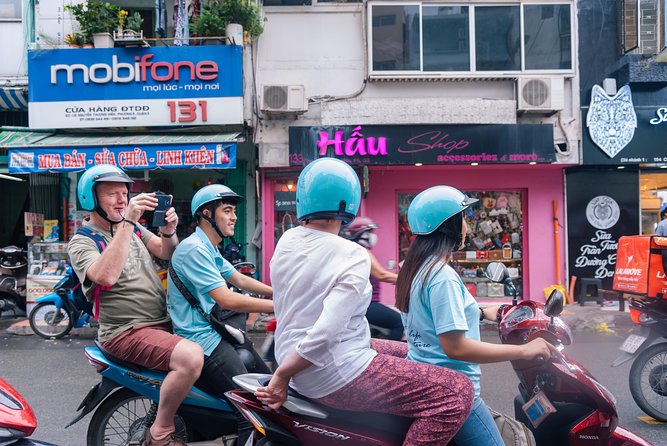
- What safety feels like with helmeted scooter driving
- Who should book this motorbike tour, and who should skip it
- Should you book Saigon Adventure’s Ho Chi Minh City Motorbike Tour?
- FAQ
- How long is the Ho Chi Minh City motorbike tour?
- Is pickup available?
- What’s included in the tour price?
- What are the main highlights included?
- What is included in the unseen part of the tour?
- Is there an option to add street food?
- Are helmets provided?
- Is there travel insurance related to scooter accidents?
- Where does the tour start and end?
- What is the cancellation policy?
Key points worth knowing

- Student-led riding, guided by locals: You’re learning Saigon from people who actually navigate it every day.
- Safety-forward setup: Helmet provided and scooter accident insurance up to $5,000.
- Top sights plus “unseen” pockets: Cathedral/Post Office/Opera-area views, then markets and apartment life.
- Included snack at Cambodian Market: A real pause, not just photo stops.
- District 1 and 3 pickup: Free pickup/drop-off for those areas; elsewhere costs a small add-on.
- Optional food version focuses on unseen areas: Great if you want street eats without extra wandering for landmarks.
Why a Saigon scooter tour feels like getting oriented fast
Saigon can be a lot on your own. The traffic is loud, the streets are layered, and the city feels like it keeps moving even when you’re standing still. This tour turns that chaos into a plan. You don’t have to figure out crossings or routes. You just hop on, follow your guide, and watch how the city flows.
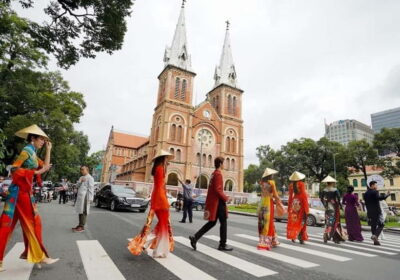
One of my favorite parts is the balance. Yes, you hit major postcard locations like the Notre-Dame Basilica area (often called Saigon Cathedral), the Central Post Office, and the Opera House/City Hall zone. But you’re also shown places you’d likely miss if you only follow the big-name map pins. On my ride, the guide pointed out the stories behind the scenes—especially the moment connected to Thich Quang Duc and the wider war-era context around that monument.
You also get a very practical “feel” for the city’s neighborhoods. The apartment-café streets, the markets, Chinatown passing-by—these aren’t just sights. They show you where people actually spend time, buy food, and live their routine.
You can also read our reviews of more city tours in Ho Chi Minh City



Price and what you really get for $23
At $23 per person for a half-day, the value is strong if you want momentum. You’re getting transport in the form of a guided motorbike experience, plus a helmet, plus a snack. That sounds simple until you compare it with how expensive and time-consuming it can be to piece together a similar route by taxi and walking.
Here’s what matters most for value:
- Time efficiency: In about 3 to 4 hours, you cover a lot more than a walking-only loop.
- Guiding, not just driving: Your English-speaking guide explains what you’re seeing as you go.
- Safety elements included: Helmet and scooter accident insurance up to $5,000.
- Pickup included in the right areas: Free pickup/drop-off if you’re staying in District 1 and District 3.
There are also add-ons depending on where you start. Extra pickup cost is listed as $3–$5 for districts outside 1 and 3. For first-timers staying in the central areas, that’s usually a non-issue. If you’re farther out, budget a little extra so the price doesn’t surprise you at checkout.
Where you start in District 1, and how pickup works
The meeting point is at Trung học cơ sở Nguyễn Du, 139 Nguyễn Du, Phường Bến Thành, Quận 1. If you qualify for pickup, your guide will collect you and you’ll get dropped back after the tour ends back at the meeting point.
Two things to know so you don’t waste time:
- Pickup/drop-off is only free for hotels in District 1 and District 3. Elsewhere, expect an extra fee.
- The start location is in a transit-friendly part of town, so even if you’re meeting there rather than being picked up, you likely won’t have a long scramble.
If you’re arriving from somewhere outside central Saigon, I’d plan to arrive early. The streets around District 1 can be tricky when you’re trying to locate a specific gate or entrance.
The highlight route: Cathedral, Central Post Office, Opera House, City Hall
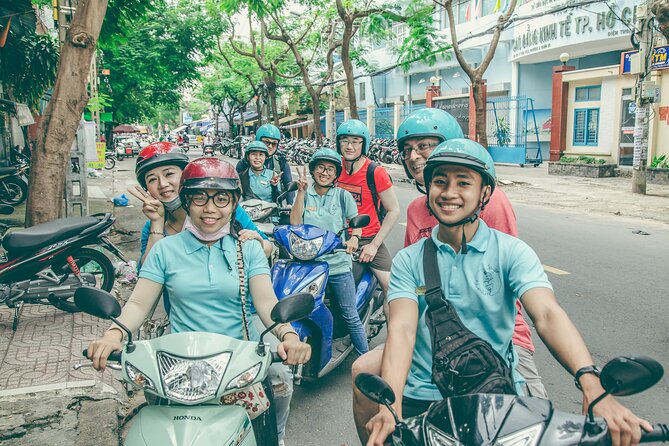
This tour is built around a classic “greatest hits” loop, but it’s not a rushed bus tour. You get time at the big icons and context from your guide, so those buildings don’t feel like random photo backdrops.
Saigon Cathedral area
You start the story in the French-colonial style zone around the cathedral. The vibe here is different from the back-alley streets later in the tour. It’s more open, more formal, and easier to read as a piece of Saigon’s older architecture. If you like walking around big buildings, you’ll appreciate having this as one of your first stops—before the heat and traffic energy build.



Central Post Office
The Central Post Office is a highlight for a reason: it’s a landmark that still feels functional, not museum-only. Your guide typically gives you the architectural and historical framing, which helps you understand why people still treat it like an important public space.
On a scooter tour, it’s smart to notice details from street level—roof lines, arches, and the way the building anchors the surrounding area. You get that viewing angle without needing to “plan a route” on your own.
Walking Street and apartment cafes
This is where the tour shifts tone. Instead of only grand landmarks, you start seeing the city’s social spaces—little pockets where people linger. Apartment cafes are especially interesting because they show how Saigon stacks modern life into older urban forms.
If you’re someone who likes to take photos but also wants context, ask your guide what to look for here. You’ll usually get a clearer sense of how these streets evolved.
Opera House and City Hall area
This portion leans into the civic side of Saigon: buildings that reflect power, governance, and city planning. Even if you don’t go inside (the tour description emphasizes passing and visiting key areas), the visual impact is strong. It’s also a helpful bridge from French architecture into later war-era landmarks you’ll hear about soon.
A practical tip: bring water and wear light layers. These highlight stops are where you’ll stand still for photos and explanations.
War Museum and Reunification Palace: the passes that matter
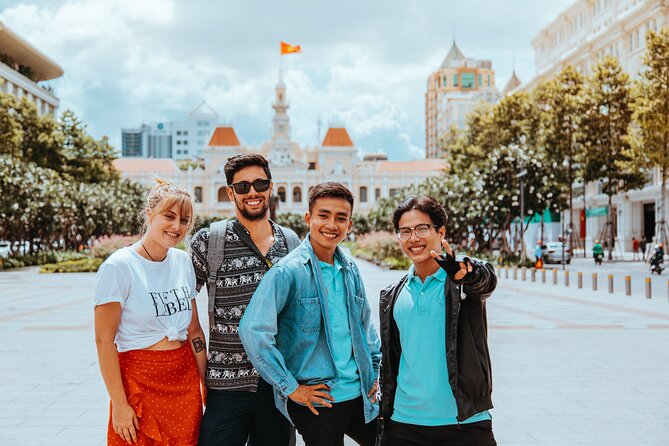
You don’t just get peaceful city scenes here. The tour includes a passing view of the War Museum and Reunification Palace. Even if the stops aren’t long, they’re important because they connect Saigon’s modern identity to the events that shaped the city.
What I like about including them as a pass-by is that you get a wider sense of the city’s timeline without losing your half-day to one museum alone. Your guide can explain how these sites fit into broader national history, and it helps your later “unseen” story stops feel more grounded.
If you already planned a dedicated museum day, this pass-by still works as a primer. If you haven’t planned any history at all, this tour gives you enough entry points to know what you’d want to study further later.
The unseen Saigon stops: Thich Quang Duc, local markets, apartments, Chinatown, and a pagoda
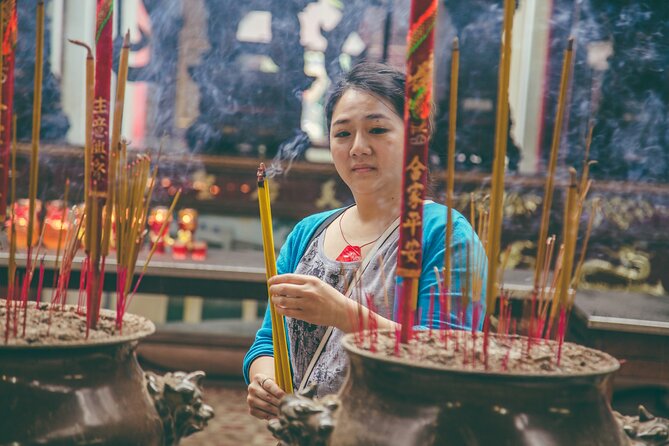
This is the part that makes the tour feel like an actual local ride, not just sightseeing from a checklist.
Thich Quang Duc Monument
This stop carries emotional weight. The tour highlights the monk’s story and the broader fallout from that moment during the Vietnam War. I appreciate that the explanation tends to be human-scale: it’s not only facts, it’s how the event reverberated through the country. If you’re sensitive to heavier topics, it’s worth knowing this stop isn’t just “pretty monument photos.”
Local markets
Markets are one of Saigon’s best teacher zones. Even if you don’t buy anything, you learn what people eat, how they shop, and what items show up repeatedly in daily life. Your guide also points out what you’re seeing, which makes the market less confusing and more meaningful.
Come with small cash readiness if you want snacks or drinks on your own, but remember: you’ll already get a cold drink/snack at the Cambodian Market stop during the unseen portion.
Nguyen Thien Thuat Oldest Apartment
This is a standout because it’s not a famous “one-time” attraction. It’s a lived-in place. Seeing the oldest apartment area (as described in the tour overview) helps you understand Saigon’s residential history—how communities formed and how people adapted their living spaces over time.
If you like social history—how ordinary life functions—this is one of the most memorable stops.
Chinatown passing-by, Flower Market, and Cambodian Market
The Chinatown segment gives you a sudden flavor shift. Then the tour continues to a colorful Flower Market and on to the Cambodian Market, where you get a cold drink and a snack included. The included snack matters because it breaks up the ride with something real and tasty, and it gives you a chance to cool down.
This is also where the “student + guide” format works well. You’re not stuck with someone reading off facts. Your guide can point out what’s worth noticing in each market area.
A hidden pagoda
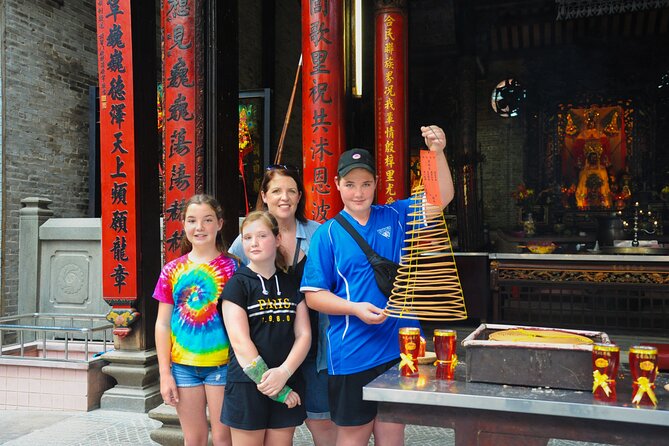
The tour includes a breathtaking yet hidden pagoda stop. Pagodas change your pace. After streets and traffic, you get a calmer moment—usually shorter, but memorable. If you like spiritual architecture and quiet corners, this pagoda stop is a strong finish to the unseen side of the tour.
In one common ending point I’ve seen people describe, it’s tied to Ba Thien Hau temple. Since the tour description stays general here, treat that as a possibility, not a guarantee.
Food option: when street food tasting fits your style
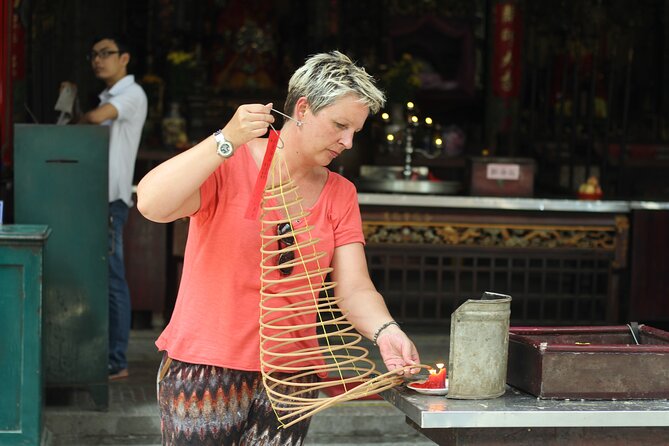
There’s an option for food and sightseeing, but it’s important: the food version focuses on the unseen part and does not include the highlight stops. That means you’re choosing whether you want the big landmark loop or the market-forward, snack-forward route.
If you’re booking specifically for food, plan around appetite. One helpful suggestion that shows up in the experience is choosing the afternoon departure (like 1pm) and not eating a full lunch first, because the tour can include multiple local food items in that format.
What you’ll get from a food-focused ride:
- market time where your guide can explain what you’re eating
- more sampling chances tied to the unseen stops
- less time at the major landmark icons
Who should pick this? Food-first travelers, people who want to learn by tasting, and anyone who prefers small, frequent stops instead of standing for longer at landmark buildings.
What safety feels like with helmeted scooter driving
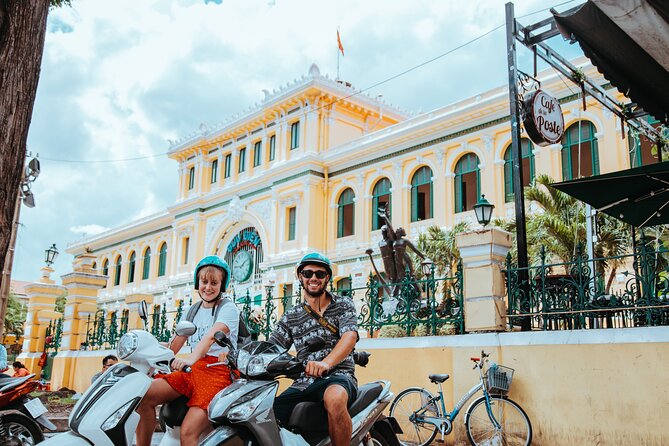
Scooter traffic in Saigon is intense if you’ve never ridden before. That’s why the safety setup is the heart of why this tour is workable.
You get:
- a helmet
- English-speaking drivers
- scooter accident insurance up to $5,000
- drivers described as good and safe
In practice, the experience tends to feel controlled because the guide and driver pair up like a team. I’ve seen names repeatedly praised—Anna for safe navigating, and guides like Helen and Thi for keeping the group confident. You’re also not thrown into it alone: guides manage the group and stops, so your attention stays on the road and the story.
Your side of the deal:
- wear shoes you can move in (not flip-flops)
- bring water and something light for sun
- keep your phone secured—traffic + stop-and-go equals sudden bumps
- if you’re nervous, tell your guide right away. You’ll get reassurance and likely a little extra care during early traffic segments.
Who should book this motorbike tour, and who should skip it
This is best for you if:
- you’re visiting Ho Chi Minh City for the first time and want quick orientation
- you like mixing big sights with real neighborhood life
- you want a guided route without figuring out transportation
- you’re comfortable riding pillion and can handle busy streets
You might want to skip (or choose a different style) if:
- you have motion sickness or severe discomfort riding motorcycles
- you’re uncomfortable with traffic noise and close spacing
- you want long indoor museum time instead of half-day street travel
For families, it can work well because the route is managed and stops are planned. Several family-focused experiences highlighted how safe and fun the ride felt when guided well.
Should you book Saigon Adventure’s Ho Chi Minh City Motorbike Tour?
If you want an efficient, local-feeling introduction to Saigon, I think this is a strong booking choice. For the price, you get far more than a quick loop: you get safety basics, guiding, landmark context, and a meaningful unseen stretch through markets and everyday life.
Book it if you:
- want to see Cathedral + Post Office + civic landmarks and still have time for the quieter side of town
- like the idea of learning through a moving ride, not only walking
Consider another option if:
- you’d rather do a slower, purely pedestrian day
- you don’t want to ride through traffic at all
If you’re on the fence, my practical advice is simple: choose based on your tolerance for scooter traffic. If you can handle that, the combination of big icons plus market-and-apartment storytelling is exactly what a first trip needs.
FAQ
How long is the Ho Chi Minh City motorbike tour?
The tour runs about 3 to 4 hours.
Is pickup available?
Yes. Free pickup and drop-off is available for hotels in District 1 and District 3. Other districts have an extra fee of $3–$5.
What’s included in the tour price?
You get a knowledgeable English-speaking guide and English-speaking drivers, a helmet, and a snack (including a snack at Cambodian Market).
What are the main highlights included?
The highlights include Saigon Cathedral, Central Post Office, Walking Street and apartment cafes, Opera House, City Hall, and pass-by views of the War Museum and Reunification Palace.
What is included in the unseen part of the tour?
You’ll visit places such as the Thich Quang Duc Monument, local markets, Nguyen Thien Thuat Oldest Apartment, Chinatown passing-by, the Flower Market, and the Cambodian Market. The tour also includes a pagoda stop.
Is there an option to add street food?
Yes. There is an option for food and sightseeing, but it focuses on the unseen part only and does not include the highlight portion.
Are helmets provided?
Yes, a helmet is included.
Is there travel insurance related to scooter accidents?
The tour includes scooter accident insurance up to $5,000.
Where does the tour start and end?
It starts at Trung học cơ sở Nguyễn Du, 139 Nguyễn Du, Phường Bến Thành, Quận 1, and ends back at the meeting point.
What is the cancellation policy?
You can cancel for a full refund if you cancel at least 24 hours in advance of the experience start time. Free cancellation is allowed up to 24 hours before local start time.