REVIEW · HO CHI MINH CITY
Ho Chi Minh City Sightseeing Private Tour By U.S Army Jeep
Book on Viator →Operated by Vietnam - Ho Chi Minh City Package Tours · Bookable on Viator
Four hours, one iconic jeep, real Saigon. This private ride mixes a classic U.S. Army jeep with an English-speaking local guide, so you get history and context without feeling like you’re sprinting. One thing to plan for: key sights like the War Remnants Museum and Independence Palace have small extra ticket fees, and you’ll spend real time in traffic.
The route is built for quick, smart stops. You’ll see powerful reminders of the Vietnam War, peaceful faith sites, and famous French-colonial buildings, then roll into markets and Chinatown streets. It’s also set up for comfort with hotel pickup and drop-off in Districts 1, 3, and 4.
In This Review
- Key highlights to know before you go
- Why a U.S. Army jeep feels like the right match for Ho Chi Minh City
- Price and value: what $98.74 buys you for a 4-hour private tour
- Getting picked up and how the driving actually feels
- Stop-by-stop: War Remnants Museum sets the tone fast
- The quieter stops: Thích Quảng Đức and the idea of sacrifice
- Secret Weapons Cellar: a history story you can almost touch
- Nguyen Thien Thuat apartment buildings: everyday life from an American-built block
- Independence Palace: power, control, and a famous building
- Saigon Central Post Office and the Opera House area: French-colonial beauty with purpose
- Downtown skyline break at Cầu Bà Sơn
- Markets and local streets: Ban Co Market and the feeling of daily commerce
- Chinatown temple streets at Chùa Vạn Phát: faith, shop signs, and street snacks
- Bùi Viện Walking Street at night: nightlife, people-watching, and street food
- Water bus option on the Saigon River: when it fits, it’s a nice break
- Who this jeep tour suits best (and who might not love it)
- The small, real-world tips that improve your experience
- Should you book this Ho Chi Minh City U.S. Army jeep tour?
- FAQ
- How long is the Ho Chi Minh City sightseeing private tour?
- What is the price per person?
- What’s included in the tour price?
- What tickets are not included?
- Is this a private tour or shared group?
- Do I get to customize the itinerary?
- What is the cancellation policy?
Key highlights to know before you go

- U.S. Army jeep, driver included for an easy, fun way to move through heavy traffic
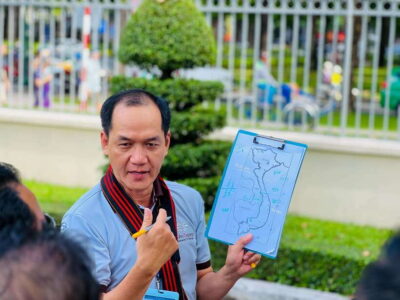
- English local guiding (for example, Kieran has been a standout) that keeps stops clear and worth your time
- Short visits, strong variety: many stops are around 15 minutes, so you cover more without museum fatigue
- Downtown and local life: markets, Chinatown temples, and the Saigon Opera House area
- Night option works well with Bùi Viện Walking Street and street-food chances around the flower market
- A private, flexible itinerary means you’re not stuck with one rigid route
Why a U.S. Army jeep feels like the right match for Ho Chi Minh City
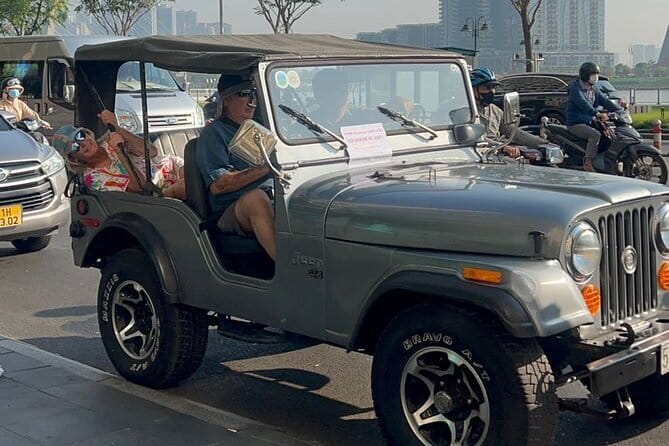
Ho Chi Minh City moves fast. Even when you take the slow way, you still get noise, motion, and sudden turns. A jeep with a driver turns that chaos into part of the experience instead of a barrier. You sit higher than you would on a normal tour car, you can see traffic flow, and you roll between districts without worrying about directions.
I like that this isn’t just a photo gimmick. The vehicle adds fun, but the real payoff is how the guide structures the day. You get stops that explain why a place matters, not just where it is. One review experience called out guide Kieran as both fluent and genuinely entertaining, and that matches the tour’s style: clear English, quick context, and time to look around.
Here’s a heads-up for your expectations. Many stops are intentionally brief. If you want to wander at length in museums, this tour will feel more like a guided highlight pass than a slow, deep study.
You can also read our reviews of more city tours in Ho Chi Minh City



Price and value: what $98.74 buys you for a 4-hour private tour
At $98.74 per person for a private jeep tour, you’re not paying for a crowded bus. You’re paying for three things you actually feel during the ride: transportation, guidance, and convenience.
The tour includes:
- a private jeep with driver
- an English speaking local guide
- hotel pickup and drop-off in Districts 1, 3, and 4
- a private flexible itinerary
- government tax
Entrance fees are the main extra cost. The War museum is listed at about $2, Independence Palace at about $2, and a water bus option is about $1. If you’re doing New Year dates, there’s also a holiday surcharge, and tips aren’t included.
So is it good value? For me, it makes the most sense when:
- you’re short on time (half-day pace)
- you want local interpretation, not just sign-reading
- you’re traveling with the kind of group that benefits from private flexibility
If you prefer only ticketed museums and long stays inside, you might spend similar money but get less time per site. This tour is built for coverage and context, not for marathon museum hours.
Getting picked up and how the driving actually feels
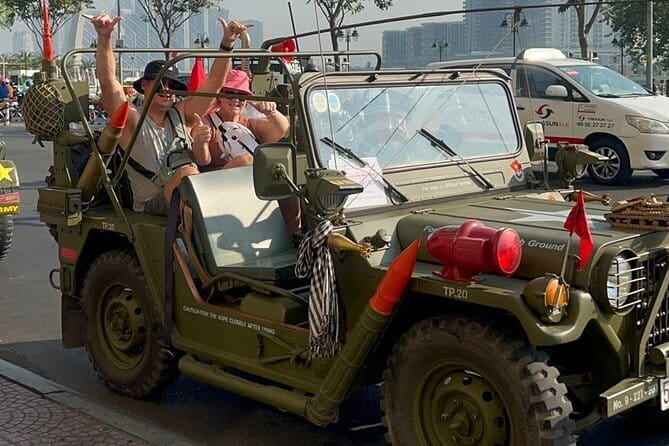
This tour is designed for easy logistics. You get pickup and drop-off in Districts 1, 3, and 4, and you’re traveling by jeep with a driver. That matters because the city is not always friendly to self-guided navigation, especially if you’re trying to hit multiple central spots in one afternoon.
The route is also going to include driving through busy streets. One of the strongest practical signals from past experiences is that the driving is real—testing traffic, constant movement, and quick repositioning. That can be a plus. It’s one of the ways you get a full sense of how Saigon works day-to-day.
Small comfort note: one group experience even mentioned the driver had beers on ice in an esky. Whether that’s your vibe or not, it hints that the tour aims for more than just transport.
What I’d do:
- bring a small water bottle if you’ll be out in the heat
- wear comfy shoes, because even a 15-minute stop can turn into a short walk
- if you’re sensitive to motion, sit where you feel most stable in the jeep
Stop-by-stop: War Remnants Museum sets the tone fast
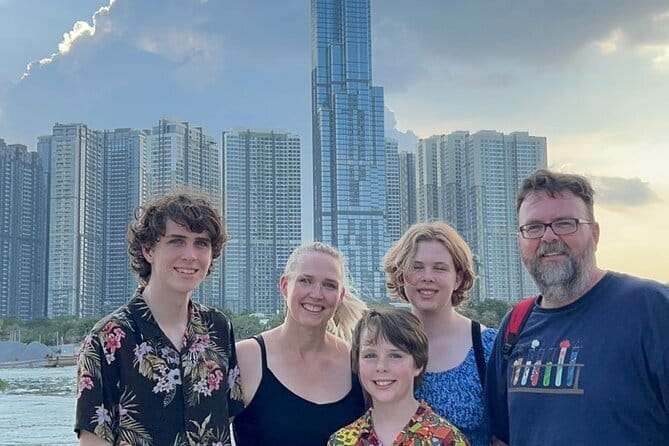
War Remnants Museum is the kind of place that rearranges your thinking. The exhibits use photographs and artifacts to explain modern history and the human impact of war. You don’t need to be a history buff to get something here. Even a short visit can sharpen your understanding of the rest of the route, because the day keeps circling back to conflict, survival, and how Vietnam remembers.
Your time at this stop is about 30 minutes, and the museum ticket is not included (listed around $2). That short window is both a benefit and a limitation. It’s a benefit because you won’t burn half your day, and the guide’s explanations can point you toward the most meaningful displays. It’s a limitation because you won’t see everything.
Practical tip: if you’re going to spend your attention well, focus on the parts that connect people to events rather than trying to read everything. The guide’s job here is to help you choose what to notice first.
The quieter stops: Thích Quảng Đức and the idea of sacrifice
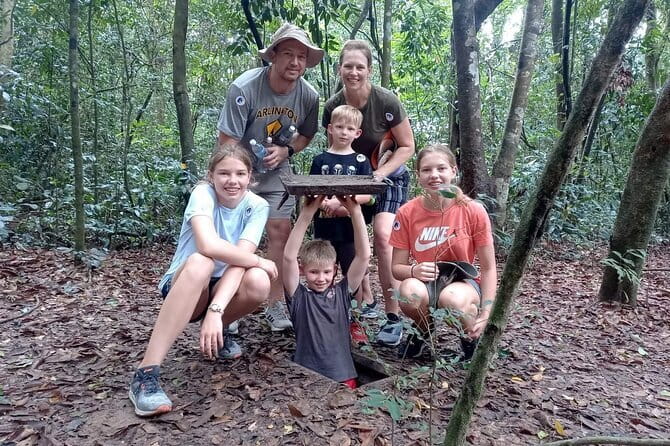
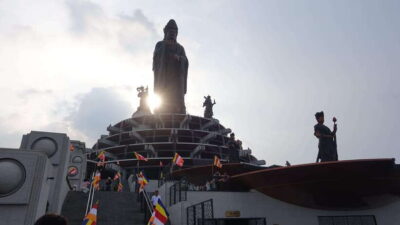
Not every stop is about battle. The Venerable Thich Quang Duc Monument is peaceful, and it honors a spiritual icon and martyr who sacrificed himself for religious equality. It’s a short stop, about 15 minutes, and the entry is free.
This moment acts like a reset button between heavy history stops. It gives you a different lens: not just politics and weapons, but faith and the moral stakes people believed in.
If you’re the type who feels the weight of war history, you’ll appreciate this contrast. If you’re rushing, you might skip the quiet part. Try not to. These are the pauses that make the whole day feel human instead of purely informational.
You can also read our reviews of more private tours in Ho Chi Minh City





Secret Weapons Cellar: a history story you can almost touch
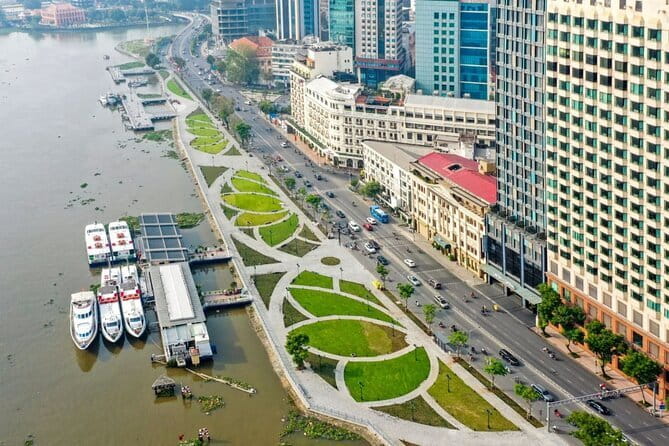
Down in downtown territory, there’s a place that sounds like a movie set but is treated as real history: the Secret Weapons Cellar. It’s described as a hidden bunker under a cafe, tied to the hiding place of large quantities of Vietcong weapons used during the 1968 Tet Offensive.
You’ll only have about 15 minutes here, and entry is free. In that short time, the value is in how the guide frames what you’re looking at: why it was built, why secrecy mattered, and how these tactics shaped events.
Drawback to consider: because the time is brief, you should expect a guided overview rather than a long, self-paced exploration. If you like to linger in underground spaces, this may leave you wishing you had more minutes.
Nguyen Thien Thuat apartment buildings: everyday life from an American-built block
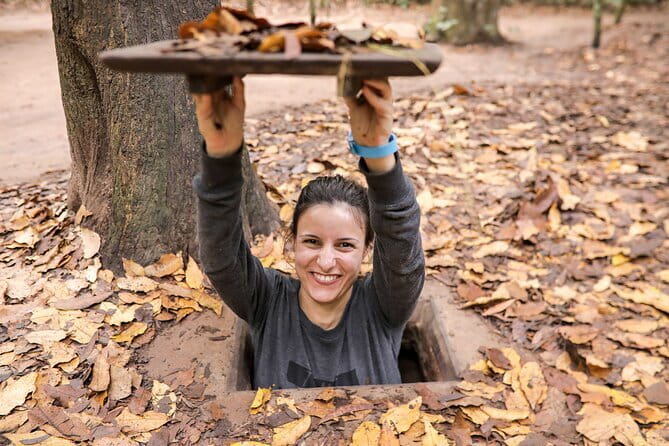
Next up are the Nguyen Thien Thuat apartment buildings in District 3, free to visit and about 15 minutes. These are American-built historic apartment complexes, which gives this stop a different kind of angle: architecture shaped by foreign involvement, then re-used by everyday people.
This is where you start to see that history in Saigon isn’t only about iconic monuments. It’s also built into housing, streets, and city neighborhoods.
What makes it worthwhile is the contrast with the war-focused stops. You’re still in the same city, but the story shifts from conflict to how people live inside the consequences of conflict.
Independence Palace: power, control, and a famous building
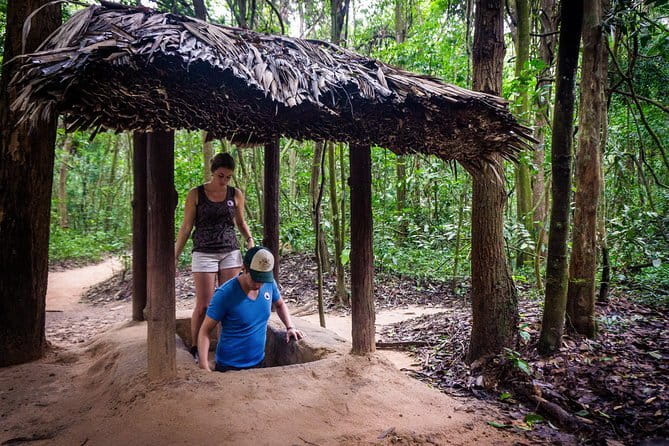
The tour includes the Independence Palace, also known as the Reunification Convention Hall. You’ll get a quick look and some interpretation from your guide. Entry is not included (listed around $2).
This stop is famous for a reason, but the tour’s smart because it doesn’t assume you already understand the context. The palace ties together political change and public memory, and it connects with the rest of your war-era stops.
Time consideration: it’s a fast stop. If you want to see every room, you may want to plan extra time outside the tour. If you’d rather get the main story without committing to hours, this fits well.
Saigon Central Post Office and the Opera House area: French-colonial beauty with purpose
After the heavier history stops, you’ll shift into landmarks that are easy to admire and still meaningful.
The Saigon Central Post Office is free to visit on this tour and takes about 15 minutes. It’s near Saigon Notre-Dame Basilica, and it’s one of those places where the grandeur helps you understand the city’s colonial-era influence. Even if you don’t buy anything, it’s worth pausing to notice how the space works and how people move through it.
Then there’s the stop for the Municipal Theatre / Saigon Opera House, known for French Colonial architecture. You’ll likely treat it more as a photo-and-structure moment because of time limits, but it’s a good way to balance the day: history that shows up in buildings, not just museums.
Tip: if you like architecture, this section will feel rewarding. If you just want war-history, you might treat these as rest breaks that also make your photos look great.
Downtown skyline break at Cầu Bà Sơn
There’s a newer bridge stop called Cầu Bà Sơn, listed as a prime spot to see the skyline. It’s about 15 minutes and free.
This is a small, practical gift from the itinerary. After streets, tunnels, and museums, you get a chance to look outward and reset your sense of the city’s scale. Also, skyline views are one of the easiest ways to capture Ho Chi Minh City beyond its famous war artifacts.
If you’re sensitive to heat, this is a great time to step out of the jeep, take your photos, and get back in quickly.
Markets and local streets: Ban Co Market and the feeling of daily commerce
Next comes Ban Co Market, free and about 15 minutes. This is the kind of stop that’s short but useful. You’ll get fresh produce, street-food glimpses, and the normal rhythm of commerce.
This is where you learn what the tour can’t explain from a museum wall. You see how people actually live and shop. Even a quick walk helps your brain connect the big-story history to daily life.
If you’re photographing, keep it respectful. Don’t block walkways. And if something looks like a workplace, stay light on your feet and let people do their thing.
Chinatown temple streets at Chùa Vạn Phát: faith, shop signs, and street snacks
The tour also takes you into Chinatown, with a stop at Chùa Văn Phát (Temple of Ten Thousand Buddhas). It’s free and about 15 minutes.
This is another shift in tone: not politics, not war, but community belief and local identity expressed through places of worship and the surrounding streets. You’ll pass traditional shops, temple atmosphere, and local eateries.
If you’re doing this tour in the evening, the city’s energy changes. The route also mentions street-food opportunities around market stops at night, so your experience may feel more like street wandering with guidance.
Practical note: short stops mean you should pick what you want to notice. Do you want the temple details? The surrounding shops? The snacks? The guide can help you choose so you don’t lose time.
Bùi Viện Walking Street at night: nightlife, people-watching, and street food
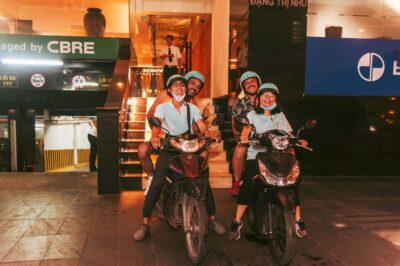
For evening tours, Bùi Viện Walking Street is included as a nightlife stop. It’s free and about 15 minutes. Expect clubs, bars on both sides, and a lively street scene.
This is not a quiet sightseeing moment. It’s a chance to feel Saigon as people experience it after dark. If you’re not into nightlife, you can treat it as a quick culture snapshot. If you do like nightlife, it’s one of the best ways to understand why first-time visitors often say they felt the city change in an hour.
Pair it with what the tour does at the flower market (Ho Thi Ky Flower Market) before this. The flower market can be a strong stop for atmosphere, and at night you may get the chance to taste street food there. That timing makes the whole evening feel more connected.
Water bus option on the Saigon River: when it fits, it’s a nice break
The tour overview also mentions a water bus ride on the Saigon River as a potential option. It’s listed with a small extra fee (about $1). The exact inclusion will depend on the day and how the flexible itinerary is set.
If you can get it, I think it’s worth asking for. A river ride breaks up street intensity and gives you a different sense of the city’s geography. Even a short segment can make the rest of the tour feel more paced.
Who this jeep tour suits best (and who might not love it)
This tour is ideal if you want:
- a half-day overview with real context
- a private guide who explains what you’re seeing in English
- a comfortable way to cover multiple districts without planning
- history plus city life—museums, monuments, markets, Chinatown, and nightlife
It might not be your best fit if you:
- want long museum time at each site
- dislike driving through busy traffic
- prefer a strictly neutral, academic tone (some guidance can lean patriotic in framing, and you’ll be better off knowing that upfront)
The small, real-world tips that improve your experience
A few practical choices can make the whole day smoother:
- Bring cash for entrance tickets like War Remnants Museum and Independence Palace (listed around $2 each).
- If you’re doing a water bus, keep a small amount ready for that $1 option.
- Wear shoes that handle short walks inside markets and temple areas.
- If you’re booking for evening, plan for more street energy near Bùi Viện, and decide in advance how much nightlife you want versus quiet sightseeing.
And if you meet a guide like Kieran, lean into the Q&A style. The best moments usually happen when you ask why a place looks the way it does, or what people learned from it.
Should you book this Ho Chi Minh City U.S. Army jeep tour?
If you like the idea of fast, guided city coverage in comfort, this is a strong choice. The U.S. Army jeep + English local guide combo is a fun way to get bearings quickly, and the mix of stops keeps the day from turning into one long museum blur. At about $98.74 per person with pickup, driver, and guide included, it’s also a reasonable price for a private half-day.
I’d book it if your goal is: see the highlights, understand the key history, and still have room for local street life. I’d think twice if you want deep museum time or a quieter pace with lots of sitting and reading.
If you want one simple way to decide: tell yourself you’re paying for guidance that helps you choose what matters in a short window. If that matches your travel style, you’ll probably come away glad you rode the jeep.
FAQ
How long is the Ho Chi Minh City sightseeing private tour?
The tour lasts about 4 hours.
What is the price per person?
The price is $98.74 per person.
What’s included in the tour price?
You get a private jeep with driver, an English speaking local guide, hotel pickup and drop-off in District 1, 3, and 4, a private flexible itinerary, and government tax.
What tickets are not included?
The War Remnants Museum ticket is not included, and Independence Palace ticket is also not included. A water bus ticket is listed as an extra cost too.
Is this a private tour or shared group?
It’s a private tour, so only your group participates.
Do I get to customize the itinerary?
Yes, the itinerary is described as flexible and private, so it can be customized to your interests.
What is the cancellation policy?
You can cancel for a full refund up to 24 hours in advance. If you cancel less than 24 hours before the start time, the amount paid is not refunded.