REVIEW · HO CHI MINH CITY
Private China Town Walking Tour in Ho Chi Minh City
Book on Viator →Operated by Magic Karp tour · Bookable on Viator
One walking loop, five sacred stops. This private Chinatown stroll through Cho Lon turns Ho Chi Minh City into something you can feel, with a real neighborhood vibe that starts at Binh Tay Market. I like that the tour begins where people actually shop and do business, not just where tourists pose for photos.
I also like the way the guide connects the dots between faith, architecture, and local legend, so each stop has a reason to exist—not just a signboard. With guides such as Ben and Casey (when available), expect English or Japanese narration and a pace that can match what you care about.
One caution: it’s still 3 to 4 hours of walking, and the start/end points are in different districts. If you’re staying far from Ben Thanh, plan a short ride to get to the meeting point.
In This Review
- Key Highlights You’ll Actually Notice
- Cho Lon Chinatown: Why This Walk Feels More Real Than Most Tours
- Binh Tay Market: The Fastest Way to Understand Business Culture
- St Francis Xavier Church: When Western and Local Traditions Intersect
- Ong Bon Pagoda: Spot the Sky God and Learn the Design Differences
- Ba Thien Hau (Thien Hau) Temple: The Sea Goddess Story You’ll Remember
- Nghia An Temple: Quan Cong, Money Luck, and Love Worship
- The 3–4 Hour Pace: How to Plan Your Day Around This Walk
- Price and Value: Why $31.63 Can Be a Smart Deal
- Who Should Book This Private Chinatown Walk?
- Should You Book? My Practical Recommendation
- FAQ
- How long is the Private China Town Walking Tour in Ho Chi Minh City?
- Where does the tour start and end?
- Is this tour private?
- What is included in the price?
- Are admission tickets included?
- Do I get pickup?
- What is the price per person?
- Is there free cancellation?
- Is the tour suitable for most travelers?
Key Highlights You’ll Actually Notice
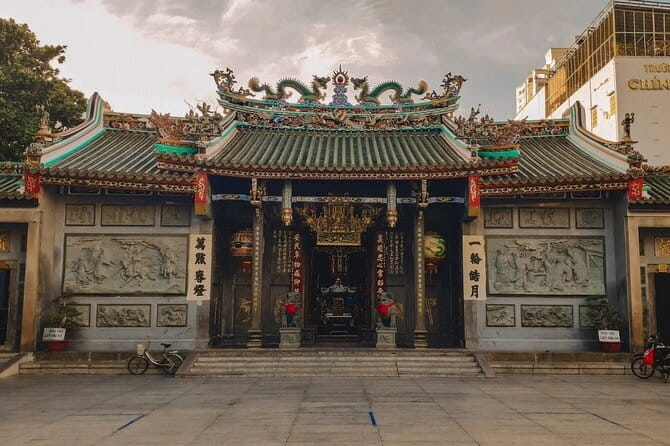
- Binh Tay Market first: you get the shopping-and-trade context before the temples.
- Faith in close quarters: Catholic church, Chinese pagodas, and temple worship all share the same area.
- Myths with names: Thien Hau (sea goddess), Quan Cong (Three Kingdoms general), and the God of Money.
- Architecture clues: you learn how temple design changes in the big market area.
- Private group pacing: it’s only your group, so you can move at a comfortable speed.
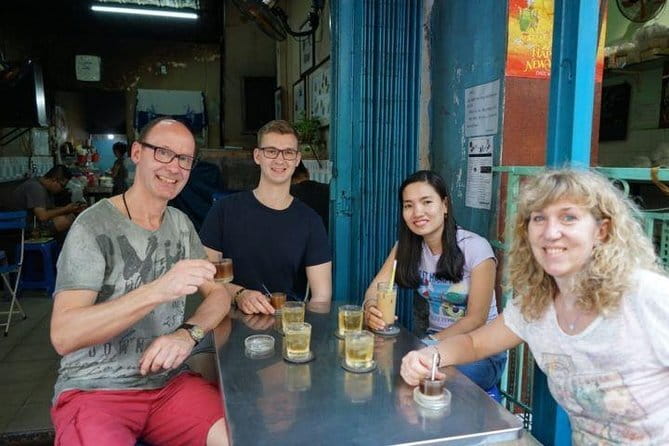
- Tea or coffee included: a small break when you’re ready for it.
Cho Lon Chinatown: Why This Walk Feels More Real Than Most Tours
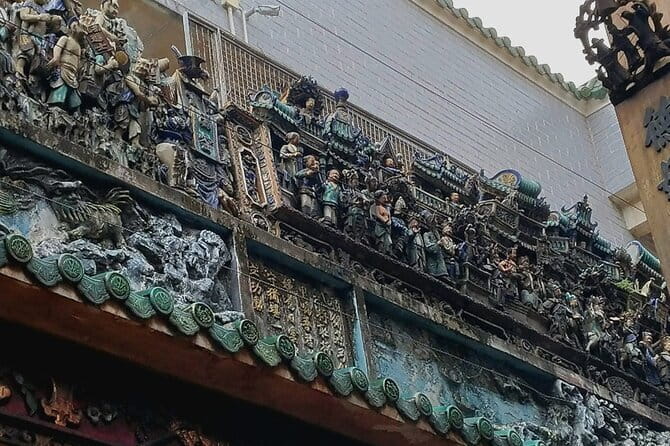
Cho Lon (the Chinese district of Ho Chi Minh City) has a layout that makes sense once you start walking. Markets and worship places sit close together, so you see how trade, community, and spirituality overlap in daily life.
This tour is built around that idea. You’re not just checking boxes on a map. You start in a busy market area, then you shift into churches and temples where stories explain why people built what they built. By the time you’re deep into the “big market” neighborhood, the architecture and the mythology stop feeling random.
And because it’s a private experience with an in-person guide, you don’t get stuck with a canned script. You can ask more questions, linger if something catches your eye, or keep moving if you’re on a tighter schedule.
You can also read our reviews of more walking tours in Ho Chi Minh City


Binh Tay Market: The Fastest Way to Understand Business Culture
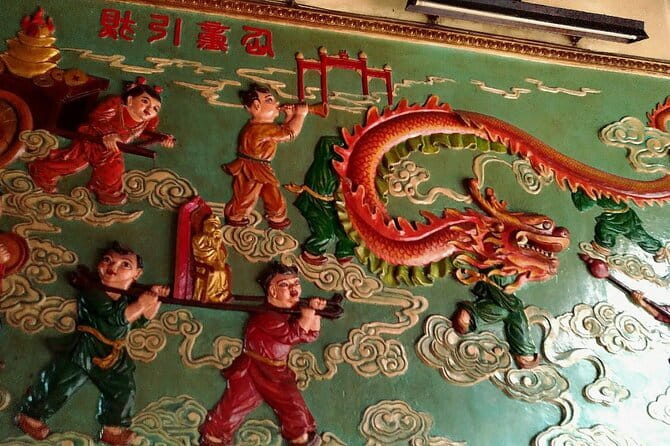
The tour begins at Binh Tay Market, and the guide takes you through it like a working set. You’ll see how Vietnamese Chinese people do business here—what gets sold, how stalls connect, and how the market works as a community hub.
Instead of treating the market like a backdrop, the guide brings you to the center and shares the story of the man who created the market. That detail matters because it gives the place a backstory you can remember when you’re later looking at the churches and pagodas nearby.
Timing-wise, this stop is about 30 minutes with admission ticket included (free). It’s long enough to get your bearings and short enough that you’re not stuck in the busiest aisles forever.
A practical tip: markets can be sensory and warm. Wear light layers and comfortable walking shoes. Even if you’re not doing the heavy lifting in the market itself, you’ll still be on foot for the day.
St Francis Xavier Church: When Western and Local Traditions Intersect
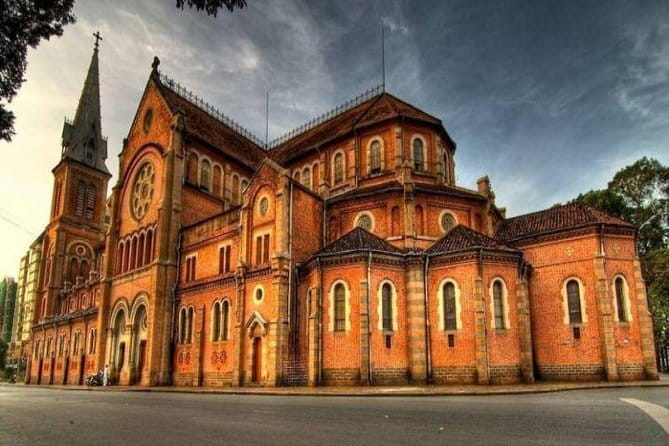
Next comes St Francis Xavier Church (listed as the church stop in this walk). The guide explains the religious mix in the “big market” area and how people celebrate and connect across faiths in the same neighborhood.
What I like about this stop is the framing. You’re learning the context first—why this church matters in this district—then you get the “untold story” part that helps the building feel less like a generic landmark.
This stop also runs about 30 minutes with free admission. It’s not a long worship visit. It’s a story-and-context stop that sets up the Chinese temple experiences that follow.
One consideration: churches and temples can have rules about where you stand or how you dress. The tour guide will steer you, but keep it respectful and quiet your phone camera if there are signs asking for it.
Ong Bon Pagoda: Spot the Sky God and Learn the Design Differences
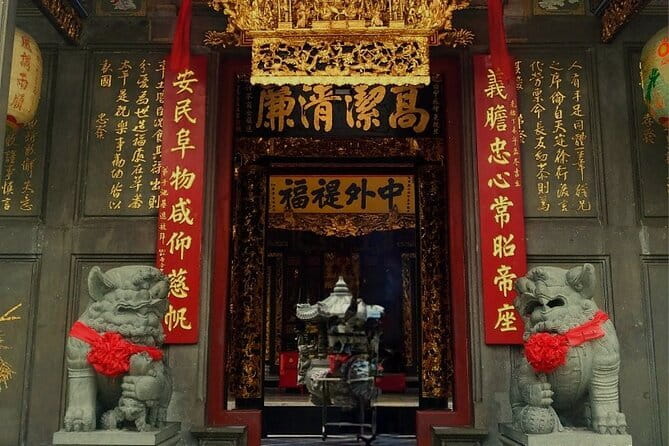
At Ong Bon Pagoda, the tour shifts from church context to Chinese temple iconography. You’ll follow the guide to see the God of the Sky and learn what makes this temple’s look different from other worship spaces in the “big market” area.
This is where the tour pays off if you like small visual details. The guide points out design features and explains how temple architecture varies within the district—so you understand what you’re seeing instead of just snapping photos and moving on.
Like the earlier stops, this is about 30 minutes and free to enter. It’s a good length for people who don’t want a long museum-style lecture, but still want meaning behind what they’re looking at.
If you’re someone who loves symbolism, pay attention here. The “Sky God” focus links to the wider theme of community protection and spiritual life that appears again later at the sea goddess temple.
Ba Thien Hau (Thien Hau) Temple: The Sea Goddess Story You’ll Remember
The next major stop is the Ba Thien Hau Temple, also focused on the famous Thien Hau worship tied to the sea goddess of the Chinese community. The guide shares the mythology behind Ms. Thien Hau and then leads you to see the other gods inside the temple.
This part works because you get both story and layout. You’re not just hearing a legend. You walk through the space with an explanation of who’s represented and why the temple is set up the way it is.
This stop is the longest in the middle section, about 45 minutes, again with free admission. If you’re keeping an eye on time, this is also where you might feel the urge to slow down a bit. The architecture and the figures invite lingering.
A quick practical note: incense and worship rituals can be part of the experience. If you’re sensitive, you can stand back respectfully and follow the guide’s lead.
You can also read our reviews of more city tours in Ho Chi Minh City



Nghia An Temple: Quan Cong, Money Luck, and Love Worship

The final stop is Nghia An Temple at Hội Quán Nghĩa An. Here the focus shifts to Quan Cong, described as the general from the Three Kingdoms period (184–280), including details about his famous horse. You’ll also hear about the God of the money and the temple’s role in love worship.
This is a very different tone than the sea goddess story. It’s more about guardianship, luck, and personal hopes—yet it still fits the same neighborhood logic. In Cho Lon, worship isn’t abstract. It connects to what people want in daily life.
This stop runs about 45 minutes with free admission. It’s also a nice finish because it gives you something practical to carry home: you’ll remember names, symbols, and why different temples emphasize different aspects of life.
One last thing to consider: because this is the end of the tour, you’re likely to feel the “wrap-up” pace. If you want extra photos or a longer look at a particular altar, ask your guide early so you can manage time without feeling rushed.
The 3–4 Hour Pace: How to Plan Your Day Around This Walk
The total time is about 3 to 4 hours. That’s not just walking time; it includes transitions between stops, guide storytelling, and short pauses at each location. In other words, it’s a good half-day option when you want something cultural but not exhausting.
Here’s what you should plan for:
- Wear shoes you can stand in for a while.
- Keep water nearby if you know you’ll get thirsty.
- Bring something for sun and light rain, since the tour requires good weather.
Your guide will handle the flow, but you’ll still want to show up ready to move. If your travel schedule is packed and you’re tempted to skip leg day, this tour is still doable—just treat it like a proper city walk.
Also, note the end point. The tour ends at Nghia An Temple in District 5. That means it’s easier to plan your next activity nearby instead of trying to sprint back to Ben Thanh immediately.
Price and Value: Why $31.63 Can Be a Smart Deal
The price is listed as $31.63 per person, and for what you get, it’s pretty straightforward value.
What’s included:
- In-person guide (English and Japanese)
- Private transportation
- Coffee and/or tea
- Free admission at the stops
What you’re paying for is more than “someone walking with you.” You’re paying for interpretation—connecting market life to churches to Chinese temples—plus private pacing. In a neighborhood like Cho Lon, that guidance matters because details can look similar at first glance. A guide helps you notice what’s meaningful.
There’s also a “private” advantage. This is only your group, not a big bus-style shuffle. If you want a slower pace for photos or you have questions, private usually beats DIY.
About pickup: pickup is offered, but any pickup outside 1 km from Ben Thanh market costs an extra $10 per customer. If you’re staying near Ben Thanh, you’re likely to keep costs simpler. If not, it can still be done—just plan the added transport cost.
Who Should Book This Private Chinatown Walk?
This tour is a great fit if you want:
- A more local feel than a standard sightseeing loop
- Stories that connect Chinese temples to the neighborhood around them
- A walk that doesn’t feel like a lecture, because stops stay short and focused
It’s also ideal if you’ve already seen a few big HCMC landmarks and want something with a different flavor—more community, less monument-hunting.
This is a good “second or third day in the city” activity too. By then, you’ve got enough context to appreciate why this area has its own mix of faiths and symbols.
And if you need comfort first: reviews highlight the importance of comfortable walking shoes, and I agree—this is one of those tours where your footwear sets the mood.
Should You Book? My Practical Recommendation
Book it if you want a half-day private experience in Cho Lon that focuses on real neighborhood culture: market life, religious buildings, and the stories tied to them. The combination of short stops, a guide who explains context, and free entries keeps it from feeling like a tourist checklist.
Skip it or swap it for something else if you’re short on mobility or you really don’t want 3–4 hours on foot. Also, if weather looks sketchy, keep an eye on plans, since this experience requires good weather.
FAQ
How long is the Private China Town Walking Tour in Ho Chi Minh City?
It lasts about 3 to 4 hours.
Where does the tour start and end?
It starts at Binh Tay Market (57A Tháp Mười, Phường 2, Quận 6, Thành phố Hồ Chí Minh) and ends at Hội Quán Nghĩa An (678 Nguyễn Trãi, Phường 11, Quận 5, Thành phố Hồ Chí Minh).
Is this tour private?
Yes. It is a private tour/activity, and only your group participates.
What is included in the price?
Included items are coffee and/or tea, private transportation, and an in-person tour guide in English and Japanese.
Are admission tickets included?
Yes. Admission tickets for the listed stops are included/free.
Do I get pickup?
Pickup is offered. Pickup outside 1 km from Ben Thanh market costs $10 per customer.
What is the price per person?
The price is $31.63 per person.
Is there free cancellation?
Yes. You can cancel up to 24 hours in advance for a full refund.
Is the tour suitable for most travelers?
The tour notes that most travelers can participate, and service animals are allowed.