REVIEW · HO CHI MINH CITY
Tay Ninh Holy See – Cable Car & Cu Chi Tunnels | Small Group Tour
Book on Viator →Operated by Grayline Vietnam Threeland Travel · Bookable on Viator
A day trip with two worlds in one morning. You start with the Bà Đen Mountain cable car, then switch gears to the Cao Dai Temple for a midday ceremony, and finish deep underground at the Củ Chi Tunnels. It’s a packed route, but it connects very different sides of Vietnam in a single 8-hour swing.
I especially love the chance to see Cao Dai worship at the right time, including the colorful robes and the chanting during the midday mass. I also like that the Củ Chi visit isn’t just a look-it’s-more-than-that stop: you watch a short video, explore underground rooms and exhibits, and even get a chance to crawl through a narrow soldier tunnel (where height matters). If you’re lucky enough to get a guide like Jay Jay, the drive feels faster thanks to lively, clear explanations.
One drawback to plan around: this is an all-day schedule that starts early, and the tunnel experience is physically tight. If you’re tall or dislike cramped spaces, you may need to adjust how much you do underground.
In This Review
- Key things you should know before you go
- Bà Đen Mountain cable car: the views and the Buddha from up top
- Cao Dai Temple in Tay Ninh: how the ceremony feels at midday
- Lunch in Tay Ninh: simple Vietnamese food that keeps the day moving
- Củ Chi Tunnels: underground rooms, trapdoors, and what war meant on the ground
- The full-day flow: cable car, ceremony, and war history in one managed schedule
- Price and value: is $105 worth it for Ho Chi Minh City?
- Who should book this tour, and who should reconsider
- Should you book the Tay Ninh Holy See and Củ Chi Tunnels small-group tour?
- FAQ
- What time does the tour start?
- Is hotel pickup included, and where does it work?
- How long is the tour?
- What’s included besides transportation and guide?
- Do I need to pay for the cable car or temple access?
- Is the Củ Chi tunnel experience difficult?
Key things you should know before you go
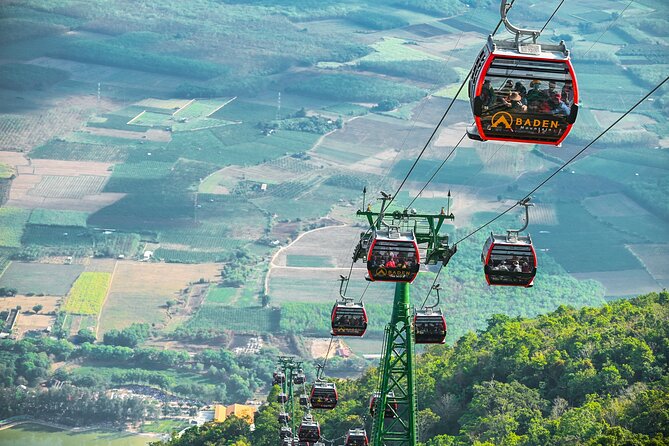
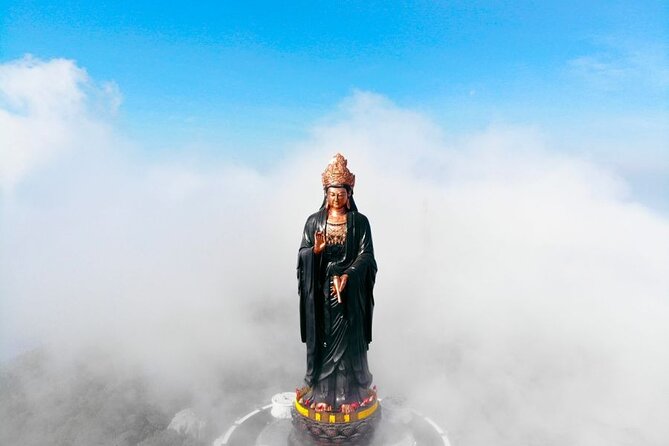
- Bà Đen Mountain cable car + big views: You ride up to the peak with wide countryside views, plus the Tây Bổ Đà Sơn Buddha Statue in sight.
- Cao Dai midday mass timing: You go when the ceremony is happening, so you see the real rhythm of worship rather than just photos outside.
- A strong Vietnam-relevant WWII focus: Củ Chi isn’t presented as vague war talk; you move through underground bunkers and exhibits tied to the Vietnam-American conflict.
- Small group size (max 10): Faster Q and A, less waiting, and a day that tends to feel more controlled than big buses.
- Lunch is included: A traditional Vietnamese meal at a local restaurant keeps your day from turning into constant snack-hunting.
- Tunnel crawl can be tough for taller people: The soldier tunnel is narrow, and you’ll feel it.
Bà Đen Mountain cable car: the views and the Buddha from up top
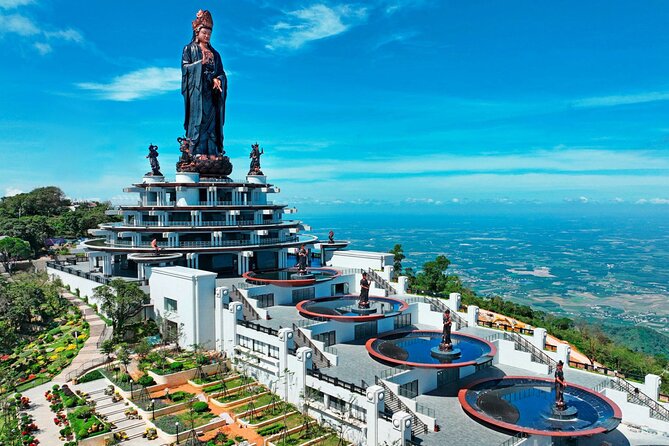
Your morning typically starts with pickup around 7:00 am from a central Ho Chi Minh City hotel area (District 1). From there, it’s about a 2-hour drive out toward Tay Ninh, with a sense that the day is already building toward something special before you even reach the first stop.
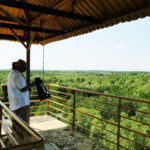
When you arrive, you take the cable car up Bà Đen Mountain. This is the part that feels like a breather. At the top, the views open up across the countryside—rice fields, villages, and on clear days the border direction with Cambodia is visible. It’s an easy place to reset your head before you go from scenic Vietnam to wartime history.
You’ll also see the Tây Bổ Đà Sơn Buddha Statue, described as the tallest bronze Buddha statue in Asia. Even if you’re not a “statues guy,” it helps the area make sense: Bà Đen isn’t only a viewpoint; it’s also a spiritual landmark. Bring a camera and don’t rush your photo spot—your best angles usually happen when you pause and let the crowds thin out.
Practical tip: Wear shoes with good grip. Cable car stations and temple grounds can be slippery after mist or if the area is humid.
You can also read our reviews of more tours and experiences in Ho Chi Minh City.



Cao Dai Temple in Tay Ninh: how the ceremony feels at midday
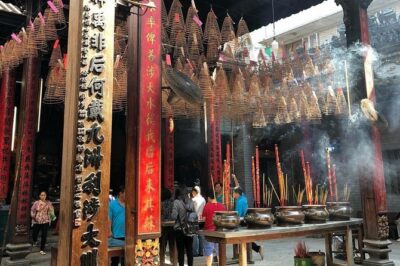
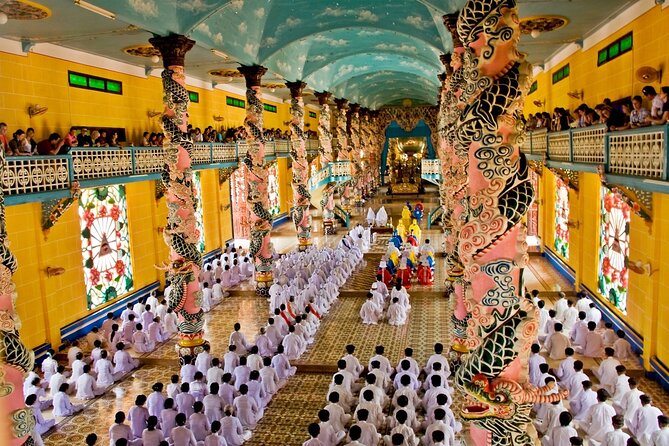
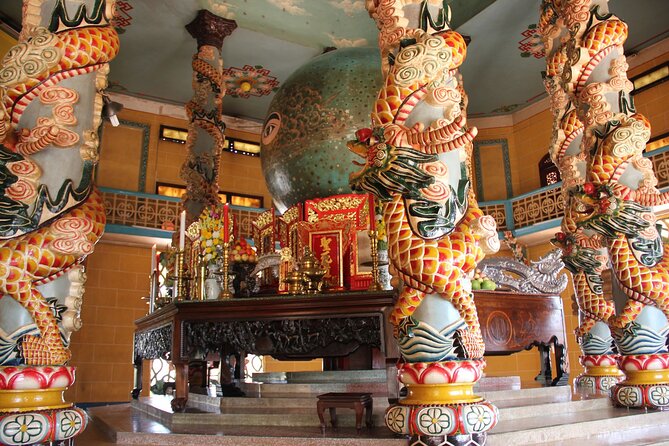
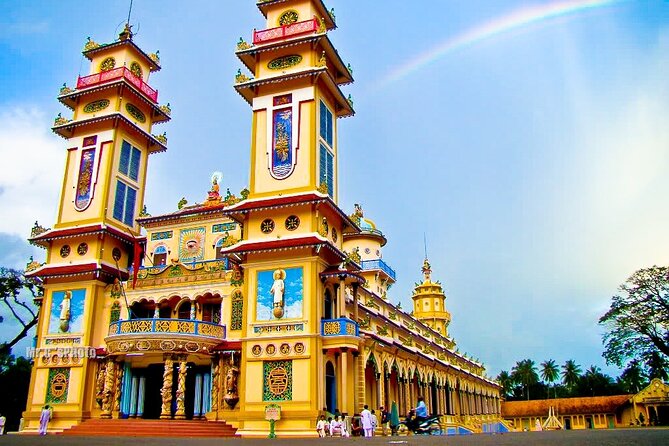
Next comes the Tay Ninh Holy See and the Cao Dai Temple, also called the Cao Đài Temple. The first impression is pure visual impact: colorful dragons, religious symbols, and that famous all-seeing holy eye above the main entrance.
Inside, the temple’s style keeps shifting. Statues representing major religious figures—Jesus, Buddha, Confucius, and Laozi—sit side by side. Cao Dai is often described as a blend of influences, with elements drawn from Buddhism, Christianity, Confucianism, Hinduism, Islam, and Taoism. You don’t need a textbook to understand it; the place itself tells the story through symbols and the way worship is arranged.
The highlight here is timing. You go for the midday mass, so you’re not just looking at architecture. You’ll see monks in colorful robes, hear the chants, and watch the flow of the ceremony as it happens. Even if you’re not religious, this is one of those “watching people worship” experiences that feels human and grounded, not staged.
The temple visit also tends to be a guided “guided meaning” session, not a drop-off and wander. Your guide will usually explain what you’re looking at—especially the religious symbols—so you can connect the dots instead of guessing.
Small caution: Temple rules can vary by site and moment. Plan to dress respectfully and be ready to follow your guide’s cues about where to stand and when to take photos.
Lunch in Tay Ninh: simple Vietnamese food that keeps the day moving
After the temple ceremony, lunch is served at a local restaurant. This is included, and it matters more than it sounds. A long day-trip can turn into a snack-only marathon if lunch isn’t planned, and then you end up tired during the historical portion.
The menu isn’t described in detail, but the intent is traditional Vietnamese lunch in a real local setting. You’ll also get a short reset before Củ Chi, where your focus shifts from colors and chants to tunnels, exhibits, and wartime survival.
What I’d do: Don’t overthink lunch. Eat enough to stay comfortable for the next stop, then use this time to hydrate. You don’t want to feel drained before the underground portion, especially if you’re considering the tunnel crawl.
Củ Chi Tunnels: underground rooms, trapdoors, and what war meant on the ground
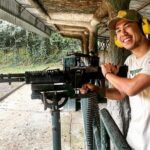
Củ Chi is the stop that makes this tour earn its reputation. After lunch, you drive to the Củ Chi Tunnels Historical Site, then start with a brief propaganda-style video before you walk through weapons and booby trap exhibits. It’s the kind of introduction that frames what you’re about to see.
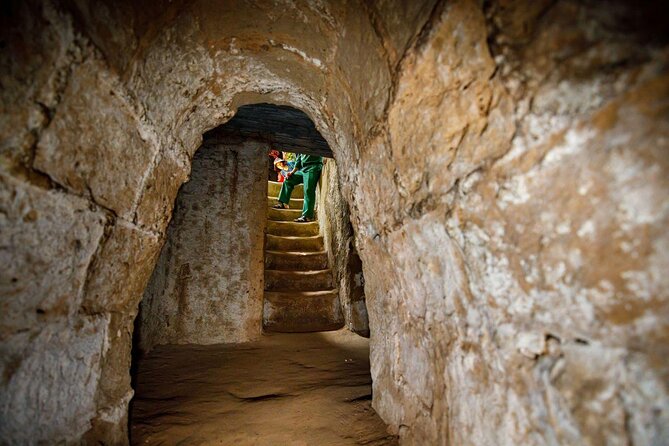
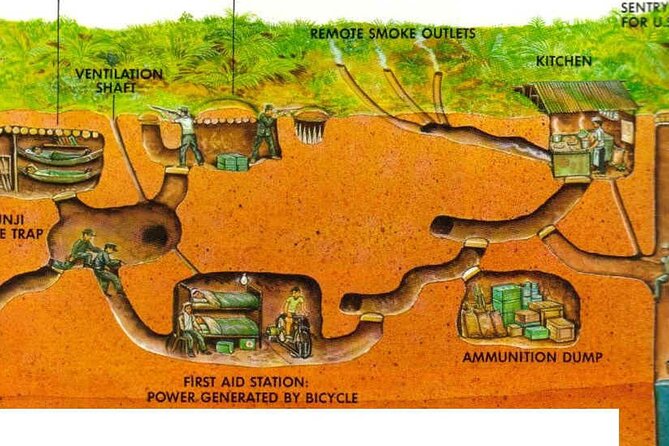
From there, the visit focuses on the underground network—tunnels and bunkers stretching for over 124 miles (200 km). The guide helps you connect these spaces to the Viet Cong guerrilla strategy, and you’ll move through underground sections that include command areas, weapons storage, and different “life” functions like meeting and kitchen spaces (as part of the tour’s guided tour of the tunnels and bunkers).
There’s an active feeling to the way the site is presented. You aren’t just reading labels. You’re guided through real-feeling spaces, where the scale becomes obvious when you see how people could move, hide, and operate in confined areas.
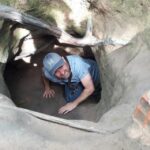
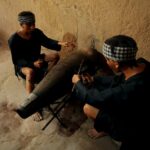
One of the reasons the experience sticks is the hands-on element. You can explore a narrow soldier tunnel—something many people remember long after they forget the exact dates. A review note called out that it’s not for tall visitors, which is exactly what you should expect from a crawl. If you’re claustrophobic, don’t force it; you can still get plenty from the surrounding exhibits and bunkers.
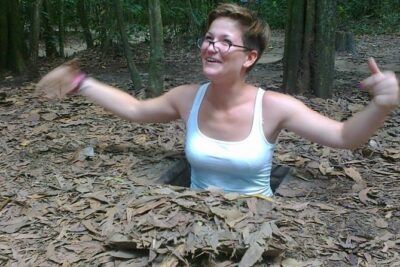
You’ll also encounter spots where the tour encourages photos peeking out from camouflaged-style trapdoors. It’s a lighter moment inside a heavy topic, but it also helps you understand how concealment worked.
Real talk: Củ Chi is a sobering history stop. If you prefer war sites without physical discomfort, you’ll likely enjoy it more by focusing on the exhibits, the guided explanations, and the underground rooms you can view comfortably.
The full-day flow: cable car, ceremony, and war history in one managed schedule
This tour is built as a straight-through day: morning pickup, drive out to Tay Ninh, cable car up, Cao Dai midday mass, lunch, then Củ Chi and back to Ho Chi Minh City.
Why that flow works: it keeps the day logical. You’re not bouncing between scattered locations without context. The Bà Đen Mountain stop softens the morning with views and an easy “wow” moment, then the schedule shifts into religion and culture, and then finally into the WWII/Vietnam-American war story at Củ Chi.
Also, the air-conditioned minivan helps. This part of Vietnam can feel warm and humid, and a day trip where you’re moving continuously is much easier when transport is comfortable.
The tour is described as small group with a maximum of 10 travelers, and that has real value. You’ll likely spend more time asking questions and less time waiting for everyone at each stop.


Price and value: is $105 worth it for Ho Chi Minh City?
At $105 per person, this isn’t the cheapest day trip from Ho Chi Minh City—but it’s also not a “luxury price” either. The value comes from what’s included and how much you pack in.
You’re getting:
- Hotel pickup and drop-off (in District 1)
- English-speaking guide
- Vietnamese lunch
- Admission fees
- Cable car inclusion as part of the stop with ticketed access
- Mobile ticket support
That’s a lot to bundle into one day, especially if you’d otherwise have to coordinate a driver, separate tickets, and your own timing. The route is also time-sensitive in a good way: Cao Dai midday mass is part of the experience, so the scheduling and guide routing can make or break the day.
If you’re staying outside District 1, note that pickup is only listed for District 1. In that case, you’d need to factor in your own way to reach the meeting point pickup area.
Best value for: first-timers doing one big day trip, people who want both cultural context (Cao Dai) and one of Vietnam’s most famous history sites (Củ Chi), and visitors who prefer a guide instead of self-planning.
Who should book this tour, and who should reconsider
This is a good match if you want a full, structured day without juggling logistics. It’s also a solid choice if you like seeing how Vietnam’s story spans religion, daily life, and wartime history.
You might want to reconsider if:
- You’re uncomfortable with early mornings and a long day.
- You don’t handle tight spaces well. Củ Chi includes a crawl through a narrow soldier tunnel.
- You’re hoping for a slow, low-stress pace with lots of free time. This tour is built for seeing multiple major stops.
If you’re traveling with limited time but want real variety—spiritual ceremony plus underground wartime survival—this combo makes practical sense.
Also, guides can strongly shape the day. One of the better review takeaways was that a guide named Jay Jay made the long travel feel lighter through strong explanations and humor. If you’re someone who values storytelling, that matters.
Should you book the Tay Ninh Holy See and Củ Chi Tunnels small-group tour?
I’d book it if you’re doing one main day trip from Ho Chi Minh City and want both of these:
1) a meaningful look at Cao Dai worship at midday, and
2) a hands-on, guided visit to Củ Chi Tunnels that goes beyond surface-level sightseeing.
It’s also a decent bet because the day is built around included tickets, a planned lunch, and hotel pickup in District 1—so you spend less time solving logistics and more time seeing what you came for.
If you’re worried about the tunnel part, you can still enjoy the visit by focusing on the exhibits and underground rooms you can comfortably access. And if plans change, there’s free cancellation up to 24 hours before the start time.
If you want, tell me your hotel area (District 1 or not) and your tolerance for cramped spaces, and I’ll help you decide whether this exact route fits your comfort level.
FAQ
What time does the tour start?
The start time is 7:00 am, with hotel pickup from the central area.
Is hotel pickup included, and where does it work?
Hotel pickup and drop-off are included only in District 1.
How long is the tour?
The duration is listed as about 8 hours.
What’s included besides transportation and guide?
The tour includes an English-speaking guide, Vietnamese lunch at a local restaurant, admission fees, and mobile ticket access.
Do I need to pay for the cable car or temple access?
Admission fees are included, and the cable car ride at Bà Đen Mountain is part of the first stop with an admission ticket included.
Is the Củ Chi tunnel experience difficult?
The tour includes exploring underground tunnels and you may crawl through a narrow soldier tunnel. One review specifically noted that going in the tunnel is not for tall visitors, so tall visitors or anyone uncomfortable with tight spaces should think ahead.