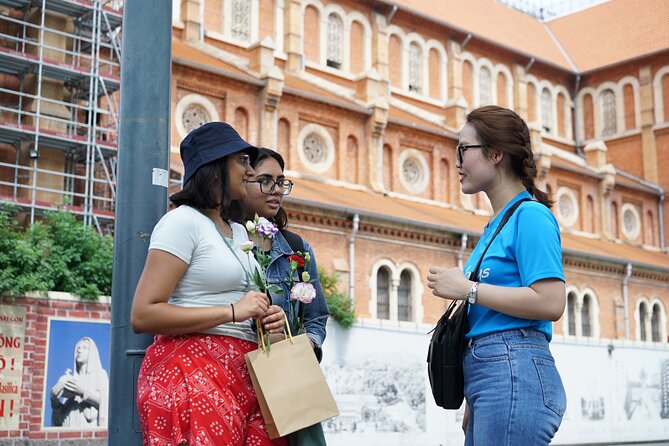
A first look at Saigon, with real people telling stories. The small group feel means you get time for back-and-forth questions, not just hearing facts. I also love that you stop at big sights like the Notre-Dame Cathedral and Independence Palace, but you get personal context from energetic university guides.
You’ll also enjoy the practical value: bottled water and a cup of Vietnamese coffee (Ca Phe Sua Da) are included, plus fees and taxes. The one consideration is simple: it’s a walking tour, and it needs good weather, so plan for some time on your feet in the city heat.
In This Review
- Key things to know before you go
- Why this Saigon walk feels different from the usual tour
- Price and pacing: $14 is a steal if you like context
- Stop 1: Notre-Dame Cathedral Basilica for first impressions
- Stop 2: Central Post Office and the joy of slow looking
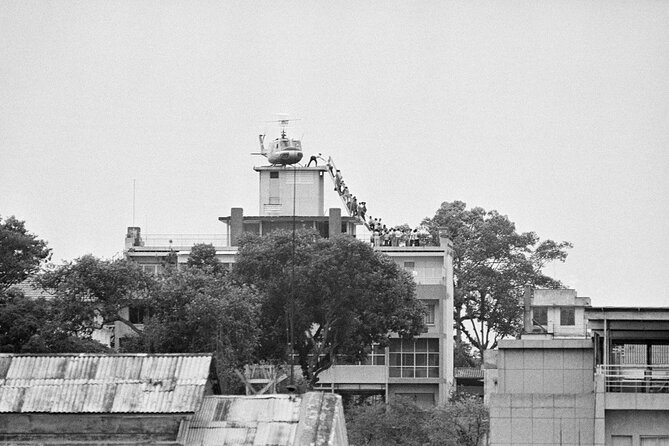
- Stop 3: Vincom Center and the Last Helicopter sculpture
- Stop 4: Independence Palace—where politics lived
- Stop 5: The Thich Quang Duc Monument and public memory
- Stop 6: Secret Weapons Cellar for the underground side of war
- Ca Phe Sua Da and the small extras that keep it comfortable
- What you can ask your guide (and how to get more value)
- Who this Saigon walking tour suits best
- Should you book Joy Journeys’ Saigon Walking Tour?
- FAQ
- How long is the Saigon walking tour?
- How much does it cost?
- How many people are in the group?
- Is bottled water included?
- Is Vietnamese coffee included?
- Are admission tickets included?
- What’s included in the price besides entrances?
- What is not included?
- Where do I meet the tour?
- What if the weather is bad?
- Can I cancel and get a full refund?
Key things to know before you go
- University-guide storytelling: expect local perspectives and Q&A, not just lecture-style history
- Small walking group: designed for a maximum of 6 travelers for more attention
- Free admission at most stops: cathedral, post office, Vincom Center, Independence Palace, and the Thich Quang Duc Monument
- Secret Weapons Cellar is included: a longer stop that adds real contrast to the street sights
- Ca Phe Sua Da included: Vietnamese iced coffee is part of the experience
- Weather matters: the tour runs with good weather in mind
Why this Saigon walk feels different from the usual tour
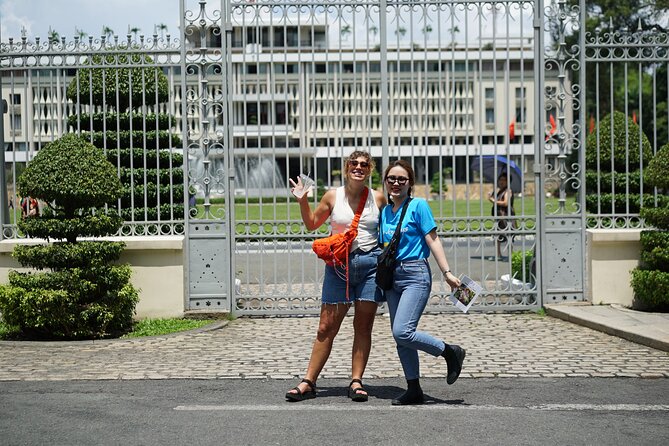
This Saigon walking tour works because it’s built around people, not just places. Instead of a guide talking at the group, you’re walking with university students who are passionate about Vietnam and about practicing their future craft. That changes the vibe right away: you can ask what you’re wondering, and the answers tend to be personal.
I like that it’s designed to connect the heart of Ho Chi Minh City to everyday life—through conversations. You’ll walk past famous landmarks, sure, but the aim is to understand how locals see those places now, not just when they were built.
And yes, at just over three hours, it’s a manageable chunk of time. It’s long enough to feel like you walked with purpose, but not so long that you’re done with the city before the tour finishes.
You can also read our reviews of more walking tours in Ho Chi Minh City



Price and pacing: $14 is a steal if you like context
At $14 per person, this tour has strong value because so much is included. You get bottled water, a Vietnamese coffee (Ca Phe Sua Da), and all fees and taxes. Plus, the most demanding stop—the Secret Weapons Cellar—is covered.
The pace is also worth noting. With six stops across the central area and a total duration of about 3 hours 15 minutes, you’re moving often but not sprinting. It’s the kind of walking schedule that works well if you like sights with explanations, and you don’t want to spend the whole day commuting.
One practical tip: if you can choose the time of day, pick a morning slot. In hot weather, walking becomes work fast, and this tour does require stamina.
Stop 1: Notre-Dame Cathedral Basilica for first impressions

You start at the Notre-Dame Cathedral Basilica of Saigon, a Catholic cathedral in the center of Ho Chi Minh City. It’s a late-19th-century building, and it shows you the French colonial layer of the city right away.
This is one of those stops where the visuals do a lot, but the guide storytelling is what makes it click. You’ll likely learn what locals associate with the cathedral area today and how to read the architecture beyond postcard photos. Admission is listed as free for this stop, so you can focus on watching, not budgeting.
The only drawback here is crowds and busy streets. Even with a small group, you’ll be moving through a public square area where foot traffic is constant. Stay patient, keep your eyes up, and you’ll enjoy the start.
Stop 2: Central Post Office and the joy of slow looking
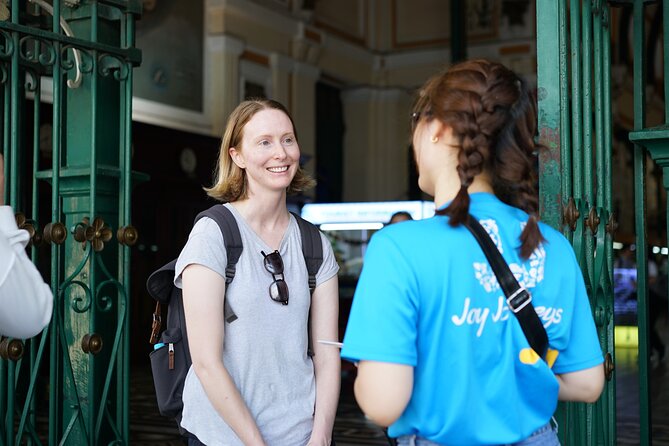
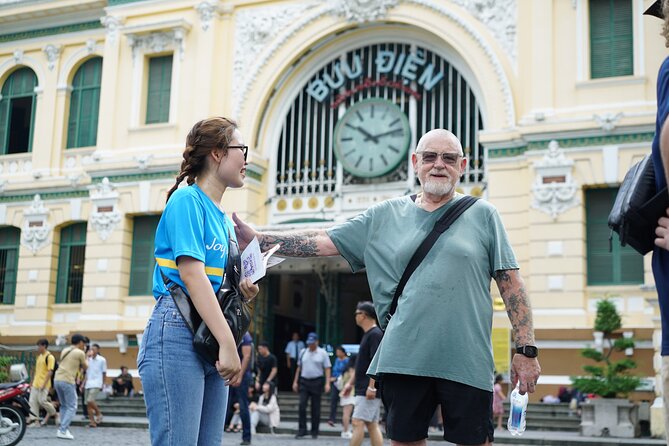
Next comes the Saigon Central Post Office, also called the Ho Chi Minh City Post Office. This is another late-19th-century French-period landmark, and it’s famous for its historic role and classic design.
What makes this stop work on a walking tour is the way you slow down. Instead of rushing to the photo spot, you’ll get time to look for details, like the feel of the interior space and how the building fits into the street life outside.
Admission here is also listed as free. That matters on a value-packed tour like this because you’re not constantly paying small fees that add up. It’s one of those stops where you can take a moment to imagine the building as a daily tool for communication—not just a monument.
Stop 3: Vincom Center and the Last Helicopter sculpture
At Vincom Center, you’ll see the Last Helicopter sculpture. It commemorates the end of the Vietnam War and features a Huey helicopter, one of the war’s most recognizable symbols.
This stop is shorter (about 20 minutes), but it’s a meaningful contrast to the colonial-era architecture you’ve just seen. It also helps you understand how war memory shows up in modern public spaces, not only in museums.
Don’t treat it like a quick photo stop. Take the minute to connect the sculpture to what the city carries forward—especially the way history gets remembered in everyday districts.



Stop 4: Independence Palace—where politics lived
Your next major anchor is Independence Palace, also known as the Reunification Palace. It was built in the 1960s and served as the home and workplace of the President of South Vietnam.
This is the kind of site where explanations matter. You’re not just looking at rooms—you’re trying to understand how power operated, how decisions played out, and why the palace became a symbol.
Time-wise, you get about 30 minutes here. That’s enough for an orientation pass if you follow your guide and keep your pace steady. If you’re the type who likes to read every sign, you might want extra time elsewhere, but on a walking tour schedule, this is a good length to keep momentum.
Stop 5: The Thich Quang Duc Monument and public memory
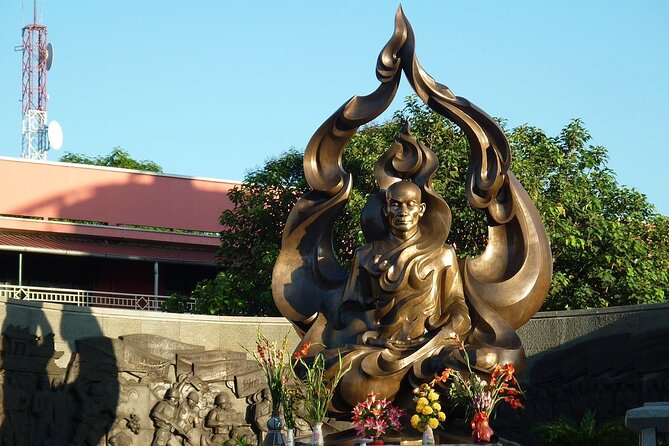
Then you’ll stop at the Venerable Thich Quang Duc Monument. This one commemorates Thich Quang Duc, a Buddhist monk whose self-immolation in 1963 became a major act of protest.
Even if you’ve heard the name before, this stop lands differently when it’s framed through local storytelling. It shows you that Saigon’s central streets carry moral and political memory in plain sight—no museum required.
Admission is listed as free for this stop, which is nice, but the bigger benefit is the guide’s ability to connect the monument to the broader human story. Expect reflection, but also expect practical explanations about why the monument exists and how it’s understood in Vietnam.
Stop 6: Secret Weapons Cellar for the underground side of war
The final stop is the Secret Weapons Cellar, and it’s the longest visit on the route (about 45 minutes). This is an underground tunnel system originally built by the Viet Cong during the Vietnam War.
Your guide will explain how the tunnels functioned as a guerrilla base and a way to move supplies and weapons undetected by American and South Vietnamese forces. This is where the tour’s tone shifts from “city sights” to “how conflict actually worked on the ground.”
Because this stop is listed as included, you don’t have to think about fees mid-tour. That also helps you stay present—no mental juggling when you’re walking into darker, more enclosed spaces.
Practical note: underground areas can feel cooler or close, and it’s easy to lose time if you stop to read everything. Stick with your guide’s pace and you’ll get the full story without feeling rushed.
Ca Phe Sua Da and the small extras that keep it comfortable
One of the underrated things about this tour is the simple comfort plan. You get bottled water, and your guide includes time for Vietnamese coffee (Ca Phe Sua Da).
This matters more than it sounds. A walking tour in Ho Chi Minh City can drain you, and a pause with cold coffee helps you reset. It also gives a natural moment to ask more questions while you’re taking a break.
I especially like that the coffee is part of the experience, not a random add-on. It feels like a real local rhythm: walk, learn, rest, talk.
What you can ask your guide (and how to get more value)
Since the tour is built around conversation, you’ll get more out of it if you come prepared with a few questions. I’d ask things like:
- What do locals think of these landmarks today?
- Which parts of the Vietnam War story are most misunderstood by outsiders?
- If you had one recommendation for how to spend a few hours in the city, what would you pick?
If you’re lucky, you might meet guides named in past tours like Lucy, Lily, Tyson, or Andrea. Different personalities, same idea: you’re learning Saigon through someone who loves it and teaches it with energy.
Who this Saigon walking tour suits best
This tour is a great match if you want a smart, social way to see central Ho Chi Minh City. It works especially well for first-time visitors who don’t want to spend hours sorting out where to go next.
It also fits people who like conversation—because the format is built for questions and personal stories. If you prefer silent, self-paced sightseeing, a walking tour with guided explanations might feel a little talk-heavy.
And if you’re traveling with a tight schedule, this is an efficient way to pack key landmarks plus the war-related tunnel stop into one morning or afternoon block.
Should you book Joy Journeys’ Saigon Walking Tour?
I’d book it if you want value, a small-group experience, and a tour that connects big sights to real human stories. The inclusion of coffee and water, plus the Secret Weapons Cellar being covered, makes it a budget-friendly option that still feels substantial.
I’d think twice if you dislike walking, or if the weather is unreliable where you are traveling. This experience is weather-dependent, and the day can be less enjoyable if you’re stuck in heat or rain without space to reset.
If you’re flexible with your time and you like learning from locals with energy, this is an easy yes.
FAQ
How long is the Saigon walking tour?
The tour runs about 3 hours 15 minutes (approximately).
How much does it cost?
It costs $14.00 per person.
How many people are in the group?
The walking experience is designed for a maximum of 6 travelers, and the overall activity has a maximum of 20 travelers.
Is bottled water included?
Yes. Bottled water is included.
Is Vietnamese coffee included?
Yes. You’ll get a cup of Ca Phe Sua Da (Vietnamese coffee) as part of the tour.
Are admission tickets included?
For the listed stops—Notre-Dame Cathedral Basilica of Saigon, Saigon Central Post Office, Vincom Center, Independence Palace, and Thich Quang Duc Monument—admission is listed as free. Secret Weapons Cellar is included.
What’s included in the price besides entrances?
The tour includes all fees and taxes, bottled water, and Vietnamese coffee.
What is not included?
Gratitude and tips are not included.
Where do I meet the tour?
You meet at Joy Journeys, 30A Hồ Hảo Hớn Street, Quận 1, Thành phố Hồ Chí Minh 700000, Vietnam.
What if the weather is bad?
The tour requires good weather. If it’s canceled due to poor weather, you’ll be offered a different date or a full refund.
Can I cancel and get a full refund?
Yes. You can cancel up to 24 hours in advance for a full refund.