REVIEW · HO CHI MINH CITY
10 Day Tour in Vietnam from Ho Chi Minh to Hanoi
Book on Viator →Operated by Up Travel Vietnam · Bookable on Viator
Saigon to Hanoi in 10 days is a punchy route. It packs history, boats, pagodas, and big scenery into a tidy plan. I like that you get real contrasts: war-time tunnels and river islands one day, then cave boats and limestone views the next.
Two standouts for me are the Cu Chi Tunnels stop (with tunnel living areas) and the long Halong Bay cruise day, which is the clearest “this is why you came to Vietnam” moment on the trip. One thing to keep in mind: the schedule is full, with multiple transfers and long days between regions, so build in patience when you’re on the road.
In This Review
- Key moments I’d plan my trip around
- Arrival Day in Ho Chi Minh City: what your first half-day really means
- Cu Chi Tunnels and the Mekong Delta: the best kind of day pairing
- Flying to Da Nang: why this middle section keeps the trip efficient
- Da Nang: Lady Buddha at Linh Ứng and Marble Mountains to Hoi An
- Ba Na Hills and the Golden Bridge: the big-ticket day you should prepare for
- Hanoi handoff and Ninh Binh: how Hoa Lu and Trang An work as a single escape
- Halong Bay cruise days: timing is everything
- Meals, transport, and the group size factor (max 20)
- Price and value for $720: what you’re really paying for
- Who this Vietnam route fits best
- Should you book this Ho Chi Minh to Hanoi tour?
Key moments I’d plan my trip around

- Cu Chi Tunnels + tunnel living spaces: you’re not just looking at signs; you’ll walk through the system and see how the site was used.
- Mekong Delta boat ride on the Tien River: the islands get named in a way that makes the trip feel story-driven, not just sightseeing.
- Da Nang and Hoi An route that saves time: Linh Ứng Pagoda and Marble Mountains are grouped efficiently before you head to Hoi An.
- Ba Na Hills via cable car + Golden Bridge: one big-ticket day that’s visually impressive and logistically simple.
- Ninh Binh caves at Trang An (UNESCO): boat time through cave passages turns nature into an activity, not a backdrop.
- Halong Bay with a tea-and-coffee morning: the morning on the water is set up for calmer views before the day heats up.
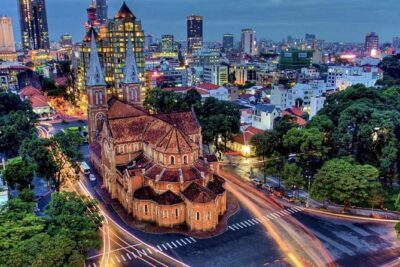
Arrival Day in Ho Chi Minh City: what your first half-day really means
Day 1 is straightforward: you land at Tan Son Nhat International Airport, get picked up, and transfer to your hotel. Your room is available from 2:00 PM, so you’re not stuck waiting around for a full afternoon with nowhere to go.
This day is more about getting oriented than seeing everything. Ho Chi Minh City is large, noisy, and fast-moving. Starting with a clean transfer and check-in gives you a base to adjust to Vietnam time and traffic without stress. If you’re arriving on an international flight, I’d treat that first evening as a light one: stretch your legs, grab a simple meal, and call it a win.
Also, the tour includes an English-speaking guide and uses air-conditioned transport. That matters here, because you’ll likely feel the heat and humidity quickly after landing.
You can also read our reviews of more tours and experiences in Ho Chi Minh City.



Cu Chi Tunnels and the Mekong Delta: the best kind of day pairing
Day 2 is a two-part day that works because it swaps themes completely. In the morning/early afternoon, you go to Cu Chi Tunnels. The drive is about 1.5 hours from the city. Then you spend around three hours exploring the remaining areas and the tunnel system, including special living areas. That detail is important: it helps you connect the physical tunnels to how people lived and moved underground.
After that, you head to the Mekong Delta, starting with My Tho. You’ll take a boat trip on the Tien River. The islands are named for mythical animals—Dragon, Unicorn, Phoenix, and Tortoise—and it turns the ride into something you can follow instead of just floating past random shoreline.
You return to Ho Chi Minh City afterward. Dinner is on your own, which is a good break. You can find something close to your hotel instead of spending the day bound to group schedules.
One practical consideration: this is not a slow day. You’re changing locations, switching from tunnels to boats, and staying on the move. If you hate being on a coach for hours, you may feel it on your second day.
Flying to Da Nang: why this middle section keeps the trip efficient
After breakfast on Day 3, you’ll have free time until the driver transfers you to Tan Son Nhat Airport for a flight to Da Nang. The tour list you provided says domestic flights aren’t included, so you’ll want to confirm exactly what you’re paying for before you go. The itinerary clearly plans for those flights; the price details clearly label them as not included.
Once you land in Da Nang, the driver is waiting to transfer you to your next stops, and the tour continues with guides and air-conditioned transport.
This is where the itinerary really earns its keep: it prevents you from losing a full day to buses across long distances. You trade some logistics (air travel and airport timing) for a more balanced Vietnam experience.
Da Nang: Lady Buddha at Linh Ứng and Marble Mountains to Hoi An
Day 4 is packed but well structured. First stop is Linh Ứng Pagoda, highlighted by the 70-meter-high Lady Buddha statue. It’s a major landmark and a good way to orient yourself in the religious architecture of central Vietnam. The visit is scheduled for about two hours, and entrance is included.
Then you head toward Hoi An Ancient Town later in the afternoon and early evening. Before Hoi An, there’s a stop at Marble Mountains. You’ll explore Tàng Chơn Cave and visit Non Nước Stone Carving Village, known for stone sculptures and handicrafts. That’s a nice mix: religious cave space plus a real craft village where you can actually see the work.
Entrance is listed as included for this day too. The timing gives you a late-afternoon arrival rhythm into Hoi An, which often helps you avoid the harshest sun and gives you daylight for walking.
If you’re the kind of traveler who likes photos, this is your day. If you’re the kind who hates crowds, go slower once you reach the popular streets in Hoi An and don’t feel pressure to see every shop.
Ba Na Hills and the Golden Bridge: the big-ticket day you should prepare for

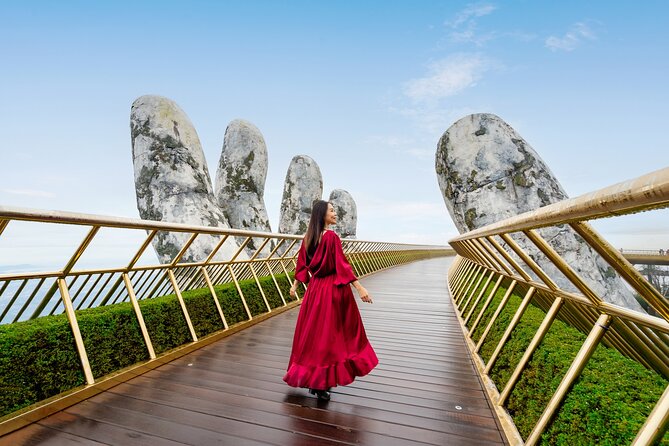
Day 5 is a full day in Ba Na Hills, accessed by cable car. You’re picked up around 7:30–8:00 AM, then driven to the cable car route. This is scheduled for about eight hours, including time on-site.
The headline is the Golden Bridge. The tour also lists visits to Le Jardin d’amourn (spelled like that in the schedule), which signals you’re going beyond just the bridge viewpoint and into garden/attraction areas. Entrance is included.
How to make this day easier on yourself:
- Wear shoes you can walk in for a while.
- Expect crowds at the most famous photo spots.
- Bring a light layer; high points can feel cooler than the coast, even when it’s hot down low.
This day is worth it if you want one “wow” destination that’s built for visitors without complicated planning. It’s less ideal if you prefer smaller, slower towns.





Hanoi handoff and Ninh Binh: how Hoa Lu and Trang An work as a single escape
Day 6 is basically a transfer day with free time. You’ll have free time in Da Nang until you’re picked up for your short flight to Hanoi. Then the guide meets you at Hanoi Airport and transfers you to your hotel for check-in. Again, the domestic flight detail is marked as not included, so confirm that before you book.
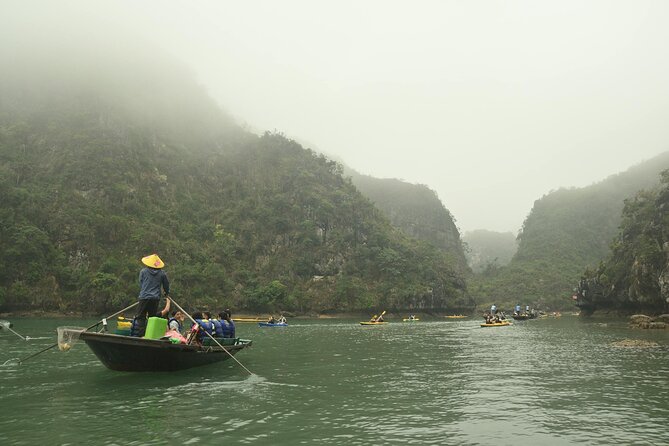
Day 7 is one of my favorite “nature-meets-culture” combinations on this route. You leave Hanoi and head to Ninh Binh province, about 120 km away. Pickup is at 7:00 AM, and there’s a 20-minute break around 9:00.
You start with Hoa Lu Ancient Capital, scheduled for about two hours, including entrance. It gives you a sense of Vietnam’s older power centers without forcing you into a museum-only day.
Then comes Trang An Landscape Complex, a UNESCO site (recognized in 2014). You’ll have afternoon timing—around 1:30–2:00 PM—and then take a boat trip through cave passages for roughly three hours. The itinerary lists caves such as Sang Cave. This is where the day turns cinematic: boat + limestone + cave darkness + reflections on the water.
What I like here is that it’s not just standing and looking. You’re moving through the scenery at a pace that feels natural.
One possible drawback: it’s another long day with driving plus on-water time. If you get motion sick easily, I’d be cautious with boats. The data doesn’t mention anything about safety gear or sickness options, so it’s a you-to-plan-it moment.
Halong Bay cruise days: timing is everything

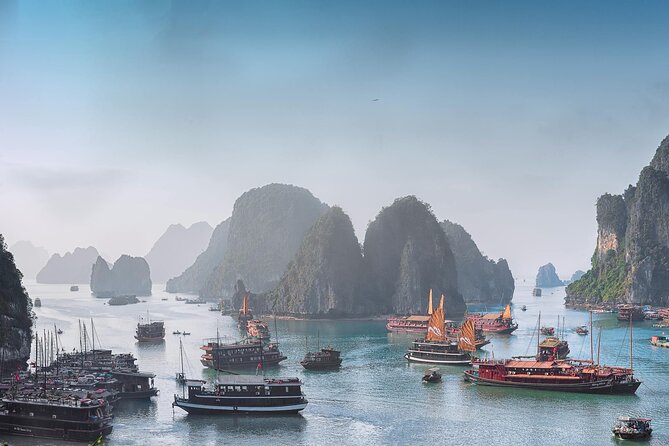
Days 8 and 9 are dedicated to Hạ Long Bay. Day 8 starts early from Hanoi Old Quarter pickup at 8:00 AM. You depart around 8:45, with arrival at Tuan Chau harbor around 11:30–12:00, then you welcome aboard the Dragon Bay cruise.
The day is listed as 18 hours, and Halong Bay admission is marked as free in the schedule. That suggests the cruise experience is a key included component, but it’s still smart to confirm what’s covered (meals, activities, and what “free” means in the operator’s pricing language).
Day 9 is the continuation, with breakfast and a calmer first look. You start with 7:00–7:45 breakfast, then enjoy a morning view with tea or coffee. That little detail matters: it’s when the bay often feels most peaceful and photo-ready. Later, the itinerary notes visiting the famous Frog Pon… (the name is cut off in the schedule you shared), so you’ll want to check the full activity list from your confirmation.
For most people, Halong Bay is the highlight. Even if you love history and cities, this is the “slow your brain down” section: limestone islets, water reflections, and the sense that Vietnam has room for huge scale.
Pack for temperature swings. Your day may start cool in transit and shift warmer on the water.
Meals, transport, and the group size factor (max 20)
The tour includes:
- Air-conditioned vehicle
- English-speaking local guide
- Tissues and water on coach
- Entrance fees
- Breakfast (9), Lunch (5), and Dinner (2)
So you won’t be eating group meals every single day, but you do get several built-in chances to eat without hunting. I like this approach, because it balances structure and freedom. The itinerary does say dinner is on your own after the Mekong day, which is exactly where I’d want independence.
Group size is capped at 20 travelers, which usually means it feels like a real group (not a floating crowd). In practice, this can make things smoother for pickup times and guide attention.
One more reality check: the included list does not explicitly mention hotels. Yet the itinerary repeatedly refers to check-in and overnight at a hotel. That mismatch is common on some tour listings. Before you go, confirm what’s included in your booking so you aren’t surprised about lodging.
Price and value for $720: what you’re really paying for
At $720 per person, the price is low enough to feel like a deal, but not so cheap that everything is vague. You’re paying for:
- multi-day transport with air-conditioned vehicles
- an English-speaking local guide
- multiple entrance fees
- several meals (9 breakfasts, 5 lunches, 2 dinners)
- a full Halong Bay cruise day schedule
The domestic flights are listed as not included, and international flights are not included either. So your real budget depends on your flight costs. The itinerary includes flights between regions, which likely means you’ll either pay extra or your package may handle it separately. Confirm that in writing.
Also, tips for guides and drivers aren’t included. That’s normal. If you’ve never tipped in Vietnam, I’d plan for it so it doesn’t feel awkward at the end.
Overall: for a south-to-north route that includes Cu Chi, Mekong boat time, central Vietnam highlights, Ninh Binh caves, and a Halong Bay cruise schedule, this has strong value—if the flight and lodging details match what you expect.
Who this Vietnam route fits best
This tour works especially well if you:
- want to cover major regions in a single trip
- like being guided through major sites without constant planning
- enjoy both history and nature (tunnels and caves, boats and pagodas)
- don’t mind a busy pace and long travel days
It may be less ideal if you:
- want slow travel and lots of downtime in each city
- dislike repeated early starts (Halong Bay is planned early)
- are sensitive to motion or long coach rides
Should you book this Ho Chi Minh to Hanoi tour?
Book it if you want an efficient, organized route with major Vietnam highlights stitched together from south to north. The strongest reason is simple: the itinerary gives you Vietnam’s “wow” moments in a way that’s hard to replicate alone without serious planning—Cu Chi, Mekong boat time, Trang An cave cruising, and the Halong Bay cruise segment.
Skip or at least verify closely if your biggest priority is having lots of free time in each city, or if you need clarity on what’s included for domestic flights and lodging. Those two items affect the true cost more than anything else.
If you like structured sightseeing with just enough freedom to breathe, this one makes sense.