REVIEW · HO CHI MINH CITY
4 Day’s Mekong Delta With Tra Su Forest Exit Phnom Penh
Book on GetYourGuide →Operated by Dragon Sea Travel & Du Lịch Rồng Biển · Bookable on GetYourGuide
Four days, two countries, one river system. This route mixes big river views with quieter canal life, plus Tra Su cajuput forest by boat, ending with the fast transfer to Phnom Penh. It is a good choice if you want Vietnam’s Mekong rhythm and a real border-day switch into Cambodia without extra planning.
I love how much you actually do: from a hand-rowed canal cruise that feels slow and local, to market and village time where you can see how people live on the water. The main trade-off is pacing. Everything runs on a schedule, and the day can feel busy if you’re the type who wants to linger.
In This Review
- Key highlights you’ll care about
- Why This Mekong Delta Route Feels Different Than a Typical Day Trip
- Day 1: Ho Chi Minh City to My Tho, Ben Tre Islands, and Can Tho
- Day 2: Cai Rang Floating Market, Zen Monastery Peace, and the Ride to Chau Doc
- Day 3: Floating Fish Farms, Cham Village Culture, and Tra Su Forest Birdlife
- Day 4: Vinh Xuong Border Gate and the Speedboat Into Phnom Penh
- Price and Logistics: What $316 Buys (and What You Still Pay)
- The One Trade-Off: Busy Timing and On-the-Clock Visits
- What to Pack and How to Stay Comfortable on the Water
- Best Fit: Who Enjoys This Trip Most
- Should You Book This Mekong Delta With Tra Su Forest Exit to Phnom Penh?
- FAQ
- What is the route and total time of the tour?
- What meals are included?
- Is a Cambodia visa included?
- What languages are the guide and materials offered in?
- How do you travel from Chau Doc to Phnom Penh?
- What should I bring for the trip?
Key highlights you’ll care about
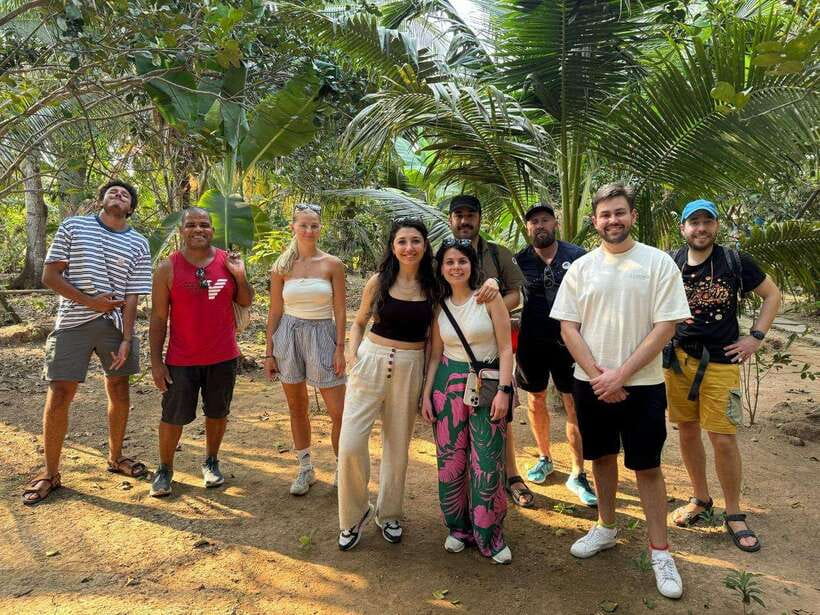
- Tra Su Forest boat time: motorboat through flooded cajuput forest, then a quieter rowing stretch with birdlife
- Cai Rang Floating Market early: a top Mekong experience with plenty of colors and movement, but limited shopping time
- Ben Tre coconut island stops: candy-making samples, fruit-tree shade lunches, and honey tea
- Chau Doc beyond the postcard: floating fish farm village and a Cham community visit
- Vietnam to Cambodia speed exit: speedboat to Phnom Penh after border formalities
Why This Mekong Delta Route Feels Different Than a Typical Day Trip
Most Mekong tours try to cram in as much river scenery as possible in one day. This one spreads it out across 4 days and 3 nights, so you’re not just rushing from boat to bus to boat again. You get a fuller sense of how the Mekong changes from wide river scenes into narrow, shaded canals—and then you switch countries and do it again with Chau Doc and Tra Su.
The other big difference is the ending. Instead of ending back in Vietnam, you leave Vietnam in the early morning and reach Phnom Penh around 1:00 PM by speedboat. That saves you one day of “travel day” planning later.
You can also read our reviews of more tours and experiences in Ho Chi Minh City

Day 1: Ho Chi Minh City to My Tho, Ben Tre Islands, and Can Tho

Your day starts with a pick-up from District 1 around 7:30 AM, then you head out to the Mekong region. First stop is Vinh Trang Pagoda, which is the kind of major landmark that helps you orient fast. Even if you’re not a temple superfan, it gives you a clear sense of where the Mekong Delta’s spiritual life fits alongside daily river commerce.
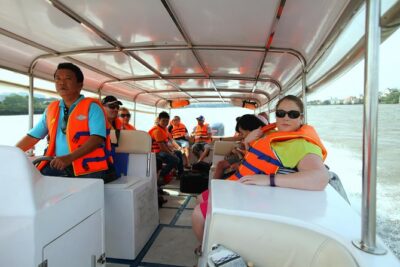
Then comes the fun part: a boat trip on the Mekong River, watching floating houses and fish farms go by. It is not a museum-style lesson. It’s the real thing, and it sets the tone for the whole itinerary: life here is practical, water-based, and constant.
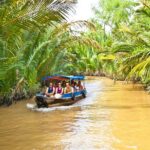
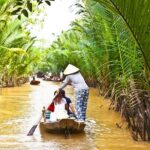
Next you switch into a smaller hand-rowed sampan to cruise the coconut-lined canals. This is the moment that usually feels most relaxing because the boats move at human speed. You can look around instead of only watching for the next hand signal from the guide.
After that you reach a coconut island in Ben Tre. You’ll learn how coconut candy is made and you get samples, which is a nice way to turn sightseeing into something you can actually taste. The tour then continues to Unicorn Island (Con Thoi Son), where you ride a motor cart and catch a performance of traditional Vietnamese folk music. You also try seasonal tropical fruits, which is exactly the kind of small local treat that makes a long day feel worth it.
Lunch is served under fruit trees with Vietnamese specialties. After eating, you have some free time on the island/village side—good for a slow stroll or a short bike ride if you feel like it.
In the afternoon, you transfer by ferry and bus to Can Tho, where you sleep overnight. Dinner is on your own. I like that setup: after a heavy day of boats, you can choose something close to your hotel rather than being dragged to a pre-set stop.
Day 2: Cai Rang Floating Market, Zen Monastery Peace, and the Ride to Chau Doc
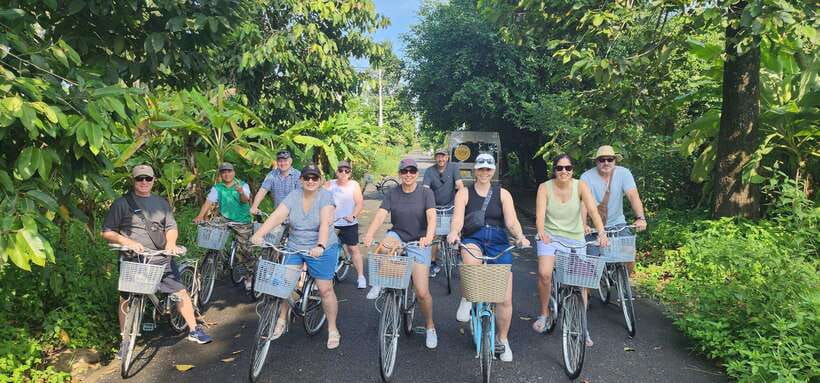
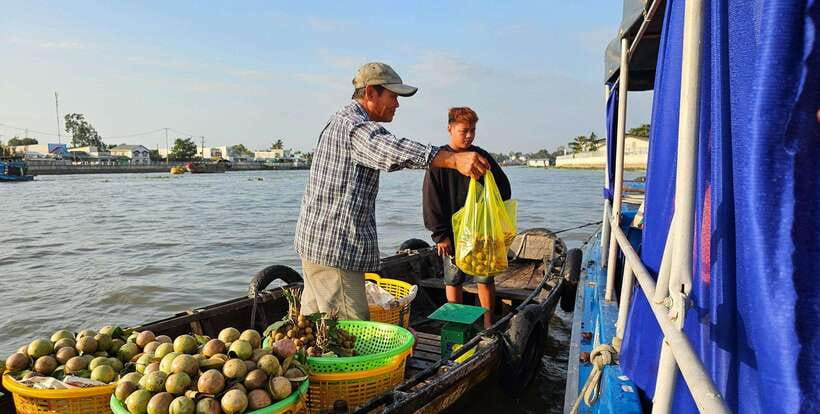
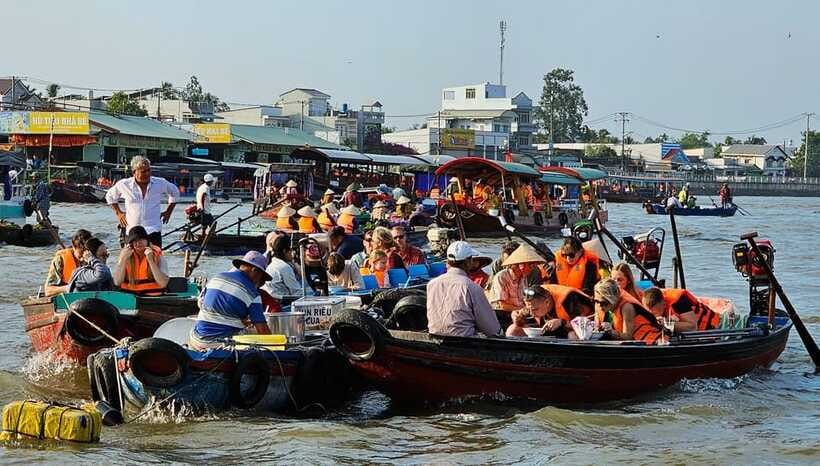
Day 2 starts early—breakfast at 6:30 AM, then you head out by motorboat to Cai Rang Floating Market, known as the largest floating market in the Mekong Delta. This is where the Mekong stops feeling like background scenery and becomes a live workplace.
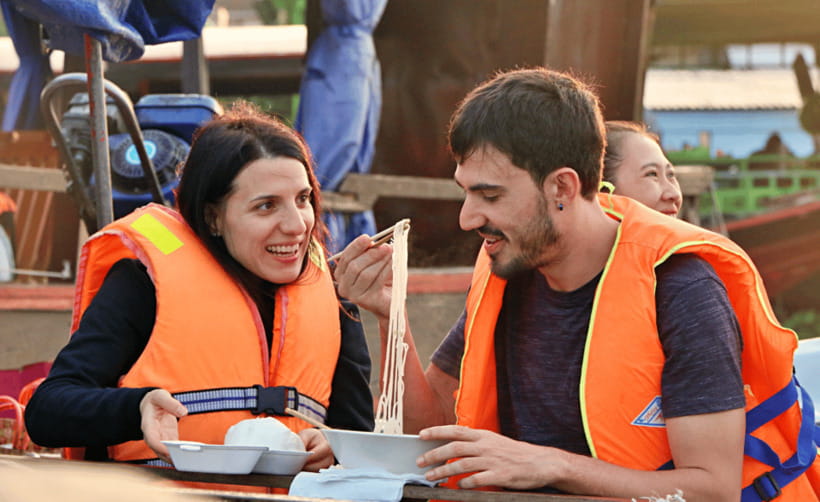
You’ll also have a rice noodle-making workshop, plus pineapple tasting on the boat. Those details matter because they turn “market photos” into a small education in how food is processed locally.
From there, the plan shifts to the city: you visit a traditional market in Can Tho and then Truc Lam Phuong Nam Zen Monastery. The monastery part is useful even if you’re just passing through. It gives you a quieter reset when the river energy gets loud.
Lunch is at My Khanh Restaurant and then you get some free time. Later in the day, you depart Can Tho for Chau Doc by local bus (the itinerary notes no guide for that transfer). You’ll sleep overnight in Chau Doc.
One practical thing to know: morning tours like this often mean you can see the market clearly, but you may not have lots of time to browse and buy. If shopping is your top priority, go in with a plan—spot what you want fast, then decide. The market moves and the schedule keeps moving.
Day 3: Floating Fish Farms, Cham Village Culture, and Tra Su Forest Birdlife
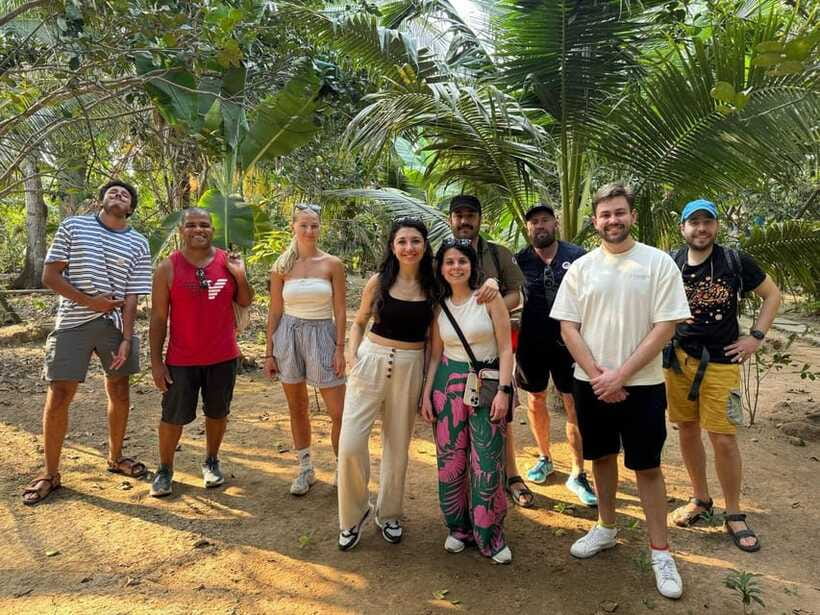
This day feels like the heart of the itinerary because it mixes three different worlds: water-based work, minority culture, and mangrove-adjacent wilderness.
First up is a boat trip to a floating fish farm village. You learn how daily life works when livelihoods are tied directly to river operations. If you like watching how people solve real problems—feeding, maintaining farms, and moving around water—this section usually delivers.
Next you visit a Cham minority village to learn about local culture and traditions, plus Islamic architecture. This is a valuable change of pace from the more general “tourist Vietnam” sights. It also explains why Chau Doc feels culturally complex compared to other parts of the delta.
Back in Chau Doc, you explore the market and then stop for lunch at a local restaurant. After lunch, you visit Ba Chua Xu Temple, also called the Lady Temple. It’s one of the most important pilgrimage sites in southern Vietnam, and it’s the kind of stop that gives you a stronger sense of devotion and community than just sightseeing.
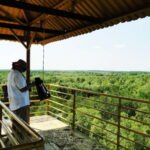
Then you shift into nature mode: travel to Tra Su cajuput (melaleuca) forest. You start with a motorboat ride through the flooded forest. This is where birdlife becomes the main character—there are over 70 bird species, including rare storks (as stated in the itinerary). Even if you don’t spot every species, the setting itself—quiet water, tall trees, the sense of protected space—makes this one of the most memorable parts.
After the motorboat stretch, you move to a peaceful rowing boat through narrow green canals. This last part is often the calmest. It’s also when you’ll want your camera ready, because the best bird moments can be quick.
You return to the hotel around 5:00 PM, and the evening is free. I like having a true break here, because by the end of day 3 you’ve been on boats most of the day.
Day 4: Vinh Xuong Border Gate and the Speedboat Into Phnom Penh
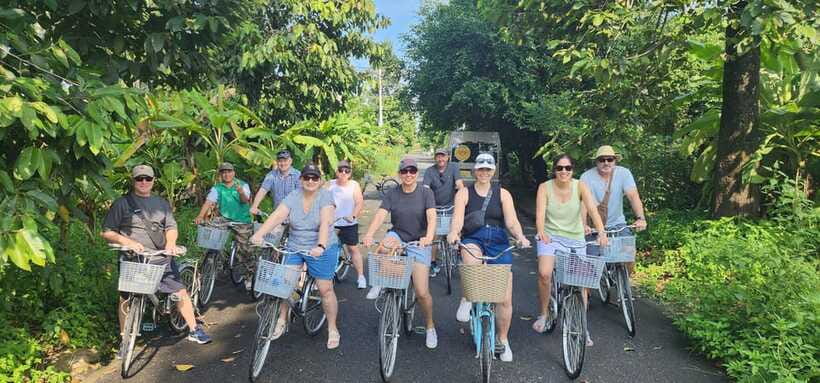
Day 4 starts early again: breakfast at the hotel, then transfer to the Vinh Xuong border gate to complete Cambodian immigration procedures. The itinerary then has you board a speedboat to Phnom Penh, arriving around 1:00 PM.
This is the smart way to structure the cross-border jump. If you tried to do it with slow boats or extra hotel nights, you’d burn time and energy. Here, the tour turns the border into a morning checkpoint and gives you an afternoon in Phnom Penh.
Keep your afternoon flexible. You’ll likely want time to handle your own transport from the arrival area, grab lunch, and settle into your Cambodian rhythm.
Price and Logistics: What $316 Buys (and What You Still Pay)
At $316 per person for a 4-day, 3-night trip, you’re paying for a lot of moving parts that are annoying to DIY.
Here’s what’s included:
- Air-conditioned bus transfer
- An English-speaking guide
- Entrance fees
- Meals: 3 breakfasts at your hotel and 3 lunches with Vietnamese food
- Boat trips as listed (including the hand-rowed canal ride), plus a motor cart ride
- Traditional Vietnamese music performance and seasonal tropical fruit tasting
- Bee-keeping visit / honey tea
- A typical Mekong house visit, plus pineapple tasting
- Hotels in Can Tho and Chau Doc
What’s not included:
- Drinks during meals and meals outside the itinerary
- Cambodia visa fee (USD 40)
- Other costs not mentioned
So where is the value? You’re not just paying for transport. You’re paying for someone to bundle together river activities, entrance tickets, and timed connections. The itinerary includes multiple boat styles (big river boat, sampan canals, floating market motorboat, Tra Su forest motorboat, then rowing boat) and that mix can be hard to replicate smoothly on your own.
One note on cost control: because dinner is mostly not included, plan for a couple of meal purchases on top of the base price. Still, for what you get, it tends to pencil out well compared with booking similar segments separately.
The One Trade-Off: Busy Timing and On-the-Clock Visits
This is a high-activity itinerary, and it runs on clock time. There are early starts, multiple transfers, and scheduled meals. That’s not a complaint—it’s the reality of seeing My Tho, Ben Tre, Can Tho, Chau Doc, Tra Su, and then Phnom Penh in only 4 days.
If you hate rushing, try to manage it in advance:
- Go into markets with a short list of what you want to buy or photograph.
- Bring water and keep your energy up; you’ll walk a bit and wait a bit.
- Use the quiet temple or monastery moments as intentional breaks.
- Treat free time as short, not as a “wander for hours” block.
You’ll still have good experiences. Just don’t expect this to feel like a slow vacation. It’s built like a well-run route.
What to Pack and How to Stay Comfortable on the Water
The itinerary makes it easy to pack correctly. Bring:
- Comfortable shoes
- Hat
- Camera
- Sunscreen
- Water
- Insect repellent
For comfort, I’d also think about lightweight clothing that dries fast. You’ll be in humid conditions, on boats, and sometimes near shaded canals where insects can be a factor.
Rules to know:
- No smoking in the vehicle
- No alcoholic drinks in the vehicle
Simple stuff, but these rules reduce friction in group travel.
Best Fit: Who Enjoys This Trip Most
This tour is built for people who like practical sightseeing and river-based daily life. It’s especially appealing if you want:
- A strong mix of boats and water villages
- One standout nature day in Tra Su
- A clean exit into Cambodia without extra planning
It is not suitable for people with mobility impairments or wheelchair users, based on the itinerary requirements and how you move through stops and on boats.
For families: one booking highlighted that the guide was especially good with children. If your kids can handle early mornings and boats, this can work better than you might think—because the days are broken into multiple activities, not one long lecture.
Should You Book This Mekong Delta With Tra Su Forest Exit to Phnom Penh?
I think you should book it if you want a tightly organized, water-heavy Vietnam-to-Cambodia route with a memorable nature stop. The combination of Cai Rang, Cham culture, and Tra Su’s cajuput forest birdlife gives you variety that goes beyond generic river photos. You also gain time by finishing in Phnom Penh at midday.
I’d skip (or at least consider alternatives) if:
- You dislike feeling rushed by schedules
- You need a slower pace with lots of unplanned free time
- You have mobility needs that make boats, transfers, and walking difficult
If that timing style works for you, this is a solid value way to see the Mekong’s many faces—and then make it into Cambodia without losing a whole extra day.
FAQ
What is the route and total time of the tour?
The tour runs for 4 days and 3 nights, moving from the Mekong Delta area through Can Tho and Chau Doc and then exiting to Phnom Penh by speedboat. You arrive in Phnom Penh around 1:00 PM on day 4.
What meals are included?
You get 3 breakfasts at your hotel and 3 lunches with Vietnamese food included. Drinks during meals and dinners are not included, so you’ll pay for meals outside the itinerary.
Is a Cambodia visa included?
No. The Cambodia visa fee is listed as not included, at USD 40.
What languages are the guide and materials offered in?
The tour includes an English-speaking guide, and it also notes Vietnamese as an available language.
How do you travel from Chau Doc to Phnom Penh?
On day 4 you transfer to the Vinh Xuong border gate for immigration procedures, then board a speedboat to Phnom Penh, arriving around 1:00 PM.
What should I bring for the trip?
Bring comfortable shoes, a hat, camera, sunscreen, water, and insect repellent. The tour also notes that smoking isn’t allowed in the vehicle and alcoholic drinks aren’t allowed in the vehicle.