REVIEW · HO CHI MINH CITY
Ho Chi Minh City: Stained Glass Art Workshop in Saigon
Book on GetYourGuide →Operated by VIVA VIETNAM · Bookable on GetYourGuide
Stained glass in Saigon turns light into art fast. This Ho Chi Minh City workshop is a hands-on, 3–3.5 hour session where you learn the basics of cutting, shaping, and assembling while making your own Vietnamese-inspired stained-glass souvenir. I love that you leave with a finished piece you can actually use or display, and I also like the relaxed studio pace that makes the whole thing feel more creative than class-like.
I’ll also be honest about one potential snag: instruction can vary. One recent booking described limited or unclear explanation and long stretches where participants felt on their own, even though the workshop is listed in English. If you need step-by-step guidance, plan to speak up early and ask questions as soon as you’re unsure.
In This Review
- Key things to know before you go
- A 3–3.5 Hour Stained Glass Session in Saigon
- What You Make: Ornament, Coaster, or Mini Panel
- Vietnamese Stained Glass: Light, Symbols, and Architecture
- Cutting, Shaping, and Assembling: The Craft Workflow
- Choosing Patterns: Traditional and Modern Saigon-Inspired Designs
- English Instruction in the Real World: How to Get the Help You Need
- Price and Value: Is $35 a Fair Deal?
- Who This Workshop Fits Best (and Who Might Not Enjoy It)
- Should You Book This Ho Chi Minh City Stained Glass Class?
- FAQ
- How long is the Ho Chi Minh City stained glass workshop?
- What is the price per person?
- What language is the instructor?
- What will I make during the workshop?
- What’s included in the price?
- What is not included?
- Is the workshop suitable for children?
- Can I get a refund if I need to cancel?
Key things to know before you go
- You make a real stained-glass piece to take home (ornament, coaster, or a mini panel).
- Beginner-friendly instruction covers cutting, shaping, and assembling stained glass basics.
- English-speaking local instructor guides you through the process and materials.
- You choose from traditional and modern patterns inspired by local architecture.
- The art connects to Vietnam’s buildings, including colonial and modern architecture symbolism.
- A calm studio setup makes it a good break from the city’s motion.
A 3–3.5 Hour Stained Glass Session in Saigon
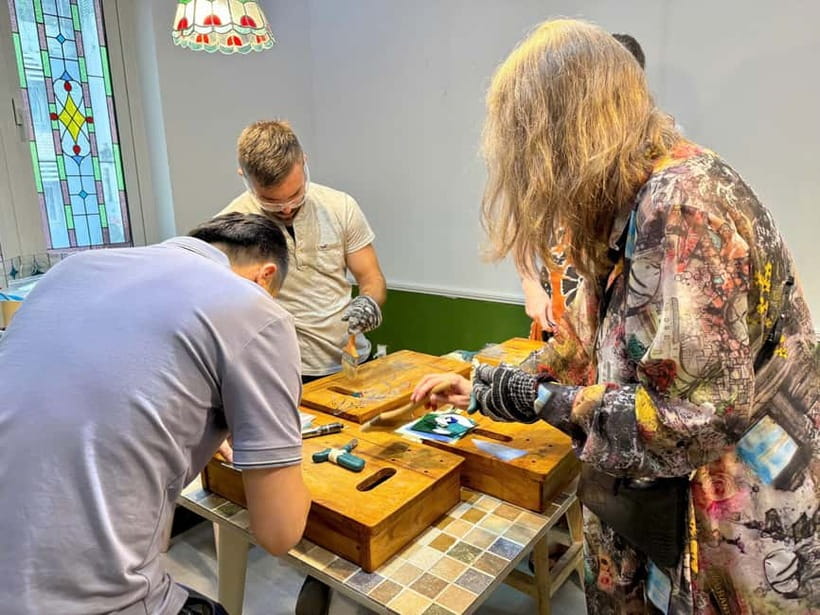
If you’re in Ho Chi Minh City and want something creative that doesn’t eat your whole day, this is a smart fit. The workshop runs about 210 minutes, so you get enough time to go from raw materials to a finished souvenir without it feeling rushed. You’re working in a peaceful studio environment, which matters in a city where you can easily end up “on” all the time.
This class also hits a sweet spot for many visitors: you don’t need any prior stained-glass experience. The workshop is designed to teach the basics clearly enough that a beginner can still produce something personal and satisfying. And unlike many souvenirs that look great but don’t mean much later, stained glass has a built-in emotional payoff—you’ll remember the process every time you see the color and light in your own space.
One practical point: the experience is focused on the making. Transportation isn’t included, so build in time to get to the studio and settle before you start cutting and assembling. And because tools and materials are part of the workshop, you can keep your packing simple.
You can also read our reviews of more city tours in Ho Chi Minh City



What You Make: Ornament, Coaster, or Mini Panel
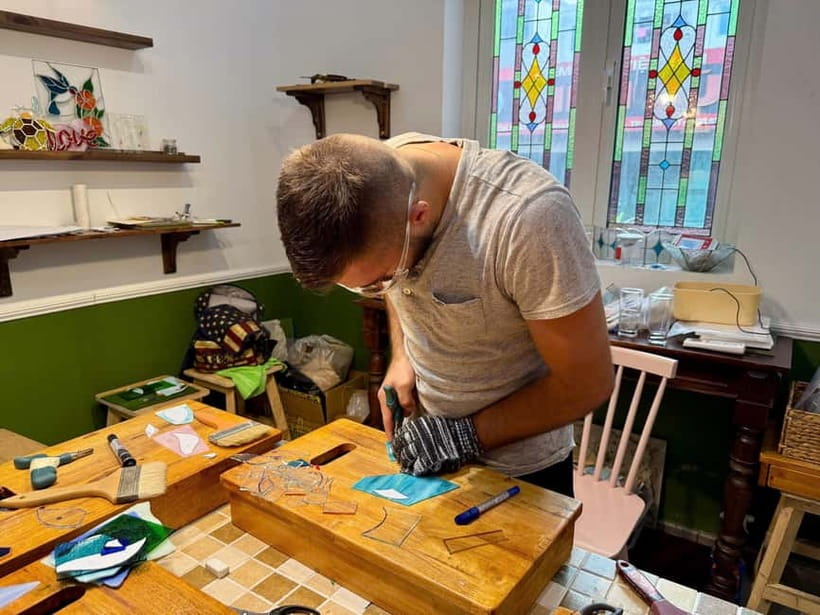
The best part of this workshop is also the most straightforward: you create your own stained-glass piece. Depending on your design and what the instructor guides you toward, you’ll end up with something you can take home, commonly described as an ornament, coaster, or mini panel.
Why this matters: stained glass is one of those crafts where the final result feels “earned.” You aren’t just picking a finished item from a shelf. You’re making decisions—pattern, layout, and assembly—then watching your choices come alive once the pieces fit together. That makes it a memorable souvenir, not just another buy-and-forget purchase.
Also, think about what you want the object to do after the class. A coaster works well as a daily reminder. An ornament is easy to pack and bring home. A mini panel can be more like a small wall-style piece. If you’re the type who likes keeping travel mementos visible, stained glass is a great choice because it changes with the light.
If you’re planning to gift something, this format is ideal. It’s personal without needing you to be a professional artist. Still, do remember one thing: the finished piece depends on the guidance you receive and how comfortable you feel with the steps. If you’re hoping for very detailed coaching at every stage, you may want to be proactive about asking questions.
Vietnamese Stained Glass: Light, Symbols, and Architecture
Stained glass has a history that travels with culture, and this workshop intentionally connects the craft to Vietnam. You’ll learn the basics of stained glass and also get stories about how stained glass found its place in Vietnamese architecture. The workshop highlights colonial and modern buildings, which gives you context beyond “just making a pretty thing.”
Here’s why that context is valuable for you: once you understand the symbolism and the visual language, your design choices make more sense. Patterns aren’t only decorative. They can carry meaning, and in architectural stained glass, those meanings often show up through color, shape, and repetition—elements you’ll be using while you design your own piece.
You’re also learning how stained glass functions as an interplay between color and light. Even if you’re not an art student, the workshop helps you see stained glass as more than “colored glass.” It’s a way to shape how spaces feel—calm, ceremonial, reflective, or story-like—depending on the design.
This is also a nice antidote to a typical sightseeing day. Instead of rushing through buildings, you’re studying them through the craft that influenced their decorative language. You’ll leave with a souvenir, but also with a clearer sense of what you’re looking at when you see stained glass in the city.
Cutting, Shaping, and Assembling: The Craft Workflow
This is a hands-on workshop, so you should expect a practical sequence: learning how to handle materials, then moving through cutting, shaping, and assembling. The workshop description emphasizes that you’ll learn how to safely handle stained glass tools and materials, which is reassuring if you’re worried about getting in over your head.
From a beginner’s perspective, stained glass can look intimidating because the results depend on precision. But the workshop is built around teaching the basics—how to work step-by-step, how the pieces come together, and what the main techniques feel like as you do them. You’ll get enough time to practice the core motions, not just watch from the sidelines.
A key value here is that you’re not guessing. The instructor supports the process using a hands-on approach, and the workshop includes all tools and materials. That means you don’t need to hunt down supplies, and you don’t need to “figure it out” yourself. Your job is creativity plus attention.
One thing to keep in mind: the experience depends on communication. One person reported that despite English being listed, explanations were hard to follow and they felt mostly left to work. Another person said the guide’s English was excellent and help was calm and ready when needed. So if you find yourself confused at any point, don’t wait—ask directly and early. In crafts like this, quick clarification saves time and prevents frustration later.
Choosing Patterns: Traditional and Modern Saigon-Inspired Designs
You’ll choose from a set of patterns, and the workshop includes both traditional and modern options inspired by Vietnamese architecture. That’s a big deal for your decision-making, because it means you don’t need to come in with a drawing or a design plan. You can pick what appeals visually and what feels meaningful to you.
I like this approach for two reasons. First, it helps you get a design that’s workable within the craft’s time frame. Second, it gives you a souvenir that feels tied to Vietnam, not generic. Even if you don’t know the full story behind every motif, your piece will still reflect local architectural influence.
Think about what you want the finished piece to communicate. Some patterns tend to look more delicate or detailed, while others can feel bolder and cleaner. If you like crisp, modern looks, you’ll likely gravitate toward contemporary designs. If you want something that feels more traditional, pick a pattern that leans into older architectural references.
And here’s the practical tip: when you’re choosing your pattern, consider how you’ll place the piece at home. Smaller panels tend to be easier to display. Ornaments are great if you want a lightweight, packable keepsake. Coasters are functional and become part of daily life, which is a nice way to keep the souvenir from being stuck in a drawer.
You can also read our reviews of more tours and experiences in Ho Chi Minh City






English Instruction in the Real World: How to Get the Help You Need
The workshop is listed with an English-speaking instructor, and that’s a major factor if your Vietnamese is limited. When instruction goes well, this kind of class is smooth: the instructor guides, the tools are ready, and the pace stays calm. One booking described the instructor’s English as excellent and credited the masters for staying calm and helping when needed, without pressure.
But there’s also a caution worth taking seriously. Another booking described communication as difficult and said participants were left alone for much of the process, with frequent reminders needed to move forward step-by-step. The final result was still described as very beautiful—so it wasn’t about talent or effort. It was about clarity and the level of hands-on support.
So what should you do? Bring a simple strategy:
- If you don’t understand a step, ask immediately.
- If you finish a step early, confirm the next instruction before moving on.
- If you want more guidance, state it early so the instructor knows you prefer a closer check-in.
This kind of workshop rewards curiosity and patience. And stained glass can be a little technical. You’ll get more out of it if you treat it like a conversation, not a silent craft.
Price and Value: Is $35 a Fair Deal?
At $35 per person, this workshop sits in the “reasonable day activity” range for Ho Chi Minh City. The real value isn’t the price alone—it’s what that price buys: an English-speaking instructor, all tools and materials, and a finished piece you take home.
Many art activities charge you for instruction but then add extra costs for supplies. Here, the supplies are included, so your budget stays predictable. You’re also paying for a guided learning experience: cutting, shaping, and assembling are the core skills. Even if your first attempt is just practice, you’re still walking away with a working piece and a clearer understanding of the craft process.
Is it a bargain? It’s priced like an accessible cultural workshop, not a premium art studio experience. That can be a good thing: you get a real creative session without luxury pricing. But it also means you should expect the class to run efficiently within the 3–3.5 hour window. If you need heavy, one-on-one tutoring, this might not feel like enough time.
Still, for most people who want a meaningful souvenir and a creative break, $35 is a solid deal—especially because stained glass souvenirs tend to last and look better over time as they catch light in different rooms.
Who This Workshop Fits Best (and Who Might Not Enjoy It)
This class is described as perfect for beginners and art lovers. If you’re the type who likes trying a craft instead of just watching, you’ll likely have a good time. The workshop also has a “relax and make something” feel, which makes it a strong option if you’ve been doing intense sightseeing and want a calm reset.
It’s also good for couples or friends who want a shared activity. Even if you each create different pieces, you’ll be learning the same craft workflow—cutting, shaping, assembling—so you can compare results when you’re done.
But there are clear limits. It’s not suitable for children under 12, and it’s also not designed for people with mobility impairments. That’s important—tool-based craft settings can have practical constraints, and this workshop isn’t marketed as accessibility-friendly.
If you’re deciding based on your own comfort level, ask yourself two questions:
- Do I want a hands-on souvenir that looks good in real life at home?
- Am I okay taking direction and asking questions if I get stuck?
If yes, you’ll likely enjoy it. If you prefer very structured, slow, highly supervised instruction, you may want to plan to communicate your needs quickly.
Should You Book This Ho Chi Minh City Stained Glass Class?
If you want a cultural souvenir that isn’t generic, I’d lean toward booking. For $35, you’re getting real instruction on how stained glass pieces come together, plus you leave with something tangible. The connection to Vietnamese architecture and the symbolism angle makes it more than a craft project; it gives your piece meaning.
My main reason to be cautious is the mixed feedback on how clear the explanation can be for some participants. That doesn’t mean the class is bad. It means you should show up ready to ask questions and stay engaged during the steps. If you do that, the odds of ending with a piece you’re proud of go way up.
Overall: book this if you like making things with your hands, want a calm break from the city, and want your souvenir to look different as the light changes.
FAQ
How long is the Ho Chi Minh City stained glass workshop?
The workshop lasts 210 minutes, which is about 3 to 3.5 hours.
What is the price per person?
The price is $35 per person.
What language is the instructor?
The workshop is taught in English by an English-speaking local instructor.
What will I make during the workshop?
You’ll create a stained glass piece to take home, such as an ornament, coaster, or a mini panel.
What’s included in the price?
It includes the English-speaking local instructor, all tools and materials, and your finished stained glass piece to take home.
What is not included?
Transportation and personal expenses are not included.
Is the workshop suitable for children?
It is not suitable for children under 12 years.
Can I get a refund if I need to cancel?
You can cancel up to 24 hours in advance for a full refund.