REVIEW · HO CHI MINH CITY
Ben Tre – Coconut Land Private One Day Guide Mekong Delta Tour Excursion
Book on Viator →Operated by VietCruise Tours · Bookable on Viator
Coconut country moves at river speed. This one-day trip from Ho Chi Minh City takes you through Ben Tre’s coconut landscapes, starting with a motorized boat ride along the Ham Luong river and continuing into hands-on village workshops. I love how the day mixes calm scenery with real daily work, from brick-making by hand to mat weaving.
I also really like the pacing: you get village walking time, plus different ways to move through orchard-garden areas like tuk-tuk and possibly bicycle. One thing to consider is the long, warm day (7 to 9 hours, with an 8:30 am start) and the fact that the experience depends on good weather.
In This Review
- Key things I’d focus on before you go
- Ben Tre Coconut Land: why this Mekong Delta day trip feels different
- From Ho Chi Minh City: how the timing and ride logistics work
- Ham Luong river cruise: coconut-lined water life from the water
- Brick-making and coconut processing: seeing how products actually happen
- Mats weaving, workshops, and “coconut country” family life
- Getting around the green village: shady paths, tuk-tuk, and orchard gardens
- Fishing villages and stilt houses: understanding how people earn a living
- Food on board: fruit, honey tea, and a proper set lunch
- Price and value: what $96.42 buys you for 7–9 hours
- Who this Ben Tre Coconut Land tour suits best
- Should you book Ben Tre Coconut Land with a private one-day guide?
- FAQ
- What time does the Ben Tre Coconut Land tour start?
- How long does the tour take?
- Is pickup included?
- What’s included in the price?
- Are alcoholic beverages included?
- Is this a private tour?
- Can I cancel for a full refund?
Key things I’d focus on before you go
- Ham Luong river cruise: a low-effort way to see how water life connects to coconut-lined banks.
- Brick-making by hand: watch construction work done the slow, human way.
- Coconut processing + mat weaving: you’ll see how raw materials become everyday products.
- Fishing villages and stilt houses: a direct look at how people earn a living around the Mekong Delta.
- Fruit and honey tea lunch: jackfruit, longan, pineapple, pomelo, and more show up in the meal plan.
- English guide Huong: one guest highlighted Huong as a big reason the whole day felt smooth and memorable.
Ben Tre Coconut Land: why this Mekong Delta day trip feels different
Ben Tre is the kind of place where you understand the Mekong Delta through habits, not just photos. The main theme is coconut—how the crop shapes work, crafts, and village life—while the river and canals provide the backdrop and the transportation route.
What makes this outing appealing for a day trip is the variety packed into one flow. You’re not just passing by scenic spots; you’re moving between small-scale factories, family workshops, and local neighborhoods where daily routines are still the center of attention.
And because it’s private, you can usually settle into the rhythm without feeling herded. Your guide is English-speaking, and the tour is built around a guided route with the main transportation handled for you.
You can also read our reviews of more guided tours in Ho Chi Minh City
From Ho Chi Minh City: how the timing and ride logistics work
The tour starts at 8:30 am and runs about 7 to 9 hours total, returning you back to your starting point. Pickup is offered, and the day includes air-conditioned vehicle transport plus local transfers like tuk-tuk inside the village areas.
That matters because the Mekong Delta day trips can feel exhausting if you’re doing everything yourself. Here, the schedule is designed so you’re not coordinating tickets and routes while trying to enjoy the day.
You’ll also want to factor in Vietnam’s morning-to-afternoon heat. This is a long stretch outside between stops, and it’s a good idea to wear breathable clothes, bring sun protection, and plan for a day that’s more work-and-scene than museum-and-stroll.
Ham Luong river cruise: coconut-lined water life from the water
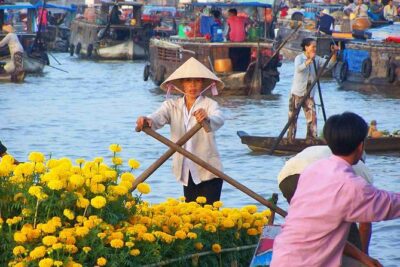
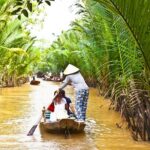
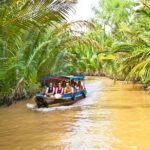
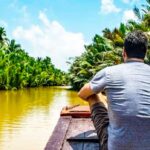
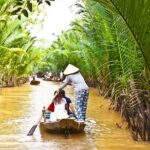
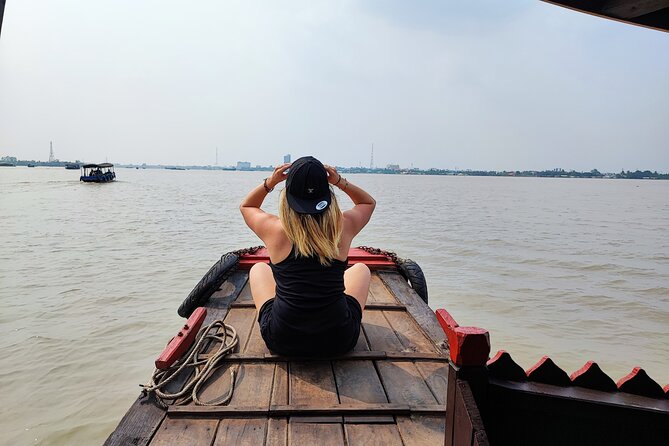
The first “wow” moment is the motorized boat ride along the Ham Luong river, a branch of the Mekong. From the water, the coconut country makes more sense. You see how the river shapes agriculture and how the shoreline becomes a working corridor instead of a postcard backdrop.
During this boat segment, you’ll get a guided look at local fishing and water transfer activity—two everyday economic pillars in this region. The river isn’t just scenery; it’s transportation, livelihood, and the reason stilt houses and trading routes make sense here.
One practical upside: you’re not sweating through a long hike right away. A boat segment helps break up the day while still delivering that Mekong Delta feeling of being surrounded by water.
Brick-making and coconut processing: seeing how products actually happen
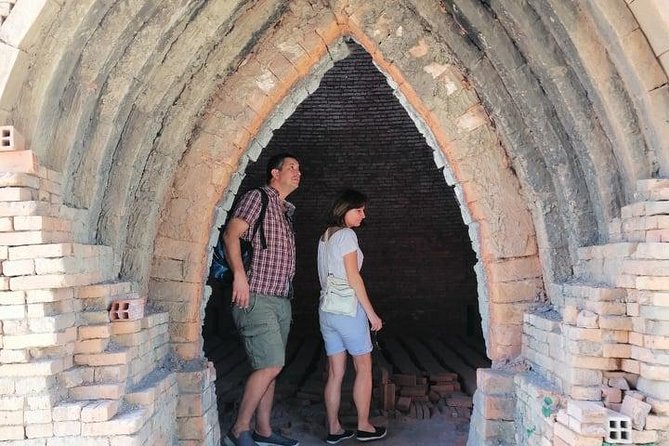
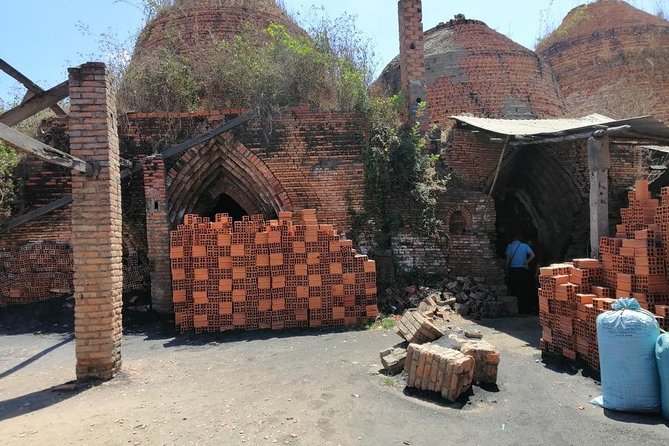
A big part of this experience is work you can watch with your own eyes. The day includes visiting local factories, including a coconut processing workshop, and it also stops at a brick-making area where bricks are made by hand.
Watching brick-making can be surprisingly instructive. You get a clearer sense of how construction materials connect to local industry and how labor-intensive building work still is in many places. It also helps you see why the Delta’s river networks matter beyond food—shipping and supply chains run through these same water systems.
The coconut processing side adds another layer. Instead of just seeing trees and harvests, you see how coconuts are turned into useful products. That matters because Ben Tre’s identity isn’t only agricultural—it’s also manufacturing and craft.
If you like tours where you learn something practical, this is the part that tends to stick. It’s not complicated; it’s just real.
Mats weaving, workshops, and “coconut country” family life
In the village area, you’ll walk to a family workshop focused on traditional mats. This is one of those stops where you can feel the difference between watching a process and reading about it.
You’ll also get welcomed with fruit and tea, which makes the workshop stop feel human rather than strictly transactional. The tone is usually calmer when you’re offered something local while you observe how a household supports itself.
Another neat detail in the route is the segment that points out a technique described as using natural scissors to help coconuts become smaller. It’s the kind of small local practice that only makes sense in context—when you see it tied to ongoing care, pruning, and growing conditions rather than as a random trick.
The takeaway is that you’re seeing how families adapt their tools and routines to the crop, and how those routines travel from farm to workshop to finished product.
You can also read our reviews of more private tours in Ho Chi Minh City




Getting around the green village: shady paths, tuk-tuk, and orchard gardens
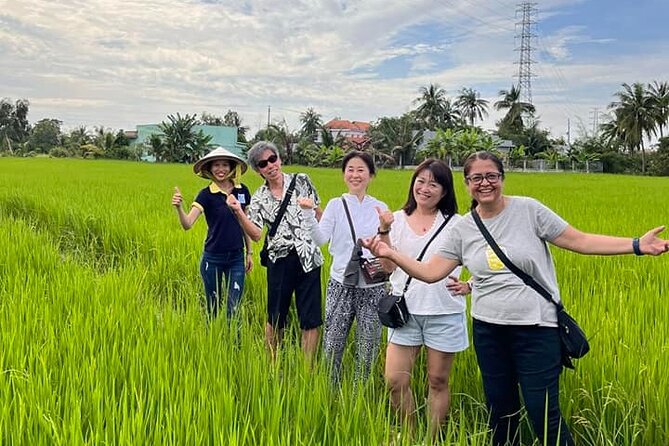
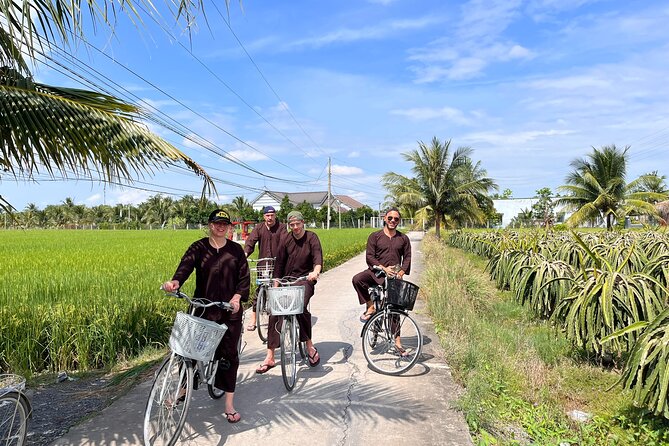
After the factory and workshop moments, the tour shifts into movement through the village. You’ll ride a motor cart along shady coconut paths, then continue through areas where you can explore on foot and also via tuk-tuk, with an option of bicycle mentioned for moving through local towns and green village lanes.
This part of the day is great because it’s flexible. Instead of a hard schedule of only one activity, you get short “in-between” stretches that feel like you’re traveling through neighborhoods rather than moving between checkpoints.
Orchard gardens are part of the story here. You’ll pass through green spaces that explain where the fruit comes from and why the Delta’s farming rhythm is so tied to the land and waterways.
A realistic heads-up: walking is part of the experience, and you’ll likely be on uneven surfaces in village areas. Comfortable shoes help more than you’d think.
Fishing villages and stilt houses: understanding how people earn a living
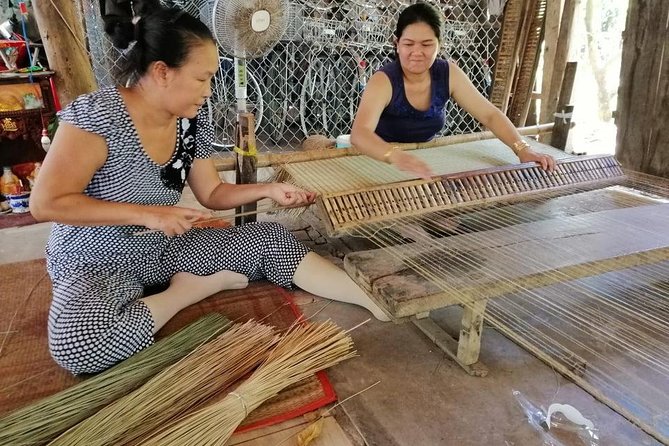
One of the most memorable moments in Ben Tre is when you see typical fishing villages and stilt houses. The Mekong Delta isn’t just a geography lesson; it’s a living system where housing, work, and water all overlap.
This stop is useful because it connects the earlier pieces. Once you’ve seen how water transfering and fishing work connect to daily life, the stilt houses stop looking like a photo concept. You start understanding why people build this way and why the river is a constant presence.
If you’re the type of traveler who likes culture that’s practical—how people actually make money and organize home life—this is the section that usually delivers.
You’ll also likely spend enough time here to notice everyday patterns, not just take quick photos. That’s the difference between “passing through” and actually getting the feel of the place.
Food on board: fruit, honey tea, and a proper set lunch
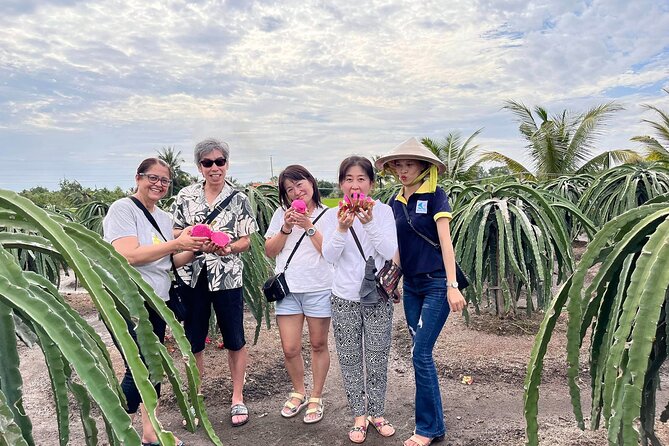
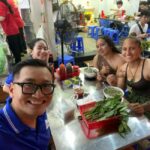
Food is built into the day, and it isn’t only one big meal. You’ll enjoy traditional foods and fruit such as jack fruit, longan, pineapple, pomelo, plus honey tea. The lunch is described as a traditional set menu.
I like this approach because it turns the tour theme into something you can taste. Coconut country isn’t only about coconuts as a tree; it’s about the flavors and local produce that show up in everyday food choices.
The set lunch style also helps the schedule. You’re not hunting for places to eat, and you don’t end up burning time deciding. Bottled water is included, which is one less thing you’ll have to worry about during the day.
If you have dietary restrictions, the data doesn’t specify options. So it’s worth checking with the provider when you book, especially since the menu is described as a set.
Price and value: what $96.42 buys you for 7–9 hours
At $96.42 per person, this is priced like a real day tour with transport and guided stops, not a budget ride with short activities. The best value part is how much is included for that price.
You get lunch, bottled water, an English-speaking guide, an air-conditioned vehicle, and the key transport pieces: the motorized boat plus sampan, and tuk-tuk transfers in the village. Alcoholic beverages are not included, but most day trips in this category handle drinks separately.
For me, the value comes from two things:
1) You’re paying for coordination across a wide area, so you spend more time actually doing the experience.
2) You’re paying for guided context, which matters in Ben Tre—because the meaning is in the work processes and how the river ties them together.
If you’re traveling with friends or family, the private format can also feel like a bargain compared with hiring separate guides for different stops. And the satisfaction score is strong: it’s rated 4.9 with 44 reviews and a 100% recommended rate based on the summary you provided.
Who this Ben Tre Coconut Land tour suits best
This tour fits best if you want a Mekong Delta day trip that’s hands-on and grounded. It’s a good match for:
- First-timers to Ben Tre who want coconut-centered context rather than generic sightseeing
- Travelers who enjoy watching local craft and production, like mat weaving and brick-making
- People who like a structured day but still want some walking and village wandering
It might be less ideal if you prefer mostly quiet, scenic boat rides with minimal activity. This day includes multiple work-focused stops, plus walking and time outdoors.
Also, because it’s private and English-guided, it’s a solid option if you want answers on the spot instead of guessing from signs.
Should you book Ben Tre Coconut Land with a private one-day guide?
I’d book it if you want a Mekong Delta day trip that explains how Ben Tre works, not just what it looks like. The mix of Ham Luong river boat time, coconut processing, mat weaving, and stilt-house village views gives you a fuller picture of life in the Delta.
Skip it (or adjust expectations) if you’re sensitive to heat and long days, since you’re out for most of the morning through afternoon. Also remember it requires good weather, so have a little flexibility in your schedule.
If you’re aiming for an authentic Ben Tre experience—coconut country, river life, and real village work—this private tour format is a smart way to do it.
FAQ
What time does the Ben Tre Coconut Land tour start?
The tour starts at 8:30 am.
How long does the tour take?
The duration is listed as about 7 to 9 hours.
Is pickup included?
Pickup is offered, and the activity ends back at the meeting point.
What’s included in the price?
Included are lunch, bottled water, an air-conditioned vehicle, an English-speaking tour guide, motorized boat and sampan, and tuk-tuk transfer in the village.
Are alcoholic beverages included?
No. Alcoholic beverages are not included.
Is this a private tour?
Yes. It’s a private tour/activity, so only your group participates.
Can I cancel for a full refund?
Yes. You can cancel up to 24 hours in advance for a full refund. If you cancel within 24 hours, the amount paid is not refunded.