REVIEW · HO CHI MINH CITY
Farm-To-Table Healthy Cooking Class in Ho Chi Minh City
Book on Viator →Operated by Western Asian Travel Service · Bookable on Viator
Farm-to-table, but with real farm work. This Ho Chi Minh City cooking class blends a walk through an organic farm with hands-on lessons from a master chef, and you end up making four healthy dishes you actually eat. I love how it turns ingredients into skills fast, especially when you’re picking herbs and vegetables on-site. I also love the one-dish-at-a-time teaching style with tastings that keep you on track. One thing to consider: it’s a longer half-day commitment with hotel pickup and a drop-off, so it’s not the best choice if you want a lot of city hopping that day.
You’ll start with convenient pickup (for selected hotels), then head out with the group to the Ho Chi Minh Agricultural Villages and Ho Chi Minh Cooking School area. The group stays small, capped at 15 people, which helps when you have questions. You’ll go home with a certificate and recipes, plus the confidence to repeat the dishes later.
In This Review
- Key highlights to know before you go
- Getting out of Ho Chi Minh City: the pickup-to-farm rhythm
- At the Ho Chi Minh Agricultural Villages: what the farm visit is really for
- Harvest time: the basket, the scissors, and the farmer mindset
- Four healthy dishes, taught one step at a time (and tasted immediately)
- Lunch, certificate, and the recipes you’ll actually use
- Price and value: is $67 reasonable for this format?
- Who this class is best for (and who should think twice)
- Small group, open-air setting: practical tips that help you enjoy more
- Should you book the Ho Chi Minh City farm-to-table cooking class?
- FAQ
- How long is the cooking class?
- Do I get hotel pickup and drop-off?
- What time does the class start?
- How many dishes will I cook?
- Do I eat what I cook?
- Are meals and refreshments included?
- Is alcohol included?
- What is the group size limit?
- What is the cancellation policy?
Key highlights to know before you go
- Organic farm tour with animals and produce in view (cows, buffalo, chickens, ducks, plus herbs, vegetables, spices, fish, and prawns)
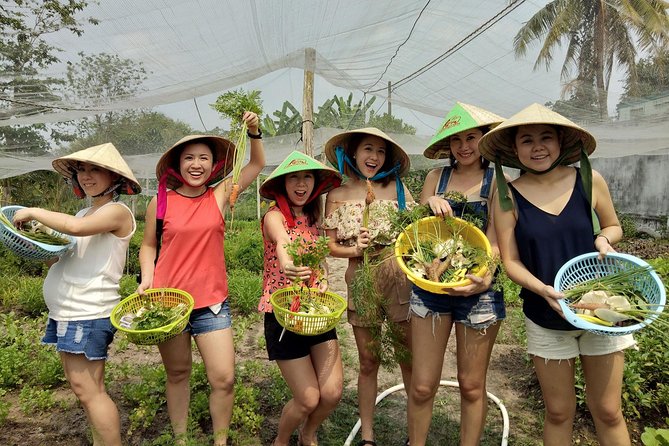
- Hands-on harvest time with a basket and scissors, so you pick what you’ll cook
- Open-air cooking lessons focused on simple, healthy techniques
- Four dishes, taught step-by-step, with tastings after each one
- Lunch and light refreshments included, with fruit break time built in
- Small group size with a maximum of 15 people
Getting out of Ho Chi Minh City: the pickup-to-farm rhythm
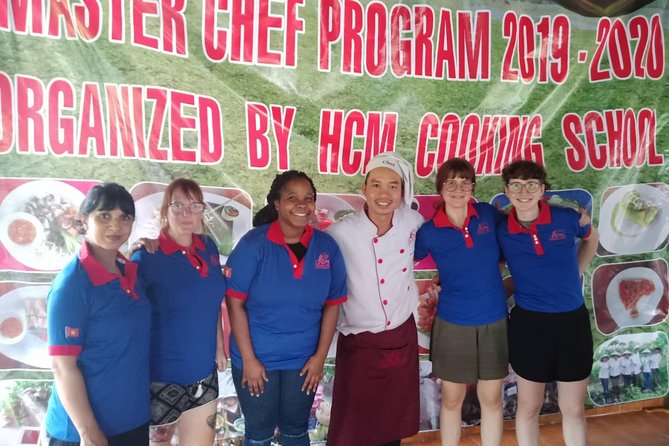
This class is built for one goal: get you away from the traffic and into real food territory quickly. You can choose a morning, afternoon, or evening session, and one start time listed is 7:30am. Either way, the day is paced like a mini retreat—transport, farm walk, cooking, then a return drop-off.
Pickup is offered from selected hotels, and the ride out is part of the experience’s comfort level. In at least one A/C van story, the group rolled out on time, which matters when you’re planning your day around a fixed schedule.
You’re paying $67 per person, and I think the value comes from more than the cooking. You’re not just learning recipes in a classroom. You’re getting a farm tour, harvesting ingredients, and then turning that haul into a full meal with step-by-step coaching.
You can also read our reviews of more city tours in Ho Chi Minh City


At the Ho Chi Minh Agricultural Villages: what the farm visit is really for
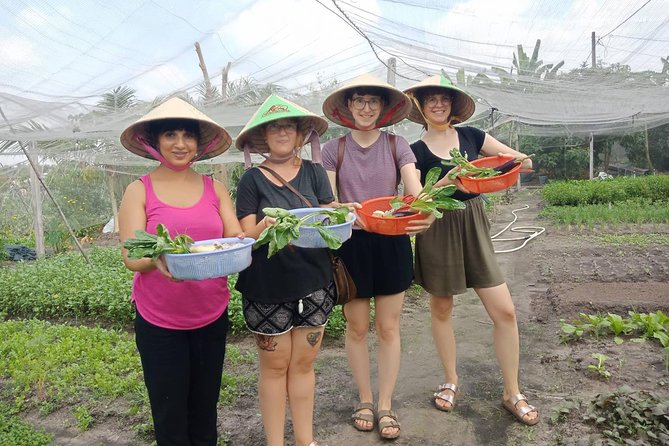
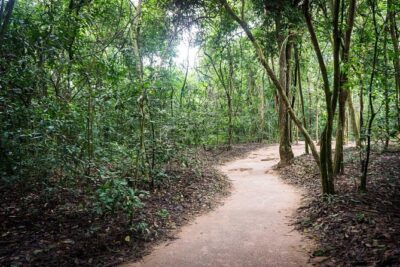
The farm tour is the backbone of this experience. You’ll arrive at the Ho Chi Minh Agricultural Villages and Ho Chi Minh Cooking School area, then follow a master chef through the organic surroundings. The walk is designed to connect “what you see” to “what you’ll cook,” not just to look at plants.
You should expect animals and layers of food production: you’ll see cows, buffalo, chickens, and ducks, and you’ll also spot plenty of herbs, vegetables, and spices. The tour includes fish and prawns too, which is useful in a cooking class where proteins and seafood sauces often show up in Vietnamese meals.
One of the best parts here is the herb talk. You can get explanations that go beyond flavor—some classes include discussion of medicinal uses of herbs and vegetables as part of the farm learning. That’s not just trivia. It helps you understand why certain ingredients are used and how to pair them.
If you want a quick takeaway, it’s this: you’re learning how to notice quality in produce. When you later cook with fresh greens and aromatics you gathered, you’re more likely to remember what “good” looks like.
Harvest time: the basket, the scissors, and the farmer mindset
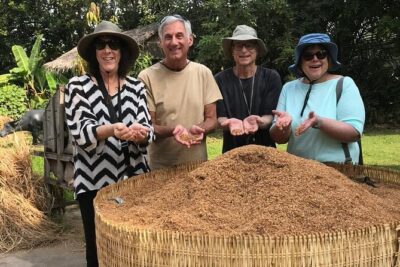
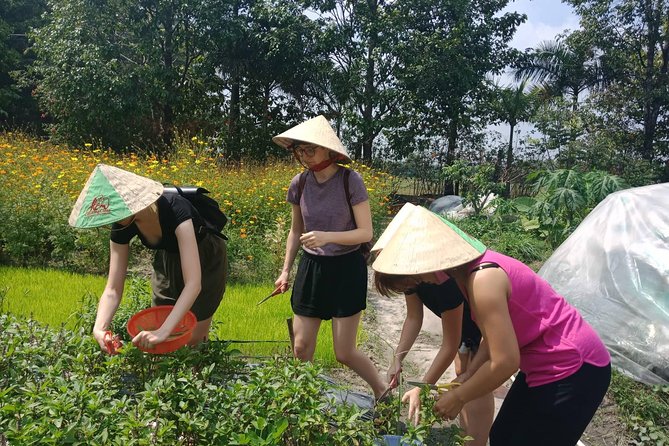
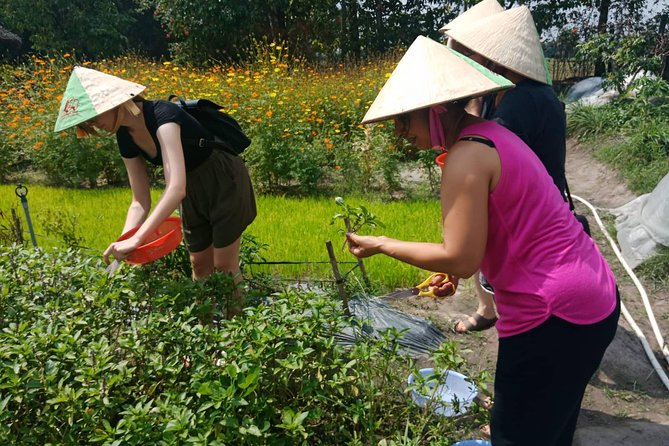
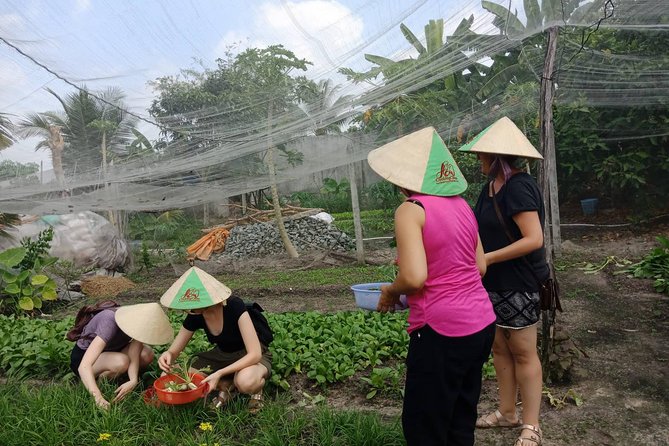
Then comes the part that makes the class feel different from typical cooking tours: you’re given a basket and scissors, and you collect vegetables to use later. This is one of those moments where the pace changes from watching to doing.
Even if you’re not a confident home cook, you’ll have a simple job. Walk through the garden, cut what you’re guided to collect, and keep it for your upcoming dishes. That small act helps everything click when you start cooking, because you already understand what the ingredient is and why it matters.
Before you hit the stove, you also get downtime with fruit and a hammock. That break isn’t just for comfort—it gives you time to reset after walking outside and before you focus on four different dishes.
I like that the class includes this rhythm: activity, short rest, then instruction. It keeps the day from feeling like nonstop work.
Four healthy dishes, taught one step at a time (and tasted immediately)
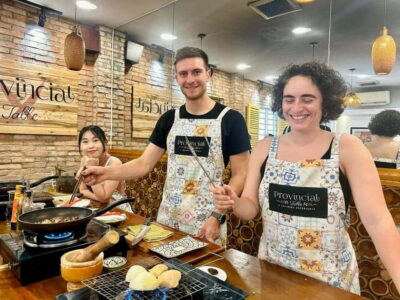
The cooking portion happens in an open-air setting. The master chef teaches you simple, healthy techniques while working through one dish at a time. After each dish is prepared, you’ll taste what you made, which is how good classes prevent common mistakes.
This step-by-step structure matters. Vietnamese cooking can sound intimidating when you’re reading a recipe at home—lots of herbs, sauces, and quick timing. Here, you’re learning the logic in the moment. The tastings also help you adjust during the lesson, not after you’ve eaten dinner somewhere else.
The class goal is healthy cooking, and that shows up in the ingredient choices and technique emphasis: fresh herbs and vegetables are the star ingredients, and the cooking approach centers on keeping flavors bright without making the meal heavy. The farm harvest ties directly into this—your picked greens and aromatics aren’t props.
You’ll prepare four dishes total. The exact dishes can vary by session, but the structure stays consistent: each dish gets instruction, preparation, and tasting before moving on.
Lunch, certificate, and the recipes you’ll actually use
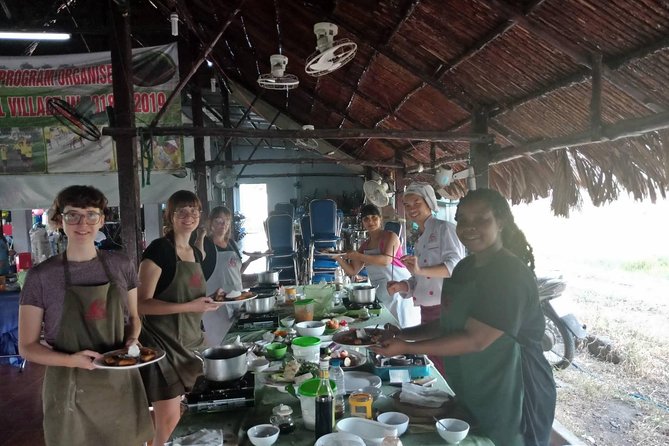
You’ll eat lunch as part of the class, and there are light refreshments too. Since you’re making the meal yourself, this isn’t a situation where you cook things and then leave hungry. It’s a full loop: learn → cook → taste → eat.
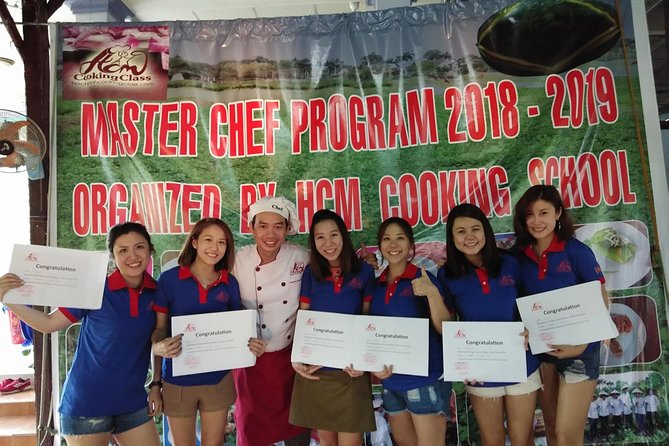
By the end, you receive a certificate and recipes to take home. I’m a fan of this because recipes give you a way to repeat the dishes without guessing measurements every time. And because you’ve already tasted your own version during the class, you’ll have a clearer sense of what the final dish should taste like.
If you’re the type who worries you’ll forget everything once you’re back in your hotel room, the recipes solve most of that. The certificate is nice, but the real value is having notes you can follow later.
You can also read our reviews of more cooking classes in Ho Chi Minh City


Price and value: is $67 reasonable for this format?
At $67 per person, you’re paying for three things at once: transportation support (pickup and drop-off for selected hotels), a guided farm experience, and guided hands-on cooking with equipment included. You’re also getting lunch and light refreshments, plus recipes and a certificate.
I think the value is strongest if you want more than a demo. A lot of cooking experiences in big cities are “watch and snack.” This one is structured around active prep—especially the harvest with scissors—and then it walks you through four dishes with tastings.
Alcohol isn’t included, but alcoholic drinks are available to purchase. If you’re trying to keep the trip cost predictable, plan around non-alcoholic beverages and food included in the price.
Also note the practical timing. The activity runs about 6 hours 30 minutes, though the cooking class itself may be described as around 5 hours once you’re on site. Either way, you’re trading half a day for something practical you can recreate, not just a photo stop.
Who this class is best for (and who should think twice)
This class is a great fit for:
- People who like hands-on learning and want a clear process, not just a list of ingredients
- Anyone curious about where Vietnamese herbs and vegetables come from, not only how they taste
- Food lovers who enjoy “one dish at a time” teaching with immediate feedback
- Families or mixed-age groups, since the structure is supportive and the group size is limited to 15 people (you’re not lost in a crowd)
It may be less ideal if:
- You want a light, flexible activity with minimal schedule pressure
- You’re only in the city for very short stays and can’t spare the half-day block
If you’re asking whether it’s worth doing alongside classic city sights, my take is yes—if you plan your day so the class is the main event. Treat it like your food day, not a filler.
Small group, open-air setting: practical tips that help you enjoy more
This experience keeps the group to a maximum of 15 people. That small size tends to make instruction feel more personal and makes questions easier to ask. You’re also less likely to feel rushed when learning knife work or sauce timing.
The cooking happens in an open-air environment, so dress for outdoor time. Comfortable shoes help for the farm walk. Bring basic sun protection if you burn easily, and be ready for a humid climate.
Language can be another factor in cooking classes. The guides here have a track record of speaking good English, and you can usually ask a lot of questions during the day—especially when you’re harvesting and when the chef explains what’s going into each dish.
Finally, come with an open mind. Vietnamese cooking often relies on fresh herbs and quick cooking techniques. Even if you’re a beginner, the class is designed to teach you the “why” behind choices so you can repeat it without stress.
Should you book the Ho Chi Minh City farm-to-table cooking class?
If you want a Vietnamese cooking class that connects food to farming, I’d book it. The organic farm tour, the chance to pick vegetables with scissors, and the four-dish, step-by-step cooking plan make this more practical than a typical cooking show. The certificate and recipes help you keep the momentum after the class ends.
Choose it when you care about health-forward cooking and fresh ingredients. You’ll also appreciate the small group size if you hate feeling lost in a big crowd.
Skip it if your schedule is too tight or you’d rather spend your limited time in Ho Chi Minh City just wandering markets and historical sights. This is a food-first day trip, and it works best when you commit to it.
FAQ
How long is the cooking class?
The experience is listed at about 6 hours 30 minutes. The cooking itself is described as around 5 hours once you’re at the school and farm.
Do I get hotel pickup and drop-off?
Hotel pickup and drop-off are included for selected hotels. You’ll meet at the hotel pickup point arranged for your reservation.
What time does the class start?
Classes can be scheduled in the morning, afternoon, or evening. A start time of 7:30am is listed.
How many dishes will I cook?
You’ll prepare four dishes during the class.
Do I eat what I cook?
Yes. Lunch is included, and you also taste what you prepare after each dish.
Are meals and refreshments included?
Lunch and light refreshments are included.
Is alcohol included?
Alcoholic drinks are not included, but they are available to purchase.
What is the group size limit?
The tour/activity has a maximum of 15 travelers.
What is the cancellation policy?
You can cancel for a full refund up to 24 hours before the experience’s start time. If you cancel less than 24 hours before, the amount paid is not refunded.