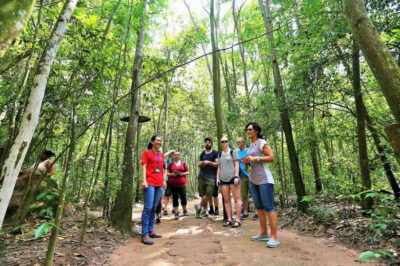
Chinatown turns walking into a story trail. This 3-hour free walking tour in Ho Chi Minh City’s Chợ Lớn area uses quiet alleyways and major community landmarks to explain how Chinese migrants shaped Saigon. I love how guide Thang keeps the history human and easy to follow, and I love the stop choices, from Hao Sy Phuong Alley to Ba Thiên Hậu Temple. You’ll mostly be walking through Chinatown alleyways, and you get an English-speaking guide who can answer questions about Vietnamese history and politics without turning it into a lecture.
One thing to plan for: you only have about 30 minutes at each stop, so the pace stays brisk. Also, this tour works on a tips-only model, so if you prefer strict set pricing, or you dislike budgeting for a guide, it may not feel like your style.
In This Review
- Key highlights you’ll feel right away
- Where you start: Saigon Skydeck to Chợ Lớn’s back streets
- Why this Chinatown walk is worth your morning: tips-only, not ticket-first
- Stop 1: Hao Sy Phuong Alley and the feel of life in a narrow passage
- Stop 2: Hội Quán Nghĩa An, where old Chinese community architecture meets modern Saigon
- Stop 3: Ba Thiên Hậu Temple and Cantonese details you can actually notice
- Stop 4: Chợ Lớn, where culture and commerce still share the same streets
- Guide Thang’s role: history and politics, delivered in bite-size pieces
- Timing, walking comfort, and what to bring
- Price check: what you actually pay and where your money goes
- Who should book this Chinatown walking tour
- Should you book this Ho Chi Minh City Chinatown Hidden Treasures walk?
- FAQ
- How much does the Ho Chi Minh City: Chinatown Hidden Treasures free walking tour cost?
- How long is the tour?
- What time does the tour start?
- Where do I meet the guide?
- Where does the tour end?
- What stops are included on the walking route?
- Are there entrance fees for the included stops?
- Is coffee or snacks included?
- How large is the group?
- Is free cancellation available?
Key highlights you’ll feel right away
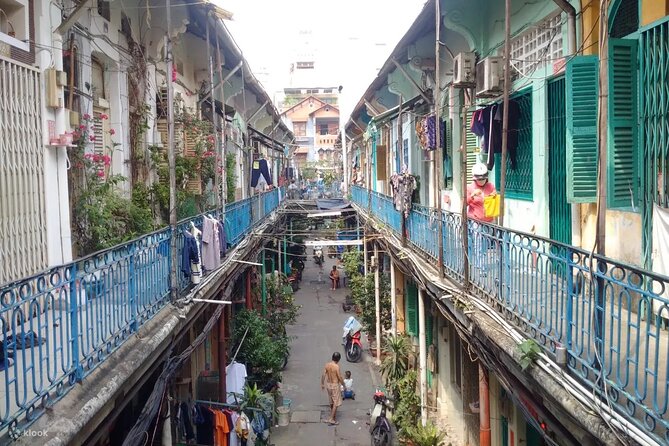
- Hao Sy Phuong Alley: a narrow lane in Saigon’s Chinatown with history spanning 100+ years
- Hội Quán Nghĩa An (Nghia An Hoi Quan): pre-19th-century roots, rebuilt over time, with an archaic look
- Ba Thien Hau Temple (Ba Thiên Hậu): late-19th-century Cantonese architecture and yin-yang tiled roof details
- Chợ Lớn: a major Chinese commercial center where culture, religion, and architecture still matter in daily life
- Thang’s storytelling: clear links from the early Chinese era to Saigon’s present-day street life
- Small-group cap: up to 30 people keeps questions and pacing manageable
Where you start: Saigon Skydeck to Chợ Lớn’s back streets
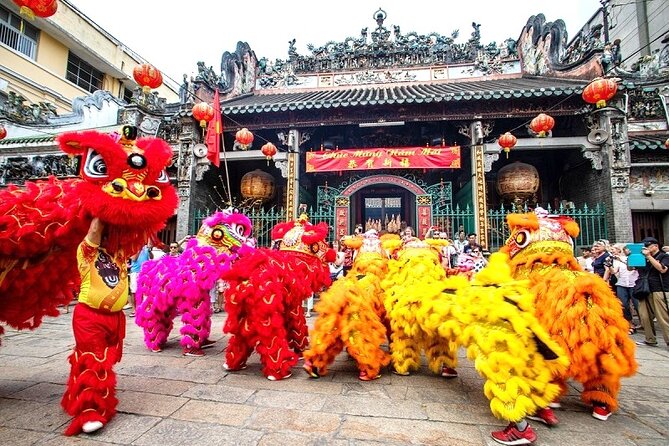
The meeting point is Saigon Skydeck, 36 Hồ Tùng Mậu, in Quận 1 (Bến Nghé). The start time is 9:00 am, and you finish back at the same meeting point, which makes it easy to plug into the rest of your day. Because it’s near public transportation, you can usually get there without wrestling with complicated logistics.
This matters because the tour is built around walking small streets, not hopping from one major monument to the next. A good start point also means fewer wasted minutes in the wrong place, and you can settle into the neighborhood rhythm fast.
Group size is capped at 30, so you’re not stuck behind a wall of people. That helps when you want to pause, take photos, and still hear the guide’s explanation.
You can also read our reviews of more walking tours in Ho Chi Minh City



Why this Chinatown walk is worth your morning: tips-only, not ticket-first
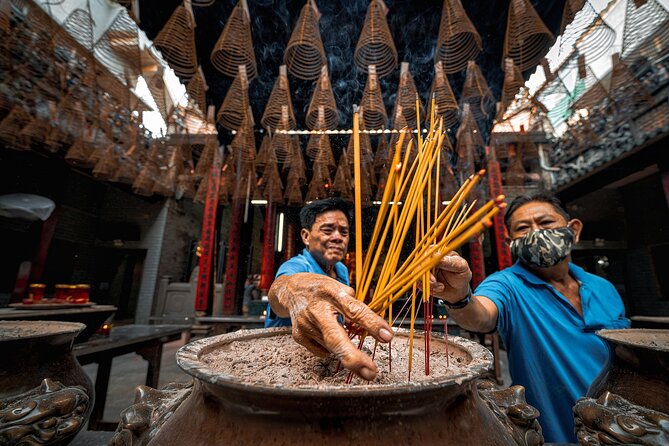
This one is priced very low on paper ($0.71 per person), and the real model is tips-only. In the included details, there’s a suggested extra tip of 15–25 USD per person. So think of the purchase as your booking entry, and think of your tip budget as the actual cost of the experience.
I like tips-only tours when the guide is doing real interpretation work, and here the guide focus is clearly on English-speaking context and storytelling. You’ll be paying for the translation of street signs, architectural clues, and the meaning behind what you’re seeing. If you want the kind of sightseeing where you leave knowing why these buildings and alleys exist, tips-only often gives you better value than fixed-price “see it, move on” tours.
The tradeoff is obvious: you’re responsible for your tip decision at the end. If you’d rather know a total price upfront, you might feel a little uneasy. But the suggested range is there to keep things simple.
Stop 1: Hao Sy Phuong Alley and the feel of life in a narrow passage

Your first stop is Hao Sy Phuong Alley (Hao Si Phuong Alley), in the heart of Saigon’s Chinatown. The key idea here is scale: this is a narrow passageway, and it works like a time capsule for everyday community life. The alley has a history spanning 100+ years, which instantly changes how you look at a place that might otherwise seem like just another lane.
What I like about starting here is that it trains your eyes. You notice how people orient themselves in tight spaces—where the activity clusters, how the neighborhood keeps working, and how the past can stay physically present even when the city around it keeps changing.
A possible drawback: if you’re expecting big, dramatic photo spots, an alley can feel subtle at first. Give it those first minutes to set your frame of mind. After that, the small details start to tell bigger stories.
Stop 2: Hội Quán Nghĩa An, where old Chinese community architecture meets modern Saigon
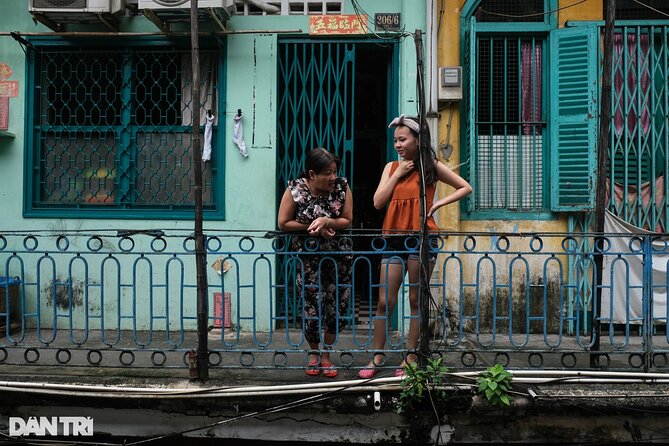
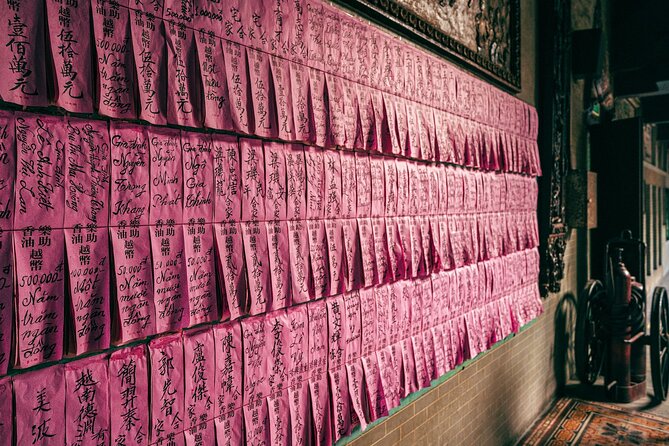
Next up is Hội Quán Nghĩa An (Nghia An Hoi Quan). This is a traditional assembly hall associated with the Chinese community, and the structure has roots before the 19th century. It also went through a few reconstructions over time, so what you see now has that layered, older-school look sitting beside modern buildings.
This stop is a great example of why a guided walking tour beats a quick self-guided wander. Without context, you might treat it like just another temple façade. With context, it becomes a sign of community organization—where people gathered for shared identity, mutual help, and cultural continuity.
You’ll likely spend around 30 minutes here, and that’s enough time to absorb both the architecture and the social meaning behind it. One watch-out: reconstruction history is the kind of detail that feels “invisible” if you’re not listening. So keep your focus during the explanation, especially if you want to walk away with real understanding instead of just photos.
Stop 3: Ba Thiên Hậu Temple and Cantonese details you can actually notice
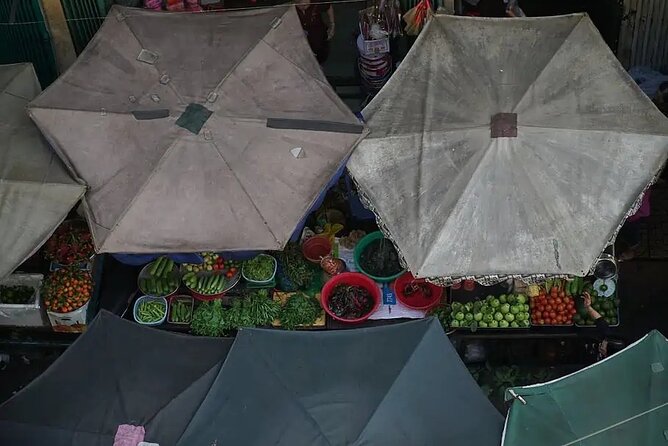
Ba Thien Hau Temple is one of the tour’s strongest anchors. It’s described as a unique Chinese-style architectural heritage built in the late 19th century by the Cantonese community in Saigon. The temple is in the heart of the city, which makes it even more striking: you’re seeing a deeply cultural landmark right in the middle of contemporary urban life.
The biggest visual clue mentioned is the yin-yang tiled roof design. That’s the kind of feature you can point out with confidence once the guide shows you what to look for. And once you notice one detail, you start spotting more: roof patterns, the feeling of craftsmanship, and the way the building expresses belief through form.
One practical note: temple interiors and surroundings can vary by time of day, so your best approach is to be respectful and flexible. If you’re someone who likes quiet sightseeing, this is a stop where you can slow your pace inside your head even if you still have limited time on the schedule.
You can also read our reviews of more city tours in Ho Chi Minh City





Stop 4: Chợ Lớn, where culture and commerce still share the same streets
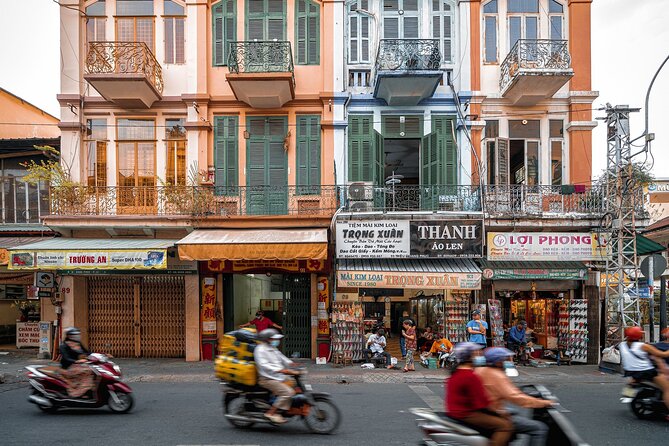
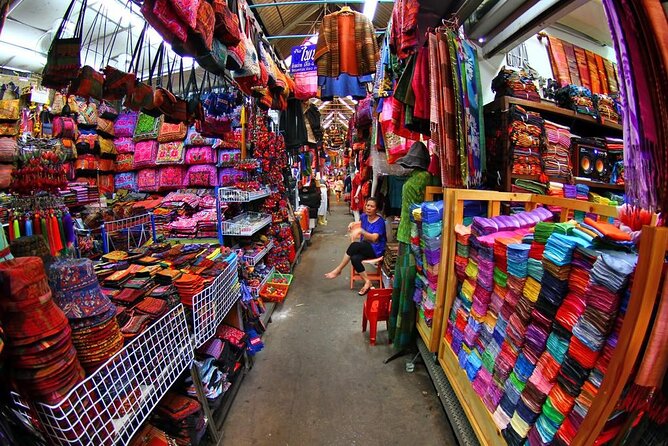
The final major stop is Chợ Lớn, Ho Chi Minh City’s important commercial center for the Chinese community. The tour description highlights that the area still preserves values of culture, religion, and architecture dating back thousands of years.
In real terms, Chợ Lớn is where these ideas stop being museum-like and start being functional. You’re not just observing architecture; you’re walking through a living district where the community’s identity shows up in how the streets feel, what people do there, and how buildings serve both practical and cultural purposes.
This stop is listed for about 1 hour, which is longer than the temple and hall stops. That extra time matters because you need room to absorb the street-level texture—shops, movement, and the overall district mood. It’s also the part of the tour where your photos will multiply fastest, because you’ll likely want to capture street scenes, not just architectural details.
Guide Thang’s role: history and politics, delivered in bite-size pieces
A big reason this tour earns top marks is the guide’s ability to explain connections. In the feedback, Thang is repeatedly praised for storytelling that links the early Chinese era to Vietnam’s broader history and even modern Vietnamese politics. That sounds heavy on paper, but the reviews describe it as digestible and entertaining—so you don’t feel trapped in a textbook.
I also like that the tour doesn’t ignore your comfort. One review notes that there was a bus ride experience that was clean, and another mentions time taken for a coffee break. The official tour description doesn’t list a vehicle or food as included, so treat that as a bonus element rather than a promise. Either way, it’s a sign the tour can flex to keep the walking manageable.
If you’re the type who loves asking questions—about why a building looks the way it does, or why a community hall matters—this tour’s format supports it. The small group cap helps too.
Timing, walking comfort, and what to bring
This is about 3 hours (approx.), starting at 9:00 am. That early start helps with heat and gives you a full neighborhood “orientation sweep” before your afternoon gets busy. Still, it’s a walking tour, and you’ll spend that time outdoors in a city district.
What I’d bring:
- Comfortable shoes for uneven sidewalks and tight alleys
- Sun protection (cap and sunscreen) since you’ll be outside most of the time
- Water, even though snacks aren’t included
Coffee and/or tea are not included, and snacks are not included either. Still, the tour may include a coffee break at some point, so plan to buy what you want rather than expecting it.
If you hate crowds, keep in mind the group can be up to 30. It’s not huge, but it’s also not a private stroll. Pace yourself. If you get tired, ask the guide to slow down for a minute—this kind of tour works best when you can stay present.
Price check: what you actually pay and where your money goes
On paper, it’s $0.71 per person. In practice, the experience is powered by tips-only. The suggested extra tip is 15–25 USD per person, and that’s the figure I’d base your budget on if you want to judge value fairly.
Here’s how I see the value:
- You’re paying for English interpretation of specific heritage sites, not just for direction
- The stop list is structured around community architecture (alley, assembly hall, temple) plus Chợ Lớn district context
- The guide’s ability to connect history and politics into clear street-level meaning is where the value lives
So if your goal is to see Chinatown without getting context, you might feel “underwhelmed” once you realize it’s not a ticketed attraction hop. If your goal is to leave with real understanding of why these sites matter, then the tips-based model can be a smart bargain.
Who should book this Chinatown walking tour
You’ll likely love this tour if you:
- Want an English-guided look at Chinatown culture in Ho Chi Minh City
- Like architecture and want to know what details mean, like the yin-yang tiled roof
- Enjoy history and politics when they’re explained in a street-friendly way
- Prefer walking tours where you can ask questions and adjust the pace
You might skip it if you:
- Want heavy, museum-style exhibits or long time inside major landmarks
- Strongly prefer fully fixed pricing with no tip expectation
- Get impatient with slower, interpretive stops like alleys and community halls
Should you book this Ho Chi Minh City Chinatown Hidden Treasures walk?
I’d book it if you’re spending more than a day in Quận 1 and you want a fast, high-impact way to understand Chợ Lớn’s Chinese heritage through real streets. The stop selection makes sense: you start with a 100+ year alley, move to an assembly hall tied to pre-19th-century roots, then hit a late-19th-century Cantonese temple with obvious design cues, and end with the district’s living commercial character.
One final tip from a practical standpoint: plan your day for 3 hours on foot, and bring a tip budget in mind from the start. If you do that, this tour feels like one of the most efficient ways to turn Chinatown from a background scene into something you genuinely understand.
FAQ
How much does the Ho Chi Minh City: Chinatown Hidden Treasures free walking tour cost?
The listed price is $0.71 per person. The walking tour works on a tips-only basis, and there is a suggested extra tip of 15–25 USD per person.
How long is the tour?
It lasts about 3 hours (approx.).
What time does the tour start?
The start time is 9:00 am.
Where do I meet the guide?
You meet at Saigon Skydeck, 36 Hồ Tùng Mậu, Bến Nghé, Quận 1, Thành phố Hồ Chí Minh, Vietnam.
Where does the tour end?
The tour ends back at the meeting point.
What stops are included on the walking route?
The tour includes Hao Sy Phuong, Hội Quán Nghĩa An, Ba Thien Hau Temple, and Chợ Lớn.
Are there entrance fees for the included stops?
The stops are listed with admission ticket free.
Is coffee or snacks included?
No. Coffee and/or tea and snacks are not included.
How large is the group?
The tour has a maximum of 30 travelers.
Is free cancellation available?
Yes. You can cancel for a full refund up to 24 hours in advance of the experience’s start time.