REVIEW · HO CHI MINH CITY
Private Cu Chi Tunnels & Mekong Delta: Full-Day Guided Tour
Book on GetYourGuide →Operated by Elegant Travel · Bookable on GetYourGuide
War tunnels and river life in one day. I like that this private format stitches together the stark reality of the Cu Chi Tunnels with the day-to-day rhythm of the Mekong Delta, all with hotel pickup and an English-speaking guide. You’re up early, you’re moving all day, and you get the kind of context that makes each stop make sense fast.
My second favorite part is the food-and-culture break that isn’t just an afterthought. The Mekong side includes fruit orchards, coconut groves, and a native bee-keeping farm where you can sip honey tea and snack on seasonal fruit and fresh coconut candy, with southern Vietnamese folk music in the mix.
One consideration: this tour is not for everyone. The tunnels involve crawling and tight spaces, and the operator notes it’s not suitable for people with mobility impairments, plus the day includes a lot of driving.
In This Review
- Key things I’d zero in on
- Cu Chi Tunnels: More Than a Quick Photo Stop
- The Road to My Tho and the Upper Mekong Cruise
- Rowboat Canals: Fruit Orchards and Coconut Groves at Water Level
- The Bee Keeping Farm Stop: Honey Tea, Fruit, and Folk Music
- Lunch, Timing, and the Reality of an Early Start
- Price and Value: Why $169 Can Make Sense
- What to Bring (So Your Day Stays Comfortable)
- Who This Tour Fits Best (and Who Should Skip)
- Should You Book This Private Cu Chi and Mekong Day?
- FAQ
- How long is the private Cu Chi Tunnels and Mekong Delta tour?
- Where does pickup happen?
- What language is the guide?
- What’s included in the price?
- What activities are part of the day?
- Is the tour suitable for people with mobility impairments?
- What should I bring?
- What time will I be back in Ho Chi Minh City?
- What’s the cancellation policy?
Key things I’d zero in on
- Early Cu Chi timing so you can see the tunnels before they get crowded
- Tunnel education via a documentary film, then a chance to explore the web of underground passages
- Upper Mekong cruise through islands named Dragon, Unicorn, Phoenix, and Turtle
- Rowboat on small waterways where you actually feel how the delta runs on waterways
- Native bee-keeping farm with honey tea, seasonal fruit, coconut candy, and folk music
- Private guided pacing with English explanations and hotel-to-hotel convenience
Cu Chi Tunnels: More Than a Quick Photo Stop
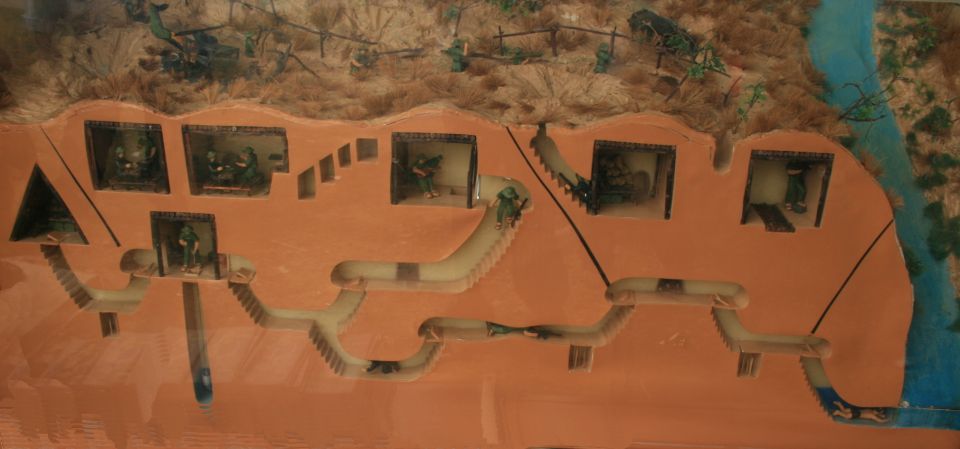
Your day starts with an early pickup from your Ho Chi Minh City hotel. The drive is about 60 km, and it’s the right kind of early—enough that the tunnels feel less like a stampede and more like a serious, human-scale experience.
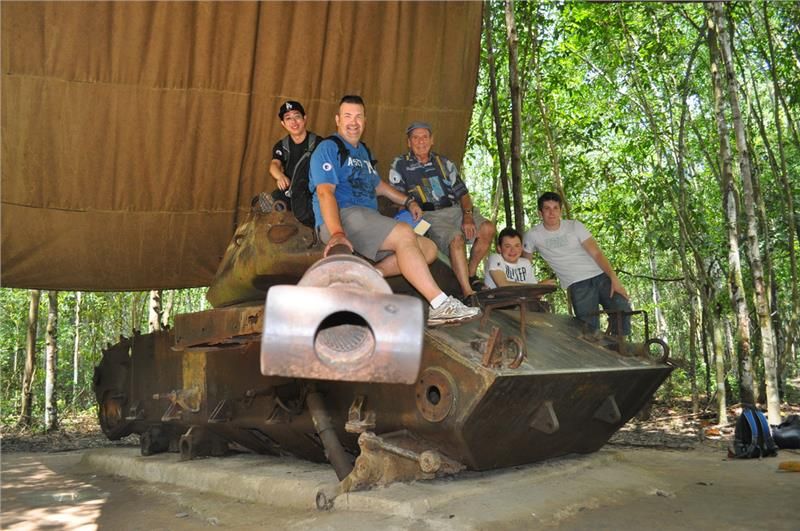
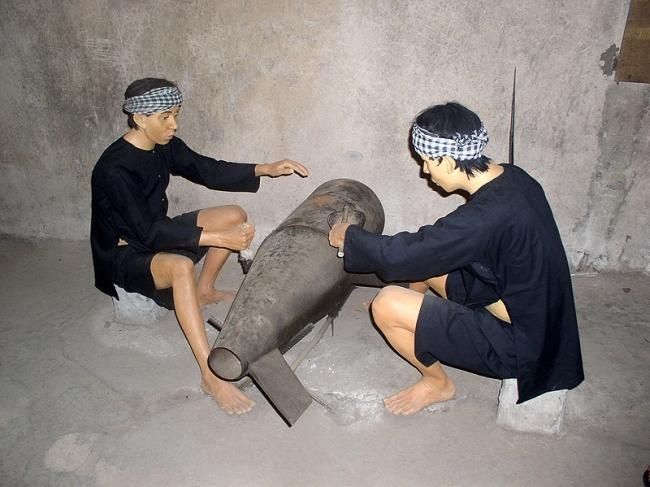
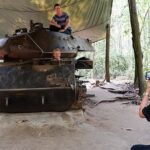
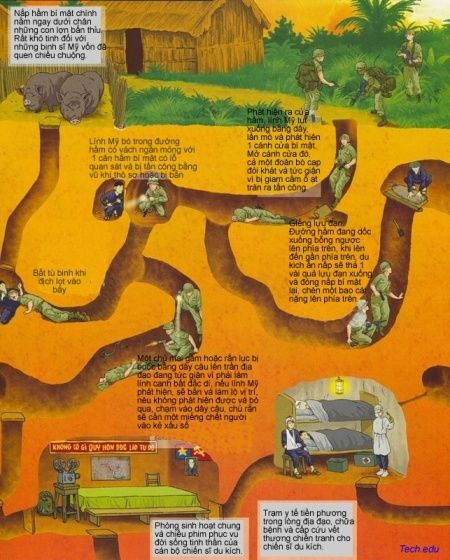
At Cu Chi, you’ll first watch a documentary film. It sets the stage for how Vietnamese resistance fighters adapted to jungle war conditions and what daily survival looked like underground. Then the explanations go hands-on, covering how locals made bamboo traps and used rice-paper as part of life and operations.
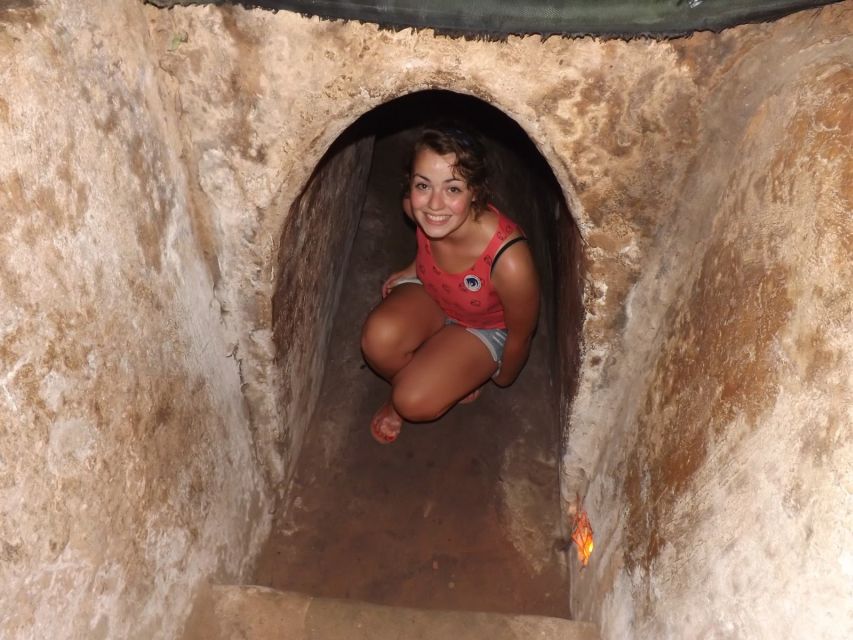
After that, you get the chance to explore the tunnels yourself. Expect narrow, low, and enclosed areas where you have to slow down and think about your footing. This isn’t a stroll. If you’re claustrophobic or you hate feeling cramped, you’ll want to take that seriously before you book. Comfortable shoes matter because your body will be doing more work than you expect.
Also, bring your camera—but don’t treat this like a pure sightseeing checklist. The tunnels tell a story best when you let your guide’s context land first. A good English-speaking guide can help you notice details you’d otherwise miss, like how hidden the entrances and connections can be.
You can also read our reviews of more guided tours in Ho Chi Minh City

The Road to My Tho and the Upper Mekong Cruise
After Cu Chi, you head toward My Tho, in the Mekong Delta region. This is where the day shifts gears on purpose: from underground war engineering to the river-world that keeps agriculture going above ground.
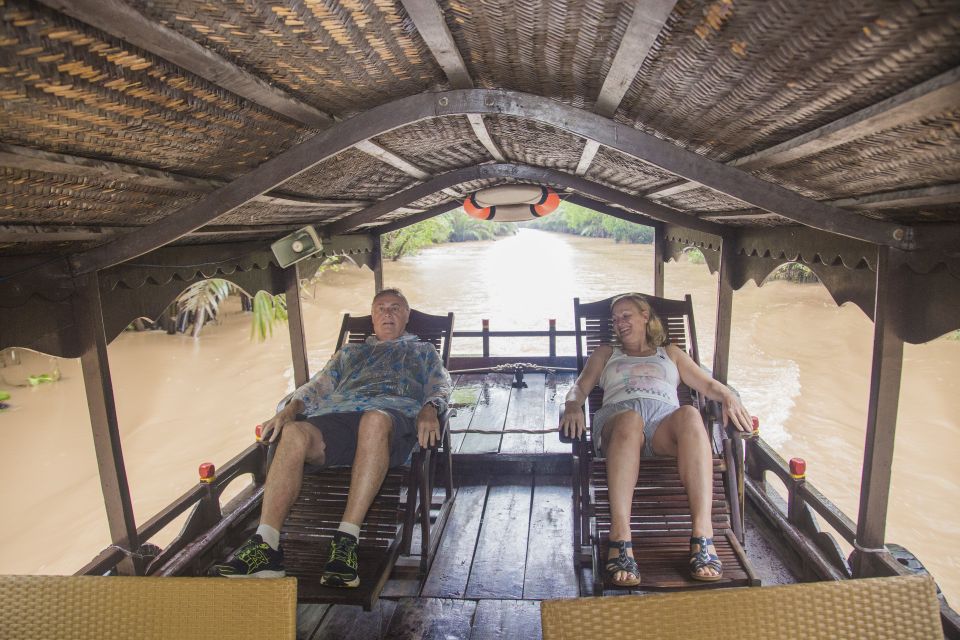
You’ll cruise along the upper Mekong by boat. This stretch is scenic in a practical way—it shows how islands and waterways shape daily life. One detail I love here is the island naming: Dragon, Unicorn, Phoenix, and Turtle, tied to Buddhist writings. It gives the landscape a story, not just a view.
As you float along, you’ll get chances to observe normal river activities. That matters because the Mekong Delta isn’t only about pretty scenes. It’s about movement: people, goods, and food flowing through a network of waterways. Even from the boat, you can start to understand why homes, orchards, and transport all seem to arrange themselves around the water.
If you like photos, the cruise gives you lots of clean sightlines. If you like learning, your guide’s job is to connect the geography to how people live—how the river supports farming, how islands function, and what daily routines look like when water is the main highway.
Rowboat Canals: Fruit Orchards and Coconut Groves at Water Level
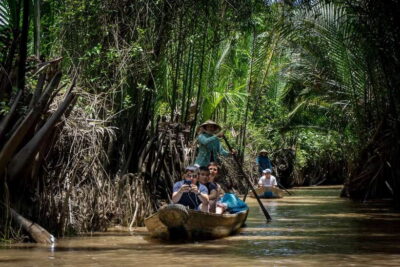
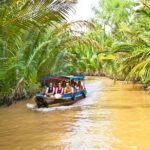
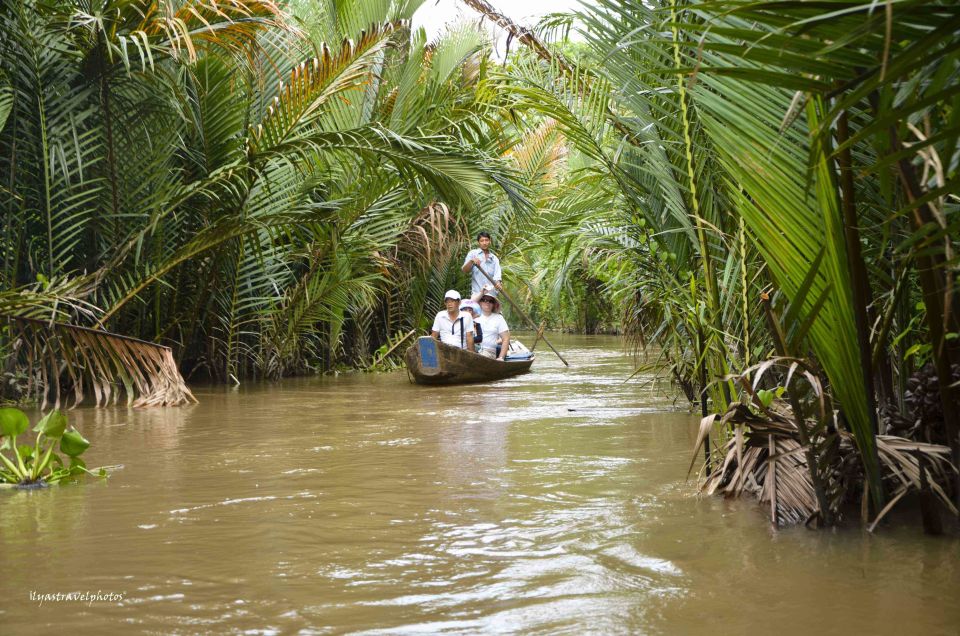
Next comes the small waterways portion. You’ll take a rowboat trip along narrow canals where larger vehicles can’t go. This part changes your perspective fast. Instead of looking at the delta from a big boat, you see it at water level—close to banks, gardens, and the edges where land meets water.
This is also where you’ll better appreciate the delta’s agricultural richness. The plan includes stops and views tied to fruit orchards and coconut groves, plus the daily work that supports them. Even if you don’t know the names of every fruit tree, you’ll recognize the pattern: farming here is not separate from the river. It is the river’s business model.
You’ll likely feel the weather more during the canal portion—sun, heat, and humidity can hit harder when you’re not getting wind from a bigger boat. That’s why the simple packing list items really matter: sunglasses and a sun hat aren’t optional if you want comfort. And keep an eye on your phone or camera because splashes and humidity can be an issue.
The rowing trip also tends to be relaxing compared to Cu Chi’s intensity. It’s a different rhythm: slower, smaller, more human-scale. You’re less focused on history now and more focused on observing everyday life.
The Bee Keeping Farm Stop: Honey Tea, Fruit, and Folk Music
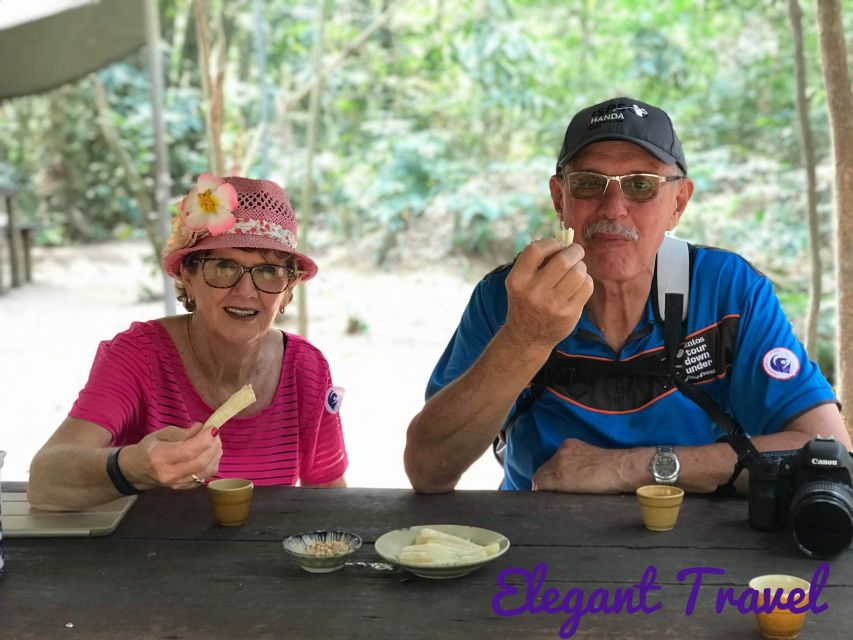
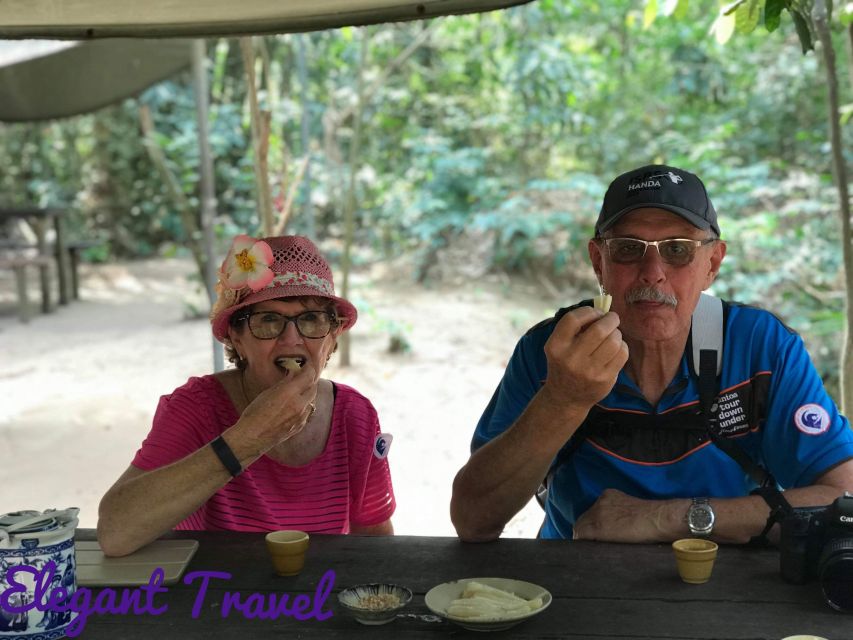
This is one of the more memorable breaks in the day because it feels local in a tangible way. You’ll visit a native bee-keeping farm, then enjoy honey tea and seasonal fruit. The snacks don’t stop there: fresh coconut candy is included too.
What makes this stop valuable is that it links a food experience to a place. Honey and coconut candy aren’t just treats—they’re outcomes of local agriculture and small-scale production. It’s the kind of moment that helps you remember the delta as something you can taste, not just something you passed through.
Southern Vietnamese folk music is also part of the program here. If music matters to you, I’d treat it like a bonus rather than a guarantee. Programs can vary day to day depending on timing and setup.
One more practical thought: stops like this sometimes involve product displays. If you’re not interested in buying, you can still enjoy the tasting and atmosphere without getting pulled into every pitch. The best move is to decide ahead of time what you’ll pay for—if anything—and focus your attention on the tea, fruit, and how the farm works.
Lunch, Timing, and the Reality of an Early Start
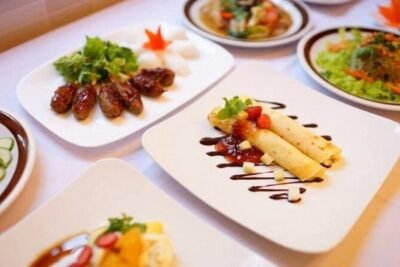
This is a full-day tour, and the schedule is built to fit a lot into one day. Transport and lunch are included, and you’ll also have a snack. Bottled water is provided in reasonable supply.
Because Cu Chi is early and the Mekong part includes multiple boat experiences, you should expect the day to feel packed. You might not want to skip breakfast at home. In a long day like this, eating earlier helps you avoid that mid-morning slump before things pick up again with lunch and fruit stops.
You’ll also get dropped back in Ho Chi Minh City around 18:00. That’s late enough that you’ll want a simple dinner plan afterward—something close to your hotel, or a short walk and an easy meal.
If you’re the type who likes a slow, leisurely itinerary, this may feel like a lot. But if you’re limited on time—say you only have one full day in the city—this “two worlds in one” structure is exactly why the tour exists.
You can also read our reviews of more private tours in Ho Chi Minh City



Price and Value: Why $169 Can Make Sense
At $169 per person, this isn’t a cheap throw-together excursion. But private tours like this can be good value when you’re paying for the whole package: English-speaking guide, transportation, entrance fees, lunch, a snack, and both kinds of water time (cruise plus rowboat).
What you’re really buying is time and reduced stress. You don’t have to coordinate rides between Cu Chi and the Mekong on your own. You also don’t have to figure out what you’re looking at once you get there. In a place with deep context like Cu Chi, that interpretation is worth real money.
There’s also the private-group comfort angle. Your guide can adjust pacing depending on what you care about—war details, delta agriculture, or just getting good photos without feeling rushed. People often call the day well-organized, and the structure does seem designed to keep things flowing without huge dead periods.
That said, it’s still a long day. If you’re sensitive to early starts or you strongly dislike cramped spaces, the value won’t matter. This is a “yes” tour for active travelers who want a dense, guided day.
What to Bring (So Your Day Stays Comfortable)
The basics are straightforward, and you’ll use them:
- Comfortable shoes (you’ll want grip for uneven and enclosed tunnel areas)
- Sunglasses
- Sun hat
- Camera
- Sunscreen
Add one smart habit: keep your items easy to access. You’ll be on and off boats, moving between sites, and spending time outdoors. If your day turns into a juggling act, you’ll waste energy you could spend enjoying the scenery and explanations.
And if tunnels are part of your comfort equation, plan your clothing and footwear with that in mind. Loose layers and a sun-protective hat can help both the tunnels and the Mekong heat.
Who This Tour Fits Best (and Who Should Skip)
This tour is ideal if you want two of Vietnam’s big contrasts in one day: resistance-era history and the river-based life of the delta. It also suits you if you like guided context and want door-to-door convenience from Ho Chi Minh City.
It’s less ideal if:
- You have mobility challenges (the operator says it’s not suitable for people with mobility impairments)
- You dislike tight, enclosed spaces (Cu Chi involves crawling/exploring underground)
- You want a slow, unhurried day with lots of free time
One more note: you may encounter other transport components depending on the route day and local arrangements. For example, some versions include a horse-cart segment mentioned in connection with the delta portion. If you’d rather avoid animal-powered rides, ask ahead so you can plan your comfort level.
Should You Book This Private Cu Chi and Mekong Day?
I think you should book this tour if you have limited time in Ho Chi Minh City and you want an English-guided day that actually connects history to daily life. It’s a practical choice because you get hotel pickup, transport, entrance fees, lunch, and two distinct river experiences—plus a bee-farm snack stop that feels meaningful, not just filling.
Skip it if your body or your comfort needs don’t match the tunnels, or if you’d rather spread things out across separate days. Cu Chi isn’t a quick visit you can power through casually.
If you do book, send one clear message when you confirm: tell them your comfort boundaries for tunnels and ask whether any additional segments (like animal rides) are part of your day. Then show up early, wear good shoes, and let your guide do what they’re good at—turn a long day into an understandable one.
FAQ
How long is the private Cu Chi Tunnels and Mekong Delta tour?
It’s a 1-day full-day guided tour.
Where does pickup happen?
Pickup is included from the lobby of your hotel in Ho Chi Minh City.
What language is the guide?
The tour includes an English-speaking guide.
What’s included in the price?
The price includes transport, the tour program, an English-speaking guide, all entrance fees, the boat trip(s), snack and lunch, and a reasonable supply of bottled water.
What activities are part of the day?
You’ll explore the Cu Chi tunnels, take a cruise along the upper Mekong River, go on a rowboat trip along small waterways, visit fruit orchards and coconut groves, and stop at a native bee-keeping farm with honey tea and included snacks.
Is the tour suitable for people with mobility impairments?
No. The tour is not suitable for people with mobility impairments.
What should I bring?
Bring comfortable shoes, sunglasses, a sun hat, a camera, and sunscreen.
What time will I be back in Ho Chi Minh City?
You’ll be dropped off at your hotel at around 18:00.
What’s the cancellation policy?
You can cancel up to 24 hours in advance for a full refund.