REVIEW · HO CHI MINH CITY
Saigon Historical City Tour
Book on Viator →Operated by AN Tours · Bookable on Viator
Saigon history becomes easier with a scooter guide. In just 4 hours, you move street-level through big landmarks and lesser-known stories, with motorbike transport and a focus on how the city changed over time. It’s built especially for first-timers who want the big picture without wrestling maps and traffic.
I really like two things about this tour: the hotel pickup that gets you moving fast, and the way the guide points out context you’re unlikely to spot on your own. I also appreciate that it’s a private tour, so the pace and stops can feel less rushed and more personal.
One consideration: you ride on the back of a scooter, and you should feel comfortable with traffic noise and a moderate physical effort. If you’re not keen on that style of getting around, plan accordingly.
In This Review
- Key points before you go
- Why a 4-hour scooter history tour is great value for first-timers
- Pickup by motorbike: the Saigon way of moving through traffic
- French-era icons: Notre Dame Cathedral and the Saigon Post Office
- The Buddhist protest story that explains a breaking point in Saigon
- Underground Vietnam: weapon-concealing bunkers and wartime history
- Small extras that make the half-day tour feel calmer
- Price and logistics: what you pay, what you avoid paying
- Who this tour suits best (and who should think twice)
- Should you book this Saigon Historical City Tour with AN Tours?
- FAQ
- FAQ
- How long is the Saigon Historical City Tour?
- What does the $45 per person price include?
- Is hotel pickup offered?
- Is this a private tour?
- Do I need to pay extra if I’m staying outside certain districts?
- What places do you visit?
- Do I get admission tickets or entries covered?
- What kind of ticket do I get?
- What’s the cancellation policy for a full refund?
Key points before you go
- Private, small-and-simple feel: only your group joins the ride
- Pickup by motorbike: you start from your accommodation instead of hunting a meeting point
- Hands-on street views: you experience Saigon at street level, not from a bus window
- French-era sights plus modern stories: Notre Dame Cathedral and the Post Office sit next to tougher wartime topics
- Included comfort items: bottled water, coffee or tea, and snacks keep the half-day stretch friendly
Why a 4-hour scooter history tour is great value for first-timers
At $45 per person for about 4 hours, the value comes from what’s bundled: a local guide, transportation by motorbike (including fuel), and the small comforts that stop half-day tours from turning into a long, hungry slog. You’re not just “seeing places.” You’re getting the story that links them.
Ho Chi Minh City can be intense your first day. Roads are chaotic, streets are loud, and landmarks can feel far apart even when they’re close on a map. This tour solves that by letting the guide handle routing while you focus on watching, listening, and asking questions.
It also helps that the tour tends to get booked ahead (about 37 days in advance on average). If your dates are flexible, you can still find options later, but if you want a specific day or time window, book sooner rather than last-minute.
You can also read our reviews of more city tours in Ho Chi Minh City



Pickup by motorbike: the Saigon way of moving through traffic
Your tour starts with pickup from your accommodation. You ride on the back of the guide’s motorbike—helmet provided—and the company equips you with a high-quality, open-face helmet. The included helmet and fuel matter because it removes the guesswork and extra costs that often show up with scooter tours.
You’ll also see why this format works in Saigon. When you’re on a bike, you naturally slow down at intersections and notice the real rhythm of the streets: the way people move, what storefronts line the road, and how neighborhoods shift block by block. It’s a fast way to get your bearings.
Logistics you should keep in mind:
- You should have moderate physical fitness, mainly because you’ll be getting on/off and staying seated during city driving.
- If your lodging is outside districts 1, 3, and 4, there’s a $5 per person charge for pickup.
Also, it’s listed as “near public transportation,” which can matter if you’re thinking about meeting up another way. But the whole point here is that they come to you.
French-era icons: Notre Dame Cathedral and the Saigon Post Office

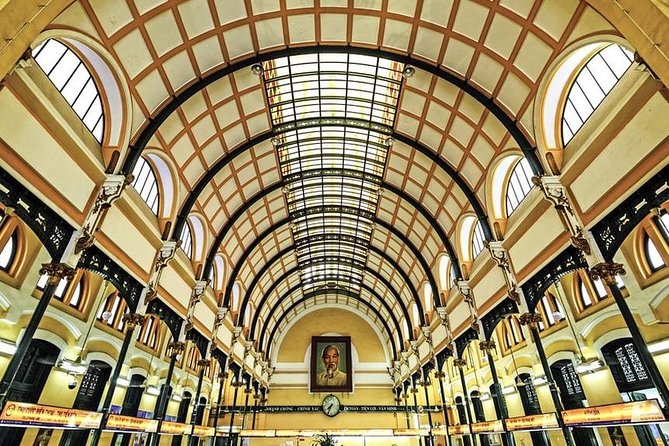
One of the best parts of this tour is how it uses famous architecture as a story tool. Early on, you’ll head to Notre Dame Cathedral and the Saigon Post Office, and you’ll get historical context tied to the France-era period.
Why this matters: it’s easy to look at these buildings and treat them as photo stops. The guide frames them so you understand why they’re here and what they signal about the city at the time. When you walk the front steps and linger near the details, the explanation helps you connect the architecture to the political and cultural shifts that followed.
The Post Office stop is especially strong for first-timers because it’s both recognizable and information-heavy. In this half-day format, you get a focused, guided look instead of a quick glance that leaves you wondering what you just saw.
If you like landmarks that sit at the crossroads of art, power, and daily life, this section is for you. You’ll also get a sense of how the city’s center grew and changed around major civic buildings.
The Buddhist protest story that explains a breaking point in Saigon
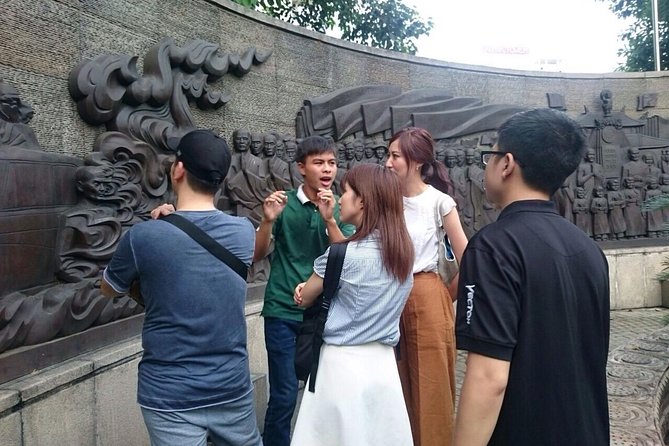
After the major tourist-area landmarks, the tour turns more serious. You’ll visit a site tied to a well-known Vietnamese Mahayana Buddhist monk who burned himself in protest against the persecution of Buddhists by the South Vietnamese government. The experience isn’t treated like sensational tragedy; it’s presented as a historical pivot that helps explain why certain conflicts and fears hardened during the era.
This is the kind of stop that can reshape how you read the city later. Even if you don’t memorize every date, you leave with a better understanding of why modern Vietnam carries the marks of political struggle and religious tension.
You should expect a guided narrative that connects the personal sacrifice to the larger environment. It’s not just about a single moment—it’s about what that moment says about government power, public pressure, and the cost of protest.
Underground Vietnam: weapon-concealing bunkers and wartime history

Another highlight is the stop at weapon-concealing bunkers, described as a place used to hide large quantities of arms. This is the “what was really happening behind the scenes” part of Saigon’s story.
Why I like this section for travelers: it shifts your view from monuments to lived conflict. Above ground, Saigon can look like a normal modern city. Stops like these explain how people had to plan for survival and secrecy, and why the city’s history includes both visible institutions and hidden operations.
This is also a nice contrast to the earlier architecture. You’re moving from built symbols of one era into a physical reminder of another. In a few hours, you get multiple layers instead of sticking to one theme.
Note: the tour is listed as having free admission. That’s a big deal for value because it means your money stays focused on the guide and transport rather than separate entries.
You can also read our reviews of more historical tours in Ho Chi Minh City






Small extras that make the half-day tour feel calmer
This tour includes the kind of basics that make a city ride easier:
- Bottled water
- Coffee and/or tea
- Snacks
- Transport by motorbikes with fuel and helmet
That may sound minor, but it’s a real quality-of-life boost. Half-day tours can feel long if you’re dehydrated or hungry, especially when you’re riding in heat and sitting on a scooter for stretches. Having water and a snack helps you stay present for the stories instead of thinking about your next meal.
It also helps that this is presented as a private tour/activity. Even with one or a few people, the guide can pace you. You’re not stuck waiting for a larger group to catch up, and the tone stays less crowded.
And since it’s a mobile ticket with confirmation at booking time, you don’t need to chase paperwork.
Price and logistics: what you pay, what you avoid paying
Here’s the practical way to think about the $45 per person price.
What you get that usually costs extra elsewhere:
- round-trip-style pickup from your accommodation (with that $5 fee only if you’re outside districts 1, 3, and 4)
- motorbike transport and helmet (plus fuel)
- guide-led city routing
- snacks, bottled water, and coffee/tea
What you avoid:
- navigating traffic alone
- wasting time figuring out which stops are worth your limited daylight
- paying separate transport for each landmark
The tour also notes admission ticket free, which lowers friction for you. Instead of planning around entry fees and open hours, you follow the guide’s flow.
The only “cost” to consider is comfort. If you’re anxious about riding a scooter, you’ll feel it more than you would on foot. But if you’re open to the style of travel, it’s one of the best ways to cover serious ground quickly in Ho Chi Minh City.
Who this tour suits best (and who should think twice)

This is a strong fit if you:
- are in Ho Chi Minh City for the first time and want context fast
- care about history and political change, not just big photos
- like street-level travel where you can actually see what people are doing
- want a private guide experience and don’t want a crowded bus routine
It may be a tougher fit if you:
- don’t feel comfortable riding on a scooter back for a few hours
- have mobility or balance concerns
- want a very slow, walking-only pace
The good news is that people often get used to scooter riding quickly. The key is to start with a calm mindset and communicate if you need extra care getting on and off the bike.
Should you book this Saigon Historical City Tour with AN Tours?
I’d book it if your priority is to understand Ho Chi Minh City’s story in a half-day, with transport solved for you. The blend—French-era landmarks, a major Buddhist protest turning point, and wartime hiding places—gives you real perspective without dragging you into a full-day commitment.
I’d pass or switch to a different format if the scooter ride feels like a deal-breaker. History tours are more enjoyable when you can focus on the guide and the sights instead of managing discomfort.
If you want a simple decision rule: book this one when you want an efficient, story-forward orientation to Saigon. Skip it when you want a quiet walking tour with minimal street noise and zero motorcycle time.
FAQ
FAQ
How long is the Saigon Historical City Tour?
The tour runs about 4 hours.
What does the $45 per person price include?
It includes everything for the tour plus bottled water, coffee and/or tea, and transportation by motorbikes with fuel and a high-quality open-face helmet.
Is hotel pickup offered?
Yes. Your guide picks you up at your accommodation by motorbike.
Is this a private tour?
Yes. It’s listed as a private tour/activity, so only your group participates.
Do I need to pay extra if I’m staying outside certain districts?
If your accommodation is outside district 1, 3, and 4, there is an extra $5 per person charge.
What places do you visit?
The tour includes stops such as Notre Dame Cathedral and the Saigon Post Office (for the France-era context), a site connected to the protest story of Venerable Thich Quang Duc, and weapon-concealing bunkers.
Do I get admission tickets or entries covered?
The tour is listed with admission ticket free.
What kind of ticket do I get?
You receive a mobile ticket.
What’s the cancellation policy for a full refund?
Free cancellation is available. You can cancel up to 24 hours in advance for a full refund. Canceling less than 24 hours before the start time doesn’t get refunded.