REVIEW · HO CHI MINH CITY
M.O.M Cooking Class in Saigon
Book on Viator →Operated by M.O.M Cooking Class · Bookable on Viator
Cooking in Saigon starts with your feet at Ben Thanh. I like the market-to-studio flow and the fact that you leave with hands-on dishes plus a recipe, not just watching from the sidelines. One possible drawback: it is time-boxed, so if you want a slow, sit-down meal experience, the pace may feel brisk.
The class is capped at 20 people, which matters. You get enough attention to actually cook, ask questions, and figure out what goes into the flavors you are tasting.
Timing is the other trade-off to consider. You have a morning slot that begins at Ben Thanh and returns to the studio by 9:15, and an afternoon slot that starts at the studio later in the day—pick the one that fits your energy and your plans.
In This Review
- Key things to know before you go
- Ben Thanh Market meetup: why the start matters
- The cooking studio on Yersin Street: where hands-on learning happens
- What you may cook: Pho, Banh Mi, and Southern-style dishes
- Morning vs afternoon timing: how the day is built
- Value at $32 per person: what you’re really paying for
- How to get the most out of the class (without overthinking it)
- Who should book M.O.M Cooking Class in Saigon?
- Quick FAQ
- FAQ
- How much is the M.O.M Cooking Class in Saigon?
- About how long does the class last?
- Where do I meet for the morning class?
- Where do I meet for the afternoon class?
- What do I receive at the end?
- How many people are in a class?
- Can I cancel and get a refund?
- Should you book this cooking class?
Key things to know before you go
- Ben Thanh Market meetup at Gate 5 (West Gate) on Phan Chu Trinh Street for the morning class
- M.O.M Cooking Studio at 119/2 Yersin Street for the afternoon class and the main cooking session
- Small group size, max 20 people, so you are not lost in a big crowd
- Certificate and recipe included at the end, so you can recreate dishes later
- Menu options like Pho and Banh Mi, plus Southern-style choices, depending on the class you book
Ben Thanh Market meetup: why the start matters
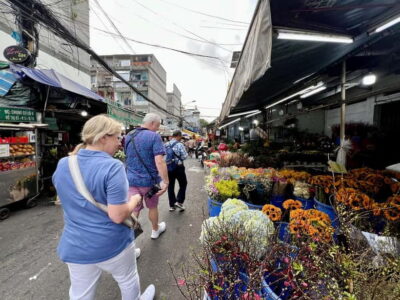
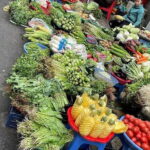
The morning class begins at Ben Thanh Market, West Gate, Gate 5 on Phan Chu Trinh Street, with the meet time listed as 8:35 am. If you have only walked through Ben Thanh before, this is a smarter way to engage it. Instead of just browsing stalls, you are starting with a purpose: learning how Vietnamese cooking is built from real, everyday ingredients.
There is a useful clue in the schedule: you arrive back at the M.O.M Cooking Studio by 9:15 am. That means the market portion is short and focused. It is not a long scavenger hunt. The goal is to get you oriented and set you up for what you will cook next, so you can spend most of your time actually cooking.
Practical mindset: if you tend to get slowed down by crowds or signage, build in a little buffer to find Gate 5 and get settled before the group moves on. Being on time helps the whole class run smoothly, especially because it later ends at a set time with your certificate and recipe.
You can also read our reviews of more cooking classes in Ho Chi Minh City

The cooking studio on Yersin Street: where hands-on learning happens
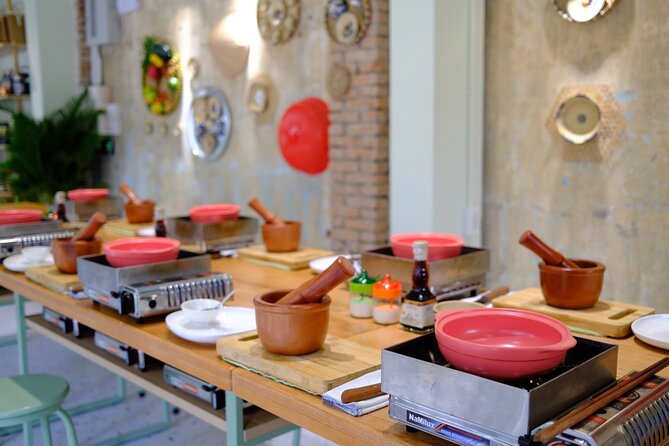
Both class options have a strong studio component, but the afternoon one is the cleanest setup. You meet at M.O.M Cooking Studio (119/2 Yersin Street) at 1:45 pm, and the class starts at 1:55 pm. That means you skip the market portion and jump straight into cooking.
Either way, the studio setting matters for a couple reasons:
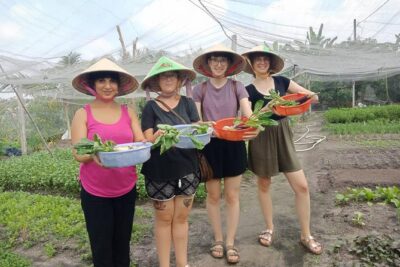
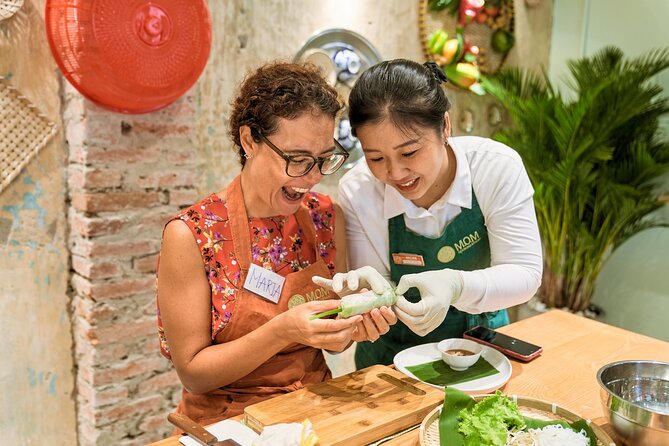
First, it gives you a controlled workspace. You are learning techniques, not just eating good food. Second, it keeps the experience comfortable for your whole group. The operator has designed the experience around a fun, lively atmosphere with professional, energetic instructors, so you are not sitting quietly while someone else cooks.
This is also where you benefit from the maximum of 20 travelers. Smaller groups mean you are more likely to get direct feedback on what you are doing—especially when you are working with sauces, herbs, and the steps that make Vietnamese dishes taste like Vietnamese dishes.
One small detail I appreciate: you use a mobile ticket. That cuts down on paperwork and makes it easier to handle your day while you are bouncing between locations.
What you may cook: Pho, Banh Mi, and Southern-style dishes
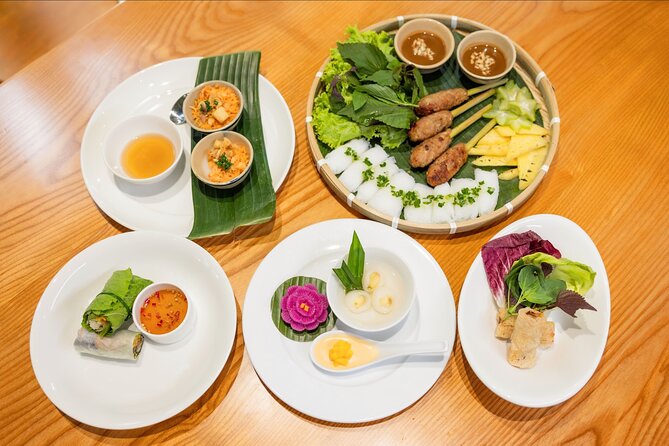
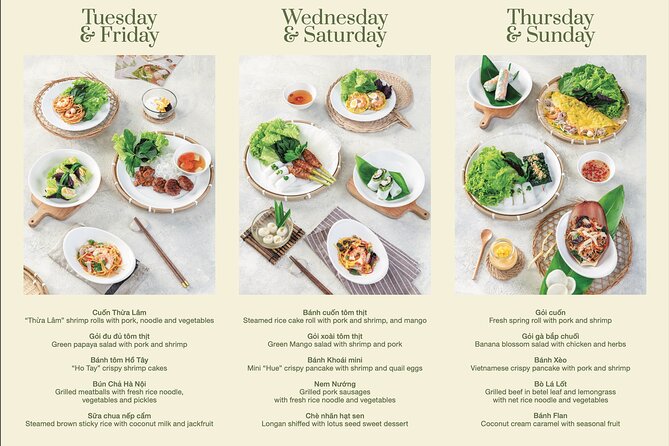
The class options you can book focus on Vietnamese comfort foods and cooking methods you can actually repeat at home. Based on the menus referenced in the experience details and class feedback, some of the strongest performers are:
- Pho cooking
- Banh Mi cooking
- Southern menu selections
- Traditional dessert as part of some class flows
- Free tea during the day in at least some menu versions
The big idea is that you are not just learning recipes by name. You are building the flavor logic. For example, Pho and Banh Mi both depend on layers—broth or sauces, aromatic herbs, and the balance between richness, saltiness, and freshness. Southern-style menus often highlight a different flavor rhythm, so you get more than one regional feel.
If you see a class centered on Pho and Banh Mi, it is a solid pick when you want two iconic dishes without switching providers. There is also a pattern in the experience that you can end up making more than just the headline items. Some course formats include extra dish work alongside the main duo, which is a nice way to use your time.
What to watch for: menu options can vary by the class you book, so if you have a must-have dish (say, only Pho, or only Banh Mi), check what is included for your specific session rather than assuming every slot uses the same lineup.
Morning vs afternoon timing: how the day is built
The morning class has a very clear structure:
- 8:35 am: Meet at West Gate, Gate 5 of Ben Thanh Market on Phan Chu Trinh Street
- 9:15 am: Arrive back at M.O.M Cooking Studio
- 12:30 pm: End of class with certificate and recipe
That gives you a morning schedule that ends before lunch plans turn complicated. By 12:30 pm, you are done cooking and can head out for food or sightseeing with less stress.
The afternoon class is also straightforward:
- 1:45 pm: Meet at M.O.M Studio (119/2 Yersin Street)
- 1:55 pm: Start class
- 4:45 pm: End with certificate and recipe
This one works well when you want a late start, or you have a morning activity already planned. It also means you likely get more of the daylight hours in the city before you cook.
Which should you choose? If you like the idea of starting at a market and seeing ingredients in context, pick the morning. If you want a calmer entry (and fewer moving parts), pick afternoon and go straight to the studio.
Also keep in mind that each option is designed to fit around a roughly 4-hour experience window. You will have time to learn and cook, but it is not meant to sprawl into a half-day feast.
Value at $32 per person: what you’re really paying for
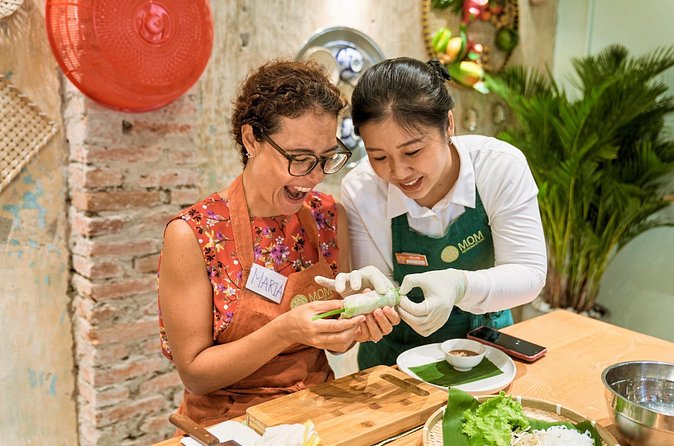
At $32 per person, this is priced like a serious “learn to cook” activity, not just a casual food tasting. The value comes from a few things that reinforce each other:
- You get a hands-on experience with an instructor-led setup in a kitchen
- You leave with a certificate and a recipe, which turns the day into something you can reuse
- The group size limit of 20 helps you stay engaged, which is where many lower-priced classes can fail
Is it a bargain? It can feel like one, especially if you are the type of traveler who hates paying money for a photo session with no real takeaway. Here, your takeaway is practical: you can recreate the dishes and remember the steps.
One more value point: the operator’s whole mission since 2017 is about sharing Vietnamese cuisine and promoting healthy Vietnamese cooking. That shows up in how they frame the class: you are learning methods meant to travel well to kitchens around the world, not just enjoying one meal.
You can also read our reviews of more tours and experiences in Ho Chi Minh City


How to get the most out of the class (without overthinking it)
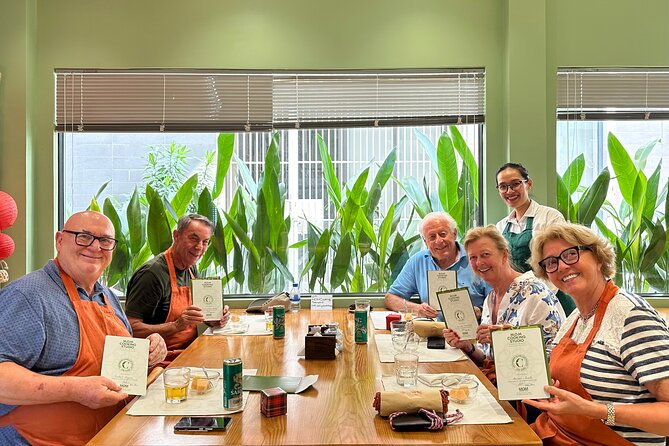
Even though the experience is structured, you can make it work better for your personal learning style with a few habits.
First, treat your cooking notes like a checklist. The end includes a recipe, but during class you want to pay attention to what the instructor is telling you about texture, timing, and flavor balance. Vietnamese dishes often live or die on small differences, and those are easiest to catch while you are actively cooking.
Second, pick the menu option that matches what you actually want to eat later. If you want Vietnamese comfort food you recognize instantly, Pho and Banh Mi are strong. If you want a broader feel for regional variation, Southern-style dishes tend to be a great way to widen your taste map of Vietnam.
Third, plan your day around the fixed end time. The morning ends at 12:30 pm, the afternoon at 4:45 pm. Build in your next steps accordingly so you are not rushing out the door hungry or scattered.
Finally, if you care about what is included beyond the main dishes—like traditional dessert or tea—ask when you arrive what your class menu includes. Some course formats have included both in at least one class flow, but menu details can vary.
Who should book M.O.M Cooking Class in Saigon?
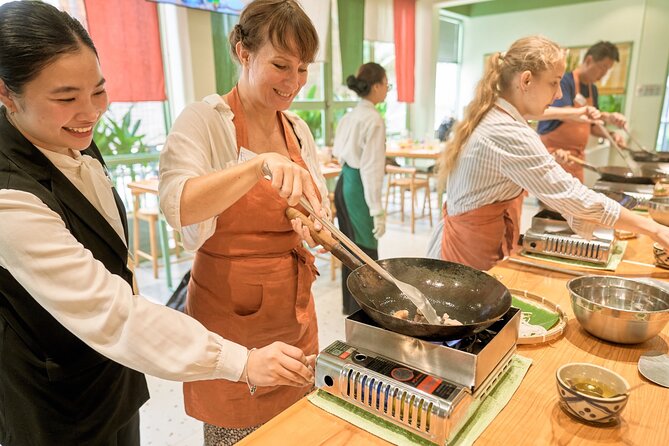
This is a great fit if you want:
- A small-group, instructor-led Ho Chi Minh City cooking class
- A way to learn Vietnamese dishes you can repeat later (not just eat once)
- A cultural activity that does not require special gear or reservations beyond showing up at the meeting point
It is especially good for couples and solo travelers who want a guided experience but still want to cook, not just watch. The class atmosphere is described as energetic and lively, and the overall 5/5 rating pattern makes sense: when you leave with multiple dishes and a recipe, you tend to feel like the time was worth it.
Who might hesitate? If you are the type who wants a long, leisurely food crawl or you dislike structured itineraries, the four-hour container might feel limiting. Also, if you are only interested in one specific dish, you will want to confirm what your exact session includes.
Quick FAQ
FAQ
How much is the M.O.M Cooking Class in Saigon?
The price is $32.00 per person.
About how long does the class last?
The duration is approximately 4 hours.
Where do I meet for the morning class?
For the morning session, you meet at Ben Thanh Market at West Gate, Gate 5 on Phan Chu Trinh Street.
Where do I meet for the afternoon class?
For the afternoon session, you meet at M.O.M Cooking Studio, 119/2 Yersin Street.
What do I receive at the end?
You end the class with a certificate and a recipe.
How many people are in a class?
The class has a maximum of 20 travelers.
Can I cancel and get a refund?
Yes. You can cancel for a full refund up to 24 hours in advance of the experience start time.
Should you book this cooking class?
Yes, if you want a practical way to learn Vietnamese cooking in Ho Chi Minh City and you like the idea of starting at Ben Thanh (morning) or jumping straight into the studio (afternoon). The biggest reasons to book are simple: you cook, you get a recipe, and the small group size keeps it from turning into a passive show.
Choose morning if you want the market start. Choose afternoon if you prefer a more direct studio experience. Either way, you are walking away with something useful—your new go-to method for dishes like Pho and Banh Mi, plus whatever menu option your session offers.