REVIEW · HO CHI MINH CITY
Saigon Afternoon Unseen Street Food by Scooter |Opt: Ao Dai Rider
Book on Viator →Operated by Saigon On Motorbike · Bookable on Viator
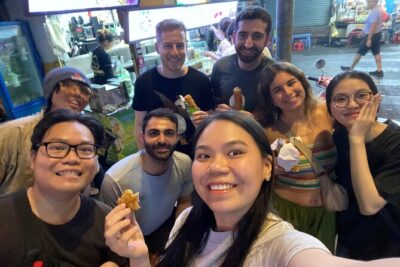
Motorbikes, coffee, and real street bites. This Saigon afternoon ride turns a simple food tour into a route of war-era reminders, neighborhood life, and classic dishes you actually see locals order. You’ll zip between stops on a motorbike and snack your way through unseen street food spots without worrying about tickets or transport.
I love two things most. First, the pairing of Vietnamese coffee with a wartime bunker tied to the 1968 attack gives the day weight. Second, the food plan isn’t just pho—it includes items like banh xeo and goi cuon, plus snack stops that feel like you’re learning local rhythm, not following a menu.
The main drawback is also the point: you ride through busy streets on a scooter. If you get motion-sick or hate traffic noise, plan for a short stretch of nerves—though you’ll have a safety setup (helmet, rain poncho if needed, and accident insurance).
In This Review
- Key highlights worth planning for
- What you’re really buying for $37 (and why it feels fair)
- Scooters in Saigon: safety, comfort, and the pace you should expect
- Stop 1: Coffee at a local shop, plus the bunker linked to 1968
- Stop 2: Ho Thi Ky Flower Market and why it’s more than just souvenirs
- Stop 3: Banh xeo with fresh wild vegetables
- Stop 4: Nguyen Thien Thuat Street and the feel of older apartment life
- Stop 5: Floating market vibes with coconut juice
- Stop 6: Thien Hau Pagoda in Chinatown (District 5)
- Stop 7: District 4 and the story of the mafia area, ending with spring roll vermicelli
- Food lineup: what you’ll likely taste (beyond the obvious)
- Why the guides matter so much here (and who people praise)
- Ao Dai rider option: what to know before you choose it
- Who this tour is best for
- Should you book this Saigon afternoon unseen street food tour?
- FAQ
- FAQ
- How long is the Saigon afternoon scooter street food tour?
- Is pickup included?
- What’s included in the price?
- Are there vegetarian options?
- What food and drinks are part of the route?
- Do I need to pay for admissions at the stops?
- Is the tour private?
- What is the Ao Dai rider option?
- Does the tour provide any rain protection?
- What if I need to cancel?
- Is there an accident insurance included?
Key highlights worth planning for
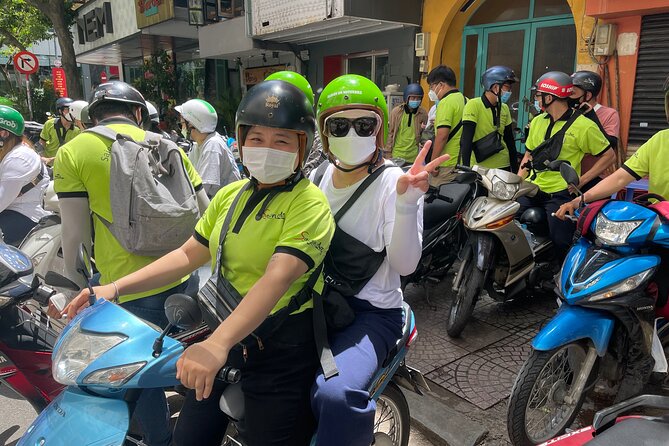
- A route that mixes food with culture: bunker coffee, a flower market, a Chinatown temple, and District 4
- Meals and drinks are fully included, so the $37 price lands closer to a true experience cost
- English-speaking drivers with strong service (names like Beck, Wolf, Annie, Jin show up repeatedly for friendliness and smooth guiding)
- Scooter time with a local feel, not a slow bus crawl
- A practical safety package: open-faced helmets, accident insurance, and ponchos when the weather turns
- Vegetarian option available, plus you’ll likely see flexible ordering at local stops
What you’re really buying for $37 (and why it feels fair)
At $37 per person for about four hours, you’re not paying for snacks only. You’re paying for the whole “hosted night out” package: pickup and drop-off from central hotels, a scooter and fuel, helmet use, and the food and drinks along the way.
That matters in Ho Chi Minh City, where getting from one street-food corner to the next can otherwise turn into guesswork—taxis add time, and grabbing food on your own often means missing the small places locals actually use. Here, the stops are already stitched into a plan, and you’re not doing the awkward part: figuring out where to stand, what to order, and how fast to move.
You can also read our reviews of more food & drink experiences in Ho Chi Minh City


Scooters in Saigon: safety, comfort, and the pace you should expect
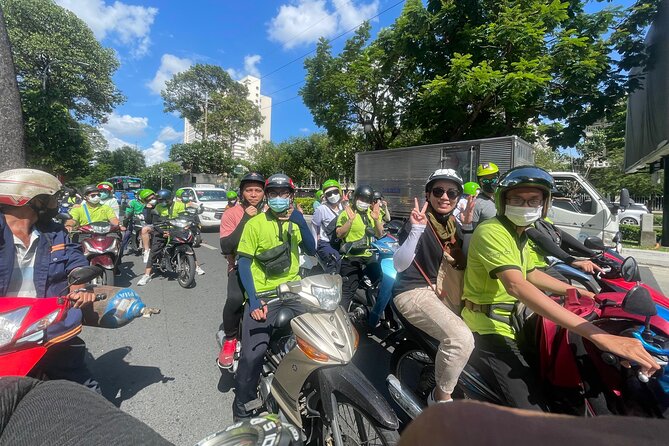
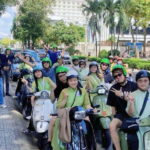
You’ll ride behind an English-speaking driver like locals do. That’s fun, but it’s also a real street experience, not a gentle sightseeing loop.
Here’s what helps you feel comfortable:
- You get a high-quality open-faced helmet.
- A rain poncho comes along if the weather needs it.
- Accident insurance is included, which is a smart baseline for any motorbike activity.
- The tour is limited to your group, so you’re not constantly waiting for strangers to catch up.
One small “consideration” to keep in mind: the schedule is tight enough to fit multiple stops in four hours. That’s great for maximizing value, but you won’t be lingering for long photos at every curb. If you like slow travel, you might want a separate daytime walk later.
Stop 1: Coffee at a local shop, plus the bunker linked to 1968
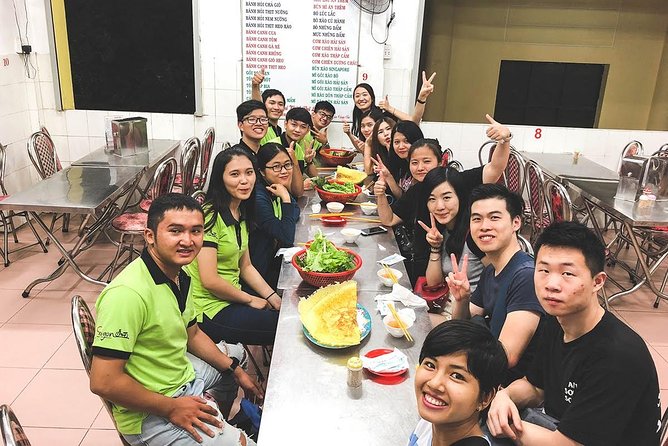
Your afternoon starts at a neighborhood coffee shop. Even if you already love Vietnamese coffee, this stop works because it sets the tone: you get that strong aroma, then you’re pulled into a physical reminder of the war around 1968.
After coffee, you’ll visit a historical bunker where weapons were stored related to the 1968 attack. This isn’t just a photo stop. It gives you context for why Saigon feels layered—everywhere you look, you’re seeing a city that rebuilt and kept moving.
Practical tip: coffee here can be intense. If you’re sensitive to caffeine, consider taking a slower sip and saving room for food. The tour moves quickly after this.
Stop 2: Ho Thi Ky Flower Market and why it’s more than just souvenirs
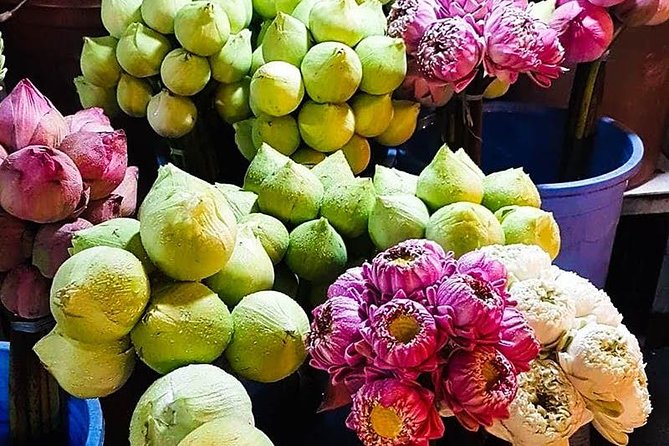
Next up: the Ho Thi Ky Flower Market, described as the largest flower market in Saigon. You’ll spend around 35 minutes here, enough time to soak in what’s being sold and how the wholesale flow works.
This is one of those stops that helps you understand daily life. Flowers aren’t only decoration. They connect to ceremonies, home visits, and seasonal needs, so seeing the trade gives you a fuller picture of what’s normal here.
If you like shopping, you can treat this as a browsing moment. If you don’t, just watch how the market moves—who’s calling out, who’s buying in bulk, and how quickly things get delivered. That’s the “real city” lesson.
Stop 3: Banh xeo with fresh wild vegetables
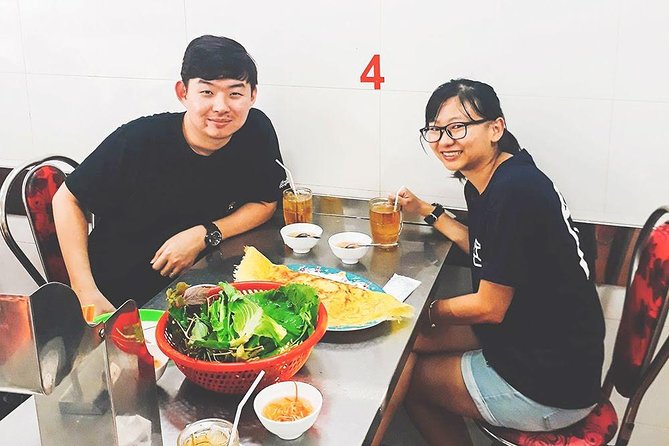
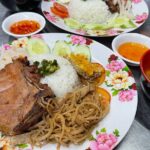
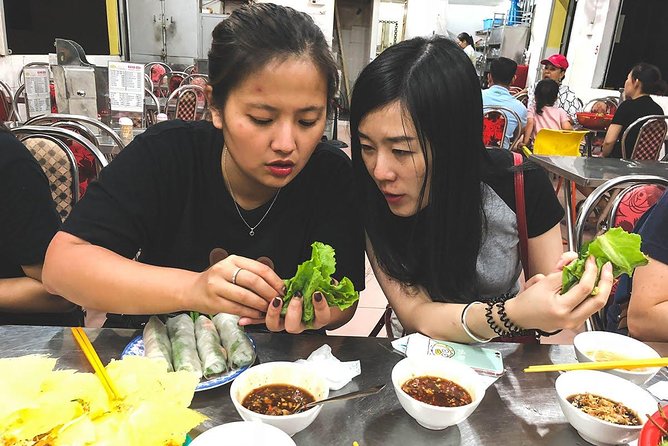
Your next food stop is a local restaurant for Vietnamese pancakes (banh xeo) served with fresh wild vegetables. This is one of the best parts of the itinerary because it gives you a complete bite, not just a single dish.
Banh xeo is the kind of food that’s easier to enjoy when someone explains the rhythm—how to eat it, how to pair it, and what makes it satisfying beyond taste. The wild vegetables add crunch and balance, so you’re not eating only salt and fat.
If you chose vegetarian, this is also where you’ll benefit most from the tour’s planning, because local restaurants can often handle substitutions better than a casual solo order.
You can also read our reviews of more tours and experiences in Ho Chi Minh City


Stop 4: Nguyen Thien Thuat Street and the feel of older apartment life
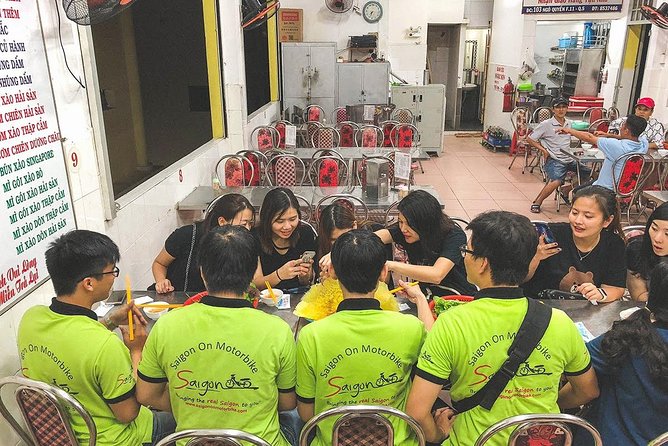
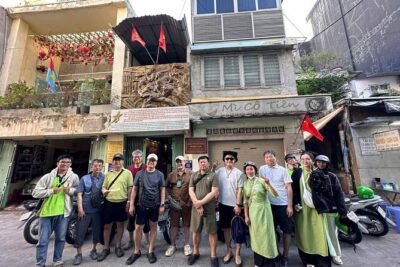
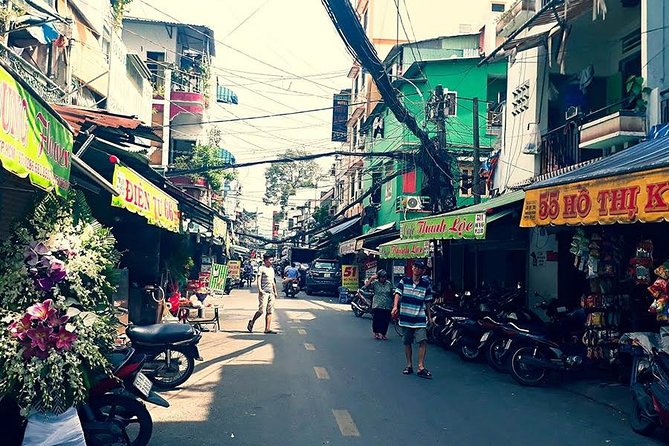
After lunch, you’ll drive to Nguyen Thien Thuat Street, where you can stroll through one of the oldest apartment complexes in the city.
This stop feels almost like a breather from food. It also adds a different kind of learning: not “what famous people did here,” but what daily housing life looks like in a major city.
At about 40 minutes, it’s enough time to walk, notice the surroundings, and get a sense of the human scale of the neighborhood. If you enjoy street-level architecture and how people actually live, you’ll appreciate this more than you might expect.
Stop 5: Floating market vibes with coconut juice
Next comes the floating market stop, with fresh coconut juice included. You’ll spend about 25 minutes here.
Even if you’ve seen floating markets elsewhere, this one is valuable because it’s short and tied directly to a drink you’ll appreciate while you watch. The coconut juice is refreshing and local-friendly—especially in Saigon’s heat—so you’re not just sightseeing. You’re actively cooling down while taking in the scene.
If the water area looks crowded when you arrive, don’t stress. Your time is short by design, and the coconut juice stop keeps it from feeling like a long wait.
Stop 6: Thien Hau Pagoda in Chinatown (District 5)
Then you’ll head to District 5 for Thien Hau Pagoda, an important Chinese heritage site and described as the oldest temple in Chinatown.
This is a meaningful culture stop, not only because of the temple, but because it explains how Saigon’s communities overlap. You’ll get a sense of why certain neighborhoods feel distinct, and how religious spaces function as community anchors.
At 35 minutes, you can slow down enough to take in details without feeling rushed. If you like temples, this is one of the more rewarding stops because the area and the story connect.
Stop 7: District 4 and the story of the mafia area, ending with spring roll vermicelli
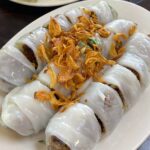
Your final stop heads to District 4, historically referred to as the mafia area. You’ll stroll for about 30 minutes, then end with a serving of spring roll vermicelli—an ideal last bite after hours of food and street scenes.
This last stop matters because it closes the day with something lighter than a heavy meal, so you don’t feel completely weighed down at the finish. Spring roll vermicelli is also a dish where fresh herbs and textures are a big part of the experience, so it feels like a clean ending.
Food lineup: what you’ll likely taste (beyond the obvious)
This tour is built around street food you can actually name. From the plan, you can expect Vietnamese coffee, banh xeo, and dishes like goi cuon (fresh spring rolls) plus spring roll vermicelli. Coconut juice shows up on the floating market stop too.
Two ways to make the most of it:
- Go with small bites and focus on variety. The itinerary is structured so each stop complements the next. Don’t try to over-order at one place.
- Use the guide’s recommendations on how to eat. With dishes like banh xeo, the pairing with vegetables matters as much as the pancake itself.
Vegetarians have a real option here. The tour lists a vegetarian option available, which is a huge deal on scooter-based food tours where you may not have time to search for guaranteed substitutions.
Why the guides matter so much here (and who people praise)
In this kind of tour, the guide is the difference between fun and chaos. The consistent theme in the strong ratings is not just friendliness—it’s how smoothly the ride runs and how safe it feels.
You’ll hear names like Beck, Wolf, Wolfy, Mint, Nam, Corn, Ethan, Moon, Ming, Flora, Annie, and Jin in the praise. Common threads show up:
- drivers keeping the route flowing, so you’re not stuck waiting
- clear English and practical explanations at each stop
- a friendly vibe that makes you feel comfortable sitting behind them
If you care about safety, pay attention to the way the tour is described: helmets provided, accident insurance included, and riders paired with drivers who are focused on a smooth ride. That’s the baseline that makes the “motorbike like locals” idea work.
Ao Dai rider option: what to know before you choose it
The tour offers an option for an Ao Dai rider. The one detail that’s important: if you’re aiming for a female Ao Dai rider, you need to request it at least 6 hours in advance. If you book later or it’s a crowded day, the rider gender is random.
So if Ao Dai photos matter to you, set your plans early. If you don’t care about the rider’s outfit, you can focus on the route and the food and not overthink it.
Who this tour is best for
This is a strong fit if you want:
- a food-focused afternoon with clear stops and included meals
- the street-level feel of Saigon without doing navigation
- a small-group experience that keeps the pace tight
It’s also a good choice if you like learning through daily life: war-era sites, wholesale markets, neighborhood streets, and temple culture all in one run.
The main mismatch is for people who can’t comfortably sit on a motorbike or don’t want any exposure to traffic. If that’s you, it might not be worth forcing it just for food—because the ride is part of the deal.
Should you book this Saigon afternoon unseen street food tour?
Book it if you want the practical version of Saigon street life: four hours, hotel pickup, scooters ready, food handled, and a route that covers coffee, flowers, pancakes, Chinatown heritage, and District 4 all in one afternoon.
I’d hold off if you’re looking for a slow, relaxed walking tour with long stops. This is about movement and bite-sized culture. It’s also about comfort with motorbikes.
If you’re on the fence, here’s the quick decision test: do you like street food that you eat with your hands and vegetables, and do you feel okay riding behind a driver for a few hours? If yes, this tour is an easy match.
FAQ
FAQ
How long is the Saigon afternoon scooter street food tour?
It’s about 4 hours.
Is pickup included?
Yes. Round-trip transfers are included from centrally located Saigon hotels.
What’s included in the price?
You get all food and drinks included, plus the motorbike, fuel, and a high-quality open-faced helmet. Rain ponchos are included if needed, and accident insurance is provided.
Are there vegetarian options?
Yes, a vegetarian option is available.
What food and drinks are part of the route?
The plan includes Vietnamese coffee, banh xeo, coconut juice, goi cuon, and spring roll vermicelli.
Do I need to pay for admissions at the stops?
Admission tickets are listed as free for the included stops.
Is the tour private?
Yes. It’s limited to your group, and it’s described as a private tour/activity.
What is the Ao Dai rider option?
There is an Ao Dai rider option. If you want a female Ao Dai rider, it must be requested at least 6 hours in advance; later or crowded days can be random by gender.
Does the tour provide any rain protection?
Yes. A rain poncho is included if needed.
What if I need to cancel?
You can cancel for free up to 24 hours in advance for a full refund.
Is there an accident insurance included?
Yes, accident insurance is included as part of the tour.