REVIEW · HO CHI MINH CITY
Saigon Street Photography Experience
Book on Viator →Operated by Secret Experiences · Bookable on Viator
One strong photo idea can change your whole trip.
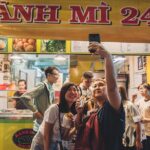
This morning walk in Ho Chi Minh City is built around practical Saigon street photography coaching, with pro guidance from Frederik Wissink or Kevin Lee as you chase real street scenes and learn how to approach people and work with light. I especially like the mix of hands-on shooting tips plus actual city locations (not just theory), and I also like that the group stays small, so you’re not lost in the crowd. One thing to consider: it’s weather-dependent and starts early at 7:00am, so it’s not the best match if you want a slow morning or you hate walking.
You’ll start at Cafe Linh77 Hàm Nghi in District 1 with coffee or tea, then move through photo-rich areas that include French colonial and war-era apartment buildings, a local hardware market, and a Buddhist temple. Expect a 2 hours 30 minutes route that’s designed to keep you moving with purpose, not wandering aimlessly.
In This Review
- Quick take: key reasons this Saigon photo walk works
- Why Saigon’s 7:00am start makes better photos
- Your hosts: Frederik Wissink and Kevin Lee bring real-world camera skills
- The coffee briefing: the fastest way to stop guessing
- French colonial and war-era apartments: photographing architecture with people in frame
- The local hardware market and alleyways: where stories happen
- Buddhist temple stop: calm compositions and respectful shooting
- How the 2.5-hour structure keeps you learning
- Price and value: why $73 can make sense for this kind of coaching
- Who should book this Saigon street photography experience
- Practical tips before you go (so the photos don’t suffer)
- Should you book it? My decision guide
- FAQ
- How long is the Saigon Street Photography Experience?
- Where does the experience start?
- What time does the tour begin?
- Who hosts the tour?
- How large are the groups?
- What locations will we visit during the walk?
- What happens if the weather is poor?
Quick take: key reasons this Saigon photo walk works
- Two pro hosts, one street-focused method (Frederik Wissink or Kevin Lee)
- A coffee briefing where you learn approach, angles, and what to notice fast
- Real local stops including French colonial/war-era apartments, a hardware market, and a Buddhist temple
- Small group size (max 10) so you can actually get feedback
- Candid street practice through alleyways and everyday family life
- Mobile ticket for easy check-in
Why Saigon’s 7:00am start makes better photos
Street photography is partly timing, and this tour nails the one thing most people skip: getting out early. You meet at 7:00am at Cafe Linh77 Hàm Nghi, and that early start matters because the light is softer and the streets tend to be more workable for photographing people.
Also, starting in the morning makes the walk feel like a gentle mission, not a slog. With a planned 2 hours 30 minutes window, you get enough time to see multiple kinds of scenes—architecture, daily errands, and a temple setting—without spending your whole vacation in walking shoes.
If you’re photo-focused, this is one of those tours where the schedule is part of the technique. And if you prefer fewer cars and less traffic, going on a weekend can help you find easier photographing conditions.
You can also read our reviews of more photography tours in Ho Chi Minh City

Your hosts: Frederik Wissink and Kevin Lee bring real-world camera skills
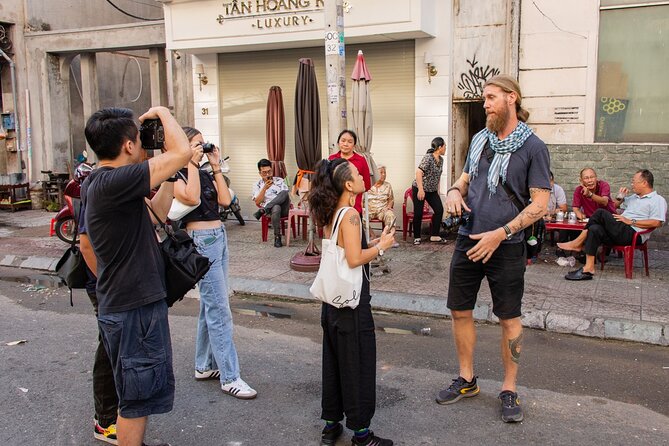
This experience is created with professional photographer Frederik Wissink, and it’s hosted either by him or by Kevin Lee. That’s not just a name-drop. It signals a specific teaching style: you’re learning how professionals see and respond to situations in the street.
Frederik’s background is heavy on commercial work for big hotel brands and major tech and media clients, with published work in places like Conde Nast Traveller and Car & Driver. He’s also known as an instructor from Hoi An Photo Tour and sometimes co-hosts multi-day tours around Vietnam.
Kevin’s role is equal parts photography and production. He’s worked with commercial clients too, and he’s led street photography meetups and walks in Singapore. In practice, that means you get both the creative eye and the “how do we make this work on the street” skills.
Net for you: you’re not just being pointed at scenes. You’re getting a method.
The coffee briefing: the fastest way to stop guessing
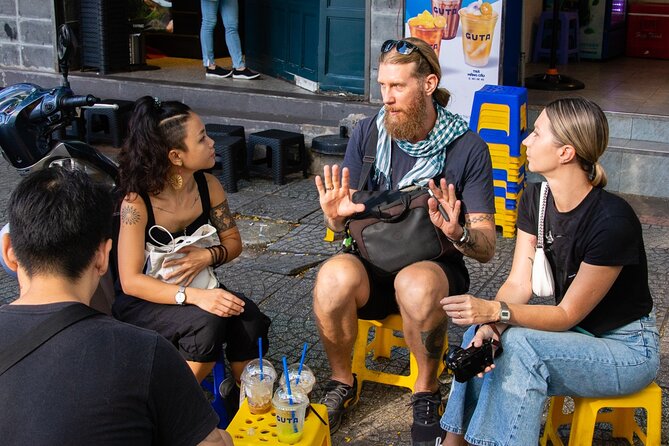
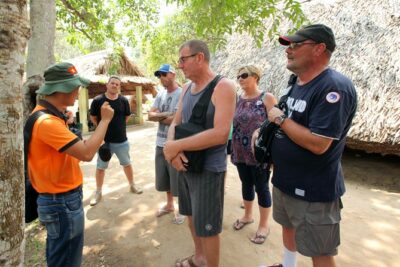
Before you hit the streets, you start with coffee or tea, and your host uses that moment to set you up with street photography tools you can use immediately.
This isn’t a lecture that puts you to sleep. The briefing is about quick, usable choices:
- how to approach people without making it awkward
- what details to watch for (light, angles, backgrounds, body language)
- how to frame shots so you’re not just snapping random moments
One smart detail here is how the tour treats attention as a skill. You’ll practice noticing more than what you usually notice on your own. Even if you’re using a compact camera or a phone, the lesson is the same: make choices before you press the shutter.
And yes, this includes shooting with a phone camera setup, since some participants get tips that work with pocket cameras too.
French colonial and war-era apartments: photographing architecture with people in frame
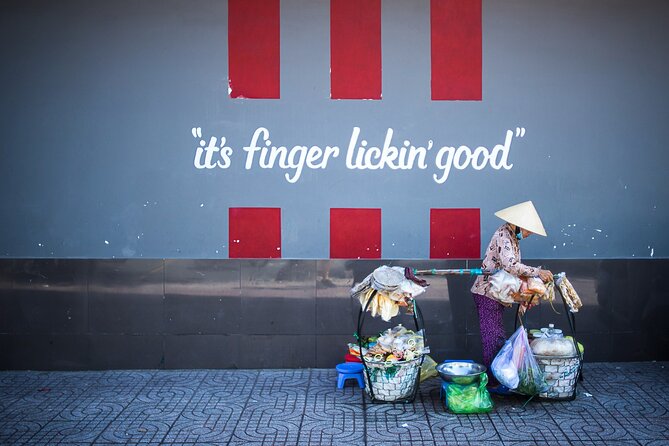
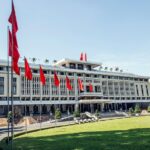
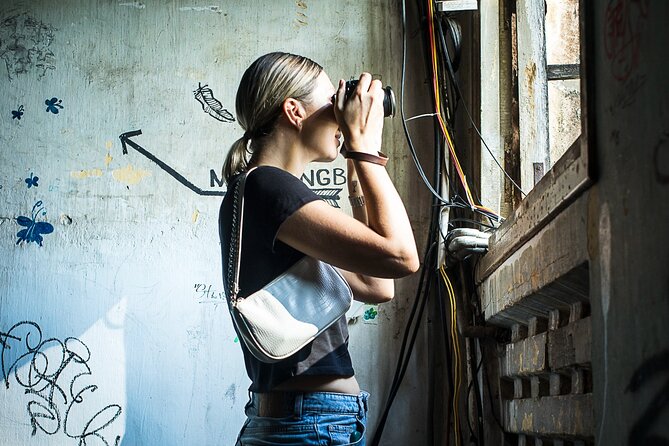
One of the most fun parts of Saigon for street shooters is the contrast—old buildings with everyday life moving through them. This route includes stops at French colonial and war-era apartment buildings, which give you strong lines, textured walls, and windows that create natural frames.
Here’s why this stop is valuable: architecture can make your photos look intentional even when the street action is unpredictable. You can use building edges for angles, windows for layers, and doorways for storytelling.
At the same time, you’re not photographing museums. You’re photographing life around real buildings, which is where the host coaching matters. You’ll learn how to get candid-looking images while still being respectful—especially when subjects are nearby or in active areas.
Practical note: in residential or semi-residential areas, keep your pace calm. Don’t block paths. And if someone looks unsure, adjust. Street photography works best when you can move on fast.
The local hardware market and alleyways: where stories happen
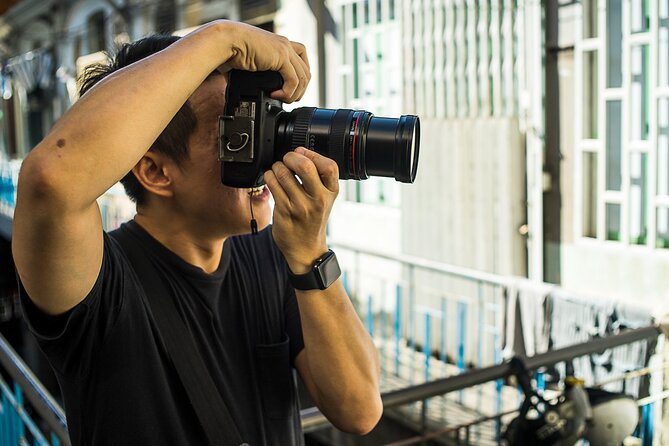
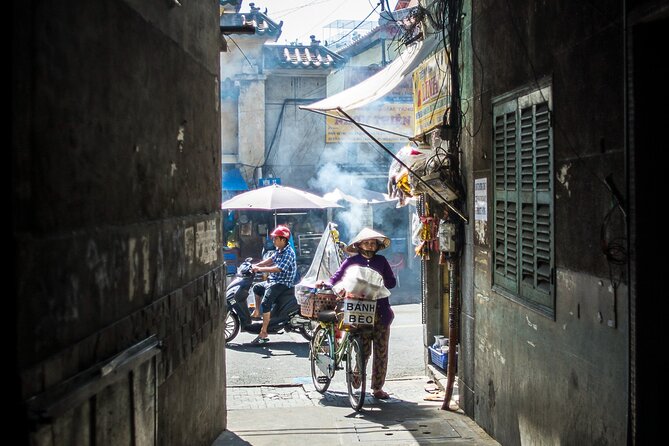
You’ll also visit a local hardware market, plus the kind of small alley network that makes Saigon feel more intimate than the main roads.
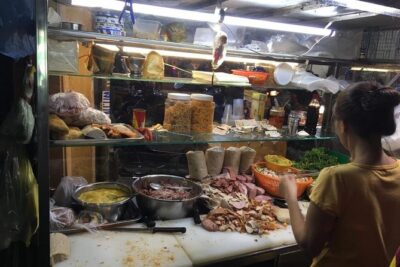
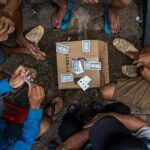
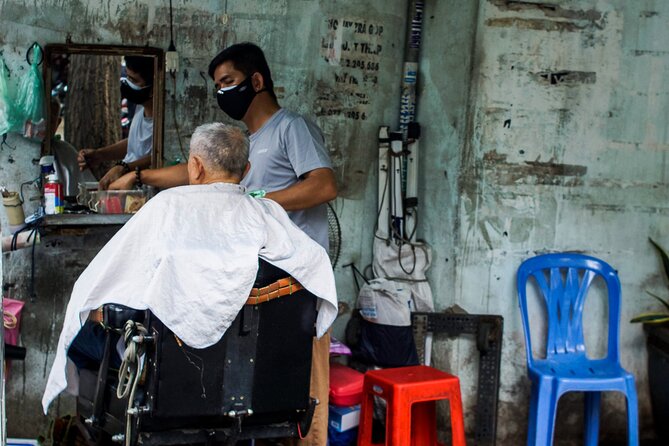
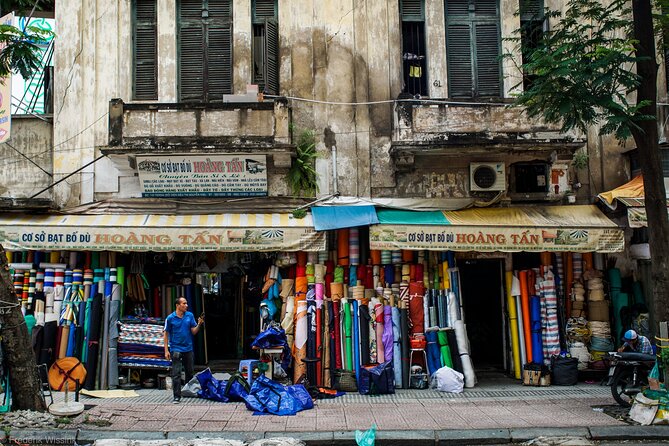
Markets are one of the best places to practice because they naturally produce motion: hands working, people passing items, faces that shift with conversation. A hardware market adds an extra layer of visual interest too—tools, signage, textures, and colors that don’t usually show up in typical tourist photos.
The teaching focus here is on candid street scenes. You’ll get tips for how to work with nearby chaos:
- position yourself so you’re not hovering over someone
- watch for small “micro-moments” rather than waiting for the perfect pose
- use angles and light to simplify busy backgrounds
If you’ve ever felt like your street photos look staged, this kind of stop is how you train out of that. You learn to accept imperfect moments and make them readable.
And yes, walking through alleyways means your camera rhythm changes. You’ll be moving more often, and you’ll need to be quick. That’s exactly where guided practice pays off.



Buddhist temple stop: calm compositions and respectful shooting
Later in the walk, you’ll visit a Buddhist temple, which is a different kind of photo environment. Instead of busy everyday commerce, you’ll likely find calmer scenes, prayer moments, and architectural details that can anchor your shot.
This stop is valuable because it teaches you contrast in your photography style. A street shooter who only works in loud situations often misses out on quieter frames. With a temple visit, you can work on:
- softer compositions
- tighter framing and detail shots
- using the environment for mood and context
Just keep it respectful. Even when you’re focused on photography, act like you’re a visitor first. If you’re unsure about what’s appropriate, follow the host’s lead and use cues from what locals are doing.
How the 2.5-hour structure keeps you learning
This isn’t a half-day event where you slowly wander and hope you get lucky. The tour is about 2 hours 30 minutes (approx.), and that length is long enough to practice multiple techniques without turning the experience into a long endurance test.
Also, the group limit is 10 travelers max, which makes a huge difference. In a bigger group, one person gets the coach’s attention, and everyone else plays catch-up. Here, you’re more likely to get direct feedback while you’re actually shooting.
Timing matters too. The tour ends back at the meeting point, so you’re not spending energy figuring out logistics. You can focus on photos, not navigation.
Price and value: why $73 can make sense for this kind of coaching
At $73 per person, you might wonder if this is “just a walking tour with a camera.” It’s not. The value comes from three things that are hard to replicate on your own:
1) Professional guidance tied to real locations
You’re learning technique and then using it immediately—at buildings, in markets, and at a temple.
2) Access to non-touristy viewpoints
The route is designed around hidden local life and places you’re unlikely to find fast without local help.
3) Approach and execution tips
Street photography is social. Knowing how to approach people and how to handle the moment is where guided help pays off.
If you’re the type of traveler who likes photography but gets stuck in a loop of random shots, the cost starts to look reasonable—because the “lesson” is not only about settings, it’s about how to see and act.
Who should book this Saigon street photography experience
This walk is designed for aspiring and professional photographers of any level. That matters because it’s not only for tech-savvy beginners, and it’s not only for advanced photographers who want advanced gear talk.
It’s especially a good fit if:
- you want practical street techniques like angles, light, and composition
- you want help learning how to photograph people without making it weird
- you’re traveling with a camera—or even a phone—and want better results fast
- you’d like a morning activity that mixes culture with photo practice
If you prefer your tours to be mostly “sit and listen,” this one probably isn’t for you. It’s active. You walk, you shoot, and you adjust.
Practical tips before you go (so the photos don’t suffer)
You don’t need special training, but you do need to show up ready to work.
- Wear comfortable shoes. You’ll cover multiple photo stops in one morning.
- Bring your camera and any basics you use (extra battery helps if you shoot a lot).
- Think about your “comfort level” with photographing people. The host coaching is built around approach, so treat it as practice.
- If you’re sensitive to early mornings, plan a lighter night before. 7:00am arrives faster than you expect.
And one small mindset tip: street photography improves when you take fewer, better frames. The tour’s structure supports that kind of focus.
Should you book it? My decision guide
Book this experience if you want a guided street photography morning in Ho Chi Minh City that combines real local scenes with practical coaching. It’s a strong choice for beginners because the teaching is approachable, and it’s also worthwhile for experienced shooters because the route nudges you toward better angles, better use of light, and more confident candid framing.
Skip it if:
- you can’t do early starts
- you’re not interested in photographing people in everyday settings
- you’re hoping for a mostly sightseeing tour with minimal instruction
If you fall somewhere in the middle—keen to learn but still figuring out how to get results—this is exactly the kind of tour that can tighten your skills in a single morning.
FAQ
How long is the Saigon Street Photography Experience?
It lasts about 2 hours 30 minutes.
Where does the experience start?
You start at Cafe Linh77 Hàm Nghi, Phường Nguyễn Thái Bình, Quận 1, Thành phố Hồ Chí Minh, Vietnam. The tour ends back at the same meeting point.
What time does the tour begin?
The start time is 7:00am.
Who hosts the tour?
The experience is hosted either by Frederik Wissink or Kevin Lee.
How large are the groups?
The tour has a maximum of 10 travelers.
What locations will we visit during the walk?
The walk includes stops such as French colonial and war-era apartment buildings, a local hardware market, and a Buddhist temple, plus time to explore street life through local neighborhoods and alleyways.
What happens if the weather is poor?
This experience requires good weather. If it’s canceled due to poor weather, you’ll be offered a different date or a full refund.
If you’d like, tell me what camera (or phone model) you use and whether you prefer people shots or architecture. I can suggest a few specific shooting goals for your morning in Saigon.