REVIEW · HO CHI MINH CITY
Afternoon Cu Chi Tunnels – Small Group Half-Day Tour
Book on Viator →Operated by TNK Travel · Bookable on Viator
Tunnels feel real, not textbook. This afternoon Cu Chi Tunnels tour turns war-era strategy into something you can actually see, with an English-speaking guide, a short orientation video, and time inside the Ben Dinh tunnel complex. I loved the way the tour starts with a quick explanation of construction and survival in harsh conditions. I also liked the on-site focus on how daily life worked underground, including kitchens and bedrooms, plus the supporting spaces like weapon areas, storage, field hospitals, and command centers.
One thing to consider: your schedule may also include a handicapped people’s art shop stop, and that part can feel unnecessary and hot if you’re waiting outside.
In This Review
- Key highlights at a glance
- How the afternoon start shapes your Cu Chi experience
- The ride out of Ho Chi Minh City (and why it matters)
- Entering Ben Dinh: what the orientation does for you
- Underground daily life: kitchens, bedrooms, and support spaces
- Security details: trap doors and hidden hazards
- The value of admission-included half-day pacing
- The handicapped art shop stop: quick and optional-feeling
- Who should book this afternoon Cu Chi tour
- Practical tips for a smoother visit
- Should you book this afternoon Cu Chi Tunnels tour?
- FAQ
- How long is the Cu Chi Tunnels small-group tour?
- Does this tour include pickup in Ho Chi Minh City?
- Is the admission ticket included?
- What group size should I expect?
- Is this tour suitable for everyone?
- What is the cancellation policy?
Key highlights at a glance
- Short video before you go in so you understand the tunnel purpose fast
- Ben Dinh Tunnels exploration for about 3 hours with admission included
- Underground daily-life details like kitchens and bedrooms next to other facilities
- Security elements you can spot including hidden trap doors and dangerous traps
- Small-group size (2–12 pax) keeps the experience from feeling rushed
How the afternoon start shapes your Cu Chi experience
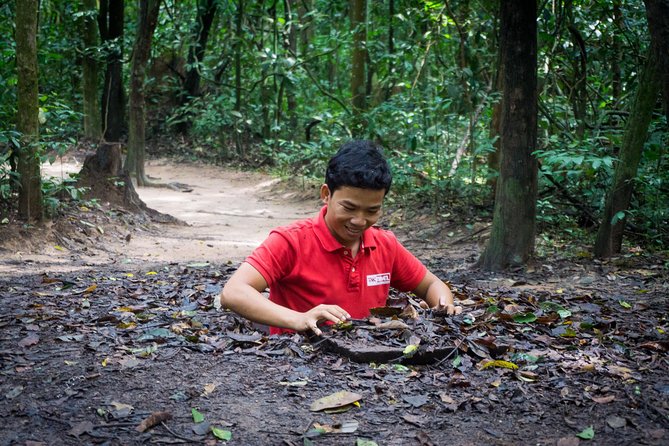
Cu Chi is about 37 miles (60 km) from Ho Chi Minh City, so the trip is built around travel time. The nice part is that this tour runs in the afternoon, departing around 13:00, which often makes the day feel less stressful than an early start. The plan is also paced for a half-day style visit, not an all-day marathon.
You’ll be traveling in an air-conditioned vehicle, and bottled water is included. That matters here because Cu Chi can be warm and you’ll be on the move for hours even before you reach the tunnel area. The tour is designed for small groups of 2 to 12 people, with a maximum of 12. In practice, that size is big enough to feel social, but small enough that questions to your guide don’t get lost.
If you’re staying in the hotel zone in District 1, pickup is offered at centrally located hotels there (with the option selected). If your hotel is outside District 1, expect that an extra pickup surcharge may apply. Also, where traffic rules limit pickup at some central hotels, you’ll be directed to contact the local supplier for support.
Finally, the tour uses a mobile ticket, and the meeting point listed is at 112 Đ. Trần Hưng Đạo, Phường Phạm Ngũ Lão, Quận 1. If you’re not doing pickup, that’s your anchor.
You can also read our reviews of more tours and experiences in Ho Chi Minh City



The ride out of Ho Chi Minh City (and why it matters)
This is not just a quick skip to a single viewpoint. You’ll travel roughly 70 km northwest toward the Cu Chi area from Ho Chi Minh City. During the ride, you’re basically setting up the right mental frame: Cu Chi isn’t just a tunnel attraction. It’s remembered as an area tied to the American war, including the idea of the underground village as something very hard to break.
That context pays off once you arrive, because the tunnel network is described as legendary, with an extent of 135 miles (220 km). Another description of the system references over 200 km in wartime conditions. Whether you focus on 135 miles or 200 km, the key takeaway is scale. You’re not seeing a short section; you’re seeing a piece of a much larger underground network that helped people survive and keep organizing.
I like trips like this when they respect your time. The vehicle, the group size, and the timing all support that. You’re not left on your own in a remote area, and you aren’t forced into a too-long schedule that steals the rest of your evening.
Entering Ben Dinh: what the orientation does for you
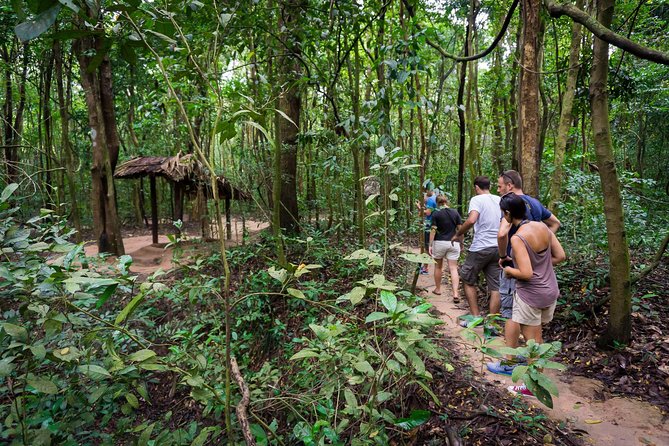
Once you arrive, the first phase is an introduction plus a short introductory video. This is a smart move, and it’s one of the reasons the experience works even if you don’t know Vietnam’s tunnel history yet.
You get an explanation of how the tunnels were constructed and how people survived in harsh wartime conditions. The video and briefing help you connect what you’re about to see to a bigger purpose: underground life wasn’t just hiding. It was organization, logistics, and survival under pressure.
Then comes the actual exploration of the remaining area and tunnel systems at Ben Dinh. Your time here is listed as about 3 hours, and the admission ticket is included. That’s a solid chunk. It gives you room to watch, walk, and absorb without feeling like you’re racing from one signboard to the next.
Also, your guide is English speaking. That’s not always guaranteed in day trips, and it matters because tunnel history is loaded with details. Having those details explained in plain language helps you make sense of what you’re seeing, especially when the site includes more than just tunnels—there are rooms and functional zones too.
Underground daily life: kitchens, bedrooms, and support spaces
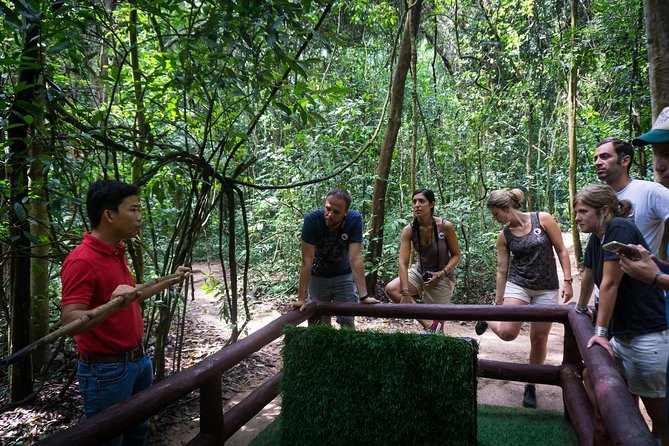
This is where I think most people get the real impact. The Ben Dinh area is presented not only as a defensive system but as an underground living space with practical needs built into it.
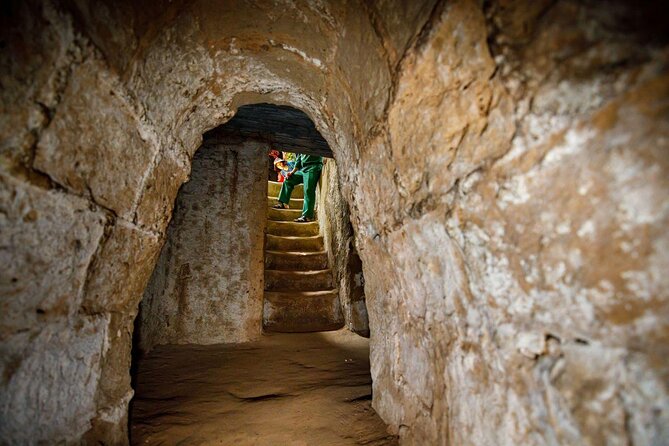
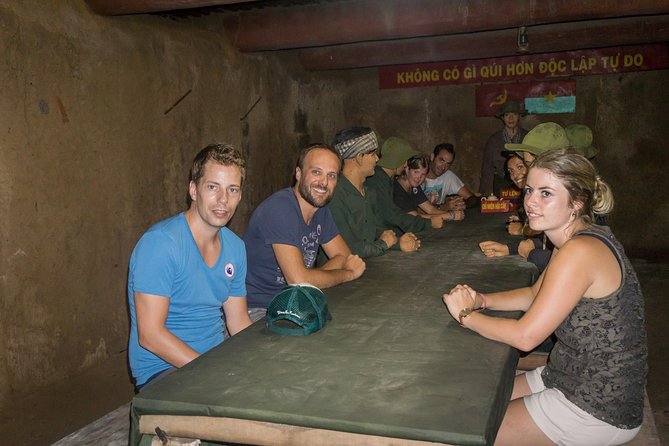
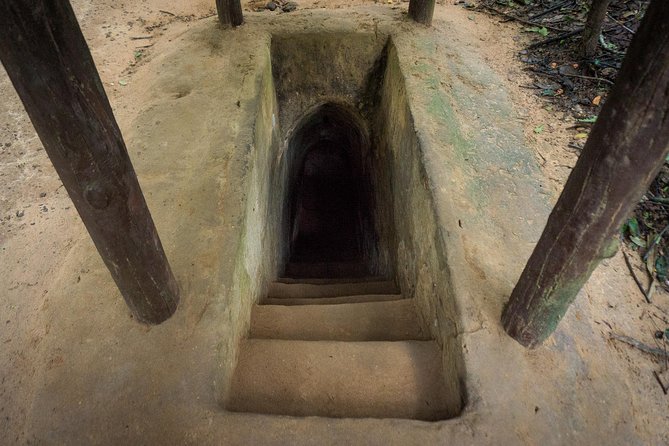
During your exploration, you’ll see areas described as specially constructed living spaces. These include kitchens and bedrooms, positioned alongside other facilities. That layout is the point: the tunnels weren’t just a hiding place. They supported basic routines so people could keep working, coordinating, and caring for one another.
In the same underground setting, the tour descriptions also reference martial facilities and operations such as storage, weapon-related factories, field hospitals, and command centers. Seeing these categories in one complex helps you understand the tunnel network as a full system. It’s closer to an underground base than a tourist maze.
I like that the tour doesn’t treat it like a single theme park moment. Instead, it keeps returning to how the tunnels functioned as a self-contained world. You’re walking through a place built to keep people alive and organized, even when the surface world was dangerous.
Security details: trap doors and hidden hazards

The tunnel network isn’t shown as tidy. Part of what makes Cu Chi unsettling—and memorable—is the inclusion of security measures.
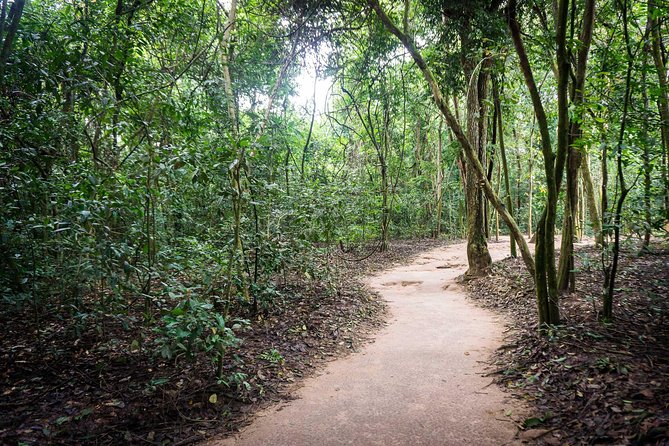
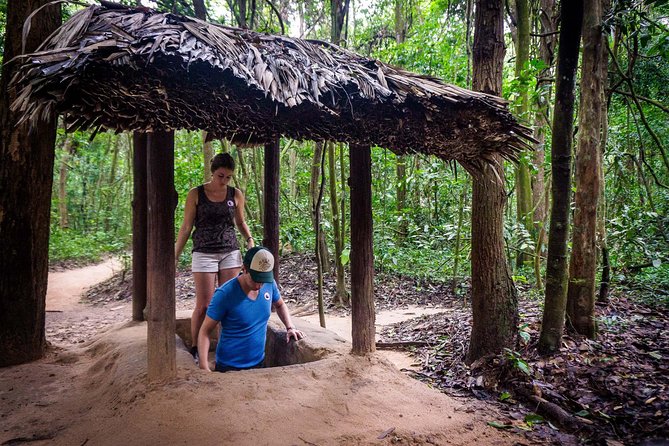
As you explore, you’ll encounter hidden trap doors and dangerous traps within the maze-like system. That’s not just a dramatic feature; it’s part of how the tunnels protected the people using them. It also helps you understand why the tunnel network required secrecy, planning, and constant attention.
One practical benefit of seeing these security elements within the guided flow is that your guide can explain them in context. Without context, these details could feel like scare tactics meant for visitors. With context, they become part of the survival strategy.






The value of admission-included half-day pacing
At $25 per person, this tour sits in a budget-friendly range for Ho Chi Minh City day trips. But the better question is what you actually get for that price.
You’re paying for several things at once:
- An air-conditioned vehicle
- An English-speaking guide
- Entrance fee / admission included
- Pickup and drop-off at centrally located hotels in District 1 (if that option is selected)
- Bottled water
- A small-group format (2–12 pax)
That bundle is what makes it feel like good value. You don’t have to figure out transport separately, and you aren’t arriving without a guide to connect the dots.
A half-day format also helps if you want to keep your evenings open in Saigon. You can fit other things later without feeling like you’ve lost a full day.
The handicapped art shop stop: quick and optional-feeling
One review comment flags a stop at a handicapped people’s art shop that felt unnecessary and could be improved. The critique was specifically about the heat outside versus the comfort of an air-conditioned space for the people working on the art.
I’d treat this stop as a “maybe, don’t plan around it” item. If you find yourself in a hot outdoor wait, it’s okay to focus on hydration and shade, not on judging it as an essential part of the tunnel story. The main event here is Ben Dinh, and that’s where your time should feel concentrated.
If this part of the schedule is included for your group, it’s still worth staying respectful and patient. Just keep your expectations grounded: this tour is fundamentally about the Cu Chi tunnel experience, not shopping.
Who should book this afternoon Cu Chi tour
This tour is a strong fit if you want:
- A guided visit with an English-speaking guide
- Small-group pacing (up to 12 people)
- Admission included so you’re not doing extra ticket math
- A practical half-day plan that still covers the most important tunnel area: Ben Dinh
It’s also a good choice if you’re trying to learn the tunnel story beyond stereotypes. The structure of the visit—video, intro, and then living-and-operational spaces—helps you see how people survived, ate, worked, and coordinated underground.
One clear caution: the tour is not available for the handicapped and anyone with heart problems. Also, confirmation is provided at booking time, and the tour requires good weather. If weather conditions cause cancellation, you’ll be offered another date or a full refund.
Practical tips for a smoother visit
A few things will make your afternoon go easier, based on how the tour is described and what you’re likely to experience on-site.
- Keep your timing flexible. Return time depends on traffic conditions, and the operator isn’t responsible for delays. If you have dinner reservations, I’d book something with a cushion.
- Dress for warmth. Even though you’re in an A/C vehicle part of the time, you should still assume conditions around the site can feel hot.
- Bring a small plan for questions. With a small group size, you’ll get more value if you ask about specific parts you notice, like how the underground living spaces related to the operational zones.
- Know what you want from the visit. If you want a tunnel-focused experience, stay mentally anchored on Ben Dinh’s living areas, facilities, and security features. That’s where the tour delivers its strongest payoff.
Should you book this afternoon Cu Chi Tunnels tour?
I’d book it if you want a guided, reasonably priced Cu Chi visit that prioritizes the tunnel network’s real-world function: construction, survival, daily living spaces, and the operational areas that made an underground village possible. At $25, with admission included and a guided small-group format, it’s good value for what you’re getting.
I would hesitate only if you’re sensitive to hot waits during any extra stop or if you need accessibility accommodations (this tour isn’t available for handicapped travelers or people with heart problems). If that fits you, you’ll probably find this afternoon format gives you the right mix of context and on-site details without eating your whole day.
If you like structured history stops with time to actually look, this one earns its reputation—especially with the high review rating and strong recommendation rate.
FAQ
How long is the Cu Chi Tunnels small-group tour?
The tour duration is listed as about 6 hours 30 minutes.
Does this tour include pickup in Ho Chi Minh City?
Pickup and drop-off at centrally located hotels in District 1 are included if you select the option. If your pickup location is outside District 1, an extra surcharge may apply.
Is the admission ticket included?
Yes. Entrance fee / admission ticket is included.
What group size should I expect?
It’s a small group tour with 2 to 12 passengers, with a maximum of 12 travelers.
Is this tour suitable for everyone?
The tour is not available for handicapped travelers and anyone with heart problems.
What is the cancellation policy?
You can cancel for a full refund up to 24 hours before the experience’s start time. If you cancel less than 24 hours before, the amount paid is not refunded.