REVIEW · HO CHI MINH CITY
Farm-To-Table Healthy Cooking Class: Half-Day Tour
Book on GetYourGuide →Operated by Westen Asian Travel Service Company · Bookable on GetYourGuide
A farm plus a cooking class beats most city plans. This half-day Vietnamese farm-to-table experience sends you through an organic garden, a medicine garden, and a mushroom house before you cook and eat a traditional healthy meal. I like the hands-on rhythm (pick, prep, cook, taste) and the way the teaching connects herbs to food and plant use, not just memorizing recipes. One watch-out: it’s out of town, so plan for a bit of travel time and walking on uneven farm paths.
Key idea: this isn’t a demo where you stand back. You’re part of the day, choosing ingredients and learning how Vietnamese home cooking can be both healthy and practical—especially for flavors you can’t easily find back home.
In This Review
- Farm-to-Table in Ho Chi Minh City: From Hotel Pick-Up to Lunch You Make
- Medicine Garden Lessons: Herbs, Plants, and Why They Matter
- Mushroom House: Learning Varieties Before You Cook With Them
- Become a Vietnamese Farmer: Pick the Veggies You’ll Actually Cook
- The Cooking Class: Healthy Vietnamese Dishes With Real Technique
- What You’ll Learn Beyond Recipes (And Why It’s Good Value)
- Price and Logistics: What $70 Buys You (In Plain Terms)
- What to Bring, What to Skip, and Who Should Book
- Should You Book This Farm-to-Table Healthy Cooking Class?
- FAQ
- How long is the Farm-To-Table Healthy Cooking Class?
- Where does the class take place?
- How much does it cost?
- Is pickup included?
- What’s included in the price?
- What language will I get during the tour?
- Is the class suitable for people with mobility needs?
- What should I bring?
- Are there any dietary options or restrictions to consider?
- Are pets allowed?
- Can I cancel for a refund?
Farm-to-Table in Ho Chi Minh City: From Hotel Pick-Up to Lunch You Make
You start in Ho Chi Minh City with pickup from your hotel or the airport by fancy car or bus, then head toward the countryside. In real life, that ride is usually around 1 to 1.5 hours depending on traffic, so it helps to use the trip time to get your expectations right: this is a food-focused day outside the city, not a quick workshop downtown.
Once you arrive, the day flows in a clear sequence. First comes the plant education—what’s growing, what it’s used for, and why it shows up in Vietnamese cooking. Then you get harvesting time, where you select the herbs and vegetables you’ll use. After that, you cook traditional dishes together and finally sit down to enjoy the lunch you helped create.
That hands-on structure is the big win. I also appreciate that the class includes the basics you need to enjoy it—lunch, iced tea, a local guide, and transportation—so you’re not constantly making choices or adding small costs.
Medicine Garden Lessons: Herbs, Plants, and Why They Matter
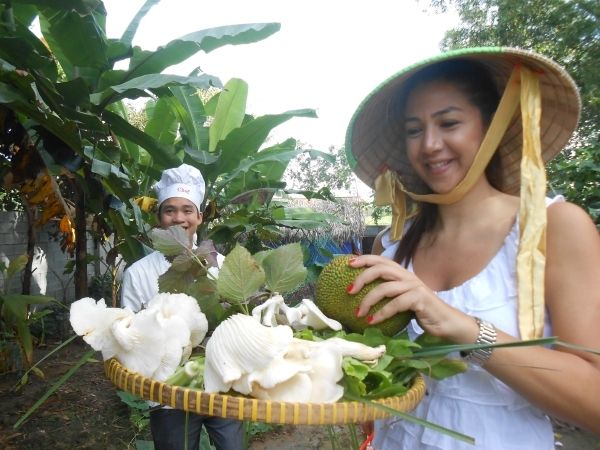
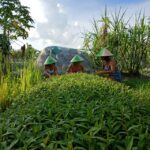
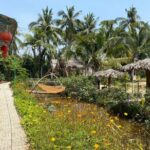
The core of this class is a medicine garden, where you learn about herbs and plants used in both cooking and traditional plant knowledge. The workshop talks about benefits and even downsides, which makes the whole thing feel more responsible than the usual food-tour “this plant is magical” pitch.
You’ll hear how Vietnamese herbs can be used, and the lesson is taught by both a pharmacist and a chef. That combo matters. The pharmacist angle keeps things practical, while the chef angle turns those plant stories into flavors you’ll recognize and can reproduce later.
In this kind of setting, the learning sticks because you’re not just watching. You’re seeing plants up close, hearing what they’re used for, and then later touching and selecting the ingredients for your own meal. If you like the idea of taking home a cooking mindset—how to think about ingredients—this section is the heart of the day.
You can also read our reviews of more cooking classes in Ho Chi Minh City
Mushroom House: Learning Varieties Before You Cook With Them
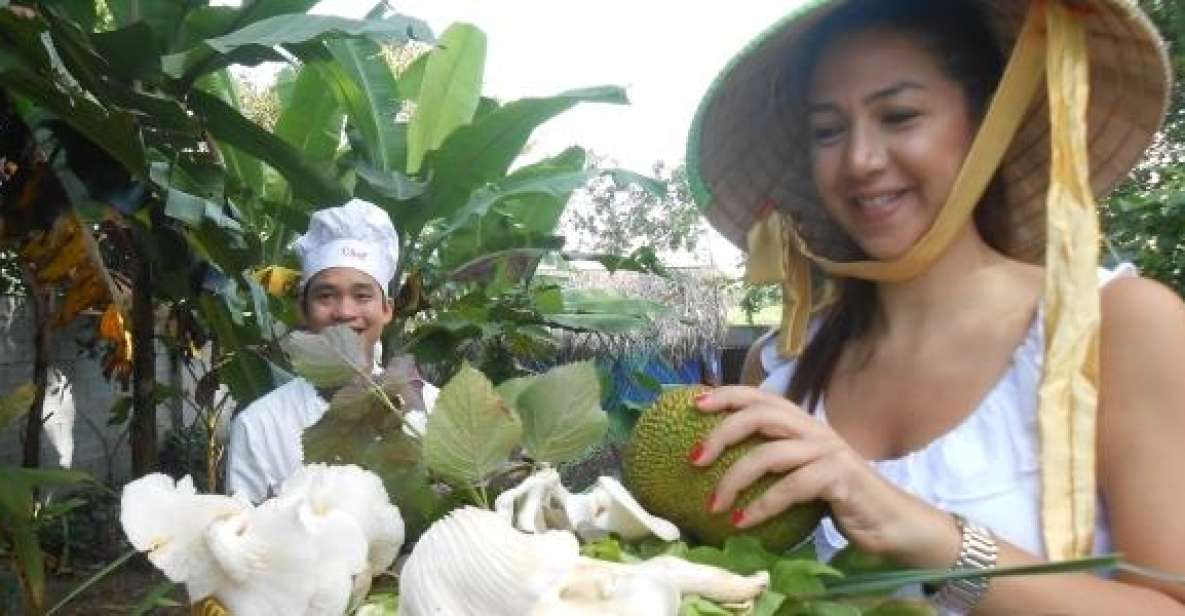
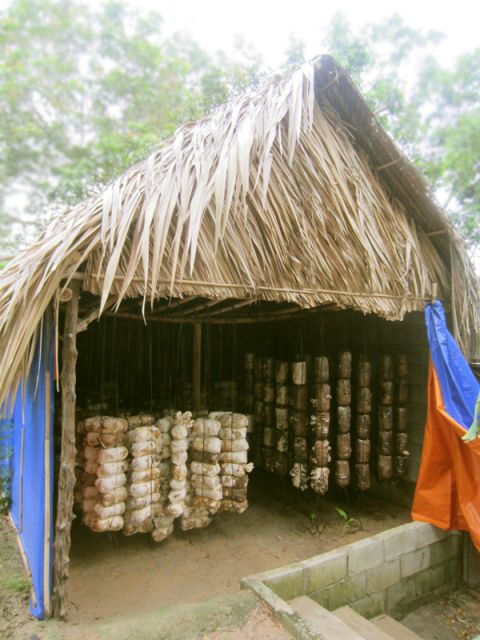
Next up is the mushroom house, where you explore different types of mushrooms and how they’re cultivated. This is where the class gets more specific than “mushrooms are healthy.” You get a real sense that mushrooms aren’t all the same, and that Vietnamese cooking treats them as a flexible ingredient for texture, aroma, and balance.
You’ll also learn about cultivation basics as part of the overall farm education. The highlights include hearing how to cultivate rice too, which helps round out the picture of how Vietnamese farms produce everyday food. The message is simple: ingredients don’t appear magically. They’re grown, tended, and harvested with care.
Become a Vietnamese Farmer: Pick the Veggies You’ll Actually Cook
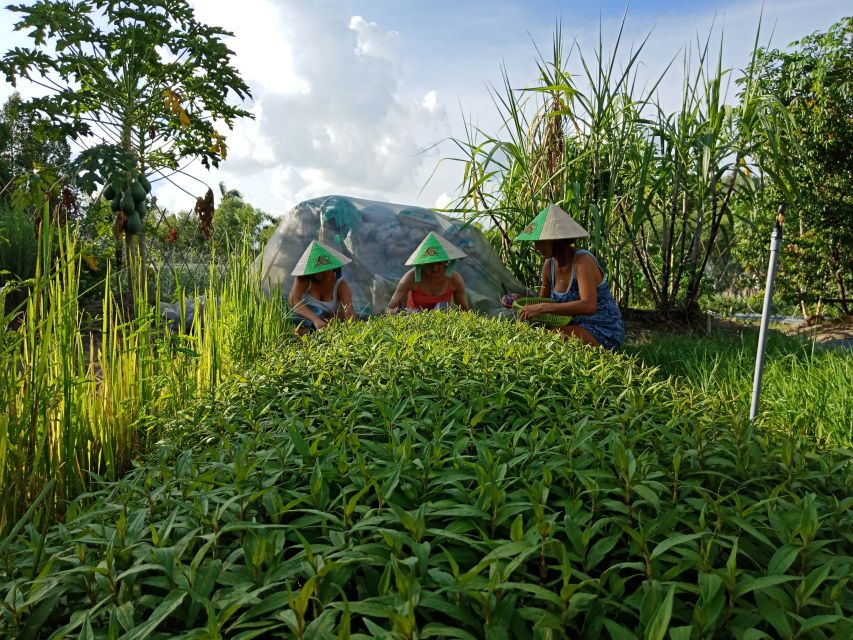
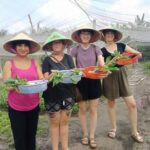
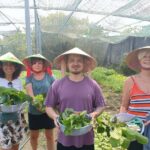
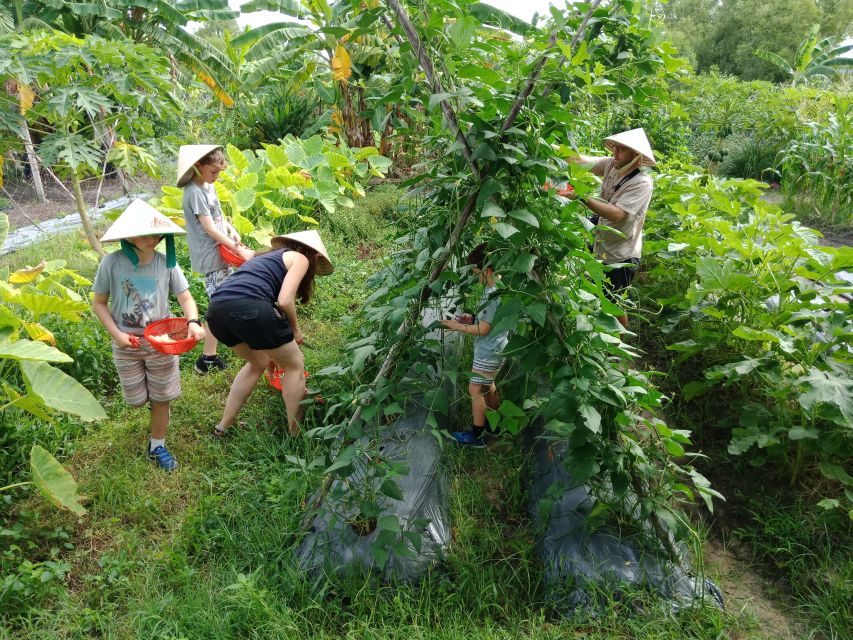
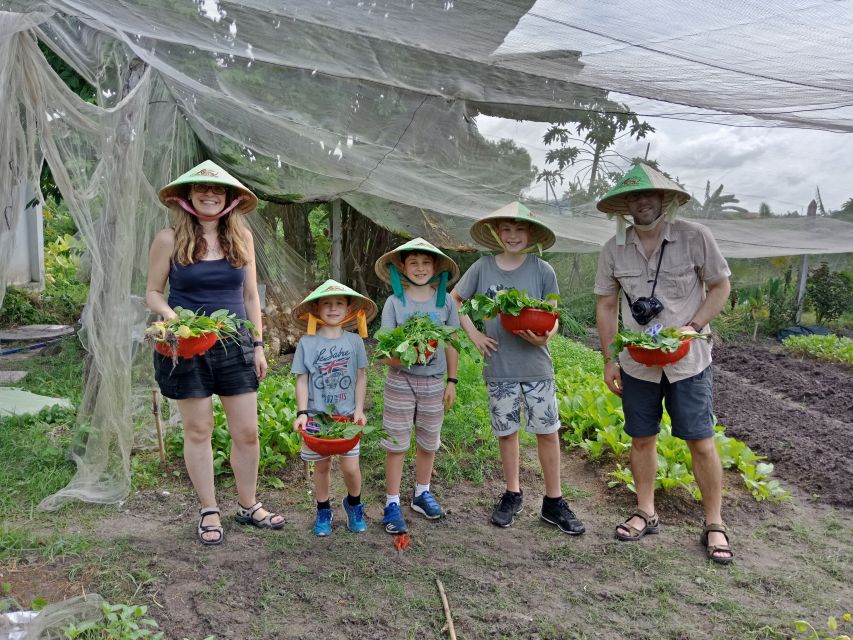
This is the part that turns the class from interesting to satisfying. You “become a Vietnamese farmer” for a while—walking the gardens and selecting vegetables, herbs, and greens for your meal.
In a good farm-to-table class, harvesting changes how you cook. You start asking: What’s the leaf like? Is it bitter or mild? Does it need a quick blanch or a longer cook? That’s exactly the kind of practical thinking this tour encourages.
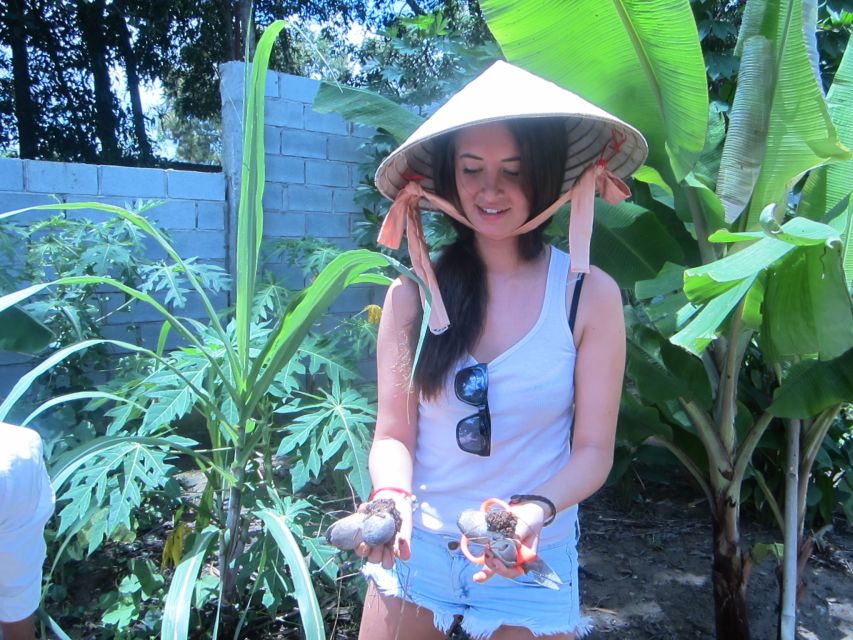
You’ll also be dealing with familiar and unfamiliar ingredients. The class highlights unusual options like morning glory, jack fruit, and banana flowers—ingredients that many visitors have heard of but rarely get the chance to cook with properly. When you pick them yourself, it’s easier to remember what to buy later and how to use them.
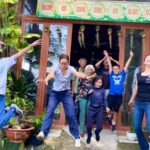
And yes, this is also social. If you’re traveling solo, you’ll likely meet the group and cook at shared stations. From the feel of the experience, it’s set up to support small-group learning, with staff around to help when you need a hand.
The Cooking Class: Healthy Vietnamese Dishes With Real Technique
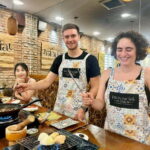
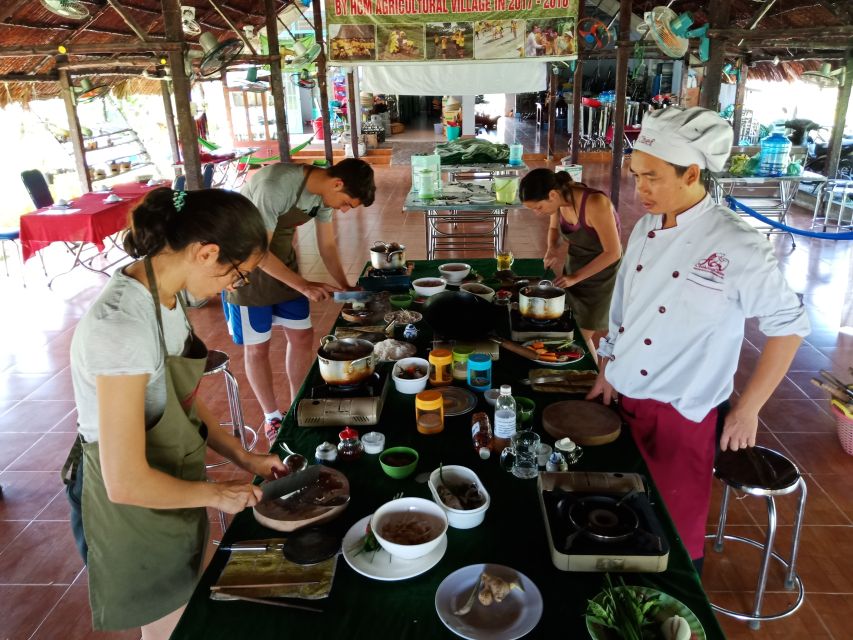
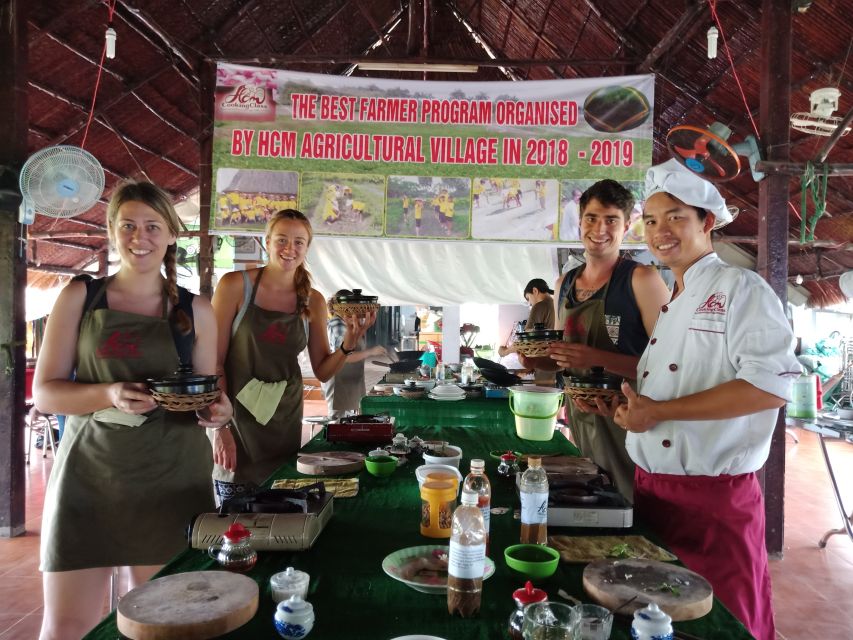
Now you switch from garden mode to kitchen mode. The chefs teach you how to prepare and cook a traditional Vietnamese healthy meal, using the ingredients you harvested earlier.
What I like here is the teaching style. Instead of just handing you a list of steps, the class focuses on technique and ingredient logic—how to adjust flavors and how to think through cooking at home. That matters because you want a meal you can repeat, not just a one-time tour souvenir.
The class includes a live Vietnamese- and English-speaking guide, plus friendly chefs guiding the cooking process. If you’re comfortable in a kitchen, you’ll get a workout with chopping, prepping, and cooking. If you’re not, it’s still manageable because the staff is there to help, and the recipes are built around accessible ingredients you can actually find later.
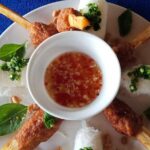
At the end, you don’t rush out. You sit down and eat what you made with your group. You also get a certificate, recipes, and souvenirs, which is a nice touch for turning the day into something tangible you can remember.
What You’ll Learn Beyond Recipes (And Why It’s Good Value)
It’s easy to treat a cooking class like a menu. This one pushes you toward a “food system” way of thinking.
Here’s what the education adds up to:
- Understanding how herb selection shapes a Vietnamese dish
- Learning why mushrooms and other farm products behave differently in cooking
- Seeing how cultivation (including rice and mushrooms) supports daily meals
- Getting real familiarity with ingredients like morning glory, jack fruit, and banana flowers
That’s why this tour can feel like more than “a cooking class.” You leave with ingredients vocabulary, cooking instincts, and recipes you can connect to real plants rather than just grocery-store labels.
Is it the cheapest cooking class in the city? Probably not. But at $70 per person for roughly 6 hours, including pickup, transportation, lunch, and guided instruction, it’s positioned as a full food experience, not just a kitchen session. The value comes from the farm education and the included meal—two things many cooking classes skip.
You can also read our reviews of more tours and experiences in Ho Chi Minh City
Price and Logistics: What $70 Buys You (In Plain Terms)
Let’s talk about the cost in the way that helps you decide.
For around $70, you get:
- A half-day (about 6 hours) experience
- Pickup from hotels or the airport by fancy car or bus
- Transportation to the farm area
- A local guide and English support
- Lunch plus iced tea
- The farm visits (medicine garden, mushroom house, harvesting)
- Cooking instruction and the meal you cook
That package is the key. If you’re already planning to eat lunch out and spend time organizing a farm visit, the included transport and guide reduce hassle. If you’re the kind of traveler who hates logistics, this is set up to be easy.
The trade-off is time. The drive out and back takes a chunk of your day, and the farm experience includes some walking and standing in outdoor areas. Bring comfortable shoes and expect that you’ll move.
What to Bring, What to Skip, and Who Should Book
Bring:
- Comfortable shoes
- Sunglasses
- Camera
Skip:
- Pets are not allowed.
This is a great fit if you:
- Want Vietnamese cooking with a stronger ingredient foundation
- Like hands-on travel (harvesting and cooking)
- Are curious about plant uses and want the “benefits and downsides” framing
- Want a small-group feel rather than a big tour bus situation
If you’re mainly looking for a quick, food-only hit with zero farm time, you might feel the schedule is a lot. But if you like learning where food comes from, the flow makes sense: garden first, cook second, eat last.
Should You Book This Farm-to-Table Healthy Cooking Class?
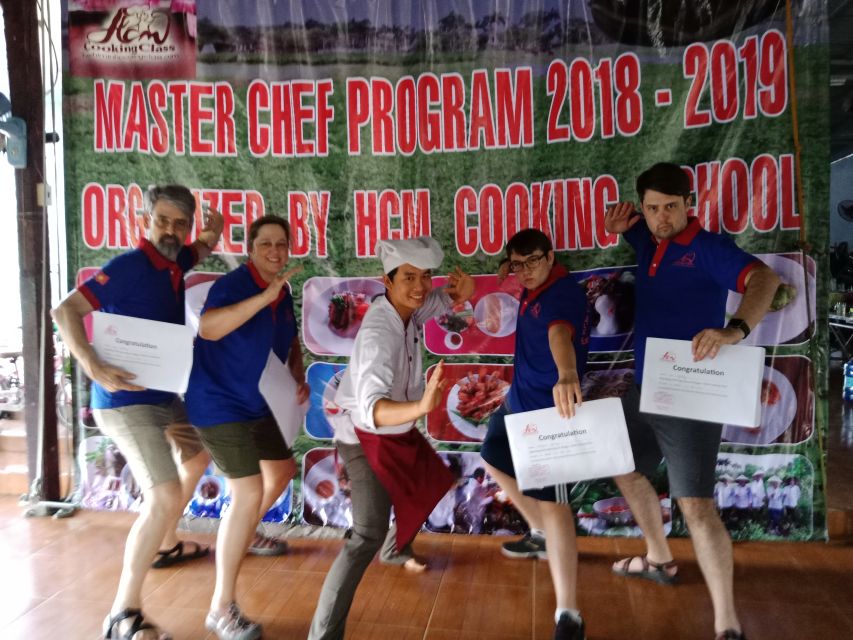
Book it if you want a day in Ho Chi Minh City that feels grounded: fresh ingredients, real plant education, and a meal you cooked yourself. It’s also a strong option for couples and solo travelers who want a friendly group setting, because you’ll be working together and sharing the finished lunch.
Consider skipping if you’re short on time, hate outdoor walking, or want only urban cooking experiences. The tour is built around the farm part, and that’s non-negotiable.
If you do book, choose the morning or afternoon start that matches your energy level. You’ll get the same overall structure, but timing matters when you’re planning the rest of your trip.
FAQ
How long is the Farm-To-Table Healthy Cooking Class?
The duration is listed as 6 hours. You’ll need to check availability for the specific starting times.
Where does the class take place?
The class is in Vietnam, with cooking held in and around Ho Chi Minh City.
How much does it cost?
The price is $70 per person.
Is pickup included?
Yes. Pickup is included from hotels in Ho Chi Minh City or from the airport, using a fancy car or bus.
What’s included in the price?
Lunch, local guide, iced tea, napkin, transportation, and pickup are included.
What language will I get during the tour?
The live tour guide offers Vietnamese and English support.
Is the class suitable for people with mobility needs?
The activity is listed as wheelchair accessible.
What should I bring?
Bring comfortable shoes, sunglasses, and a camera.
Are there any dietary options or restrictions to consider?
You should advise the provider if you have any special dietary requirements or allergies.
Are pets allowed?
No, pets are not allowed.
Can I cancel for a refund?
Yes, you can cancel up to 24 hours in advance for a full refund.